What a Guide Pulley Does on a Conveyor
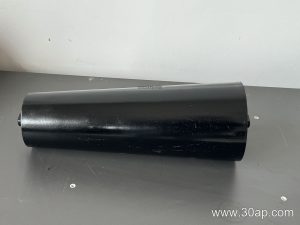
A guide pulley is a small-diameter roller used to steer, support or redirect a conveyor belt along a path that a standard conveyor pulley cannot follow. Instead of carrying the main tension like a drive pulley or tail pulley, it typically works at low wrap angles and light loads, correcting belt tracking through curves, keeping the belt seated between structures, or guiding it into and out of a transfer point. In sand and gravel plants, cement plants and power plant coal yards, guide pulleys are often the quiet components that decide whether a belt runs centered or starts rubbing the frame.
The name is sometimes written as a belt guide pulley or a steering pulley. These are equivalent descriptions of the same component. A guide pulley is not a substitute for a drive pulley, a tail pulley or a bend pulley; those carry different duties in the tension and drive layout.
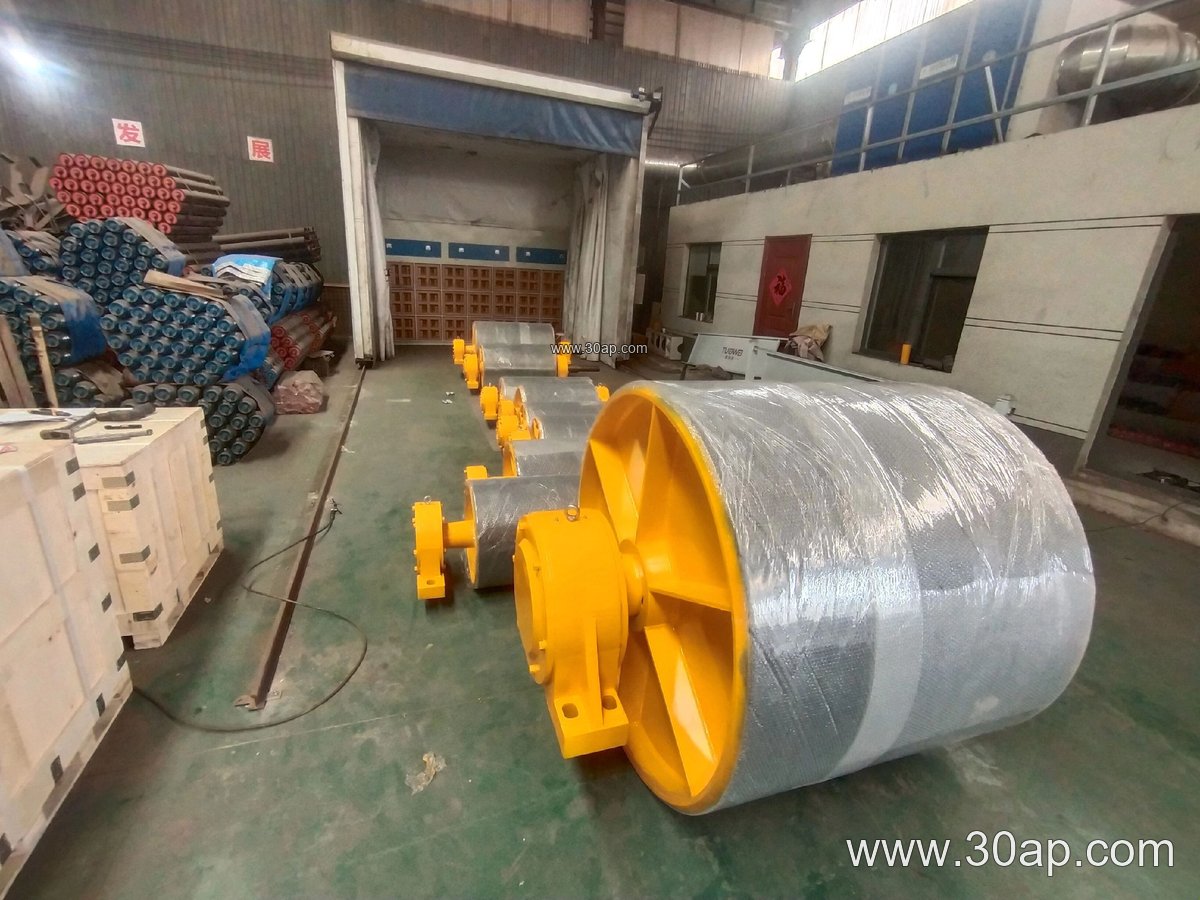
How It Is Built
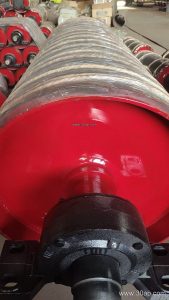
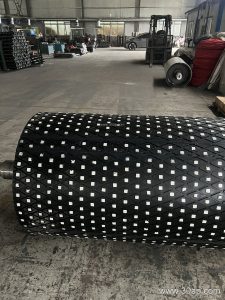
Most guide pulleys use a welded steel shell, a through shaft or stub shaft, and two bearing housings mounted in a compact bracket. Because the belt may approach from an angle, the pulley is often mounted on an adjustable base so maintenance staff can fine-tune its position. Surface options range from plain finish to rubber lagging, and small guide pulleys may use a crowned face to help center the belt.
- Shell: steel tube, machined and balanced for smooth rotation
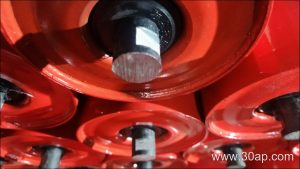
- Bearing: sealed ball or spherical roller bearing, greased for life or re-lubricable
- Lagging: plain, cold-bonded rubber or diamond pattern rubber where grip matters
- Mounting: fixed bracket, sliding frame or swivel base for tracking adjustment
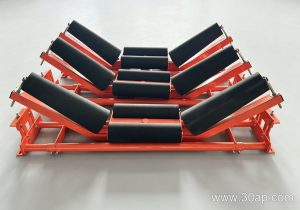
Guide pulleys are frequently paired with a conveyor pulley in the head or tail station, and they work together with the idler roller set and conveyor bracket to hold belt line geometry.
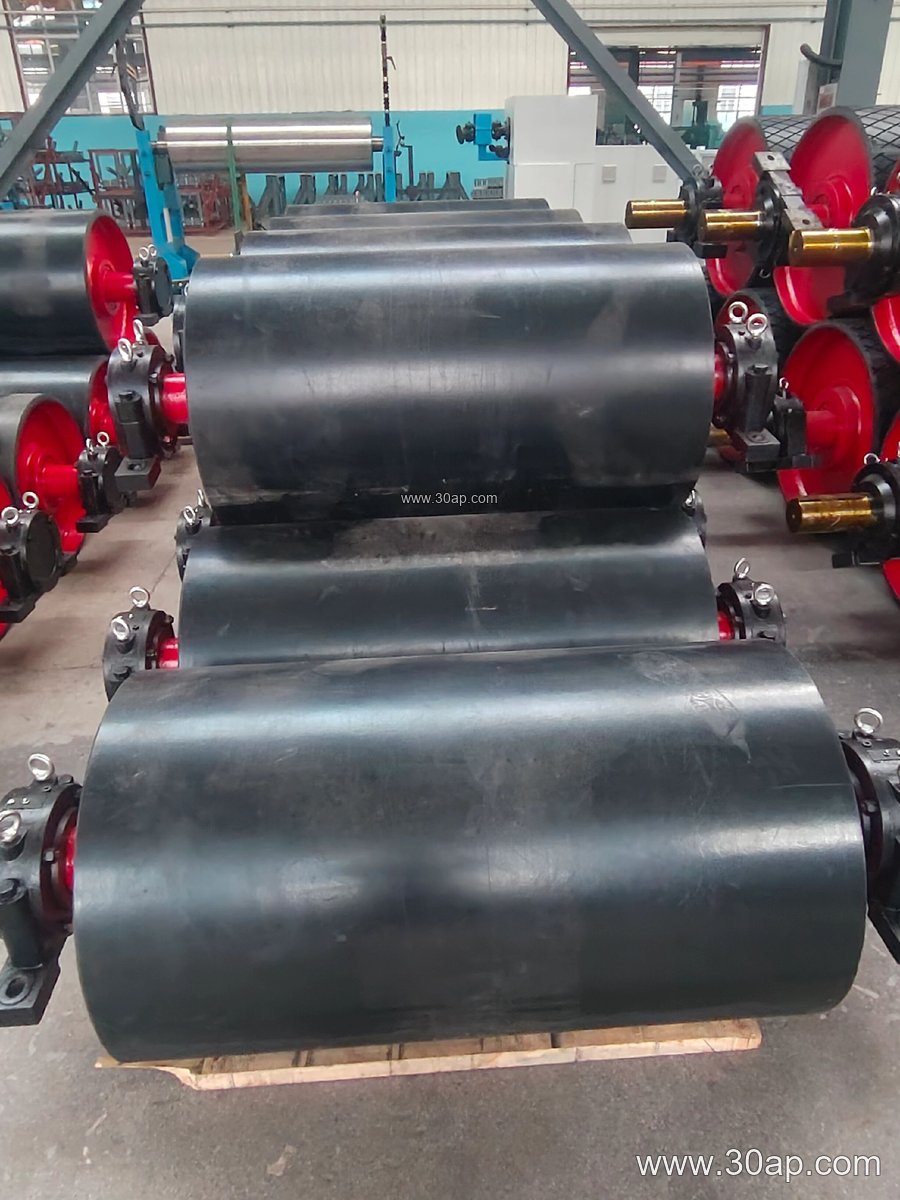
Where It Fits in the Line
Typical positions include the entry and exit of a transfer chute, the return side just before a take-up, and short curves where the belt changes direction by only a few degrees. In a quarry or aggregate line, a guide pulley may keep a wide belt away from a steel structure; in a coal handling system, it may prevent edge contact near a tripper. In tunnel spoil removal or fertilizer plants, compact guide pulleys help route the belt through narrow spaces.
For comparison, a bend pulley changes belt direction with a larger wrap angle and takes more load, while a guide pulley mostly corrects alignment. The two are related but not interchangeable.
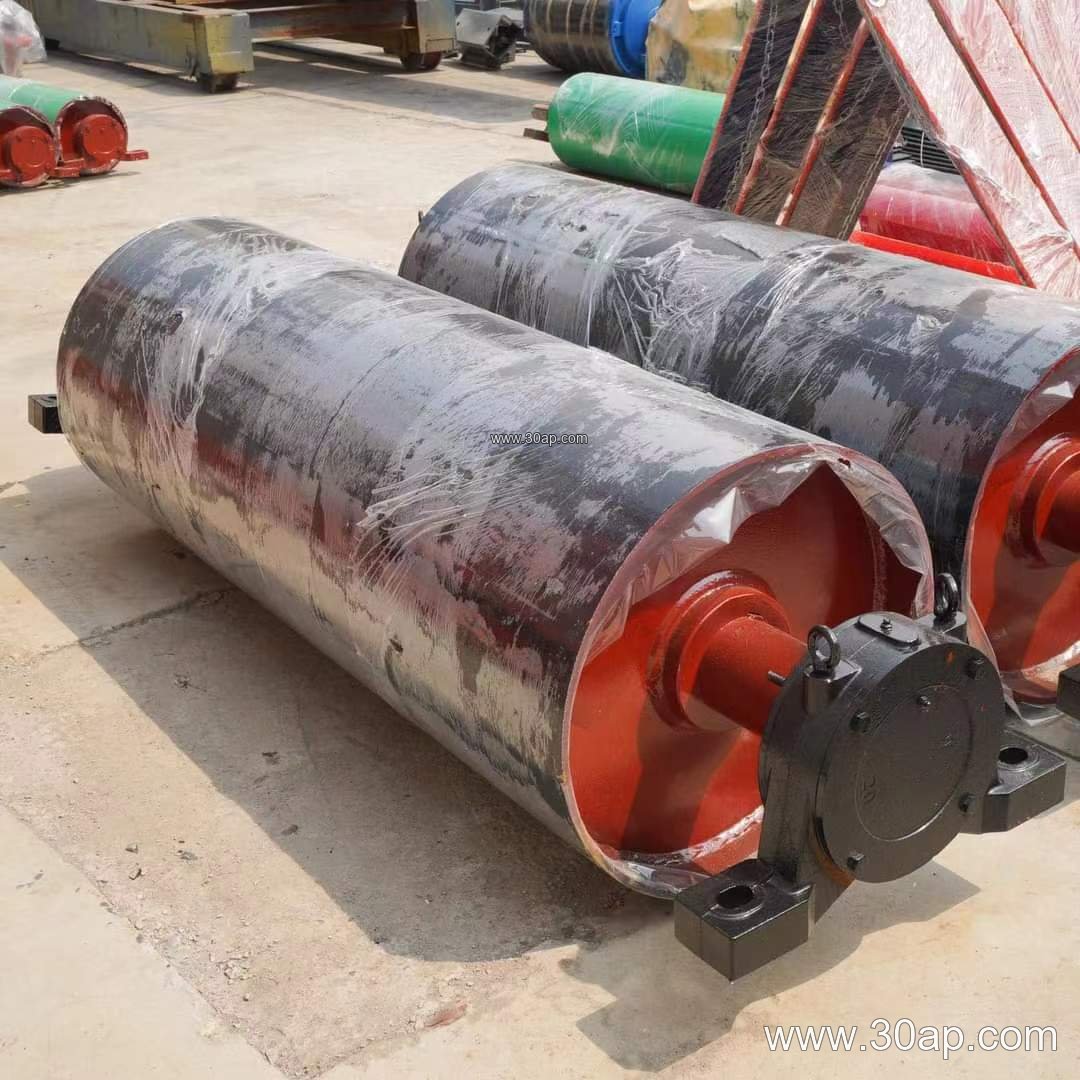
Common Reference Dimensions
The table below gives common reference values, not fixed rules. Final size depends on belt width, belt tension, shaft load and the space available.
| Item | Common reference values |
|---|---|
| Belt width B | B400, B500, B650, B800, B1000, B1200, B1400, B1600 |
| Pulley diameter | Ø200, Ø250, Ø315, Ø400, Ø500 |
| Shaft diameter | Ø50, Ø60, Ø70, Ø80, Ø90, Ø100 |
| Lagging thickness | 8, 10, 12, 15 mm |
| Face width | Usually wider than belt, e.g. B800 about 950 mm, B1000 about 1150 mm |
Example combinations such as B800 × Ø315 or B1000 × Ø400 appear in real layouts, but no single belt width is tied to one diameter. Shaft size follows torque and bearing load, not belt width alone.
Buyer Checklist
- Confirm the belt width, belt type and whether the belt is an EP conveyor belt, steel cord conveyor belt or flame retardant conveyor belt, since stiffness affects tracking.
- Check available space and the required adjustment range before choosing a bracket style.
- Decide between plain and lagged surface; rubber lagging helps grip but adds cost and weight.
- Specify bearing sealing for dusty or wet conditions, such as a coal mining conveyor belt line or a cement plant.
- Ask for the balancing grade and runout tolerance if the pulley turns at higher speed.
- Plan inspection access, because a guide pulley that drifts out of position can wear belt edges quickly.
Matching the guide pulley to the conveyor belt and the surrounding conveyor bracket layout early in design avoids field modifications later. For heavy-duty mining conveyor belt duty, a slightly larger shaft and better sealing usually pay off in service life.