What a Steel Pulley Does on a Conveyor
A steel pulley is the rotating drum that drives, redirects, or tensions a conveyor belt. In a quarry or a coal washing plant, it is the component that turns motor torque into belt motion and keeps the belt tracking along the structure. Drive pulleys transmit power, tail pulleys return the belt, and bend pulleys change direction without driving. These roles are not interchangeable, and each position places different demands on the pulley body, shaft, and surface.
Construction and Key Components
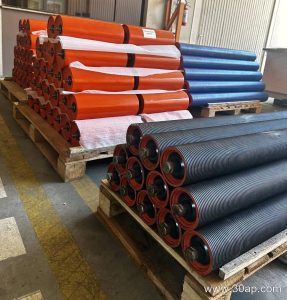
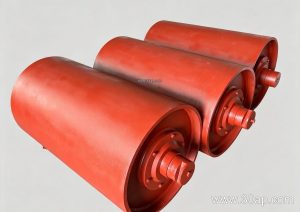
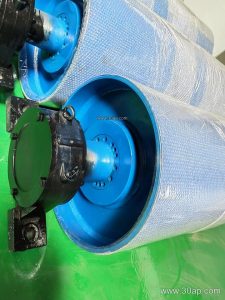
Most industrial steel pulleys are built from a rolled steel shell, welded end discs, a through shaft, and bearing housings. The shell thickness and shaft diameter are selected according to torque and radial load, not simply by belt width. Common shaft diameters include Ø50, Ø60, Ø70, Ø80, Ø90, Ø100, Ø120, Ø140, Ø160, Ø180, and Ø200 mm, but final sizing follows the conveyor design. Surface options include plain finish, cast rubber, cold-bonded rubber, hot-vulcanized rubber, diamond grooving, herringbone grooving, ceramic lagging, and flat rubber sheet. Lagging thickness often falls in the 8, 10, 12, 15, or 20 mm range.
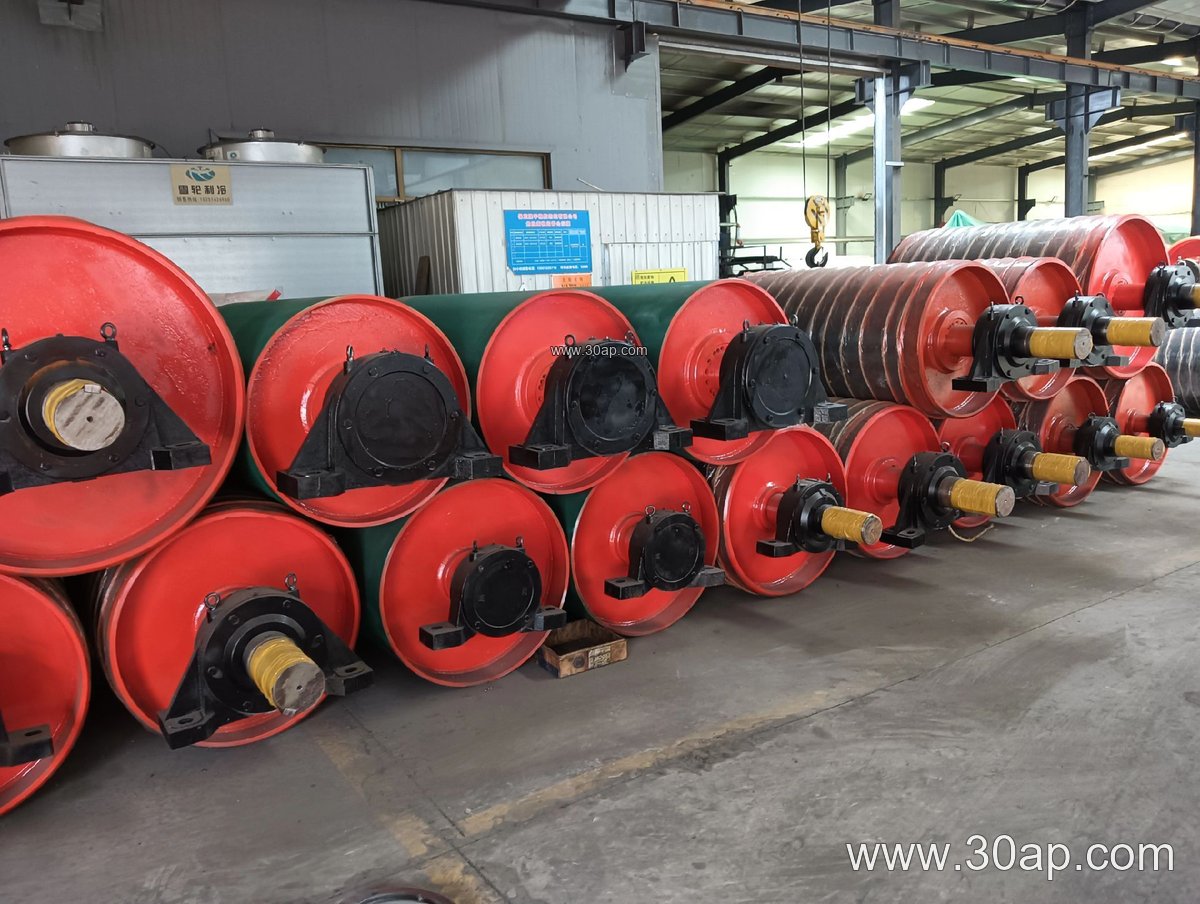
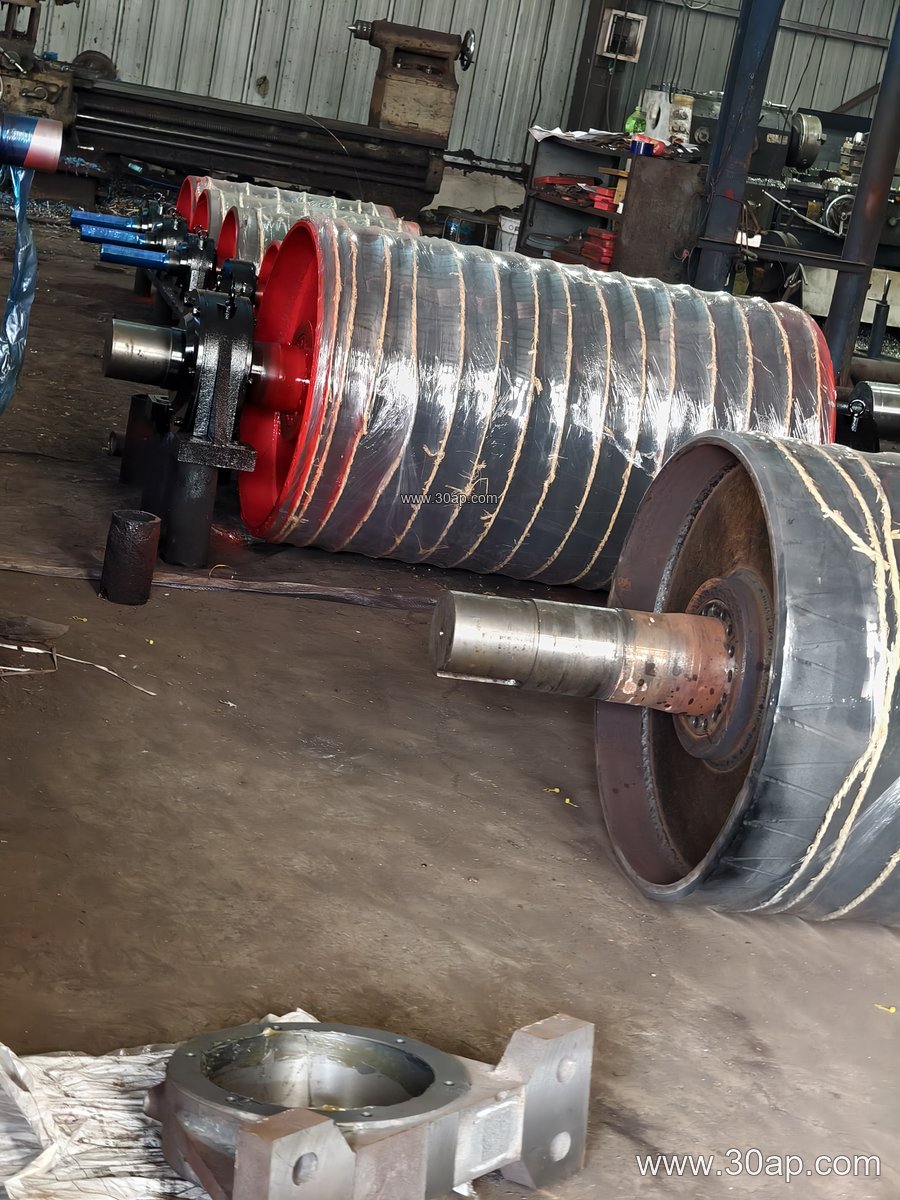
Matching Belt Width and Pulley Dimensions
Pulley face width is usually a little wider than the belt. For reference, B400 belt may use a face around 500 mm, B650 around 750 mm, B1000 around 1150 mm, and B1400 around 1600 mm. Diameter choices such as Ø200, Ø250, Ø315, Ø400, Ø500, Ø630, Ø800, Ø1000, Ø1250, Ø1400, Ø1600, and Ø1800 appear across different conveyor duties. A combination like B800 × Ø500 or B1200 × Ø1000 is common in bulk handling, but no single belt width locks a pulley to one diameter. The belt tension, wrap angle, and space available all influence the final selection.
Where Steel Pulleys Are Used
In a limestone mine, the head pulley often runs with an abrasion resistant conveyor belt carrying crushed rock. In a coal washing plant, flame retardant conveyor belt and fire resistant conveyor belt grades are typical, and the tail pulley must handle fines and moisture. Cement plants use steel pulleys on clinker and raw meal lines, where heat resistant conveyor belt may appear near kiln discharge. Power plant coal handling, port bulk terminals, and aggregate crushing circuits also rely on these drums daily. A quarry conveyor belt or crusher conveyor belt installation usually pairs a lagged drive pulley with a plain or lightly lagged tail pulley to maintain grip without over-tensioning.
Surface Form and Grip
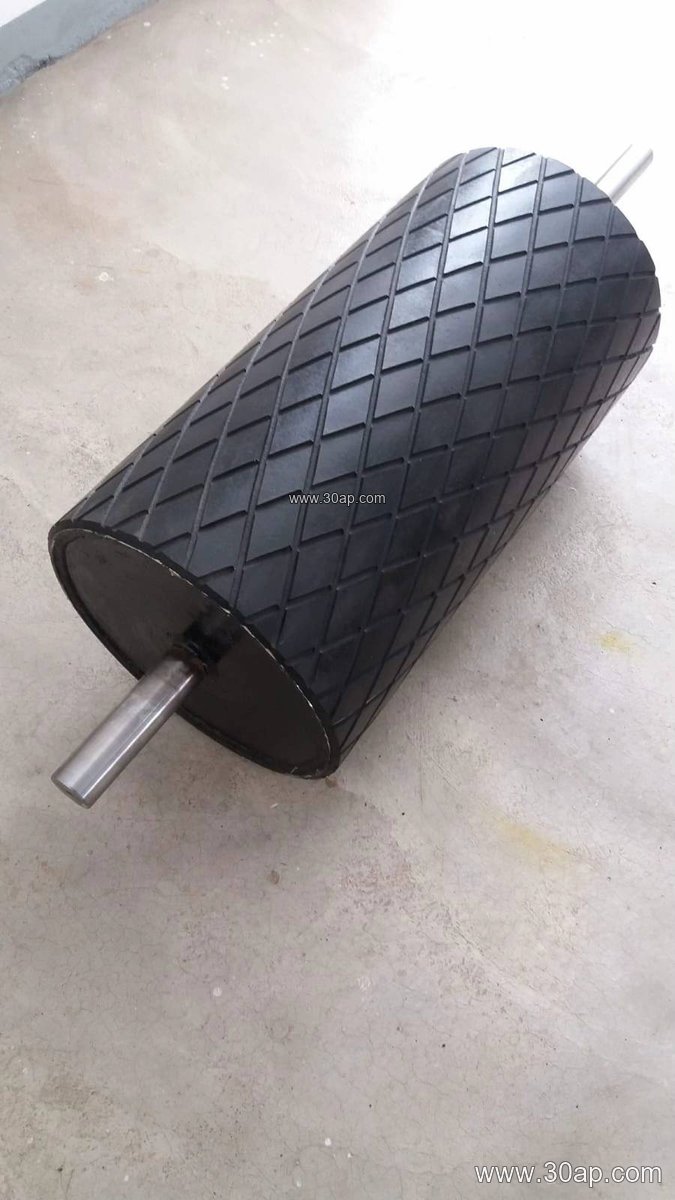
Lagging choice depends on the material and the position. Diamond or herringbone rubber lagging helps shed water and fine dust on drive pulleys. Ceramic lagging is chosen where slip and wear are concerns, though it is not a universal answer. Plain steel may suit a bend pulley that only redirects the belt. The lagging should match the belt cover compound; for example, an oil resistant conveyor belt in a recycling or chemical environment may need a compatible rubber surface. A steel cord conveyor belt or high strength conveyor belt often demands careful pulley diameter selection to limit bending stress.
Buyer Checklist
- Confirm the pulley role: drive, tail, bend, take-up, or snub.
- Provide belt width, belt type, and operating tension so the supplier can check face width and shaft size.
- State the environment: wet, dusty, oily, or high temperature. This affects lagging and bearing protection.
- Ask for the balancing grade and inspection report for the assembled pulley.
- Check that the pulley face and the conveyor bracket or frame dimensions align before installation.
For any conveyor project, the steel pulley works alongside the conveyor belt, idler roller, and conveyor bracket. A well-matched drum reduces belt wander, extends splice life, and keeps the whole conveyor pulley assembly running smoothly in demanding industries such as mining, cement, and power generation.