What a Self-Centering Idler Does on a Conveyor
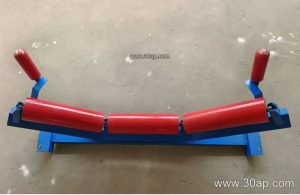
A self-centering idler is a carrying or return roller assembly designed to correct belt drift without operator intervention. As the conveyor belt begins to wander off its intended line, the angled rollers of this idler generate a small sideways force that nudges the belt back toward the center. In a quarry conveyor or a power plant coal handling line, that gentle correction can prevent edge damage, spillage, and premature wear on the conveyor pulley and frame.
The product is also called a training idler or self-aligning idler, and both names describe the same function. It is not a replacement for a drive pulley, tail pulley, or bend pulley; those components transmit power or change belt direction, while the self-centering idler only steers the belt.
How the Assembly Is Built
Most designs use two or three rollers mounted on a pivoting frame. The frame sits on a central pivot, and the rollers are set at a slight forward lead angle, commonly about 1.5 to 2 degrees, so that contact with a drifting belt produces a corrective moment. A vertical guide roller or side roller may be added to sense the belt edge.
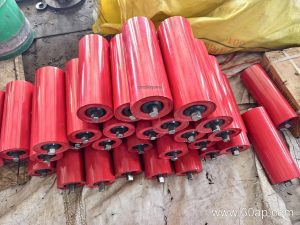
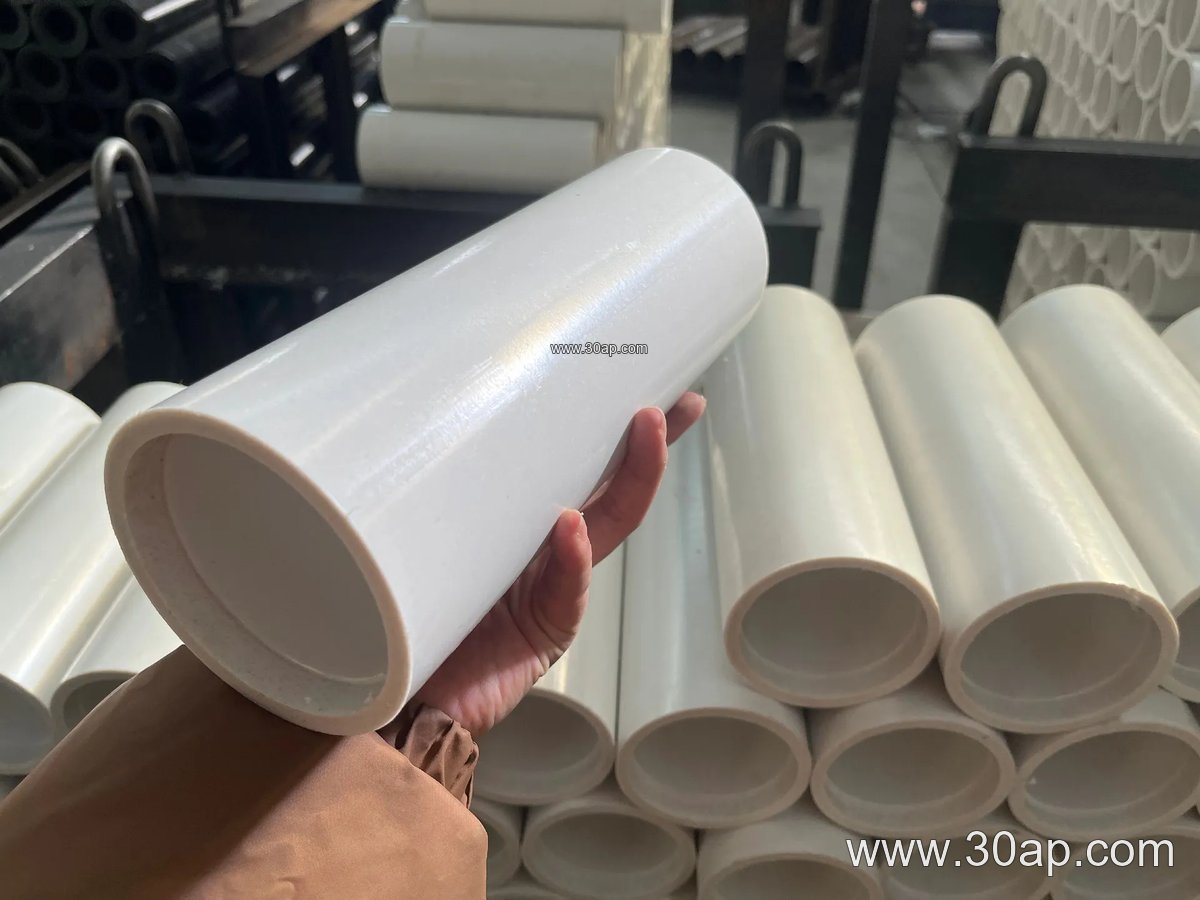
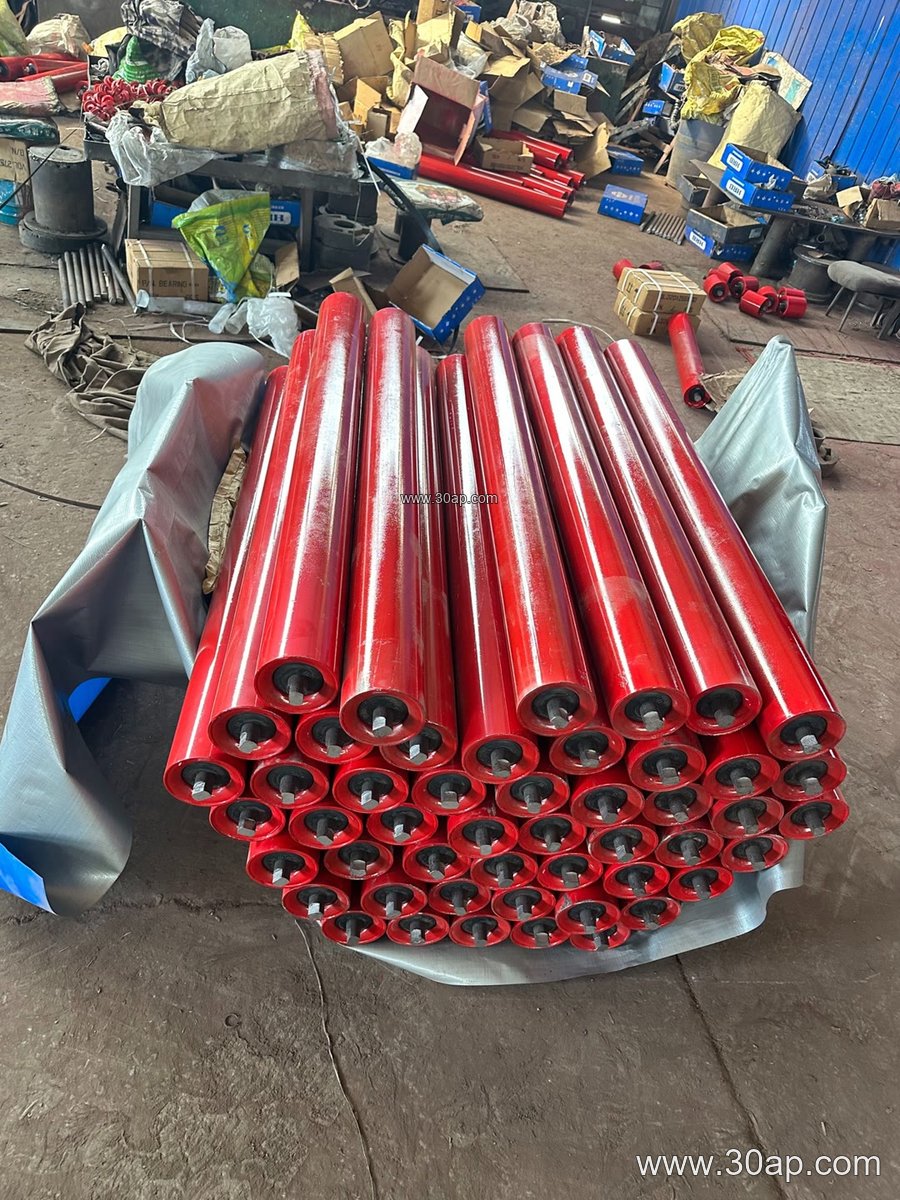
Roller shells are usually steel tube, sometimes fitted with rubber discs or ceramic tiles for grip and abrasion resistance. Bearings such as 6204, 6205, 6305, 6306, 6308, or 6310 are common, selected according to load and shaft size rather than tied to one roller diameter. Seals matter in dusty service, because fine material from crushing or screening will shorten bearing life if it reaches the housing.
Where It Fits in the Conveyor Line
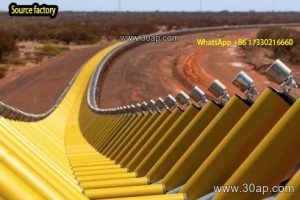
Training idlers are typically placed on the carrying side after the loading point and at intervals along long runs, and on the return side where the belt is prone to misalignment. In a limestone mine or cement plant, they are often installed near transition zones where the belt changes from flat to troughed. In a coal-fired power plant, they help keep the belt centered through transfer towers and around curves in the route.
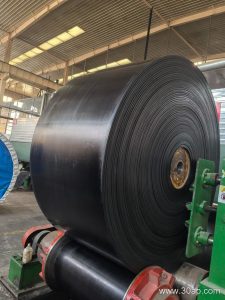
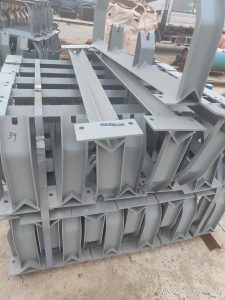
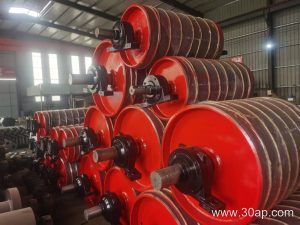
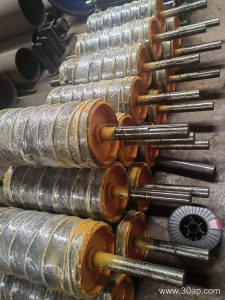
They work alongside the conveyor belt, idler roller sets, conveyor brackets, and conveyor pulleys. The belt itself may be a heavy-duty mining conveyor belt, an abrasion resistant conveyor belt, or a flame retardant conveyor belt for underground coal mining conveyor systems. A steel cord conveyor belt on a long overland run may need training idlers spaced differently from a fabric core conveyor belt on a short transfer.
Common Configurations and Reference Dimensions
The table below gives typical reference values, not fixed rules. Final roller length depends on belt width, trough angle, and the number of rollers in the set.
| Item | Common Reference |
|---|---|
| Idler type | Friction self-centering, tapered self-centering, return training idler |
| Roller diameter | Ø89, Ø102, Ø108, Ø127, Ø133, Ø159 mm and others |
| Belt width | B500, B650, B800, B1000, B1200, B1400, B1600, B1800 mm |
| Trough angle | 20°, 30°, 35°, 45° |
| Roller surface | Steel, nylon, rubber ring, ceramic |
| Bearing | 6204, 6205, 6305, 6306, 6308, 6310 |
For example, a three-roll troughed set on a B800 belt often uses rollers around 315 mm long, while a B1200 set may use roughly 465 mm rollers. These are illustrative figures; side rollers and center rollers can differ, and the design should follow the conveyor manufacturer’s layout.
Selection and Maintenance Notes for Buyers
- Match the idler to belt width, belt speed, and material load, and confirm the mounting height with the existing conveyor bracket.
- Choose sealed bearings and a dust-resistant housing for quarry, crusher, and coal handling duty.
- For hot material such as clinker or sinter, consider heat resistant bearing grease and a suitable roller surface.
- Check pivot freedom and guide roller clearance during routine inspections; a stiff pivot defeats the self-centering action.
- Replace worn roller shells before they damage the belt edge, and keep the training idler aligned with the conveyor centerline.
On sites handling abrasive ore or aggregate, pairing training idlers with an abrasion resistant conveyor belt and well-maintained pulleys reduces total downtime. For underground coal mining conveyor belts, flame retardant and anti-static properties of the belt are separate requirements from the idler, and both should be reviewed together.
Typical Industries and Final Checks
Self-centering idlers appear in sand and gravel plants, iron ore and copper ore handling, cement kiln feed lines, port ship loading conveyors, and steel plant sinter routes. Before ordering, confirm roller diameter, shaft size, bearing type, frame width, and whether the unit is for the carrying or return side. A correctly sized training idler is a small investment that protects the belt, the conveyor pulley, and the structure around it.