What a Conveyor Equipment Pulley Does
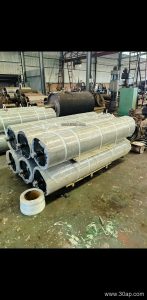
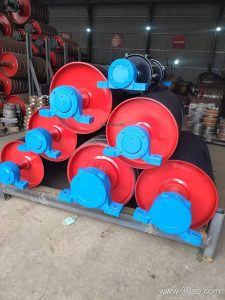
A conveyor equipment pulley is the rotating drum that gives a conveyor belt its direction and its drive. On a long overland line at a quarry or a short transfer at a cement plant, the belt loops around several of these drums, and each one has a job. The drive or head pulley pulls the belt, the tail pulley turns it back, and bend or take-up drums guide it through the structure. Because the belt carries the load, the pulley has to transmit torque without letting the belt slip, and it has to keep its shape under constant tension.
The same component is often called a conveyor drum or belt pulley. Those names describe the same item, whether it sits at the discharge end of a coal handling system or under a stockpile feed in a sand and gravel line.
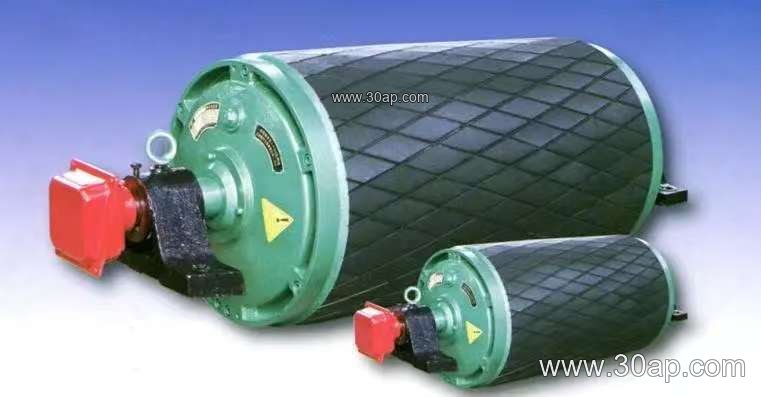
How the Drum Is Built
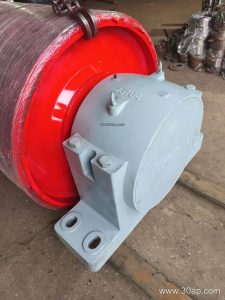
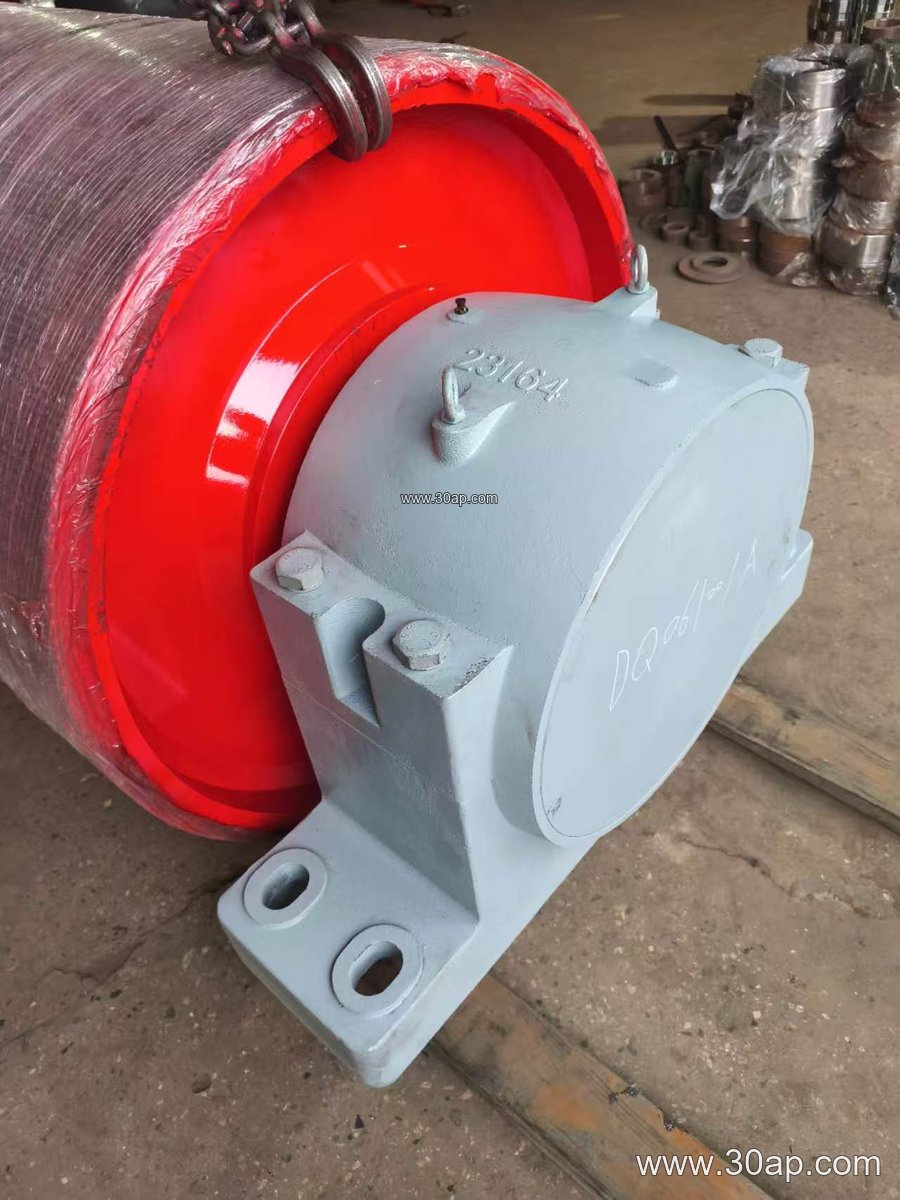
A typical unit combines a cylindrical shell, two end discs, a shaft, and bearing housings that bolt to the conveyor bracket. The shell is usually rolled steel, machined at the ends, and fitted with a lagging surface where grip matters. Shafts are sized by torque and radial load rather than by belt width alone, so a B800 drum and a B1200 drum may use very different shaft diameters depending on the duty.
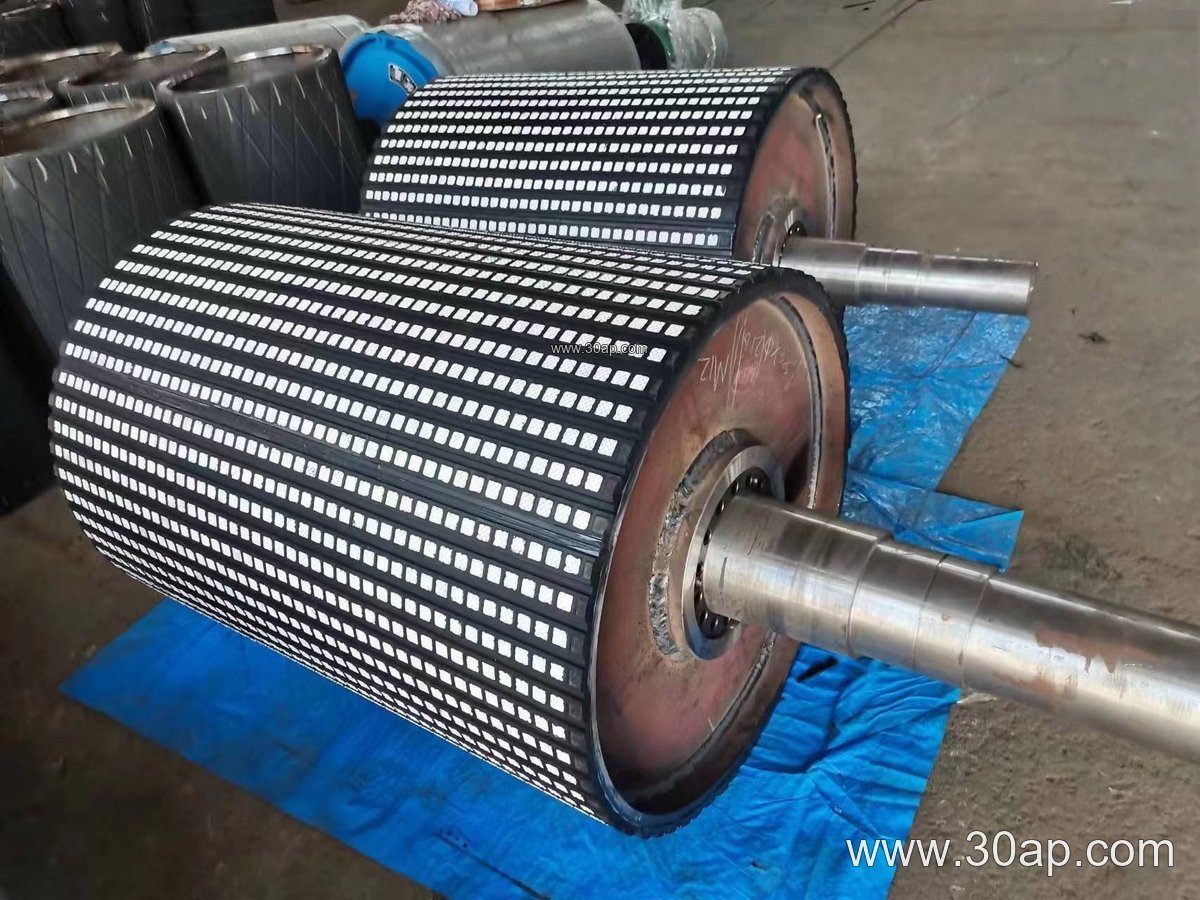
Common shaft diameters include Ø50, Ø80, Ø100, Ø140, and Ø200, while shell diameters range from about Ø200 up to Ø1800 for large drives. Surface options include plain, cast rubber, cold-bonded rubber, hot-vulcanized rubber, diamond lagging, herringbone lagging, and ceramic lagging, usually in 8, 10, 12, 15, or 20 mm thickness. Face width normally exceeds belt width, for example about 1150 mm for a B1000 belt and about 1600 mm for a B1400 belt.
| Parameter | Common reference values |
|---|---|
| Belt width | B400, B650, B800, B1000, B1200, B1400, B1600, B1800 |
| Drum diameter | Ø200, Ø315, Ø400, Ø500, Ø630, Ø800, Ø1000, Ø1250 |
| Shaft diameter | Ø50, Ø70, Ø90, Ø120, Ø160, Ø200 |
| Lagging thickness | 8, 10, 12, 15, 20 mm |
Drive, Tail, and Bend Positions Are Not Interchangeable
A drive pulley is selected for traction and torque transmission, so it usually carries lagging and a heavier shaft. A tail pulley mainly redirects the returning belt and may be plain-faced. A bend pulley changes belt direction on a long route and sees lower wrap angles. These roles are distinct, and a spare drive drum cannot simply be swapped into a tail position without checking load, wrap, and bearing capacity.
When a system needs more wrap around the drive, an extra snub or pressure drum may be added rather than replacing the main drive. Electric drum motors are a separate option for compact layouts, but they are not a substitute for a standard head drum in every duty.
Where These Drums Work
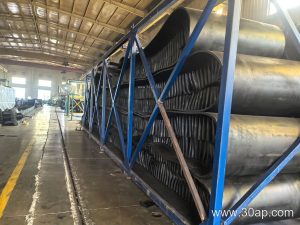
In a limestone quarry, a head drum at the crusher feed handles coarse rock and constant abrasion. In a power plant coal yard, flame retardant and anti-static belt grades are common, and the pulley lagging must resist fine dust. Aggregate lines, iron ore concentrators, and fertilizer granulation plants all rely on correctly matched drums to keep the belt tracking. The belt itself may be an EP conveyor belt, a steel cord conveyor belt, or a multi-ply fabric core conveyor belt, and each has different elongation and tension characteristics that affect drum choice.
For high-abrasion service, an abrasion resistant conveyor belt paired with ceramic lagging reduces slip and wear. Where oil or heat is present, an oil resistant conveyor belt or heat resistant conveyor belt protects the carcass, while the pulley surface must still provide grip.
Buyer Checklist
- Confirm belt width and expected belt tension, then agree on drum diameter and face width together.
- State the position: drive, tail, bend, take-up, or snub, since each has different load and lagging needs.
- Choose lagging by condition: diamond or herringbone for wet slip, ceramic for abrasive ore, plain for light duty.
- Check shaft diameter against torque and bearing load, not against belt width alone.
- Match the drum to the conveyor bracket and bearing housing dimensions before ordering.
- Ask for the balance grade and runout tolerance for high-speed drives.
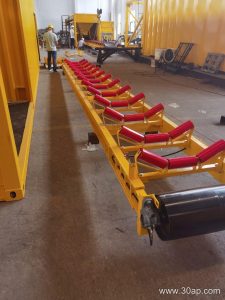
Maintenance is mostly about inspection. Worn lagging, loose end discs, and leaking seals show up early if the drum is checked at each shutdown. Keeping the belt cleaner and the idler roller set aligned reduces side load on the drum and extends bearing life. For a reliable line, treat the conveyor equipment pulley as an engineered part of the system, matched to the belt, the load, and the place it turns.