What Is a Conveyor Bend Pulley
A conveyor bend pulley is a non-drive pulley that changes the direction of the conveyor belt, typically at the tail end, take-up section, or along the return run. Unlike drive pulleys that transmit power or tail pulleys that support the belt at the loading point, the bend pulley guides the belt around a curve without driving it. In quarry and aggregate lines, these pulleys help route the belt through tight spaces, while in cement plants they manage the return path in clinker transport systems.
Sometimes called a snub pulley or deflector pulley, the bend pulley is essential for maintaining proper belt tension and alignment. It works alongside conveyor idlers and brackets to keep the belt tracking smoothly, especially in confined installations such as underground mining or tunnel excavation projects.
Construction and Key Components
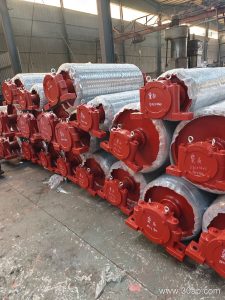
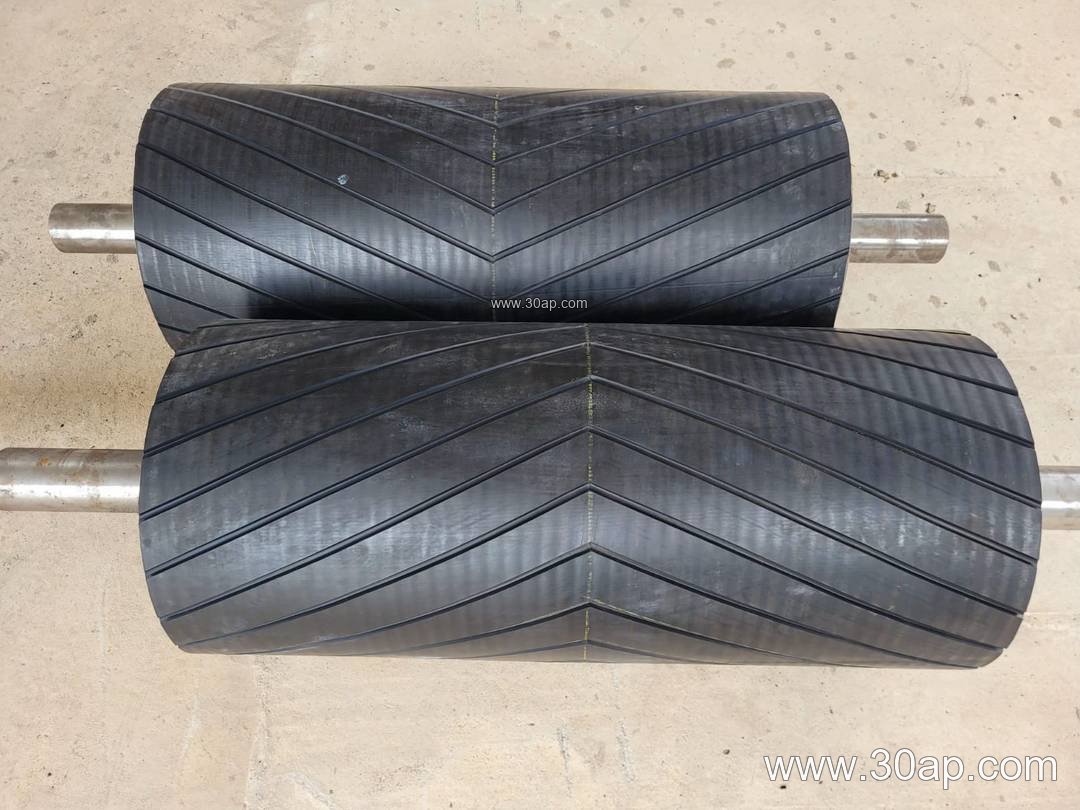
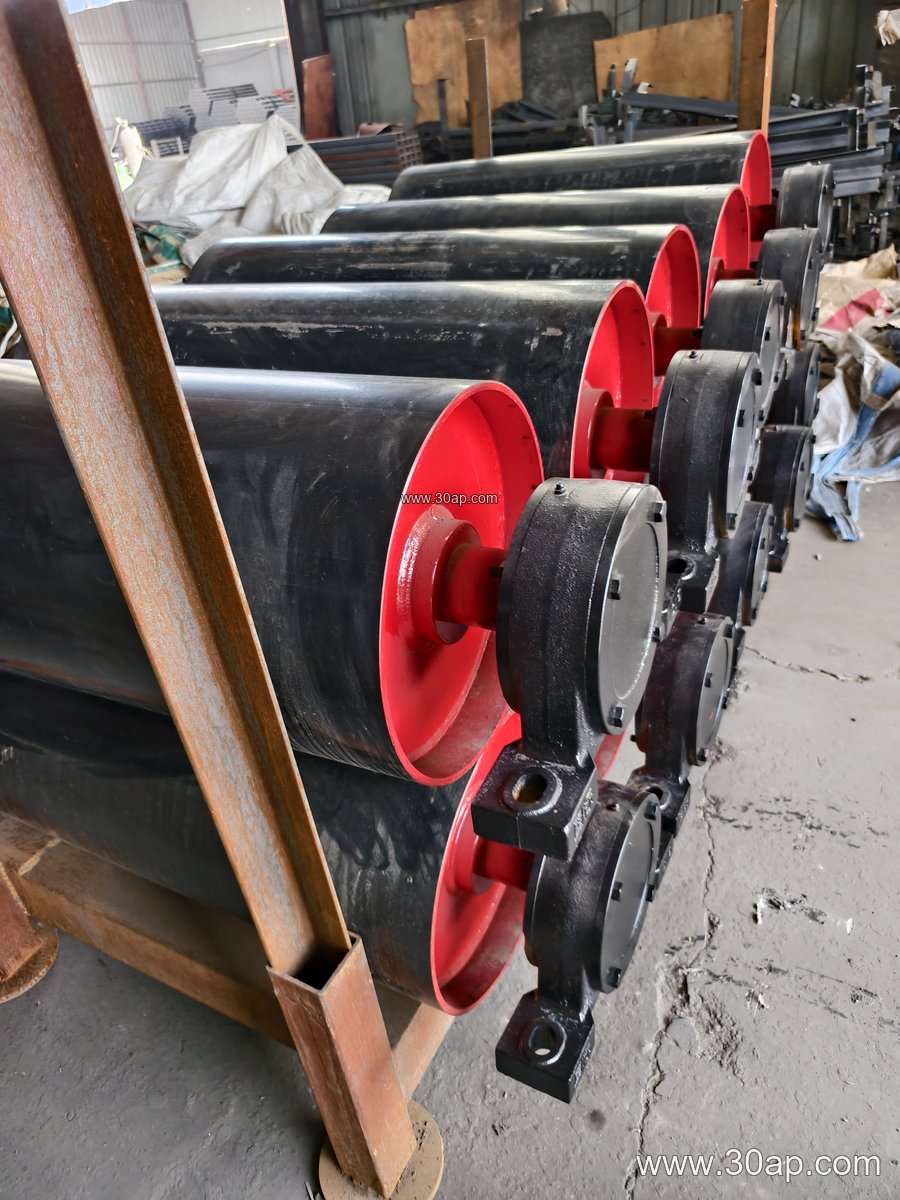
A typical bend pulley consists of a cylindrical shell, shaft, bearings, and a locking assembly. The shell is usually made from seamless steel tube or welded steel, machined for balance and concentricity. Surface options include plain finish, rubber lagging (cold-bonded or hot-vulcanized), diamond grooving, or ceramic lagging to improve traction and wear resistance. Lagging thickness commonly ranges from 8 mm to 20 mm, depending on the application and belt tension requirements.
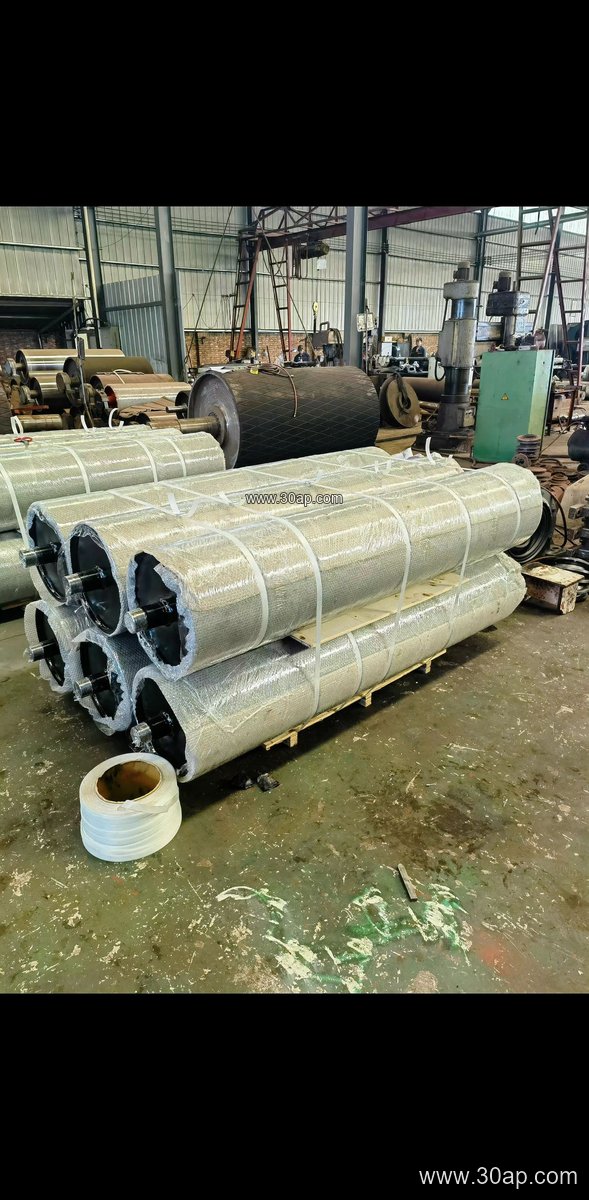
The shaft diameter is determined by torque and load calculations—not simply by belt width. Common shaft sizes include Ø50, Ø80, Ø120, and Ø160, but final selection must consider the specific conveyor design. Bearings are typically self-aligning ball or spherical roller types, housed in cast iron or steel bearing blocks that mount to the conveyor bracket.
For abrasive environments like iron ore or copper ore handling, a high abrasion resistant conveyor belt may be paired with a lagged bend pulley to reduce slip and extend service life. In coal mining, flame retardant conveyor belts are often used, and the bend pulley should be selected with compatible materials to avoid static buildup.
Where It Fits in a Conveyor System
Bend pulleys are commonly installed at the tail end (as a tail bend pulley) to redirect the belt from the return side back to the carrying side, or in the take-up section to maintain tension. They are also used as snub pulleys near the drive to increase wrap angle on the drive pulley, improving power transmission. In port conveyor systems and ship loading facilities, bend pulleys help navigate complex belt routes with minimal space.
Unlike a drive pulley, which is connected to a motor and gearbox, or a tail pulley that primarily supports the belt at the loading zone, the bend pulley is a passive component focused on direction change. It should not be confused with a tension pulley, though their roles sometimes overlap in take-up arrangements.
Typical Sizes and Configurations
Bend pulleys are available in a range of diameters and face widths to match conveyor belt widths. The table below shows common combinations, but these are reference values—actual selection depends on belt tension, speed, and space constraints.
| Belt Width (mm) | Common Pulley Diameter (mm) | Face Width (mm) |
|---|---|---|
| B500 | Ø250, Ø315 | 600 |
| B650 | Ø315, Ø400 | 750 |
| B800 | Ø400, Ø500 | 950 |
| B1000 | Ø500, Ø630 | 1150 |
| B1200 | Ø630, Ø800 | 1400 |
| B1400 | Ø800, Ø1000 | 1600 |
| B1600 | Ø1000, Ø1250 | 1800 |
Note that a given belt width can accommodate multiple pulley diameters; the final choice is governed by belt tension, allowable shaft deflection, and bearing life. For example, a B1200 conveyor might use a Ø1000 bend pulley in a high-tension application or a Ø800 unit in a more compact layout.
Selection and Maintenance Tips
When specifying a conveyor bend pulley, consider the belt type and load. For heavy-duty mining conveyor belts or steel cord conveyor belts, a larger diameter and robust lagging are often needed to reduce bending stress on the belt. In food grade or clean environments, stainless steel or hygienic lagging may be required.
Regular maintenance includes checking lagging wear, bearing lubrication, and pulley alignment. Misalignment can cause belt edge damage and premature failure of the conveyor belt. Inspecting the bend pulley during scheduled shutdowns helps avoid unplanned downtime in continuous operations such as power plant coal handling or sinter plants.
Always match the pulley to the conveyor bracket and idler roller specifications to ensure proper fit and load distribution. For expert advice on selecting the right bend pulley for your conveyor belt system, visit our site at www.example.com/conveyor-bend-pulley or contact our team.