What a Construction Industry Conveyor Belt Does
A construction industry conveyor belt moves crushed stone, sand, cement clinker, recycled concrete and excavated spoil between crushers, screens, stockpiles and loading points. On a busy quarry or demolition site the belt is the continuous link in the production chain, so its construction and compound must match the duty. A general-purpose rubber conveyor belt may cope with dry aggregate, but sharp rock, oil drips from plant, or heat from fresh clinker call for a more specific build.
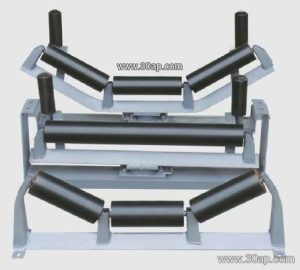
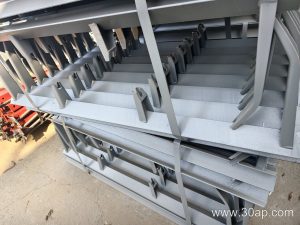
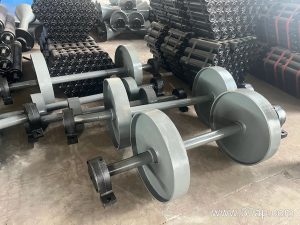
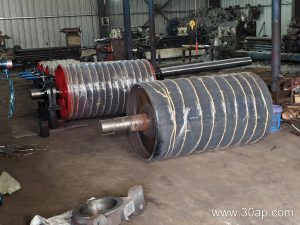
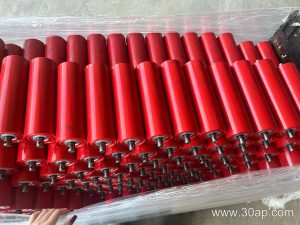
The belt itself is only one part of the line. Conveyor pulleys at the drive and tail ends, idler rollers along the carry and return sides, and conveyor brackets that hold the structure together all influence belt life. Drive, tail and bend pulleys are separate components and are not interchangeable; each has its own duty in the conveyor layout.
How the Belt Is Built
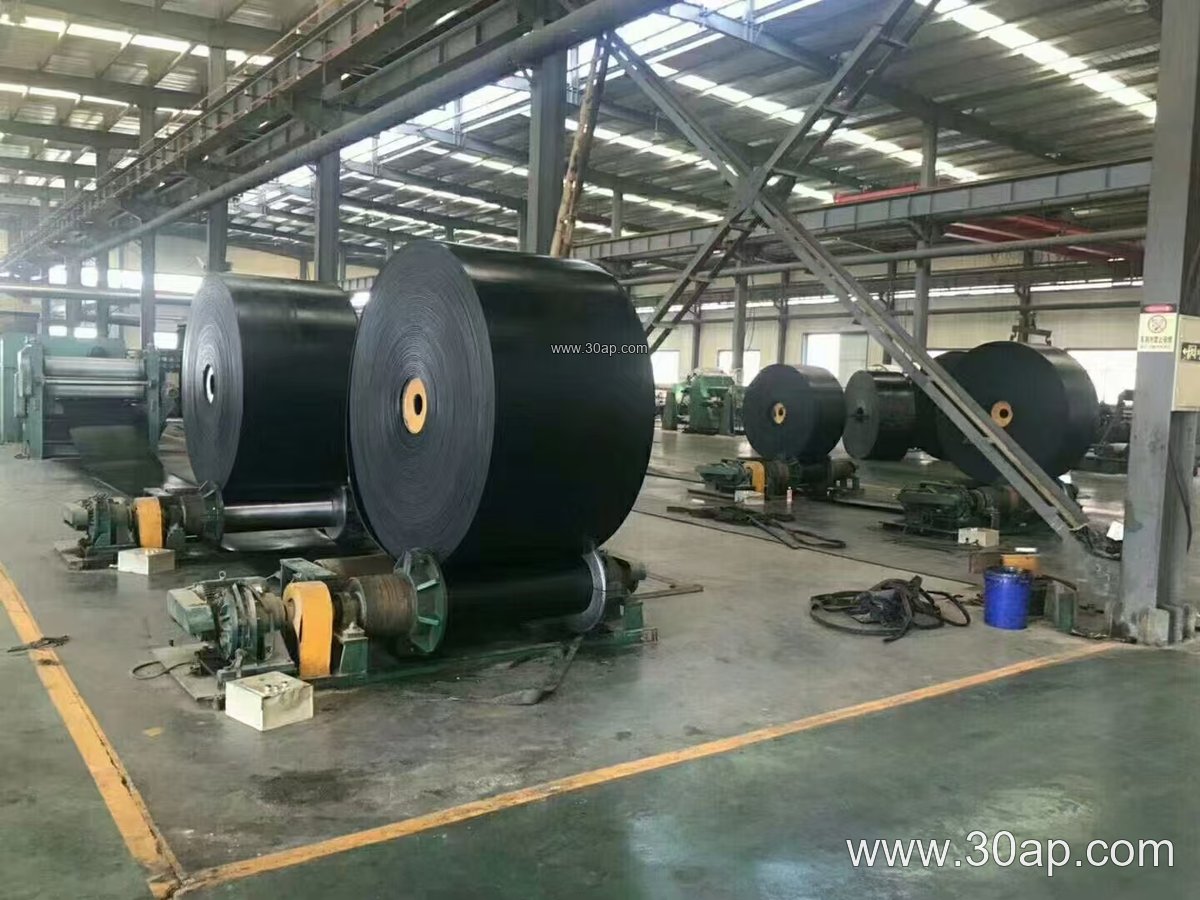
Most construction site belts use a fabric core or a steel cord core. A fabric core conveyor belt is built from multiple plies of EP or NN fabric, covered on both faces with rubber. The number of plies and the cover thickness are chosen for the load and the material being carried. A multi-ply fabric core conveyor belt with four to six plies is common on long stockyard runs where tear resistance matters.
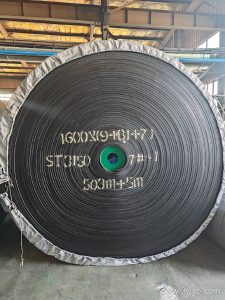
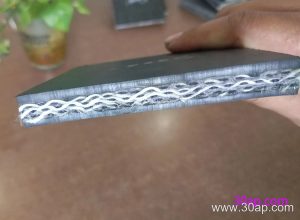
For very high tension and long centre distances, a steel cord conveyor belt uses parallel steel cables instead of fabric plies. It is heavier and needs larger pulley diameters, but it can carry more tonnage over greater distances. The table below shows common reference values; actual supply is confirmed by design.
| Parameter | Common reference |
|---|---|
| Belt width | B500, B650, B800, B1000, B1200, B1400, B1600, B1800, B2000 |
| EP strength grades | EP200, EP315, EP400, EP500, EP630, EP800, EP1000, EP1250, EP1600, EP2000 |
| Cover thickness | 3+1.5 mm, 4+2 mm, 5+2 mm, 6+2 mm, 8+3 mm |
| Fabric plies | 2 to 6 layers, depending on duty |
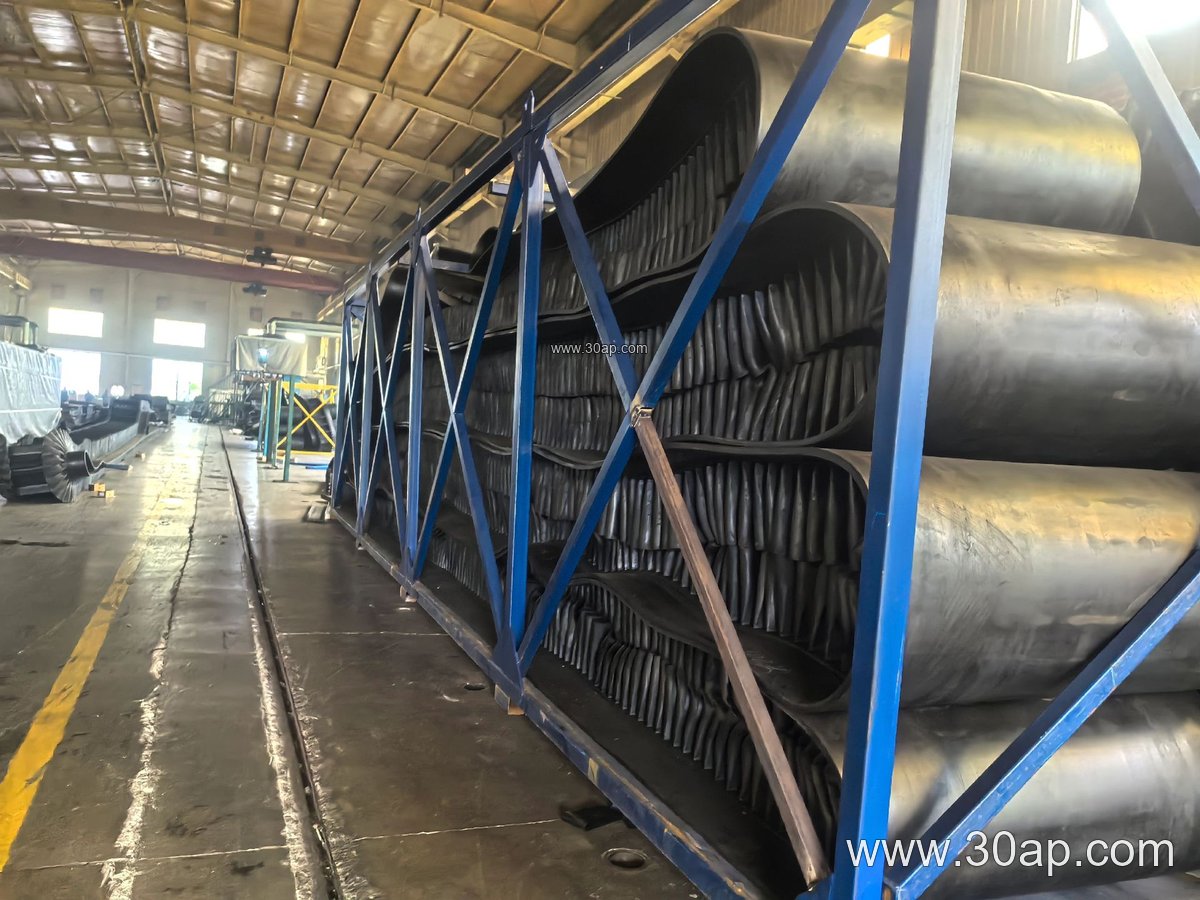
Surface forms change how the belt handles slope and spillage. A chevron conveyor belt has raised ribs to stop material rolling back on inclines. A skirted conveyor belt or a corrugated sidewall conveyor belt keeps bulk material on the belt at transfer points, while a pipe conveyor belt encloses the load to reduce dust along the route.
Matching the Compound to the Site
Construction work is abrasive, and crushed granite or basalt will wear a plain cover quickly. An abrasion resistant conveyor belt with a thicker top cover is often selected for primary and secondary crusher discharge. Where cement or lime is handled, a heat resistant conveyor belt may be needed for clinker that has not fully cooled. At asphalt plants and fuel unloading areas, an oil resistant conveyor belt protects the rubber from swelling.
Underground and enclosed tunnels in mining or civil works bring fire and static risks. A flame retardant conveyor belt and an anti-static conveyor belt are common choices for underground mining conveyors, including coal mining conveyors where regulations apply. For cold winter sites, a cold resistant conveyor belt keeps flexibility at low temperature. Buyers should state the material, lump size, temperature and whether oil or chemicals are present so the compound can be matched.
Selection and Maintenance Notes
- Check that belt width suits the tonnage and the largest lump; a narrow belt on a wide structure wastes capacity.
- Confirm the pulley and idler roller diameters are compatible with the belt thickness and cord type.
- Inspect conveyor brackets and idler rollers for alignment; misalignment shortens belt edge life.
- Keep the belt tracking straight and the skirt rubber in good condition to prevent spillage.
- Record cover wear and splice condition at regular intervals so replacement is planned, not forced.
For construction sites, a practical spare strategy is to keep one roll of the same specification and a spare splice kit on hand. That reduces downtime when a belt is damaged by tramp metal or a jammed crusher. Buyers comparing quotations should ask for the core type, ply count, cover thickness and strength grade in writing, because two belts of the same width can have very different duty ratings. The right construction industry conveyor belt is the one specified for the actual material, layout and operating hours of the plant.