What a Carbon Steel Idler Does on a Conveyor
A carbon steel idler is the rotating support that carries the conveyor belt and the material load along the length of a conveyor. It is called an idler roller in many plants, and it sits between the loading point and the discharge pulley, usually mounted in a conveyor bracket or frame. The body is made from carbon steel tube, which gives a good balance of stiffness, wear life and cost for bulk handling duty. In a quarry, a coal preparation plant or a cement line, dozens or even hundreds of these rollers keep the belt tracking smoothly and reduce the drag that the drive has to overcome.
Because the roller is a wear item, buyers should treat it as a replaceable component with a defined duty, not as a one-off purchase. The right carbon steel idler protects the belt, keeps the load centred and lowers running resistance. The wrong one may wear quickly, seize, or damage the belt edge.
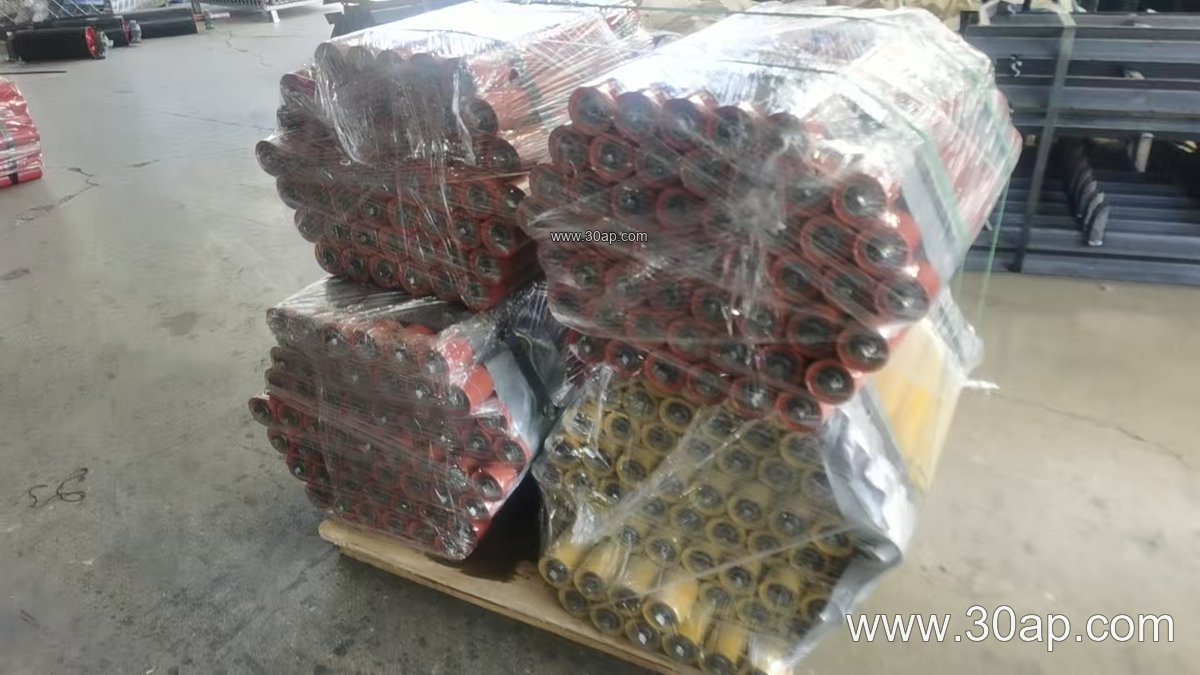
How the Roller Is Built
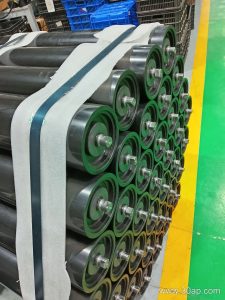
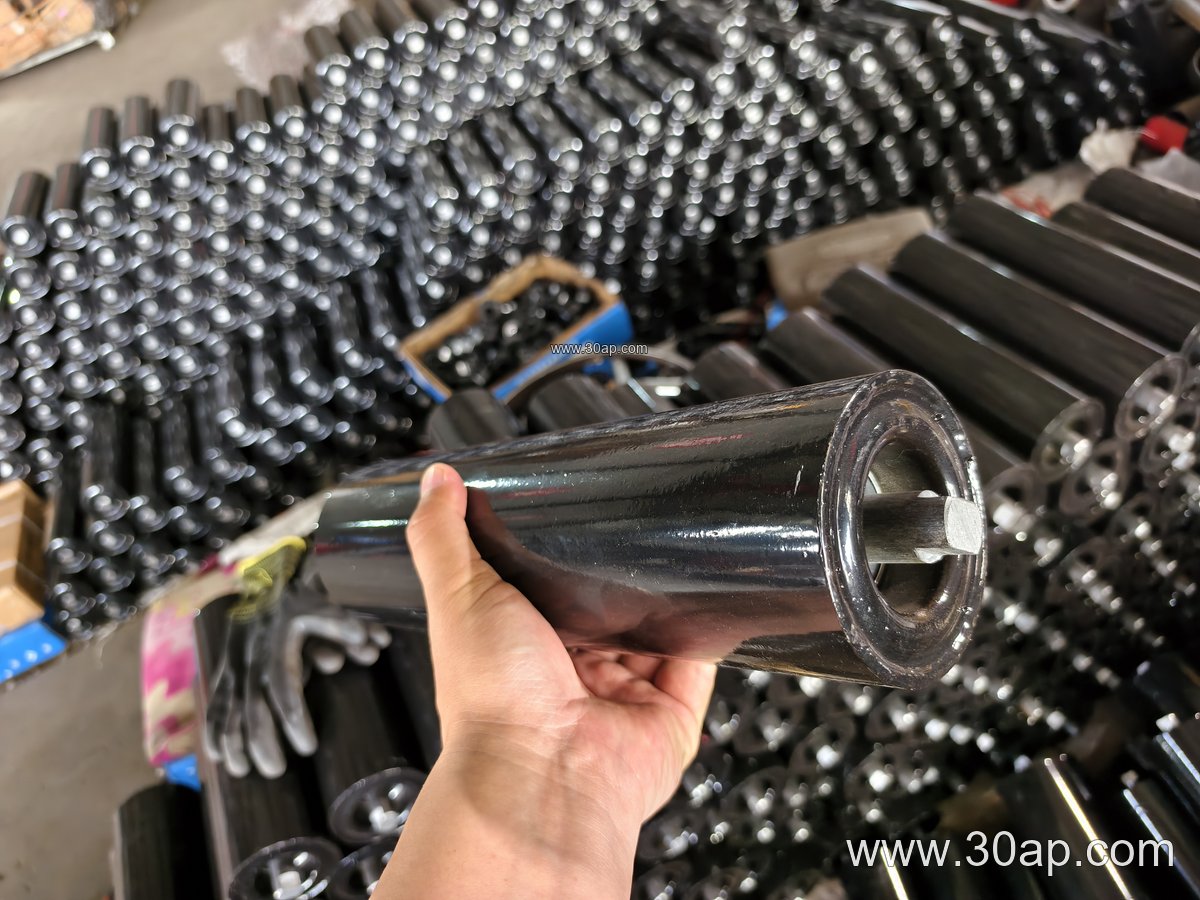
Most carbon steel idlers share the same basic construction. A steel tube forms the shell, and pressed bearing housings are welded into each end. Sealed ball bearings sit inside, usually in a deep-draw housing with a labyrinth or lip seal arrangement to keep out dust and water. A fixed shaft runs through the roller, and the ends are held by the conveyor bracket. The shell surface may be plain steel, or it may carry rubber rings, nylon or ceramic to suit the application.
Common bearing sizes include 6204, 6205, 6305, 6306, 6308 and 6310. These are matched to the shaft and load, not to a single roller diameter, so the same bearing may appear in more than one size class. Sealing quality is often the deciding factor in dusty service, and it is worth asking how the end cap and seal are arranged before placing a large order.
Common Types and Where They Sit
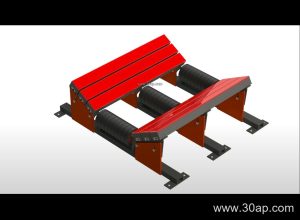
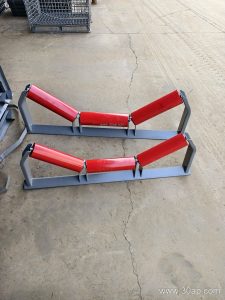
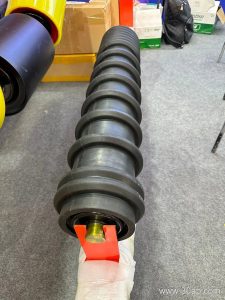
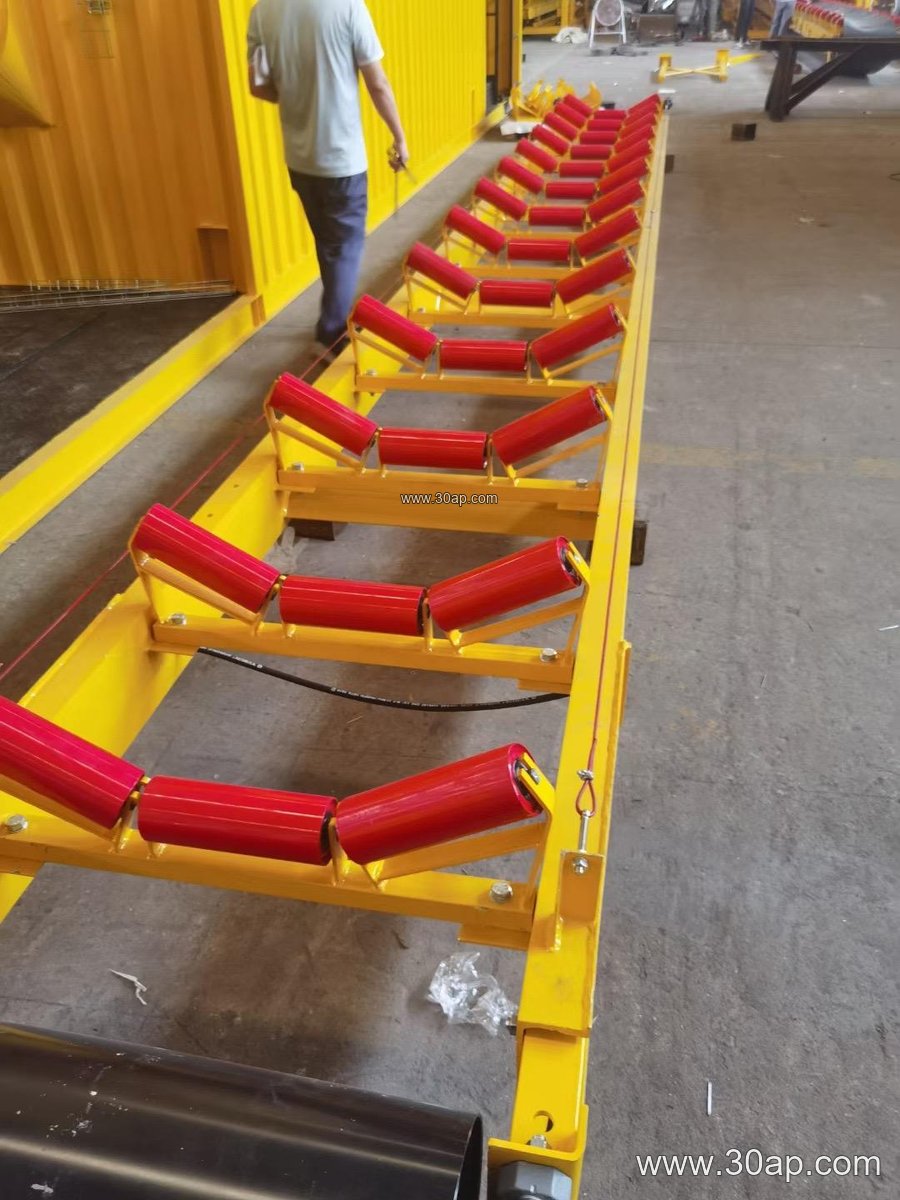
The carrying side usually uses three-roll troughing sets, with two side rolls angled to form the trough. The return side uses a flat return roller or a V-return roller to support the empty belt. Impact idlers with rubber rings are placed under the loading chute to absorb the drop energy of lump material. Self-aligning types, including friction and tapered designs, help correct belt wander on long runs. Spiral rollers are sometimes used where sticky material tends to build up on the shell.
Trough angles of 20, 30, 35 and 45 degrees are common, and a small forward tilt of about 1.5 to 2 degrees is sometimes used on training idlers. The belt width and trough angle together set the roll length, so the roller should be ordered against the actual conveyor layout rather than guessed from belt width alone.
Reference Dimensions for Early Planning
The table below gives typical roll lengths for three-roll troughing sets. These are common examples only; side rolls and centre rolls can differ, and final dimensions follow the conveyor design.
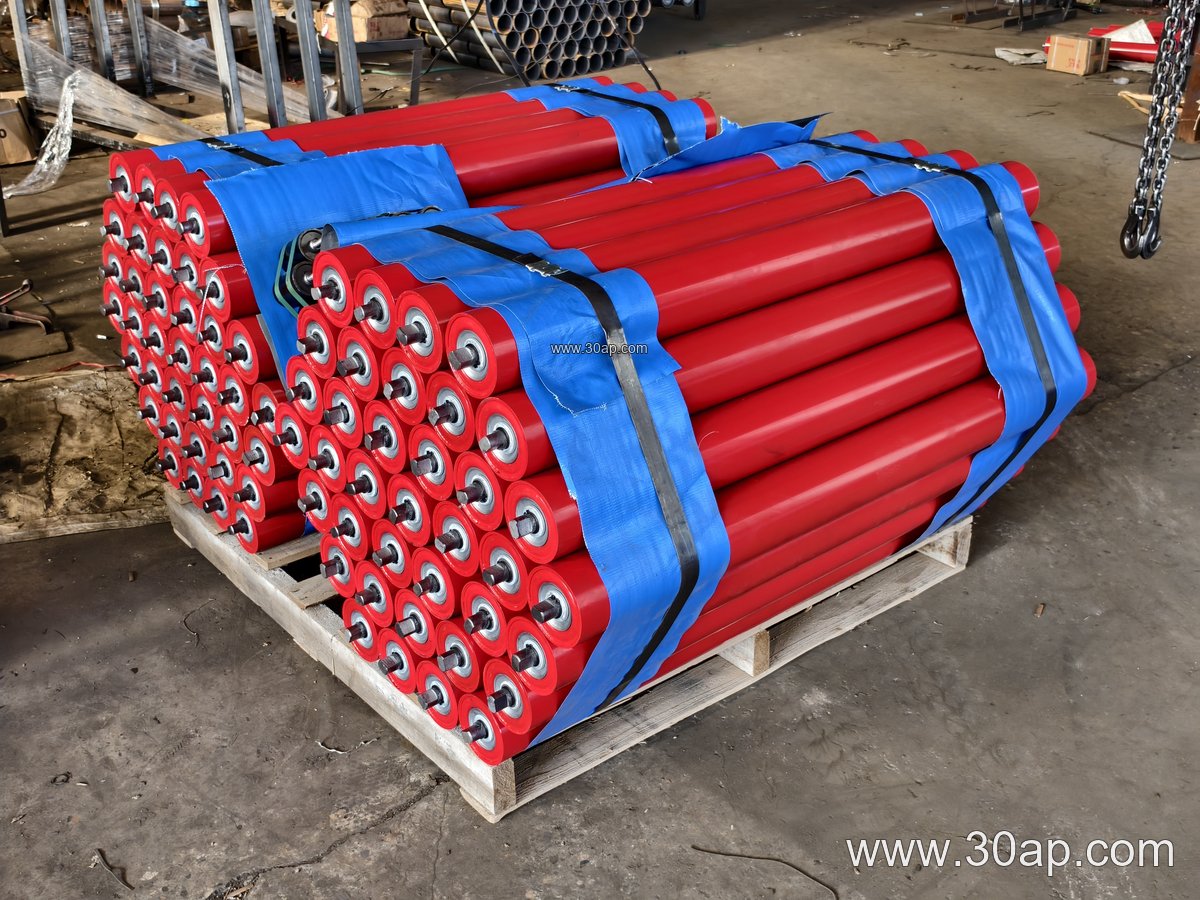
| Belt width | Typical centre roll length | Common roller diameter range |
|---|---|---|
| B500 | 200 mm | Ø63 to Ø89 |
| B650 | 250 mm | Ø76 to Ø108 |
| B800 | 315 mm | Ø89 to Ø133 |
| B1000 | 380 mm | Ø108 to Ø159 |
| B1200 | 465 mm | Ø127 to Ø178 |
| B1400 | 530 mm | Ø133 to Ø194 |
| B1600 | 600 mm | Ø159 to Ø219 |
| B1800 | 670 mm | Ø159 to Ø219 |
| B2000 | 750 mm | Ø178 to Ø219 |
Roller diameters commonly available include Ø63, Ø76, Ø89, Ø102, Ø108, Ø127, Ø133, Ø159, Ø178, Ø194 and Ø219. Larger diameters generally suit heavier loads and wider belts, but the choice also depends on belt speed, material density and the load per roller station.
Matching the Idler to the Conveyor Duty
On a quarry or aggregate line, an abrasion resistant conveyor belt and a well-sealed carbon steel idler are a sensible pair. In a coal preparation plant, flame retardant conveyor belt and anti-static properties may be required, and the idler should be specified to suit the same environment. A cement plant handling hot clinker may need heat resistant conveyor belt together with idlers that can tolerate elevated temperature. Port and ship loading conveyors often use wide belts, so the roller length and bearing capacity should be checked against the actual belt tension and load.
The belt itself matters too. An EP conveyor belt, an NN conveyor belt or a steel cord conveyor belt each has a different tension and stiffness profile, and that affects the load seen by the roller. A heavy-duty mining conveyor belt on a long overland run will call for a stronger roller and a more frequent support spacing than a short transfer conveyor. Where a chevron conveyor belt or a corrugated sidewall conveyor belt is used, check that the roller and bracket arrangement clears the cleats and sidewalls.
Buyer Checklist
- Confirm belt width, trough angle and the actual roll length required.
- State the roller diameter and bearing size, and ask about the seal design.
- Describe the material: lump size, moisture, temperature and dust level.
- Check the shaft end fixing and the conveyor bracket dimensions.
- For impact zones, specify rubber ring buffer rollers rather than standard carrying rollers.
- Ask how the roller is balanced and tested before delivery.
A carbon steel idler is a simple part, but it carries a large share of the conveyor’s reliability. Getting the roller diameter, length, seal and bearing right at the order stage is usually cheaper than replacing failed rollers during a shutdown. For more on matching rollers with conveyor belt and conveyor pulley choices, review the full conveyor range before specifying each run.