What a Self-Aligning Idler Bracket Does
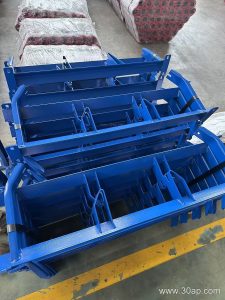
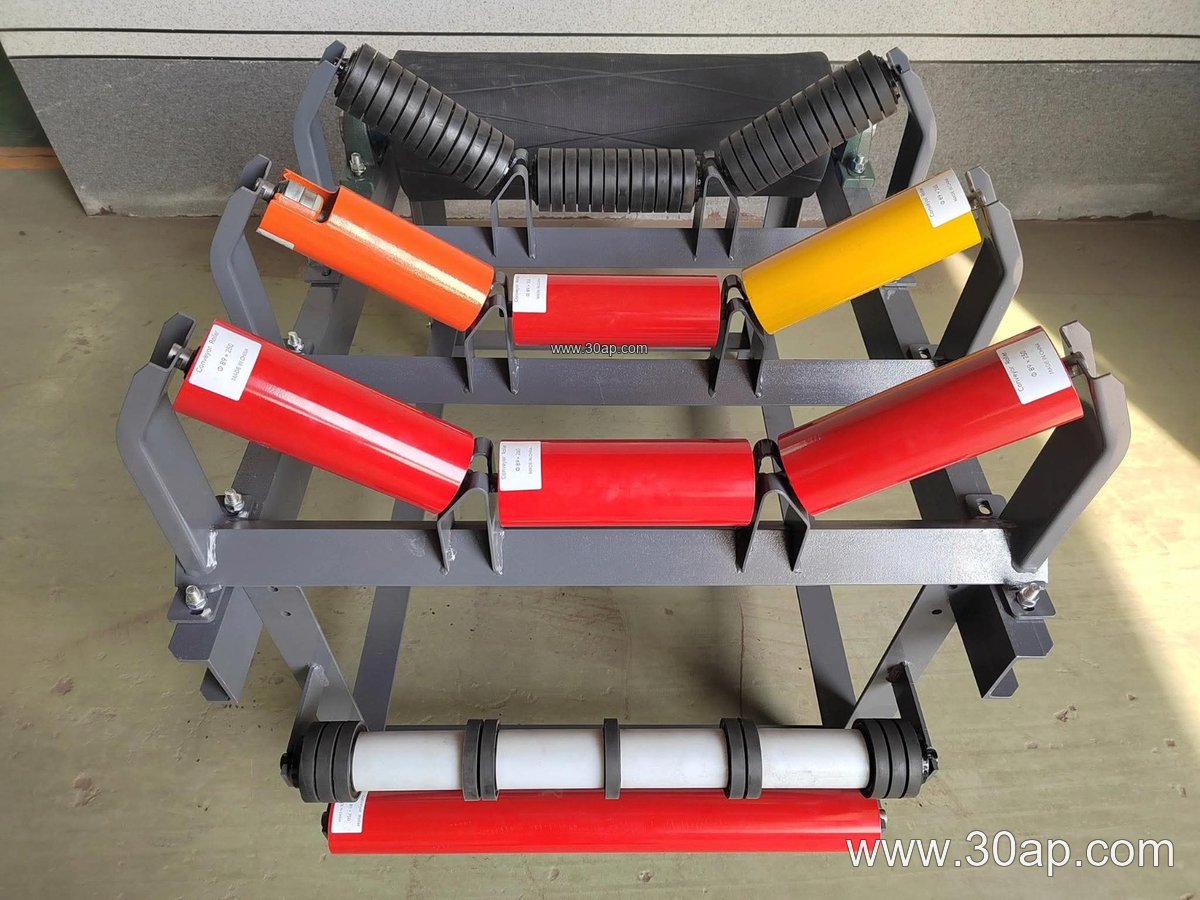
A self-aligning idler bracket, also called a self-aligning idler frame, is the mounting component that holds training idlers and lets them pivot to correct belt misalignment. In a quarry, cement plant, or coal handling system, the bracket works with the conveyor belt to keep the load centered without constant manual adjustment. Unlike fixed troughing brackets, this bracket is designed with a pivot point or linkage that allows the idler assembly to swing slightly when the belt drifts.
How the Bracket Is Built
Most self-aligning idler brackets are fabricated from angle steel, channel steel, or folded steel plate. The frame includes a central pivot shaft, mounting pads for the idler roller, and often a vertical spindle that connects to the conveyor stringer. Some designs use a pair of linked brackets so that two idlers move together. The bracket must be strong enough to resist the side loads created during belt tracking, especially on heavy-duty mining conveyor belts carrying ore or aggregate.
- Pivot bushing or bearing for smooth rotation
- Welded or bolted mounting flanges
- Adjustment slots for fine-tuning alignment
- Corrosion-resistant finish for washdown or underground conditions
The bracket is usually paired with a return idler or a training idler on the carrying side. It should not be confused with a fixed troughing bracket or a transition bracket, which serve different positions on the conveyor.
Where It Fits in the Conveyor System
Self-aligning brackets are common in bulk material handling where belt wander causes spillage or edge damage. You will see them on:
- Aggregate conveyor belts in sand and gravel plants
- Coal mining conveyor belts and underground mining conveyor belts
- Cement plant conveyor belts handling clinker and raw meal
- Power plant coal conveyor belts and port ship loading conveyor belts
The bracket works alongside the conveyor pulley, idler roller, and conveyor bracket system. On a 1200mm wide conveyor belt with a 35-degree trough angle, the self-aligning bracket helps maintain proper belt contact without over-tensioning.
Installation and Adjustment Notes
Correct installation starts with squaring the bracket to the conveyor centerline. The pivot should allow the idler to move freely but without excessive play. For a B800 conveyor belt with 30-degree troughing and Ø108 idlers, the bracket mounting hole spacing is determined by the stringer width. Do not assume a fixed hole pattern across all belt widths. The bracket is typically set so the training idler leads the belt slightly, encouraging self-correction.
When used with a chevron conveyor belt or a corrugated sidewall conveyor belt, the bracket must clear the raised profiles. In such cases, a plain return idler on a self-aligning bracket may be preferred over a troughing set.
Choosing the Right Bracket for Your Belt
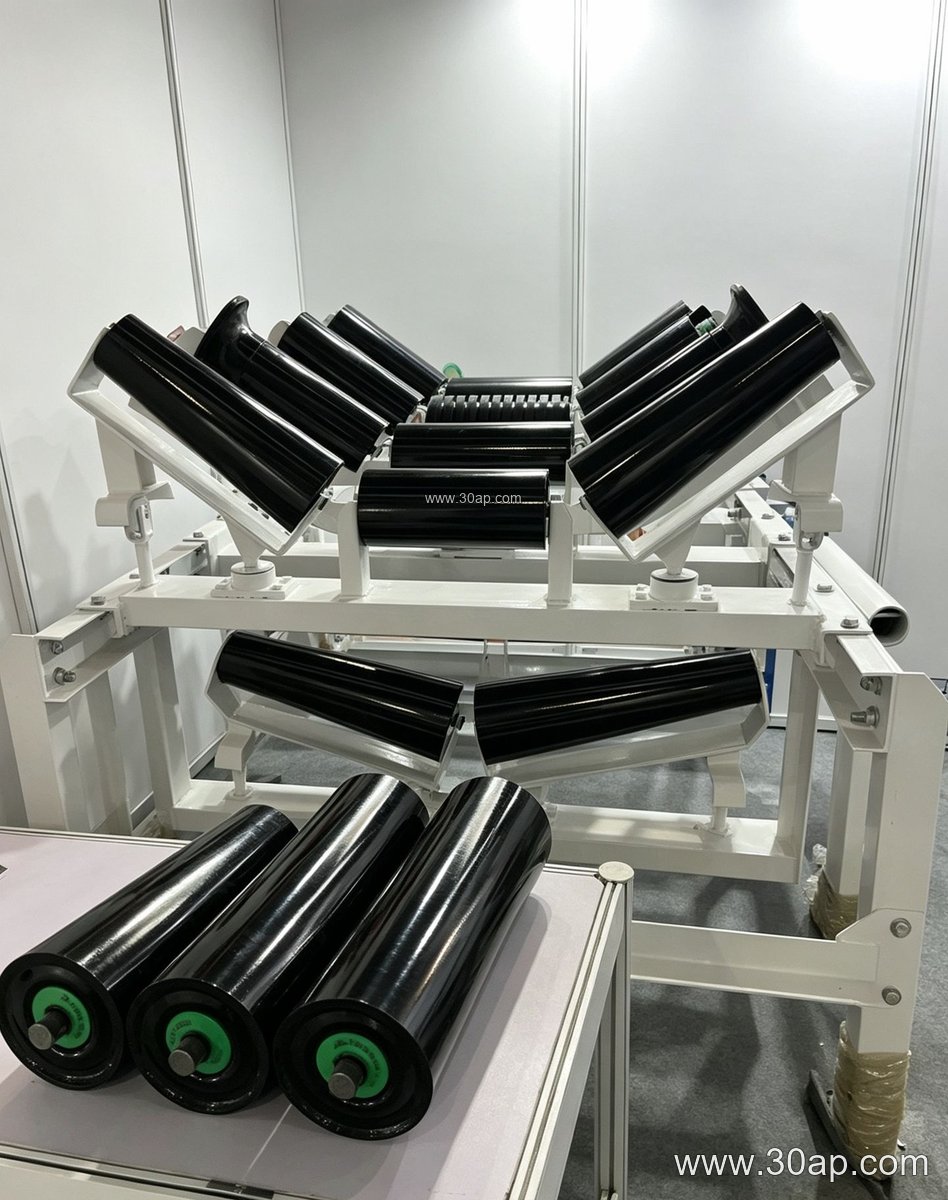
Selection depends on belt width, idler diameter, trough angle, and the load carried. Common belt widths include B500, B650, B800, B1000, B1200, B1400, B1600, B1800, B2000, B2200. Trough angles are usually 20, 30, 35, or 45 degrees. Idler roller diameters often range from Ø89 to Ø194. A self-aligning idler bracket for a B1000 belt with 35-degree trough and Ø133 idler is not the same as one for a B650 belt with 20-degree trough and Ø89 idler.
| Belt Width | Common Trough Angle | Typical Idler Diameter |
|---|---|---|
| B500 | 20° – 30° | Ø89 |
| B650 | 30° – 35° | Ø89 – Ø108 |
| B800 | 30° – 35° | Ø108 – Ø133 |
| B1000 | 35° – 45° | Ø133 – Ø159 |
| B1200 | 35° – 45° | Ø133 – Ø159 |
| B1400 | 35° – 45° | Ø159 – Ø194 |
These are reference ranges, not fixed rules. The actual bracket and idler combination should be confirmed by the conveyor designer. For abrasive materials, an abrasion resistant conveyor belt may require a heavier bracket to handle increased side load. In underground coal mining, a flame retardant conveyor belt is often used, and the bracket should be compatible with the fire resistant conveyor belt specification.
Maintenance and Buyer Checklist
Check pivot points for wear and lubrication. A worn bushing can let the bracket wobble, reducing tracking effectiveness. Inspect welds for cracks, especially on high-tension belts like steel cord conveyor belt or EP conveyor belt with high strength. Confirm that the bracket material matches the environment: galvanized for washdown, painted for general bulk handling.
Ask for the bracket drawing with mounting dimensions, idler spacing, and allowable belt width range. Verify that the bracket is designed for the specific trough angle and idler diameter, not a one-size-fits-all frame. For a 1500mm wide conveyor belt or an extra-wide conveyor belt, the bracket may need additional reinforcement. Keep spare pivot pins and bushings on hand for critical circuits such as a cement plant conveyor belt or a ship loading conveyor belt.