What a Tapered Self-Aligning Idler Does
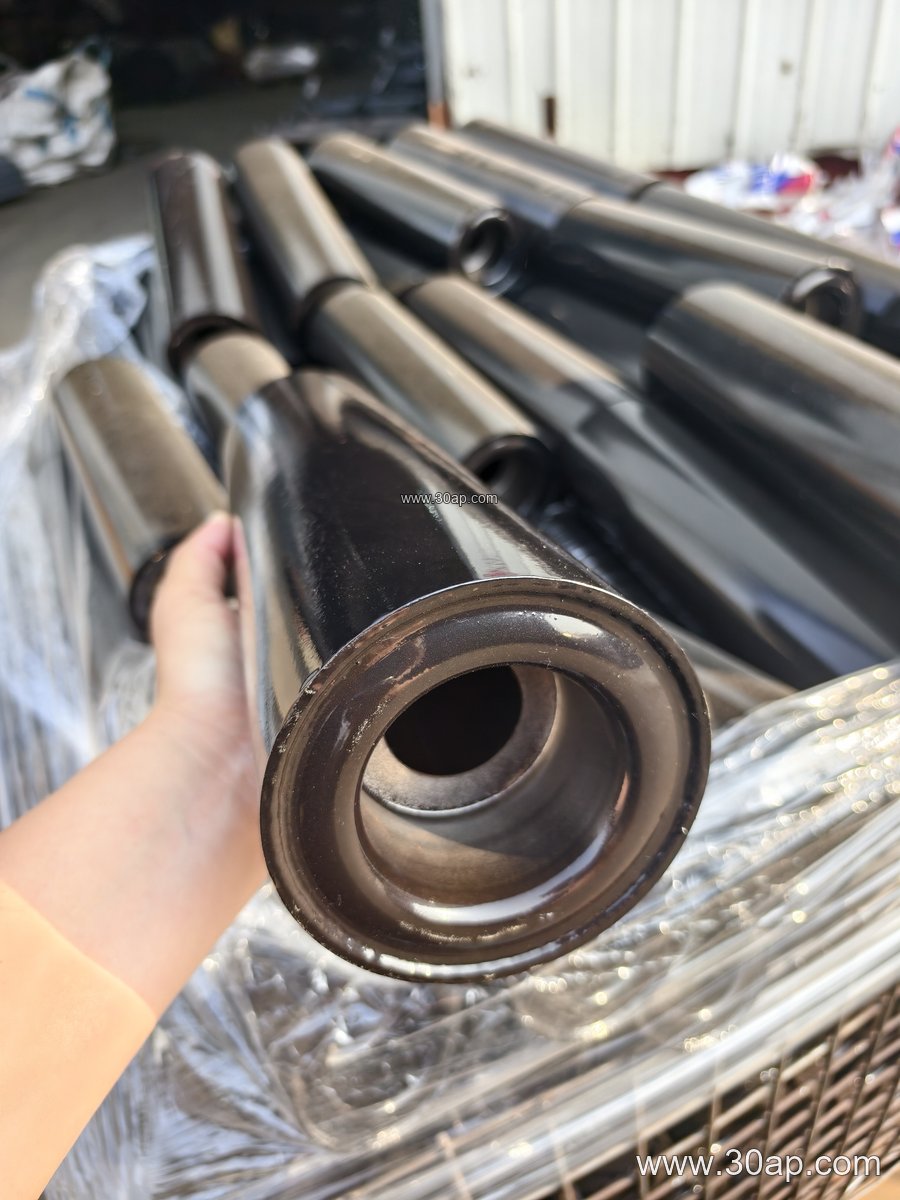
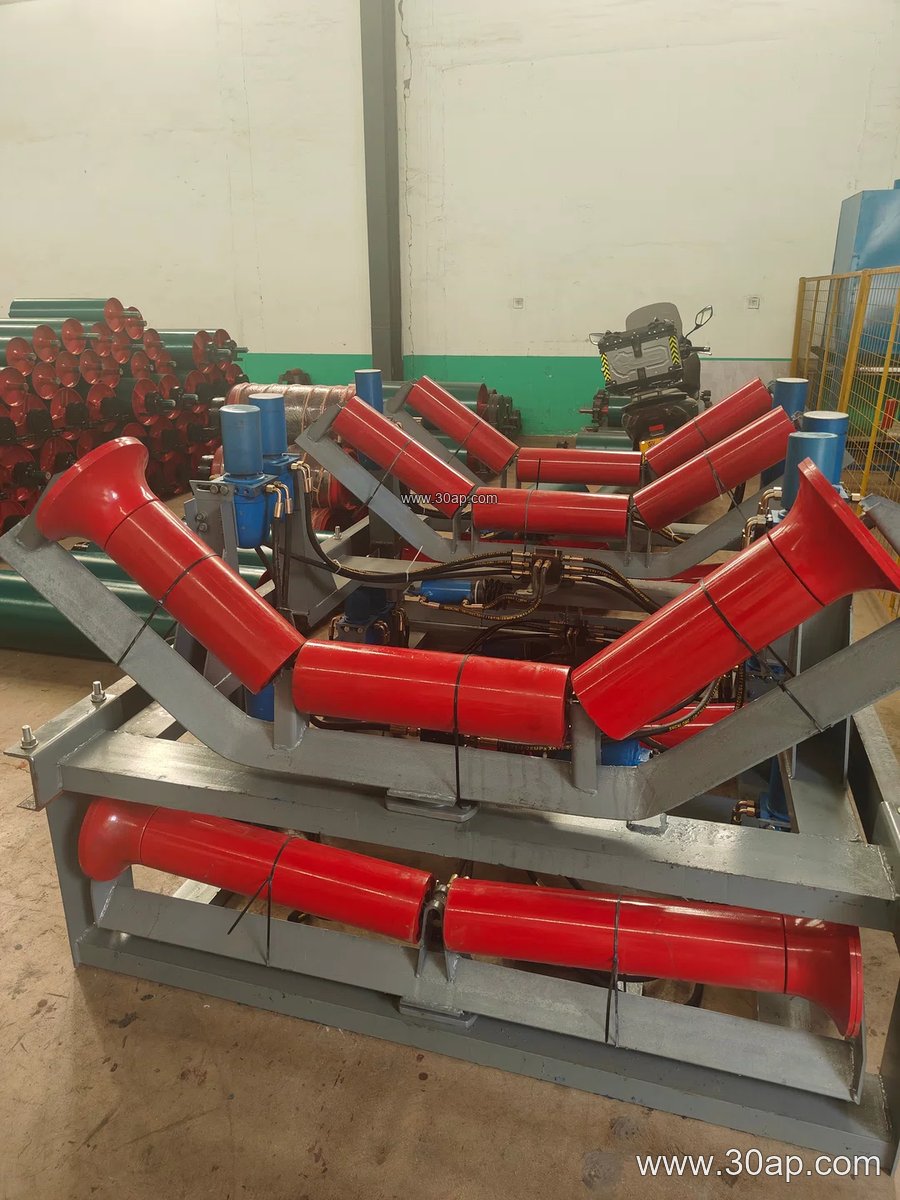
A tapered self-aligning idler is a training idler used on belt conveyors to keep the conveyor belt centered. Its rollers are tapered toward the ends, so the belt contacts a slightly larger diameter near the middle and a smaller diameter toward the edges. When the belt starts to drift, the tapered shape creates a gentle steering effect that nudges it back toward the center line. This idler is also called a conical self-aligning idler, and it is typically mounted on the carry side or return side where belt misalignment is a recurring problem. Unlike a drive pulley, tail pulley, or bend pulley, which transmit power or change belt direction, the tapered self-aligning idler is a tracking component that supports the belt and corrects its path.
How It Is Built
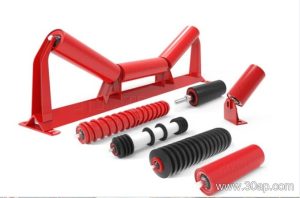
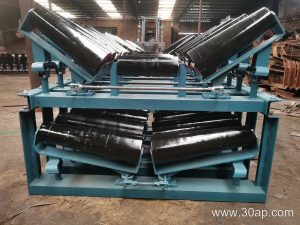
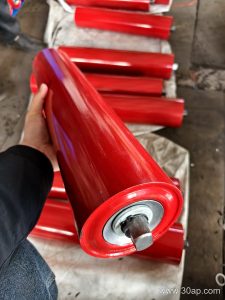
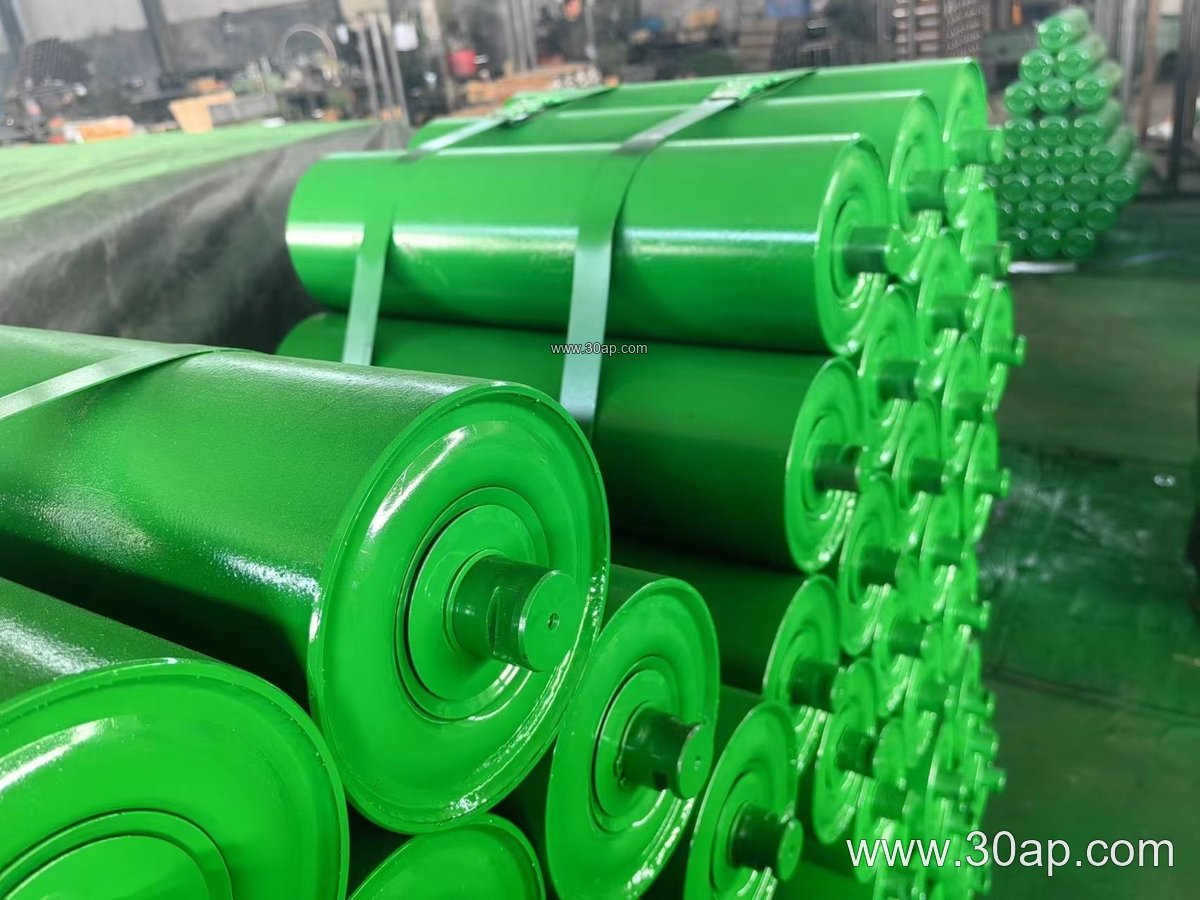
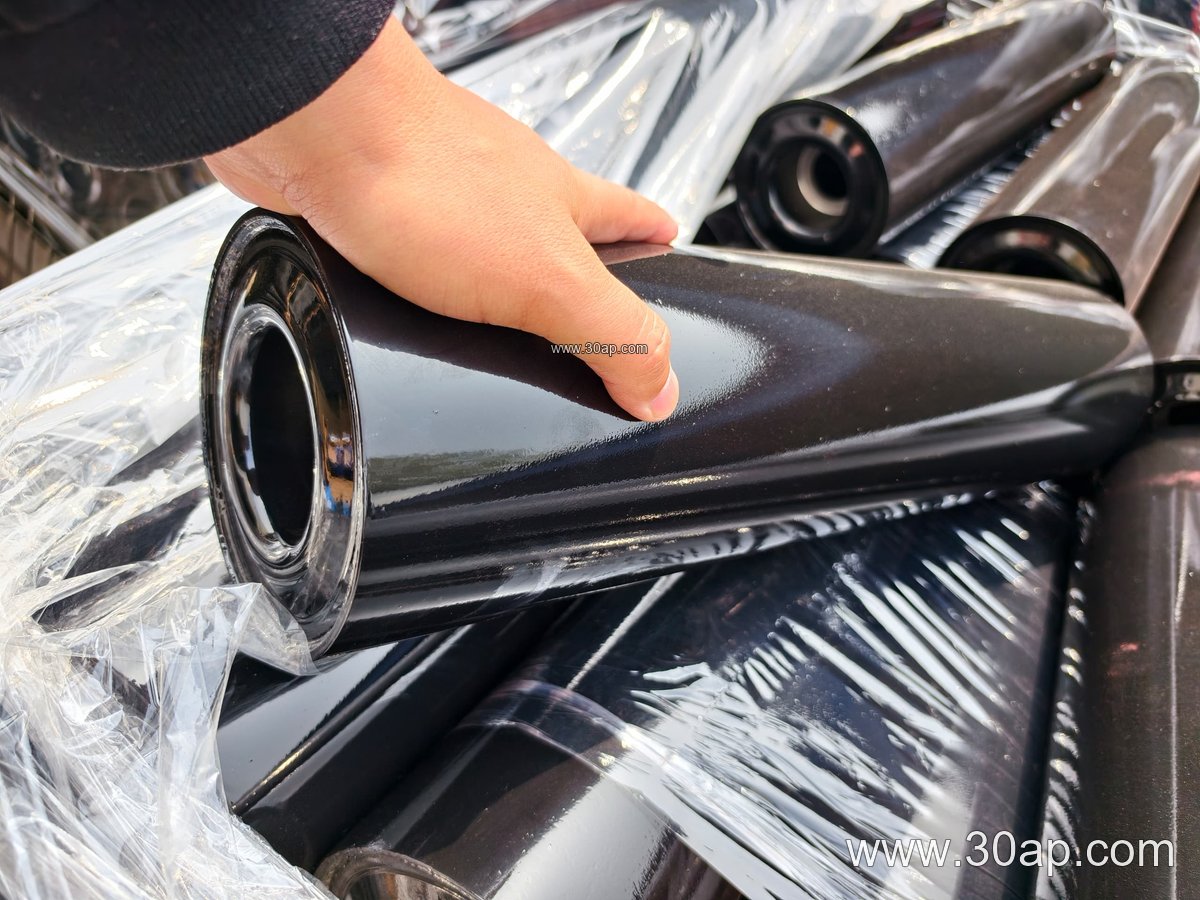
The idler usually consists of two or three tapered rollers mounted on a common shaft or frame, with self-aligning bearings that allow the roller assembly to pivot slightly. The roller shell may be steel, nylon, or covered with rubber rings for grip and wear protection. Common roller diameters include Ø89, Ø108, Ø127, and Ø133 mm, though the exact size depends on belt width and load. Bearings such as 6204, 6205, 6305, and 6306 are often used, but a given bearing is not tied to a single roller diameter. The taper angle and roller length are matched to the conveyor belt width and trough configuration. For example, a three-roll troughing set on a B800 belt may use rollers around 315 mm long, while a B1200 belt may use rollers around 465 mm long. These are typical references, not fixed rules.
Where It Fits on the Conveyor
Tapered self-aligning idlers are common in bulk material handling where belts are long and prone to wander. In a quarry or aggregate line, they help keep a quarry conveyor belt centered after a crusher discharge. In a coal mining operation, they are used on underground coal mining conveyor belt systems where space is tight and belt tracking is critical. Cement plants, power plant coal yards, and port loading facilities also use them on bulk material conveyor belt lines. They are not a substitute for a drive pulley or a bend pulley; those components serve different functions. A tapered self-aligning idler is a support and training device, and it works alongside standard carrying idlers, return idlers, and conveyor brackets.
Selection and Sizing Notes
Buyers should match the idler to belt width, trough angle, and the expected load. Common belt widths range from B400 to B2400, and trough angles of 20, 30, 35, and 45 degrees are available. The idler roller diameter should be chosen according to the belt speed and material weight, not by belt width alone. The table below shows typical reference values, but final selection should be confirmed with the conveyor design.
| Reference Item | Typical Range |
|---|---|
| Roller diameter | Ø63 to Ø219 mm |
| Belt width | B400 to B2400 |
| Trough angle | 20, 30, 35, 45 degrees |
| Roller length (three-roll example) | About 200 mm for B500, 380 mm for B1000, 600 mm for B1600 |
| Bearing examples | 6204, 6205, 6305, 6306, 6308, 6310 |
These values are for general guidance. A conveyor designed for a heavy-duty mining conveyor belt may need larger rollers and stronger bearings than a light aggregate line. Also, a tapered self-aligning idler should not be confused with a friction self-aligning idler or a spiral idler; each has a different training method.
Maintenance and Buyer Checklist
Check the idler regularly for roller rotation, bearing noise, and taper wear. A worn taper reduces the steering effect, and a seized bearing can damage the belt edge. Keep the idler frame free of material buildup, especially in dusty cement or coal handling. When replacing, confirm the roller diameter, length, bearing type, and mounting bracket pattern. The idler should pivot freely but not be loose. Pair it with the correct conveyor pulley and conveyor bracket to avoid misalignment. For abrasive ore or iron ore conveyor belt service, consider rubber-covered rollers to improve grip and reduce shell wear. For food or clean applications, a smooth steel or nylon roller may be more suitable. Always review the conveyor layout and belt tension before adding or moving a training idler.