What an Impact Resistant Idler Does
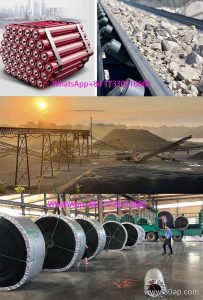
An impact resistant idler is the cushioning roller placed under a conveyor belt where material is loaded or transferred. Instead of a rigid steel shell taking the full force of falling rock, ore, clinker or aggregate, this idler absorbs and spreads the shock. In a quarry, a coal preparation plant or a cement plant, the loading point is where belts fail fastest, and the impact resistant idler is the component that buys time for the rest of the system.
The same product is also called a buffer idler, impact idler roller or shock-absorbing idler. These are equivalent names for one item; it is not a return roller, a troughing idler or a self-aligning idler, although it often sits in the same frame line.
How the Roller Is Built
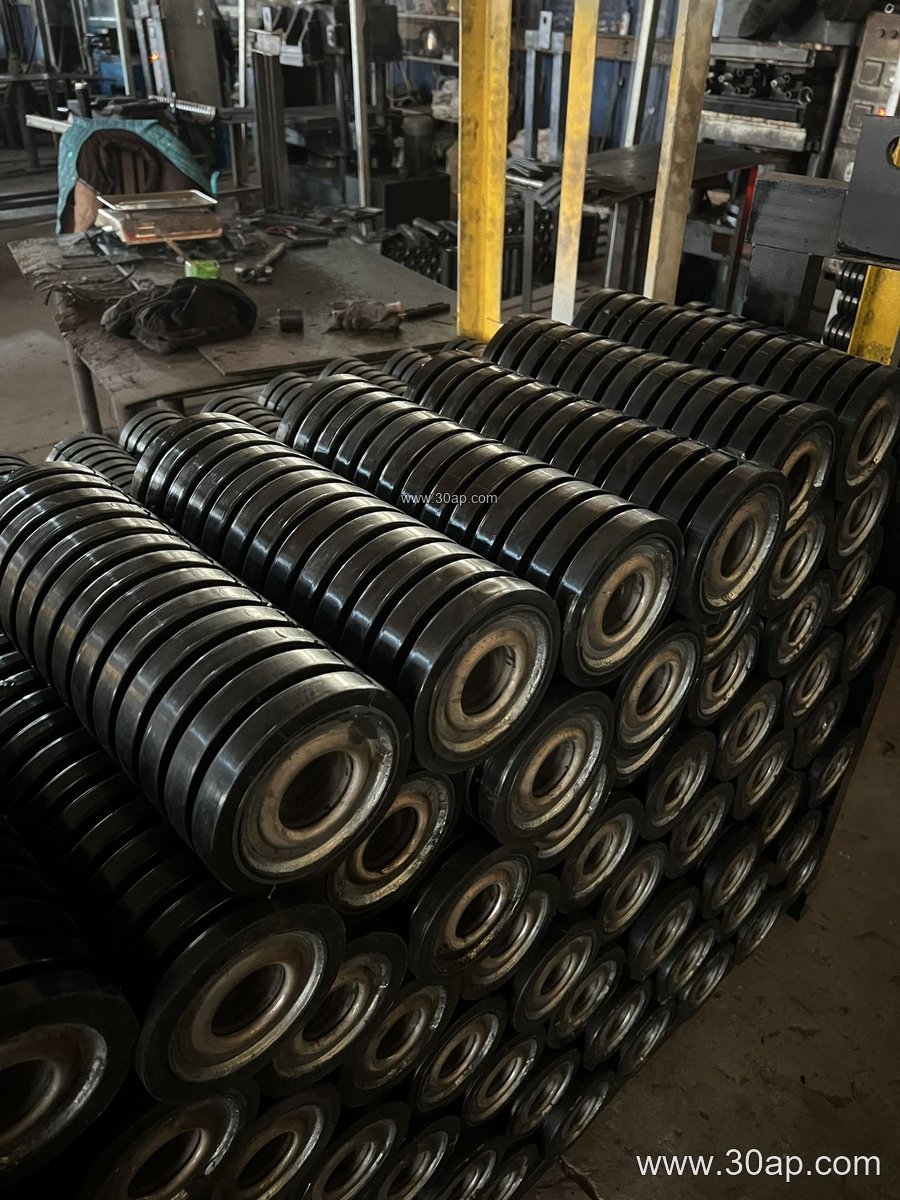
The distinguishing feature is the surface. A steel tube body carries a stack of rubber rings, discs or a rubber-covered sleeve, and these rings deflect under load instead of passing the blow straight into the bearing. The rubber also grips the belt briefly on contact, which reduces bounce and spillage.
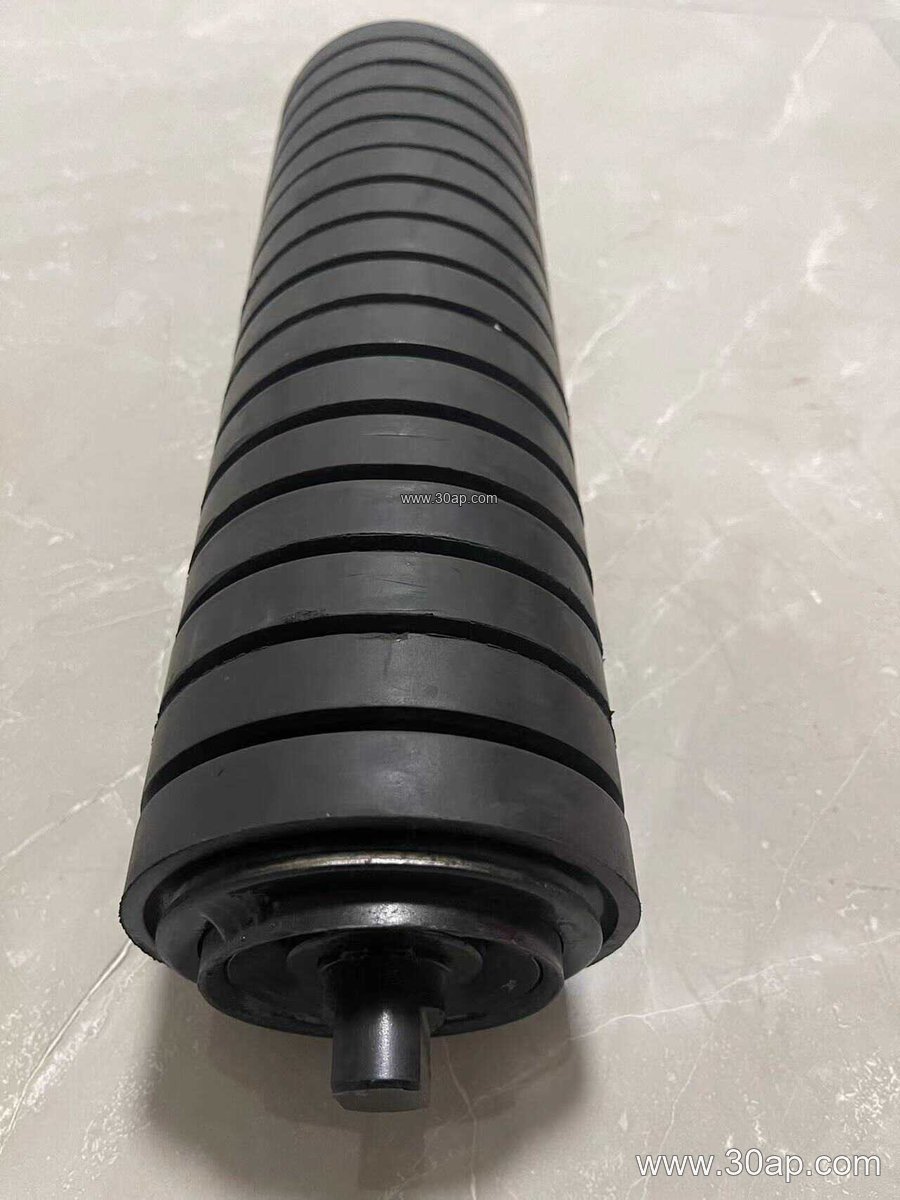
- Tube body in steel, often thicker than a standard roller shell
- Rubber rings or a rubber sleeve, sometimes with a wear-resistant compound
- Sealed bearing housings, commonly 6205, 6305, 6306 or 6308 depending on shaft and load
- Fixed or spring-mounted shaft ends, with brackets that allow some vertical travel
Bearing size follows the shaft and load design, not the belt width alone. A wide belt does not automatically dictate a particular bearing, and a given bearing number can serve several roller diameters.
Where It Fits on the Conveyor
The idler is normally installed in the first few metres after the loading chute, in a group of three or more, often as part of a three-roll troughing set with a 30 or 35 degree trough angle. In a crusher discharge line or a belt feeding a screen deck, the fall height and lump size decide how many impact idlers are needed. A short transition zone of two or three sets is common; long loading zones may need more.
Typical service locations include:
- Primary crushing stations at a limestone or iron ore mine
- Transfer towers on a coal mining conveyor belt
- Clinker and raw meal feed points in a cement plant
- Coal yard and bunker feeding in a power plant
- Aggregate and sand making plant transfer points
Downstream, the belt usually runs on standard troughing idlers; the impact type is a local reinforcement, not a replacement for the carrying idlers along the whole line.
Common Sizes and Matching the Belt
Roller diameter and length are selected from the belt width, trough angle and frame. The table below shows typical reference values, not fixed pairings.
| Belt width | Common roller diameter | Typical roller length, three-roll set |
|---|---|---|
| B500 | Ø89, Ø102 | about 200 mm |
| B650 | Ø89, Ø108 | about 250 mm |
| B800 | Ø108, Ø133 | about 315 mm |
| B1000 | Ø108, Ø133, Ø159 | about 380 mm |
| B1200 | Ø133, Ø159 | about 465 mm |
| B1400 | Ø159, Ø178 | about 530 mm |
| B1600 | Ø159, Ø178, Ø194 | about 600 mm |
Side rollers and centre rollers can differ in length, and the final figures are confirmed by the frame drawing. Trough angles of 20, 30, 35 and 45 degrees all appear in practice; a steeper trough holds a deeper material bed but raises the load on the outer rollers.
Buyer Checklist
- State the belt width, trough angle and frame hole spacing, not only the roller diameter.
- Describe the material: lump size, drop height, moisture and temperature. Hot clinker or sinter needs a heat-tolerant rubber compound.
- Check sealing and bearing class for dusty, wet or wash-down conditions.
- Confirm the mounting: fixed brackets or resilient mounts, and whether the existing conveyor bracket can be reused.
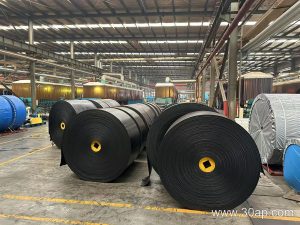
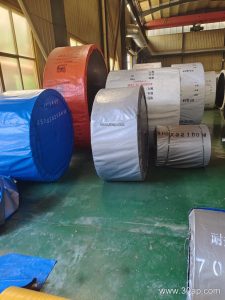
- Match the belt itself. An abrasion resistant conveyor belt or a heavy-duty mining conveyor belt tolerates impact better, but a worn or badly spliced belt still damages rollers.
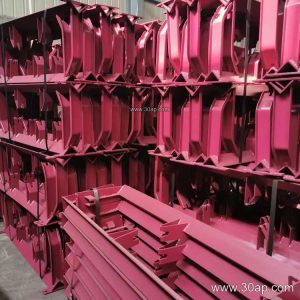
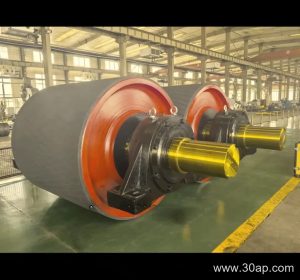
For the full conveyor, the impact idler works alongside the conveyor pulley, the idler roller train and the conveyor bracket. A belt specified as an EP conveyor belt, steel cord conveyor belt or flame retardant conveyor belt all benefit from cushioning at the load point, and the choice of belt construction should be made together with the idler layout.
Installation and Maintenance Notes
Set the impact idlers so the rubber rings sit slightly higher than the adjacent carrying rollers, allowing the belt to settle onto them under load. Keep the loading chute centred and avoid material falling directly onto the belt edge. Inspect rings for cuts, hardening or missing segments, and check that the roller still turns freely; a seized impact idler quickly wears a flat spot into the belt cover.
Replace rings in sets rather than one at a time where possible, and re-check alignment after any chute repair. On a quarry conveyor belt or a coal mining conveyor belt, this small maintenance routine prevents the loading zone from becoming the weakest link. For matching belt and roller selection, see https://www.jiuhengconveyor.com/impact-resistant-idler and the wider range of conveyor components.