What the Ø159 Conveyor Idler Is
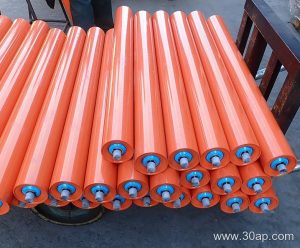
The Ø159 conveyor idler is a carrying or return roller with a nominal shell diameter of 159 mm. It sits in the idler frame under or over the conveyor belt and lets the belt travel with low friction while holding its trough shape. Because this diameter is one of the larger roller sizes in common use, it is often chosen for wider belts and heavier bulk streams where the belt and material load need more support between frames.
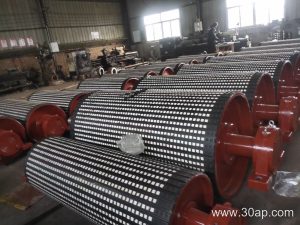
In day-to-day plant language the same item may be called a 159 mm idler roller, a Ø159 carrying roller, or simply a 159 diameter troughing idler. These are equivalent names for the same product. A drive pulley, tail pulley or bend pulley is a different component with a different job and is not a substitute for an idler.
How It Is Built
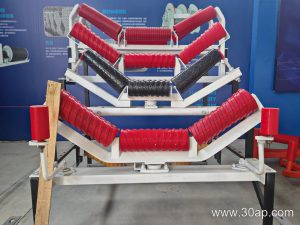
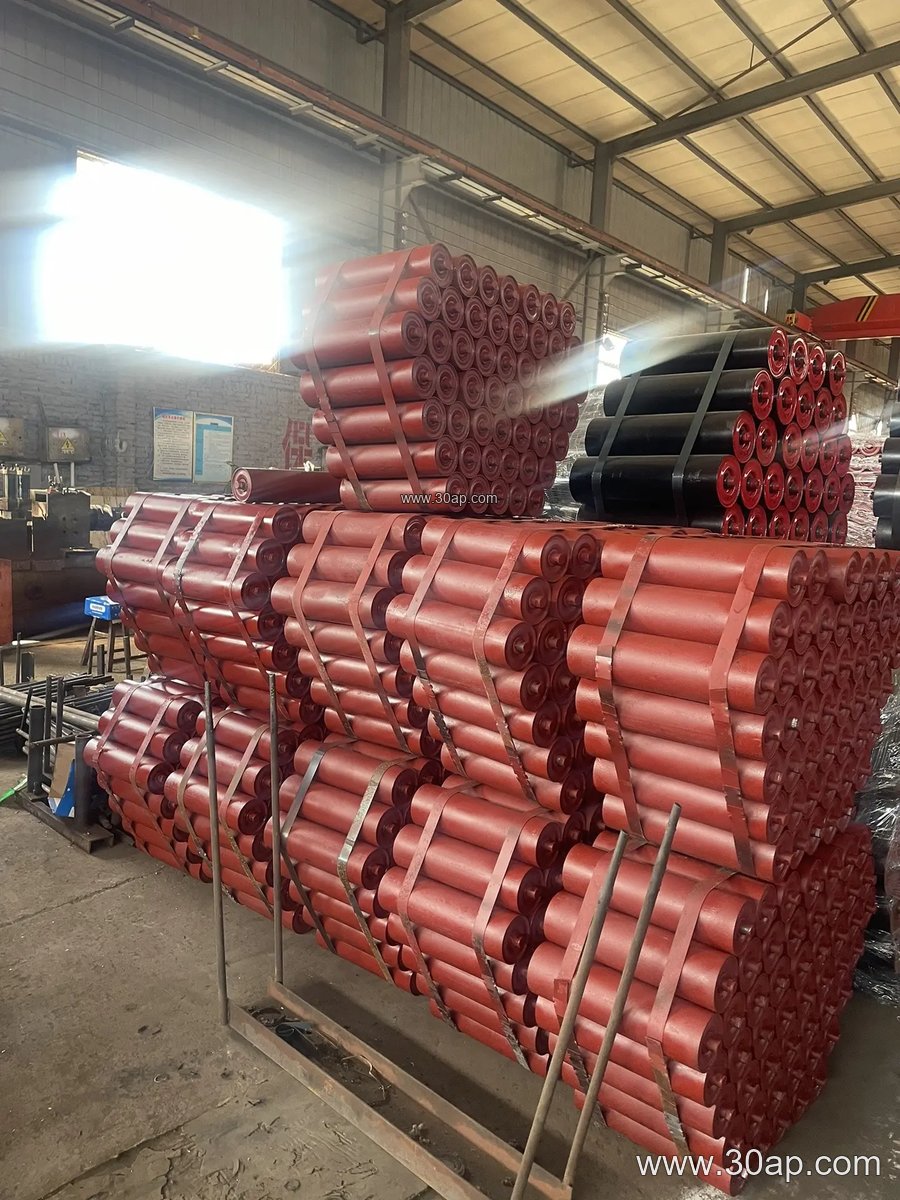
A typical Ø159 idler combines a steel tube shell, welded end discs, a through shaft, bearing housings and a sealing arrangement. The shell may be plain steel, nylon-coated, ceramic-lined or fitted with rubber rings, depending on whether the priority is abrasion life, material build-up resistance or impact cushioning. Bearings are usually selected from the 6200 and 6300 series, such as 6205, 6305, 6306, 6308 or 6310, but the bearing choice follows the load, speed and shaft design rather than the shell diameter alone.
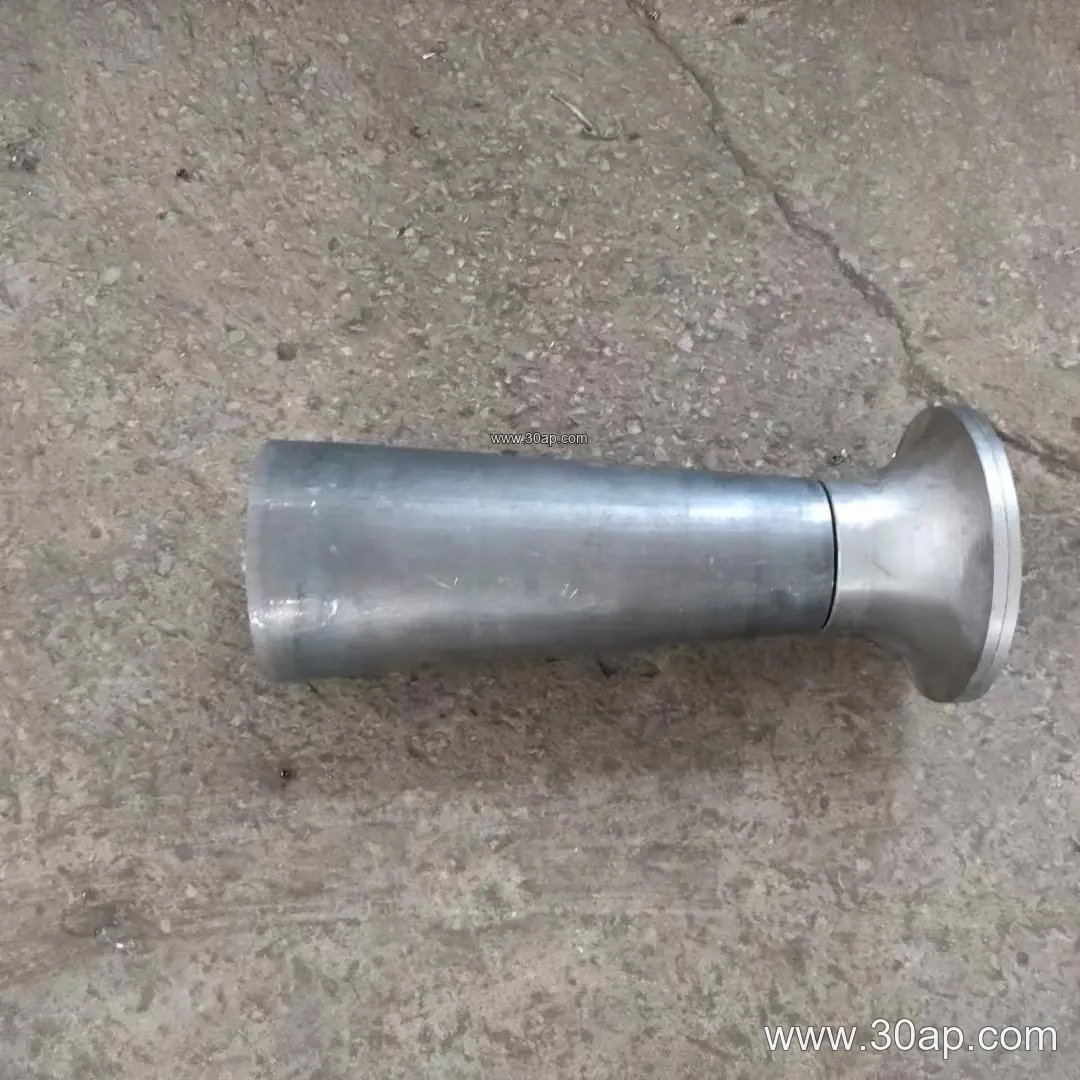
Sealing matters as much as the tube. Dust, grit and moisture are the usual causes of seized rollers in a quarry or a coal handling plant, so labyrinth seals, felt seals or multi-stage dust seals are common. A well-sealed idler roller keeps grease in and fines out, which extends service life and protects the conveyor belt from drag and misalignment.
Where the Size Fits
The 159 mm shell is often seen on three-roll troughing sets and on transition idlers where a wide belt needs a gentler change of trough angle. It also appears as a return roller or V-return roller on heavy belts. Common trough angles are 20, 30, 35 and 45 degrees; the right angle depends on the material’s flow behaviour and the belt’s ability to trough without edge stress.
Roller length is not fixed by diameter. It follows belt width, trough angle and frame type. As a reference only, three-roll troughing sets commonly use roller lengths of about 200 mm for B500, 250 mm for B650, 315 mm for B800, 380 mm for B1000, 465 mm for B1200, 530 mm for B1400, 600 mm for B1600, 670 mm for B1800 and 750 mm for B2000. Side rollers and the centre roller can differ, and the final length is set by design.
| Reference item | Typical range |
|---|---|
| Shell diameter | Ø159 mm |
| Belt width examples | B800 to B2000 mm |
| Trough angle | 20, 30, 35, 45 degrees |
| Roller surface | Steel, nylon, ceramic, rubber ring |
| Bearing examples | 6205, 6305, 6306, 6308, 6310 |
| Idler set forms | Single roll, two-roll, three-roll troughing |
Applications in Bulk Handling
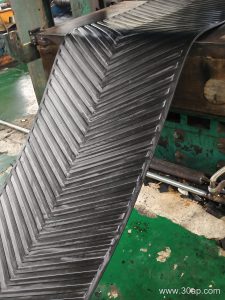
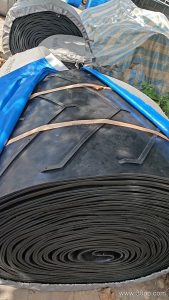
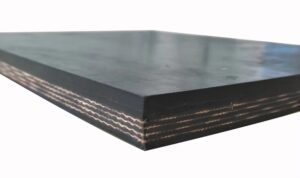
This diameter suits steady, high-tonnage duty. In a quarry or aggregate line it may carry crushed stone after a crusher, where impact and abrasion are both present. In a coal preparation plant or a power station coal yard it supports a flame retardant conveyor belt on long runs. In a cement plant it handles clinker and limestone, and in an iron ore or copper ore terminal it works under a heavy-duty conveyor belt that carries dense, sharp material.
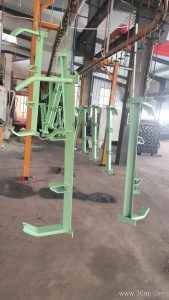
The idler does not work alone. It sits with the conveyor bracket and frame, and its condition affects the whole conveyor belt. A worn or seized roller increases belt tension, causes tracking problems and can damage the belt cover. Matching the roller to the belt, the material and the environment is more useful than choosing by diameter alone.
Buyer Checklist
- Confirm belt width, trough angle and frame dimensions before ordering; do not assume one belt width fixes one roller length.
- State the material: coal, limestone, clinker, ore or sand each puts different demands on the shell and seal.
- Choose the roller surface for the job, for example rubber rings at a loading point and ceramic or nylon where build-up is a problem.
- Check shaft diameter and bearing seat dimensions against the existing bracket, and ask for the drawing.
- Consider the environment: dusty, wet, hot or corrosive conditions call for different sealing and lubrication.
- For impact zones, compare a rubber-ring buffer idler with a standard troughing idler; each has its place and neither replaces the other.
Ordering a Ø159 conveyor idler is mostly a matter of matching four things: the frame, the belt, the material and the working environment. Get those right and the roller will run quietly and keep the belt on track.