What a Motor-Driven Pulley Does
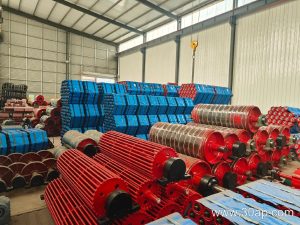
A motor-driven pulley is a conveyor pulley that combines the drive motor and the pulley drum into one compact unit. Sometimes called a drum motor or motorized pulley, it eliminates the external gearbox, chain, and exposed rotating parts found on conventional drive stations. The pulley shell itself rotates to move the conveyor belt, while the internal motor and gearing stay protected inside the drum. This design is common in bulk material handling where space is tight and reliability matters, such as in a cement plant clinker line, a coal mining conveyor, or a quarry conveyor belt system.
Unlike a tail pulley or a bend pulley, which only guide or tension the belt, the motor-driven pulley is the primary power source. It is not interchangeable with an idler roller or a conveyor bracket; each has its own role. The motorized pulley is often installed at the head of the conveyor, but it can also serve as a drive at other positions depending on layout.
Construction and Key Components
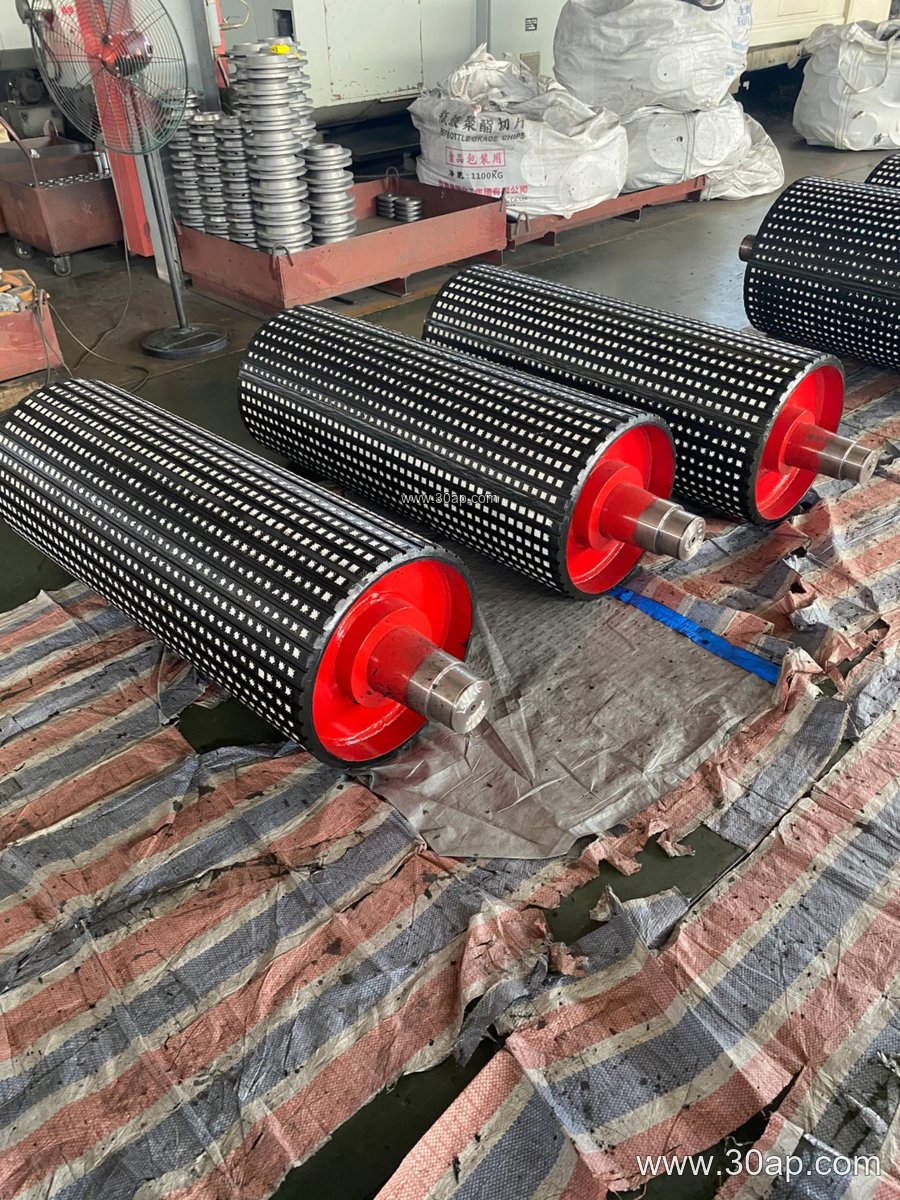
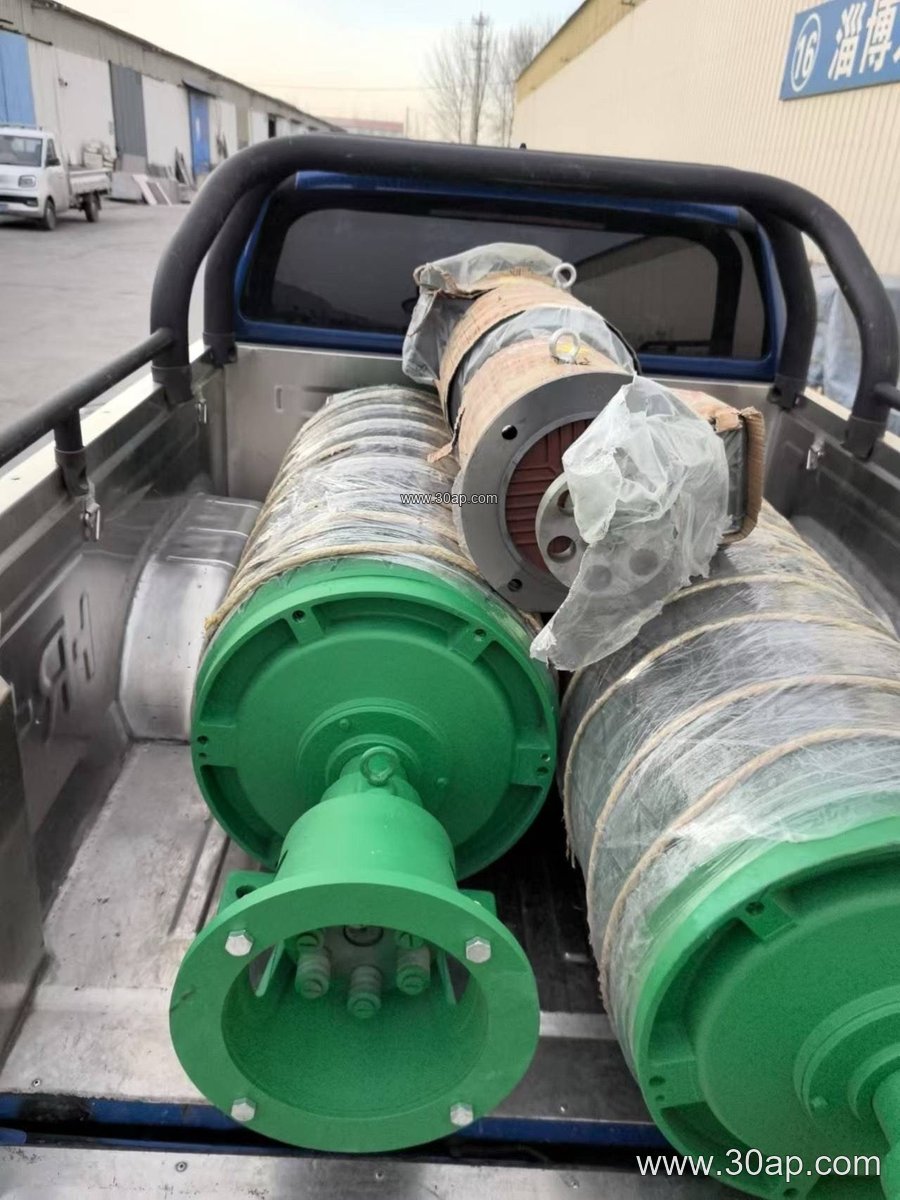
Inside the drum, an electric motor stator is fixed to a stationary shaft, and the rotor connects to a planetary or helical gear train that reduces speed and increases torque. The drum shell rotates on bearings sealed against dust and water. External features may include a terminal box, a cooling fan, and mounting flanges. The shell surface can be plain, rubber-lagged, or ceramic-lagged to improve grip. Lagging thickness typically ranges from 8 mm to 20 mm depending on the application.
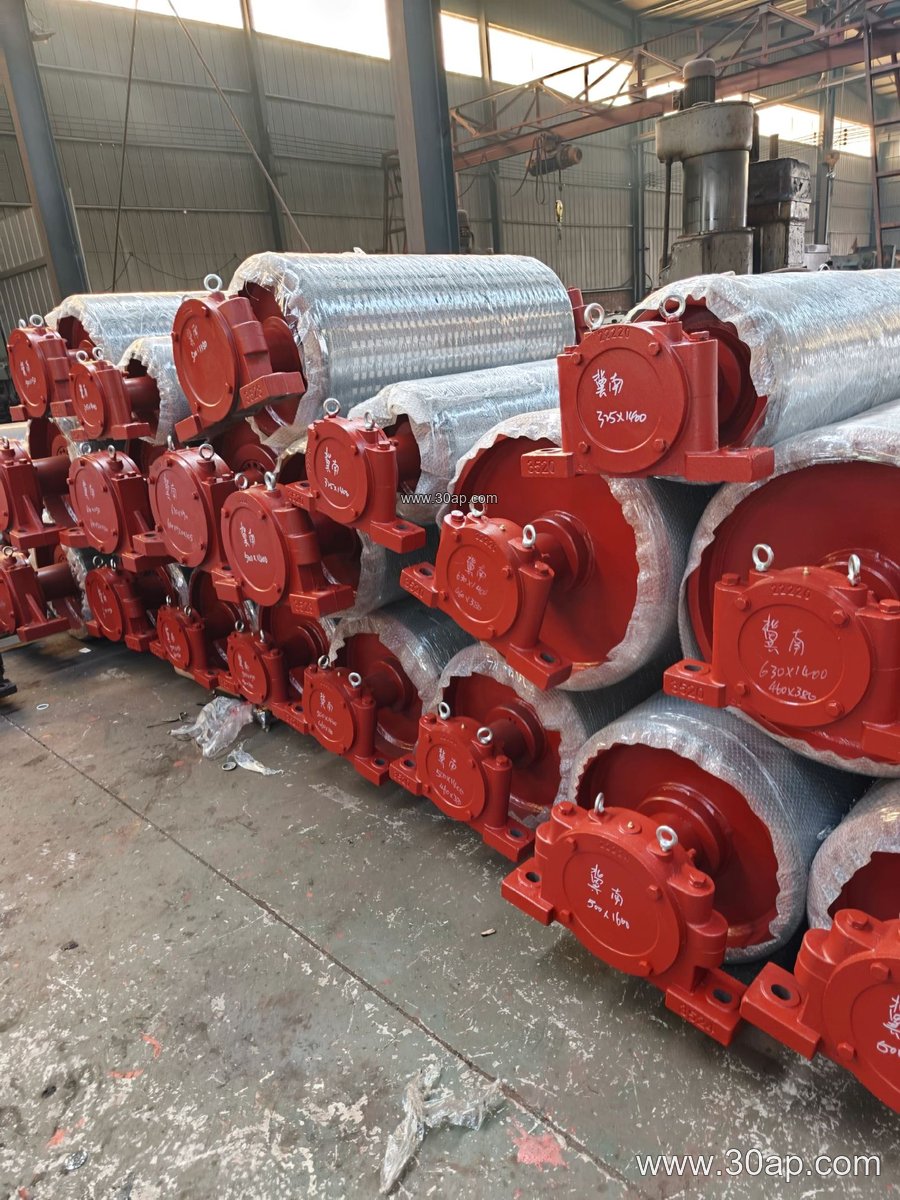
Common belt widths for motorized pulleys follow the conveyor width, such as B500, B650, B800, B1000, and B1200. The pulley diameter must be sized to the belt speed and torque requirements, not simply matched to belt width. For example, a B800 conveyor might use a Ø500 pulley in one duty and a Ø630 in another. Shaft diameters are determined by torque and load, with typical values like Ø80, Ø100, or Ø120, but no fixed rule ties shaft size directly to belt width.
Where Motor-Driven Pulleys Fit
These pulleys are well suited to applications where a clean, enclosed drive is preferred. In a coal mining conveyor or underground mining conveyor, the sealed design reduces the risk of dust ingress and improves safety around moving parts. In a power plant coal handling system, a motorized pulley can replace a conventional drive with gearbox and coupling, saving floor space. They are also found in sand and gravel plants, fertilizer handling, and grain silos where washdown or frequent cleaning is needed.
The belt itself must match the pulley surface. For high-traction needs, a rubber-lagged or diamond-lagged shell works with a rubber conveyor belt or an abrasion resistant conveyor belt. In coal mines, a flame retardant conveyor belt is often required, and the pulley lagging should be compatible with that belt. A steel cord conveyor belt may need a larger pulley diameter to avoid excessive bending stress, while an EP conveyor belt or NN conveyor belt can run on smaller diameters within its rating.
Selection and Sizing Notes
Buyers should consider belt width, belt speed, required torque, and the duty cycle. The pulley face width is usually wider than the belt width; for instance, B800 may use a face width around 950 mm, and B1200 around 1400 mm. Diameter choices are often Ø320, Ø400, Ø500, Ø630, Ø800, or Ø1000. A combination like B1000 × Ø630 is common, but the same belt width can use different diameters depending on tension and space. Do not assume one belt width pairs with only one diameter.
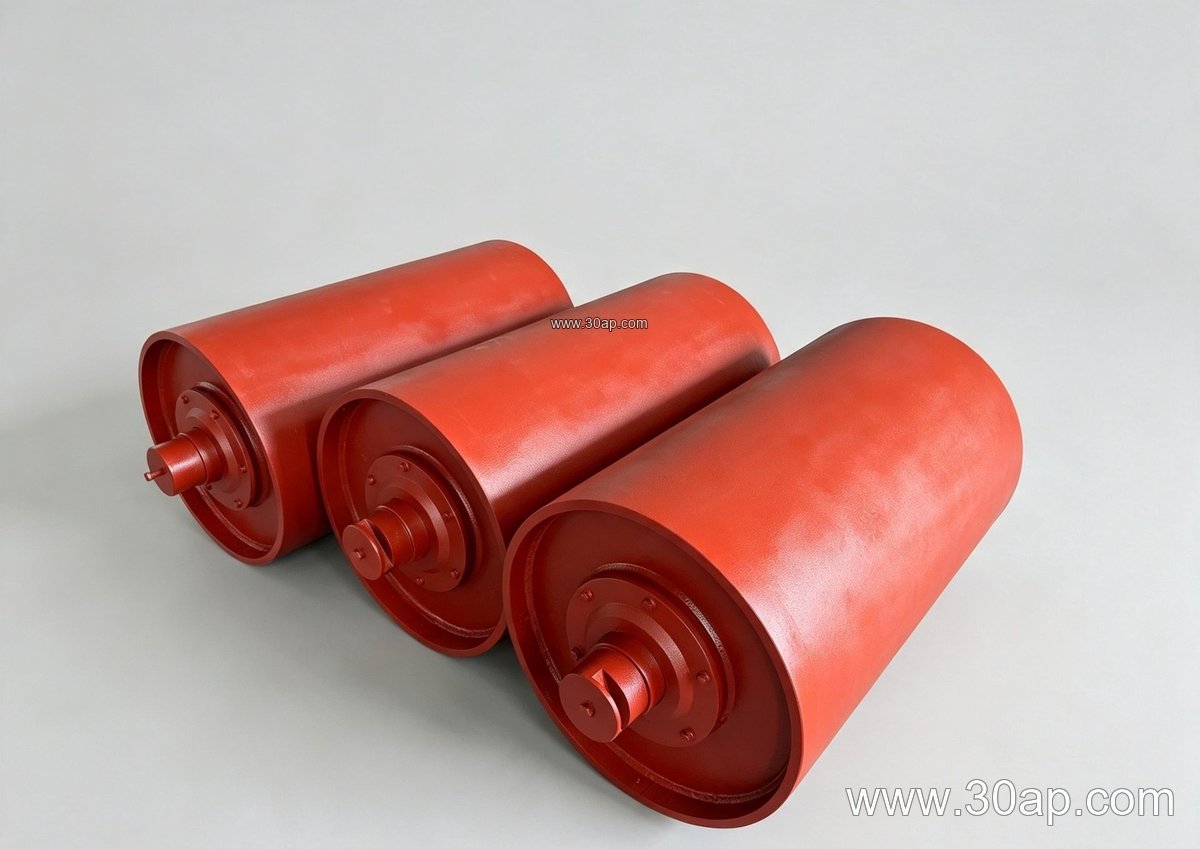
Surface options include plain, cast rubber, cold-bonded rubber, hot-vulcanized rubber, diamond lagging, herringbone lagging, and ceramic lagging. Each affects grip and wear. For a conveyor belt system handling wet or oily material, ceramic or grooved lagging may help. For a food grade conveyor belt, a smooth, cleanable surface is preferred. Keep in mind that a motor-driven pulley is not a tail pulley or a bend pulley; it drives the belt, so its selection must account for starting torque and belt tension.
Maintenance and Buyer Checklist
Motorized pulleys require less routine maintenance than exposed drives, but they still need periodic inspection of seals, lagging wear, and electrical connections. In a dusty quarry or a cement plant, check that the cooling fins or oil level (if oil-cooled) are clean. Listen for unusual noise that could indicate bearing wear. Before ordering, confirm the belt width, pulley diameter, shaft diameter, lagging type, and motor voltage. Also verify the conveyor bracket mounting dimensions and the available space for the terminal box. A motor-driven pulley can be a reliable choice for a compact drive, but it must be matched to the conveyor belt and the material being handled.