What the Pulley Does on a Sand and Gravel Line
On a sand and gravel plant conveyor, the pulley is the part that turns the belt, sets its tension, and steers it through the structure. It looks like a simple drum, but it carries the full belt pull and the weight of the load. In a crushing and screening circuit, a single stop caused by a failed pulley can halt the whole line, so the choice of this component deserves more attention than it usually gets.
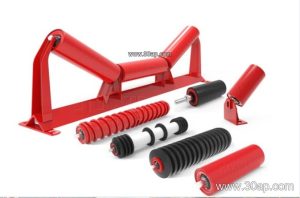
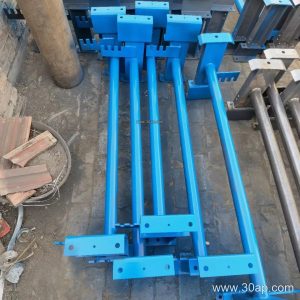
The drum works together with the conveyor belt, the idler roller, and the conveyor bracket that holds the bearing housing. If any of these are mismatched, the belt will mistrack, the lagging will wear unevenly, and bearing life will drop.
Drive, Tail, and Bend Pulleys Are Different Jobs
Each position on the conveyor asks something different of the drum.
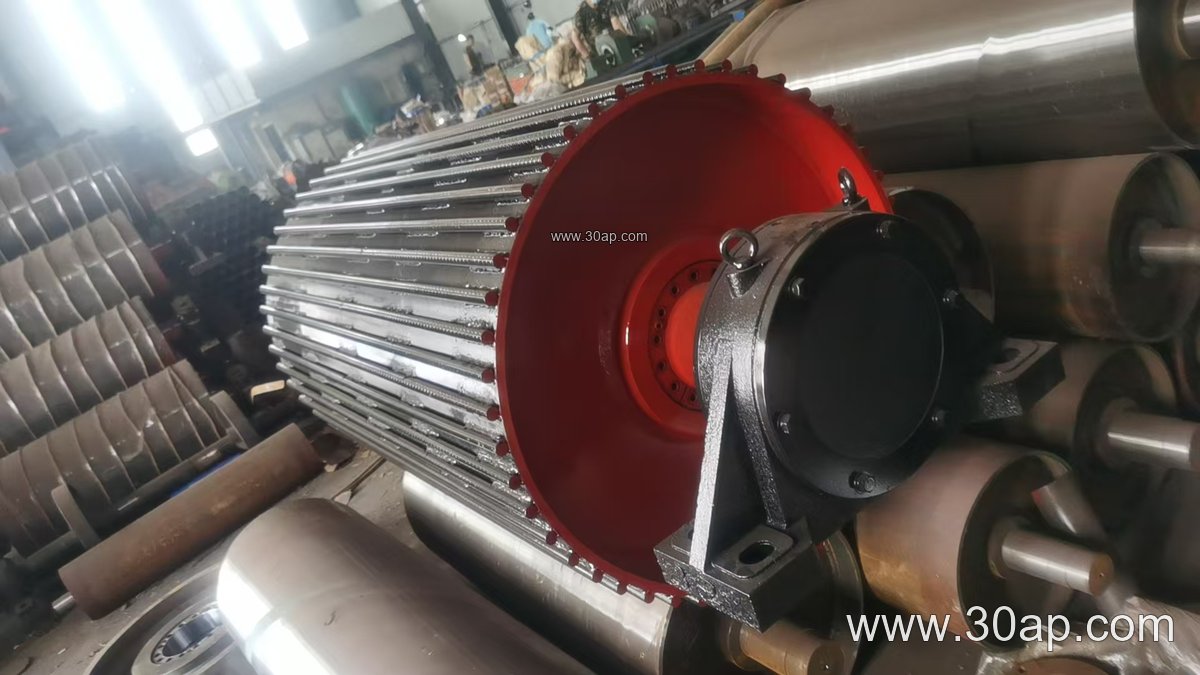
- Drive or head pulley – transmits power to the belt. It usually has the largest diameter on the conveyor and the heaviest lagging, because it must grip without slipping.
- Tail pulley – sits at the loading end, often with a wing or self-cleaning form so spilled material does not build up.
- Bend pulley – changes belt direction and increases wrap angle around the drive. It carries tension but no drive torque.
- Tension pulley – takes up slack in a take-up system and keeps the belt from sagging.
These are not interchangeable. A bend pulley used as a drive will slip; a drive pulley used as a bend will be overbuilt and waste money. When replacing a unit, confirm the position first, then the dimensions.
How It Is Built
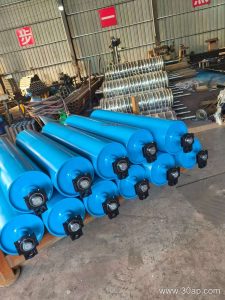
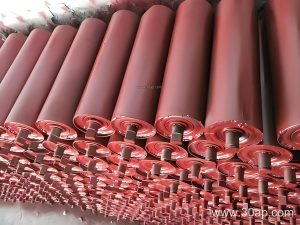
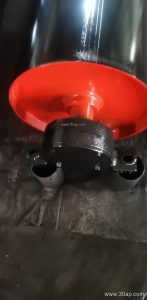
A typical sand and gravel plant conveyor pulley has a welded steel shell, two end discs, a shaft, and bearing housings. The shell is machined so the belt runs true. The shaft diameter is set by torque and load, commonly in the range of Ø50 to Ø200 mm, and should never be picked from belt width alone.
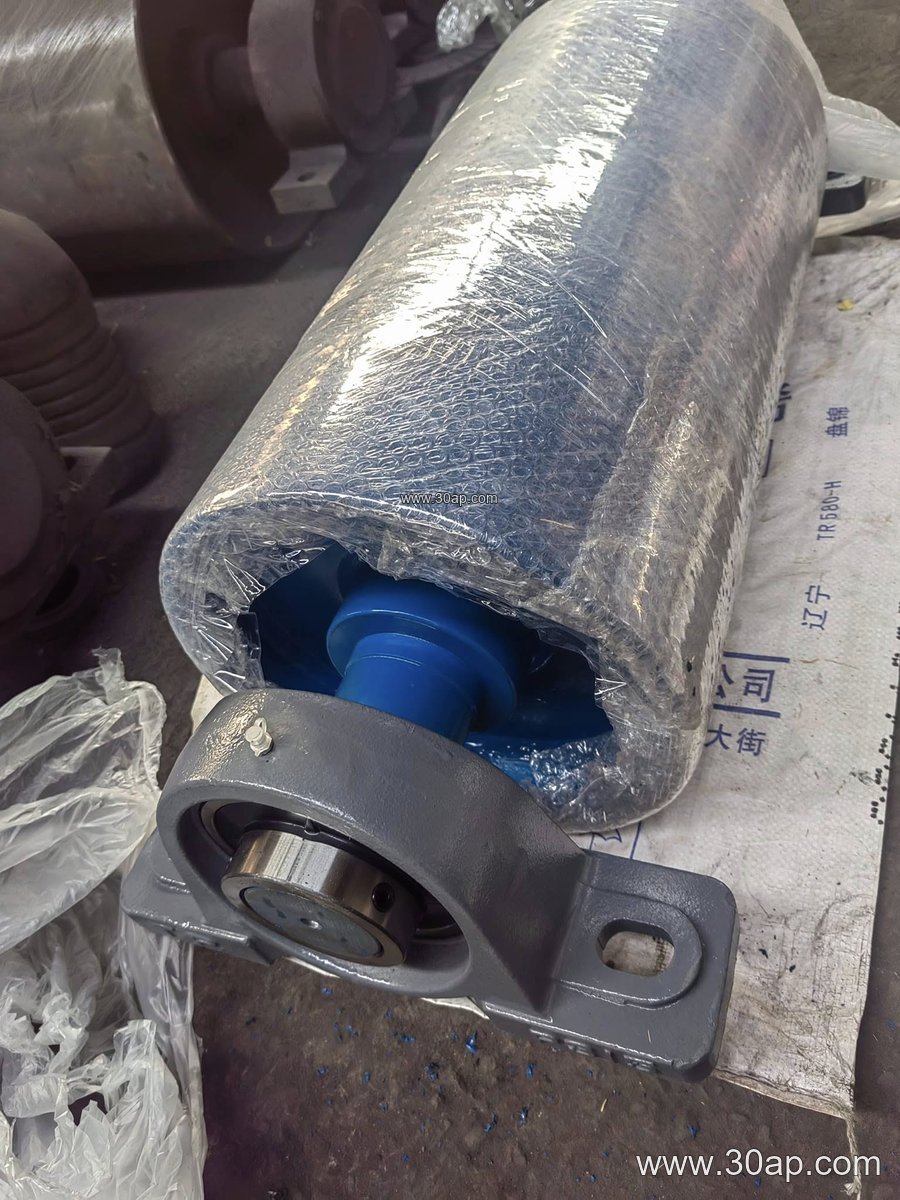
The surface is where most of the practical decisions happen. Plain finish suits light duty and clean material. Rubber lagging, applied by cold bonding or hot vulcanizing, raises friction and protects the shell. Diamond or herringbone patterns shed water and fine grit. Ceramic lagging is chosen where abrasion is severe, such as under a primary crusher discharge.
Common lagging thicknesses are 8, 10, 12, 15, and 20 mm. A thicker layer lasts longer but adds weight and cost, so match it to the duty.
Sizing Notes for Sand and Gravel Duty
Belt width and pulley diameter are related but not locked together. A B800 conveyor may run a Ø500 drum in one plant and a Ø630 drum in another, depending on belt speed, tonnage, and wrap angle. The table below shows reference combinations, not fixed rules.
| Belt width | Typical face width | Reference diameter | Common shaft range |
|---|---|---|---|
| B400 | approx. 500 mm | Ø200 – Ø315 | Ø50 – Ø80 |
| B650 | approx. 750 mm | Ø315 – Ø500 | Ø60 – Ø100 |
| B800 | approx. 950 mm | Ø400 – Ø630 | Ø70 – Ø120 |
| B1000 | approx. 1150 mm | Ø500 – Ø800 | Ø80 – Ø140 |
| B1200 | approx. 1400 mm | Ø630 – Ø1000 | Ø90 – Ø160 |
| B1400 | approx. 1600 mm | Ø800 – Ø1250 | Ø100 – Ø180 |
| B1600 | approx. 1800 mm | Ø1000 – Ø1400 | Ø120 – Ø200 |
Face width is normally a little wider than the belt, for example B1200 with roughly 1400 mm face. A combination such as B1200 × Ø1000 or B800 × Ø500 is common in aggregate plants, but it is a starting point for engineering, not a catalogue promise.
Matching the Drum to the Belt
The pulley and the belt are a pair. An abrasion resistant conveyor belt running over a plain shell may wear the drum faster than the belt; a ceramic-lagged drum can be too aggressive for a light fabric belt. In a quarry or aggregate line, a heavy-duty rubber belt with a properly lagged head pulley usually gives the best balance.
Where the conveyor handles hot clinker or asphalt mix, a heat resistant belt and a drum rated for the same temperature are needed. In a coal preparation plant, a flame retardant belt is standard, and the pulley should be selected with the same fire-safety thinking in mind. For long overland runs, a steel cord belt may be used, and the drum diameter must respect the belt’s minimum bend radius.
Belt tracking is the other half of the story. Crowned shells, accurate machining, and square mounting all help, and so does a well-aligned idler roller set. A drum that is off-square will push the belt to one side no matter how good the lagging is.
What to Check Before Ordering
- Position on the conveyor: drive, tail, bend, or take-up.
- Belt width and belt type, so face width and minimum diameter are right.
- Calculated shaft load, not a guess from belt width.
- Lagging form and thickness for the material and moisture level.
- Bearing type, housing, and bracket interface with the conveyor frame.
- Balance and runout for high-speed drives.
Buyers who send the plant layout, belt specification, and duty hours get a more accurate quotation than those who send only a diameter. For more on matching drums to belts and frames, see www.example.com/conveyor-pulley and our notes on www.example.com/EP-conveyor-belt.
Maintenance That Extends Service Life
Check lagging wear at the drive first, since slip shows up there. Keep the tail area clean so material does not pack under the belt. Re-grease bearings on schedule, watch for temperature rise, and check shaft alignment after any frame repair. A spare drive pulley on site is cheap insurance for a sand and gravel plant that runs two shifts.