What a Custom Conveyor Bracket Is
A custom conveyor bracket is a made-to-order support component that positions idlers under or above the belt on a belt conveyor. Instead of forcing a standard frame onto an existing structure, the bracket is designed around the actual belt width, trough angle, roller diameter, and mounting points of the line. In quarry, cement, and power plant coal handling systems, this flexibility often decides whether an upgrade fits into a tight shutdown window or turns into a structural rebuild.
The bracket itself is a relatively simple steel part, but its geometry matters. A few millimetres of error in hole spacing or frame height can cause misalignment, edge wear on the conveyor belt, and premature idler failure. That is why custom fabrication is common where conveyors have been modified, extended, or mixed from different suppliers over the years.
Construction and Materials
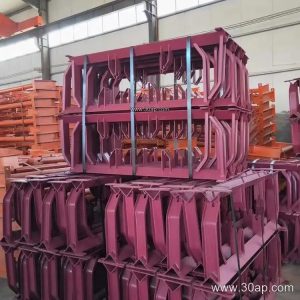
Most brackets are fabricated from angle steel, channel steel, or folded steel plate, then drilled, welded, and finished according to the drawing. The choice of material and thickness follows the load case: a light aggregate line and a heavy iron ore transfer point do not need the same section. Typical workshop practice includes jig-based drilling so that mounting holes stay consistent across a batch, and shot blasting or painting for corrosion protection in wet or dusty environments.
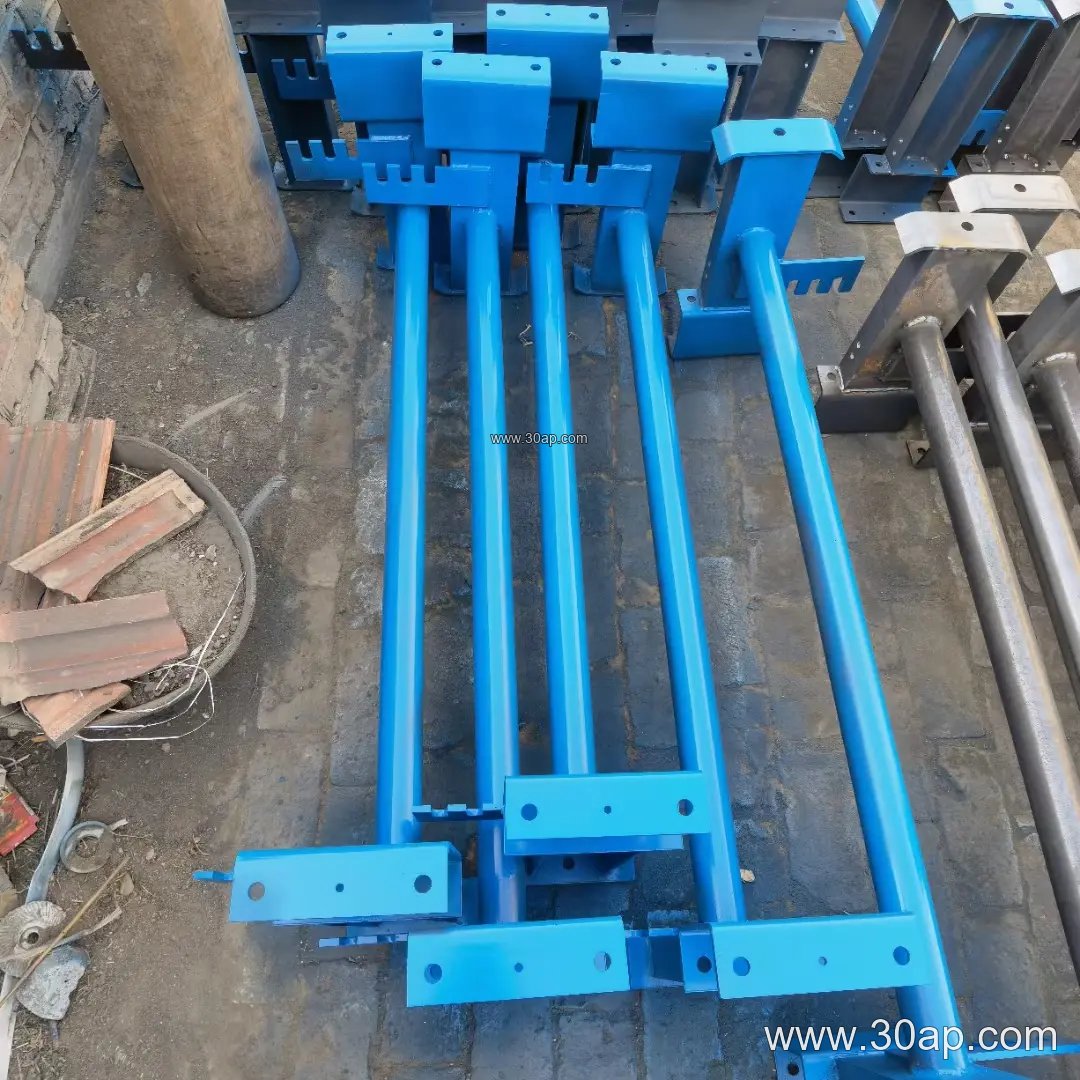
Because the bracket is a structural interface rather than a wear part, the design usually focuses on stiffness and accurate hole placement. A flexible bracket that deflects under load will let the idler tilt, which shows up quickly as uneven belt tracking.
Types and Where They Sit
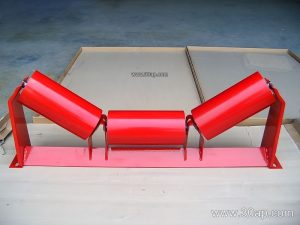
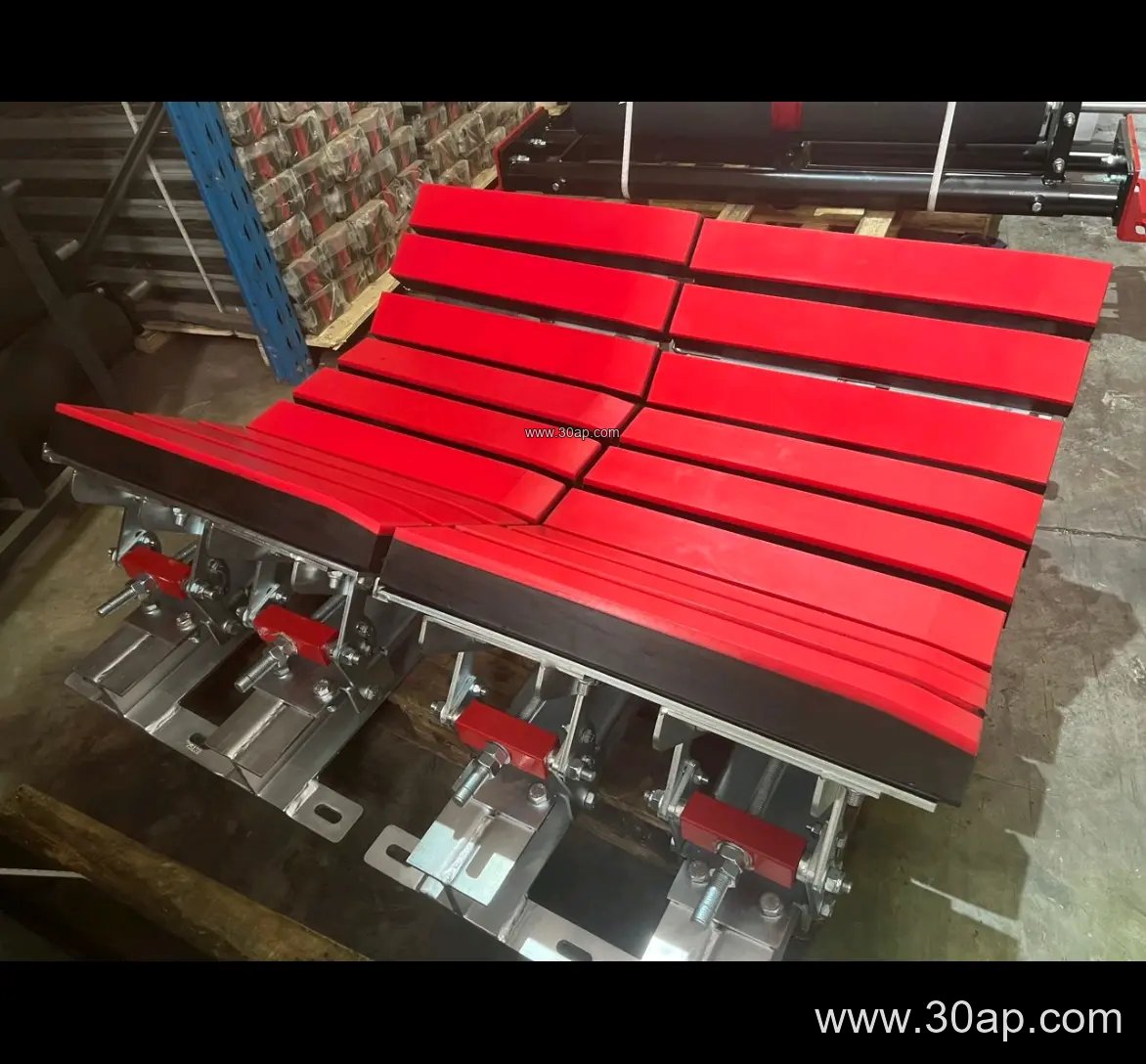
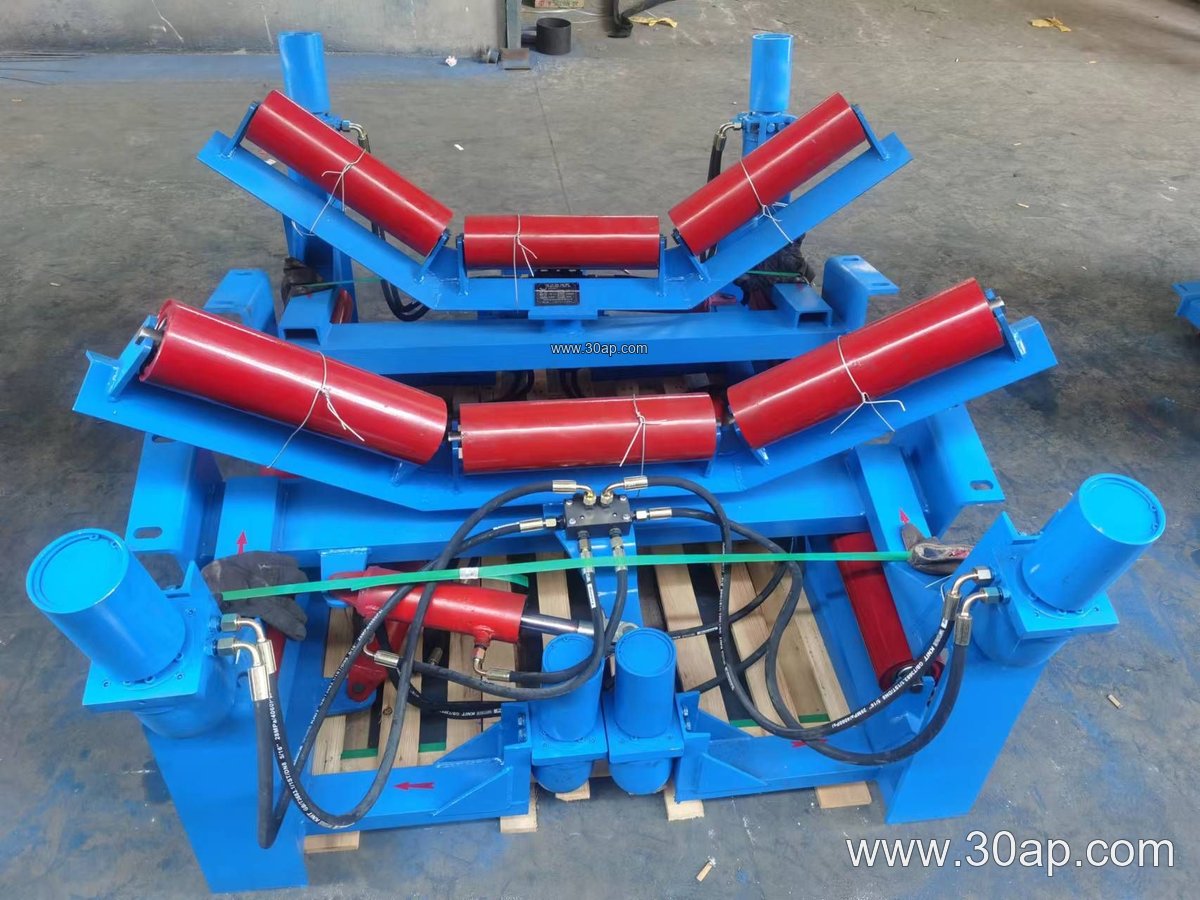
The term covers several positions along the conveyor. Trough brackets carry the upper idlers and set the trough angle; return brackets support the belt on its way back; transition brackets ease the belt from flat to troughed; impact brackets sit under loading points and hold cushion idlers; and self-aligning brackets work with training idlers to correct belt drift. Adjustable versions allow the trough angle to be changed on site, which is useful when a line handles materials with different flow characteristics.
- Trough bracket, upper run, fixed or adjustable
- Return bracket, flat or V-shaped
- Transition bracket near head and tail
- Impact bracket under the feed chute
- Self-aligning bracket for belt training
- Suspended bracket for confined structures
None of these replaces another. A return bracket cannot do the job of a trough bracket, and a transition bracket is not a substitute for a standard carrying frame. Each is specified by position and function.
Matching Belt Width, Trough Angle, and Roller Diameter
Brackets are usually ordered against three linked values: belt width, trough angle, and idler diameter. Common belt widths include B500, B650, B800, B1000, B1200, B1400, B1600, and B1800. Trough angles of 20, 30, 35, and 45 degrees are widely used, and adjustable brackets can move between these settings. Roller diameters such as Ø89, Ø108, Ø133, Ø159, and Ø194 are matched to load and belt speed rather than to belt width alone.
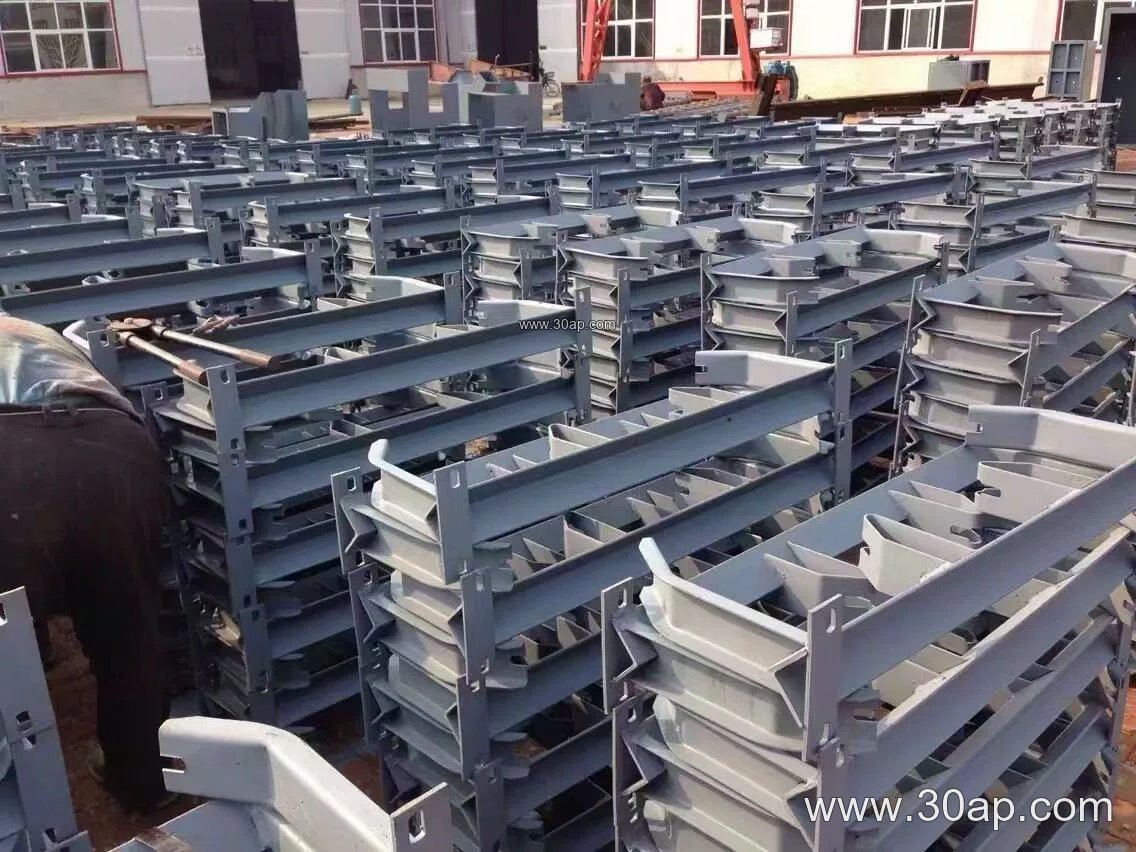
There is no fixed rule that ties one belt width to one trough angle or one roller diameter. A B800 line might run 35 degrees with Ø108 idlers in one plant and 45 degrees with Ø133 in another, depending on material, capacity, and transition length. Hole spacing and crossbeam length change with the design, so they should be confirmed on the drawing rather than assumed.
Reference Values for Early Planning
The table below is a planning aid, not a supply promise. Final dimensions are set by the conveyor design.
| Belt width | Typical trough angle | Common idler diameter | Bracket note |
|---|---|---|---|
| B500 | 20–30 degrees | Ø89 | Compact frame, short crossbeam |
| B650 | 30 degrees | Ø89–Ø108 | Adjustable option common |
| B800 | 35 degrees | Ø108 | Standard quarry duty |
| B1000 | 35–45 degrees | Ø108–Ø133 | Reinforced under impact |
| B1200 | 35–45 degrees | Ø133 | Heavier section steel |
| B1400 | 35–45 degrees | Ø133–Ø159 | Check transition length |
| B1600 | 35–45 degrees | Ø159 | Wide frame, braced |
| B1800 | 35–45 degrees | Ø159–Ø194 | Heavy-duty fabrication |
Applications Across Bulk Handling
Custom brackets appear wherever a conveyor has to fit an existing steel structure. In a limestone quarry, a transition bracket may be needed because the head pulley sits closer to the chute than the original design allowed. In a coal washing plant, adjustable trough brackets let operators tune the belt profile after a change in feed size. Cement plants and power plant coal yards often order replacement brackets for frames that have corroded or been modified over decades of service.
Because the bracket positions the idler roller, it indirectly affects how the conveyor belt wears. Correct alignment keeps the belt centred and reduces edge damage, which matters on long overland lines carrying abrasive rock or ore.
What Buyers Should Confirm Before Ordering
- Belt width and the measured distance between existing frame members
- Trough angle required, and whether adjustment is needed
- Idler diameter and the idler shaft end type
- Mounting hole diameter and centre distance, taken from the site
- Material and finish, based on dust, moisture, and corrosion exposure
- Whether the bracket sits at a transition, impact, or standard position
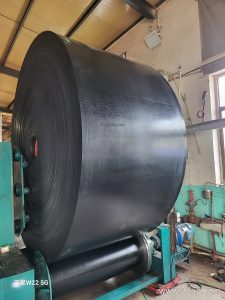
A clear drawing or a measured sketch prevents most fitting problems. Where the conveyor uses a fabric core belt such as an EP conveyor belt or an NN conveyor belt, the transition distance may differ from a steel cord installation, so the bracket position should follow the belt manufacturer’s guidance rather than a generic figure.
Finally, treat the bracket as part of a system. It works with the idler roller, the pulley at the head or tail, and the belt itself. Ordering a custom conveyor bracket with accurate dimensions is a small step that protects the larger investment in the conveyor line.