What a Heavy-Load Conveyor Idler Does
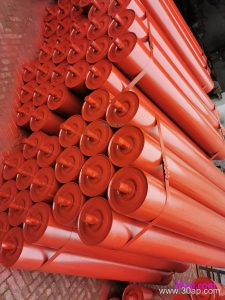
A heavy-load conveyor idler is the load-bearing roller that supports the belt and the material on it at some of the most heavily stressed points of a conveyor line. In a quarry, a limestone mine, or a crushing and screening circuit, the belt may carry large lumps and a deep bed of rock, so the idler must hold its shape, keep turning freely, and resist wear at the shell and at the bearing. The same heavy-load idler roller is often chosen for the head and tail zones, for transfer points below a crusher, and for long overland runs where downtime is costly.
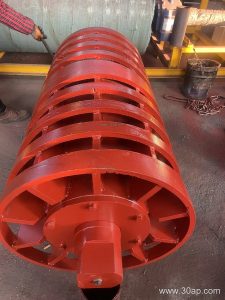
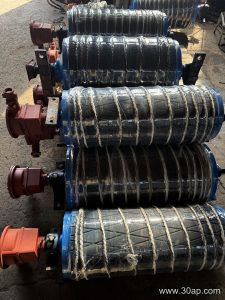
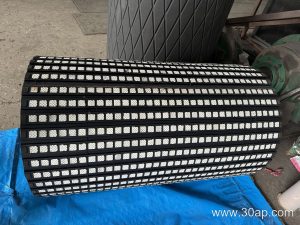
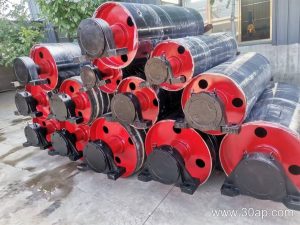
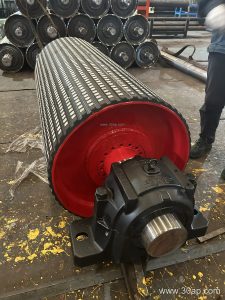
This is not the same component as a conveyor pulley. A conveyor pulley drives, returns, or bends the belt, while the idler only supports it. Drive, tail, and bend pulleys are separate parts with separate duties, and they should not be ordered as substitutes for a heavy-duty idler.
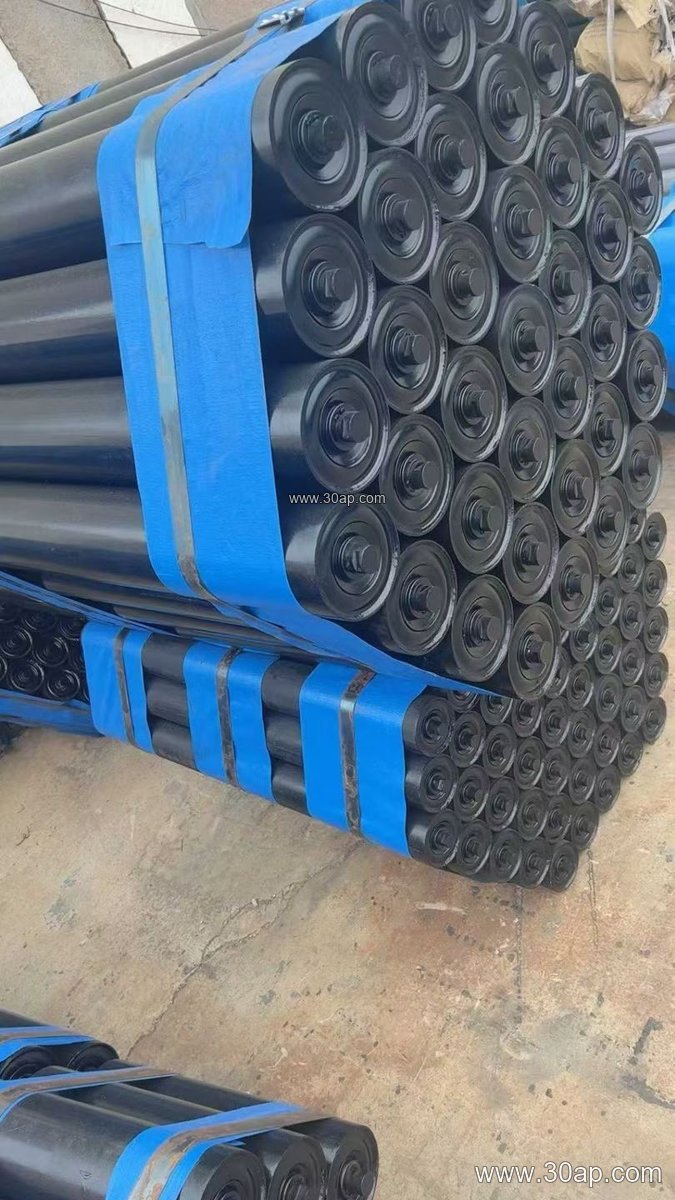
How the Roller Is Built
The core of the product is a steel tube fitted with bearing housings, a shaft, and a sealing arrangement. Heavy-load versions usually use thicker tube walls, larger shaft ends, and robust seals to keep dust and water away from the bearing. Roller surfaces may be plain steel, nylon, ceramic, or rubber rings. Rubber-ring impact idlers are common below a crusher or at a chute where the belt takes falling rock; the rubber rings absorb shock and protect both belt and roller.
Bearing choice follows the load and speed, not the belt width alone. Common bearings include 6204, 6205, 6305, 6306, 6308, and 6310, and a given roller diameter can be paired with more than one bearing size depending on the design. Typical roller diameters include Ø63, Ø76, Ø89, Ø102, Ø108, Ø127, Ø133, Ø159, Ø178, Ø194, and Ø219 mm. Larger diameters are often used where the belt is wide and the load is high, but the final choice is a design decision.
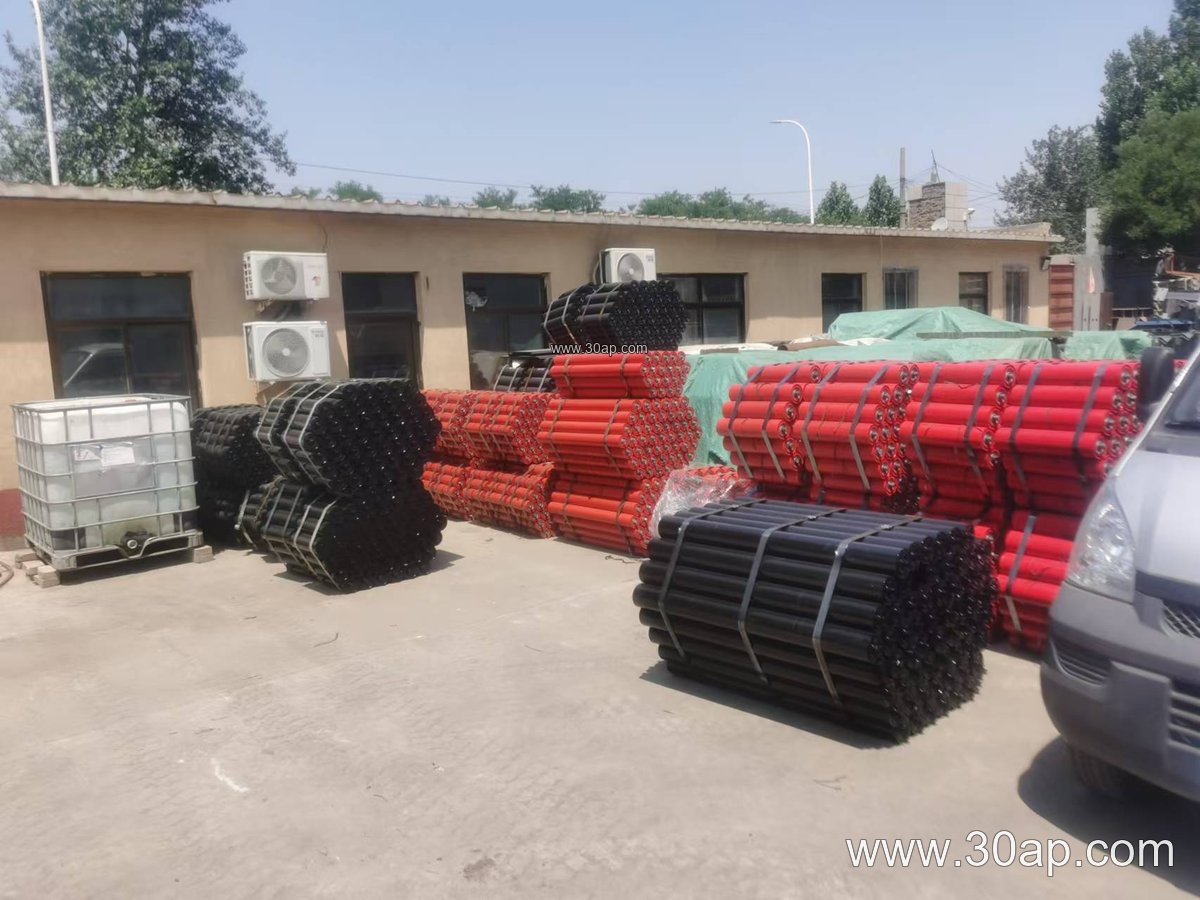
Where Heavy-Load Idlers Fit
These rollers appear in a wide range of bulk handling plants. In a coal preparation plant or a power station coal yard, they support a flame retardant conveyor belt on the main haul. In a cement plant they carry clinker and raw meal, and in a steel plant they handle sinter and ore. A sand and aggregate line, a copper or iron ore concentrator, and a port ship-loading system all rely on idlers that can take continuous load without seizing.
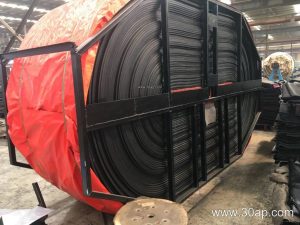
The belt itself matters too. A steel cord conveyor belt or a heavy-duty EP conveyor belt may run at high tension, and the idler spacing and roller diameter must suit the belt sag and the material weight. Where the load is abrasive, an abrasion resistant conveyor belt works with the roller to reduce total wear. In underground coal mining, a flame retardant conveyor belt and well-sealed idlers are usually specified together.
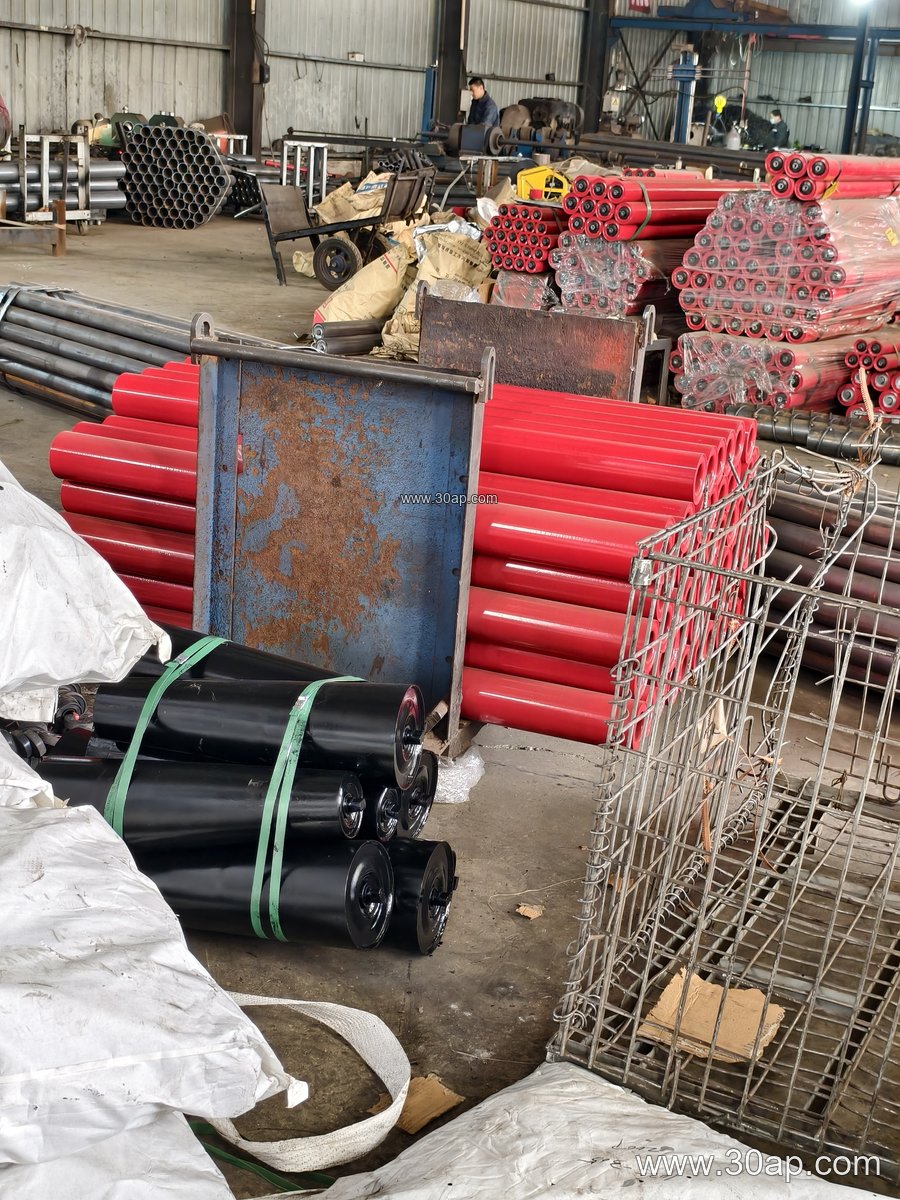
Common Configurations and Reference Dimensions
Troughing sets are normally made as single-roller, two-roll, or three-roll arrangements. The trough angle is often 20, 30, 35, or 45 degrees, and a small forward tilt of about 1.5 to 2 degrees is sometimes used on training idlers to help keep the belt centered. Return sides may use a flat roller or a V-shaped return roller. The table below gives common examples only; actual roller length depends on belt width, trough angle, and frame design.
| Belt width | Typical roller length, three-roll trough | Common trough angle |
|---|---|---|
| B500 | about 200 mm | 20–35 degrees |
| B650 | about 250 mm | 20–35 degrees |
| B800 | about 315 mm | 30–35 degrees |
| B1000 | about 380 mm | 30–35 degrees |
| B1200 | about 465 mm | 30–45 degrees |
| B1400 | about 530 mm | 30–45 degrees |
| B1600 | about 600 mm | 35–45 degrees |
| B1800 | about 670 mm | 35–45 degrees |
| B2000 | about 750 mm | 35–45 degrees |
Side rollers and center rollers can differ in length, so the values above should be treated as reference data, not fixed matches. A wide belt such as a 1200 mm or 1500 mm conveyor belt does not automatically dictate one pulley diameter or one shaft size.
Buyer Checklist
- Match the idler to the actual load, belt speed, and material lump size, not only to belt width.
- Confirm the roller diameter, shell thickness, bearing number, and seal type with the supplier.
- Use impact or rubber-ring idlers at transfer points and crusher discharge.
- Check that the conveyor bracket and frame accept the chosen roller length and shaft end.
- Plan inspection of seals, bearing play, and shell wear as part of routine maintenance.
For plants handling abrasive rock or coal, a heavy-load conveyor idler is a small part with a large effect on belt life and on the cost of stoppages. Selecting it together with the right conveyor belt, such as a mining conveyor belt or a heat resistant conveyor belt where temperature is a factor, gives a more reliable line overall.