What a Sand and Gravel Plant Conveyor Pulley Does
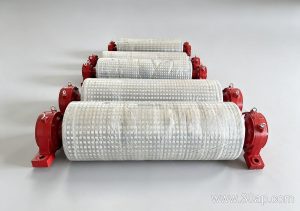
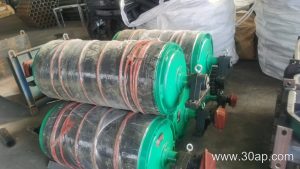
A sand and gravel plant conveyor pulley is the cylindrical rotating component that carries and drives the belt on an aggregate handling conveyor. In a crushing and screening line, these pulleys sit at the head, tail, and take-up positions, transferring motion from the drive unit to the belt and keeping tension stable as material moves from the pit to the stockpile. Unlike an idler roller that simply supports the belt along its run, a pulley transmits torque and guides the belt around a turn, so its construction and surface treatment matter for both traction and belt life.
Because sand, gravel, and crushed stone are abrasive and often wet, the pulley must resist wear on its shell and maintain grip without slipping. This is why plant operators pay close attention to shell thickness, lagging type, and bearing selection when replacing or specifying a unit.
How the Pulley Is Built
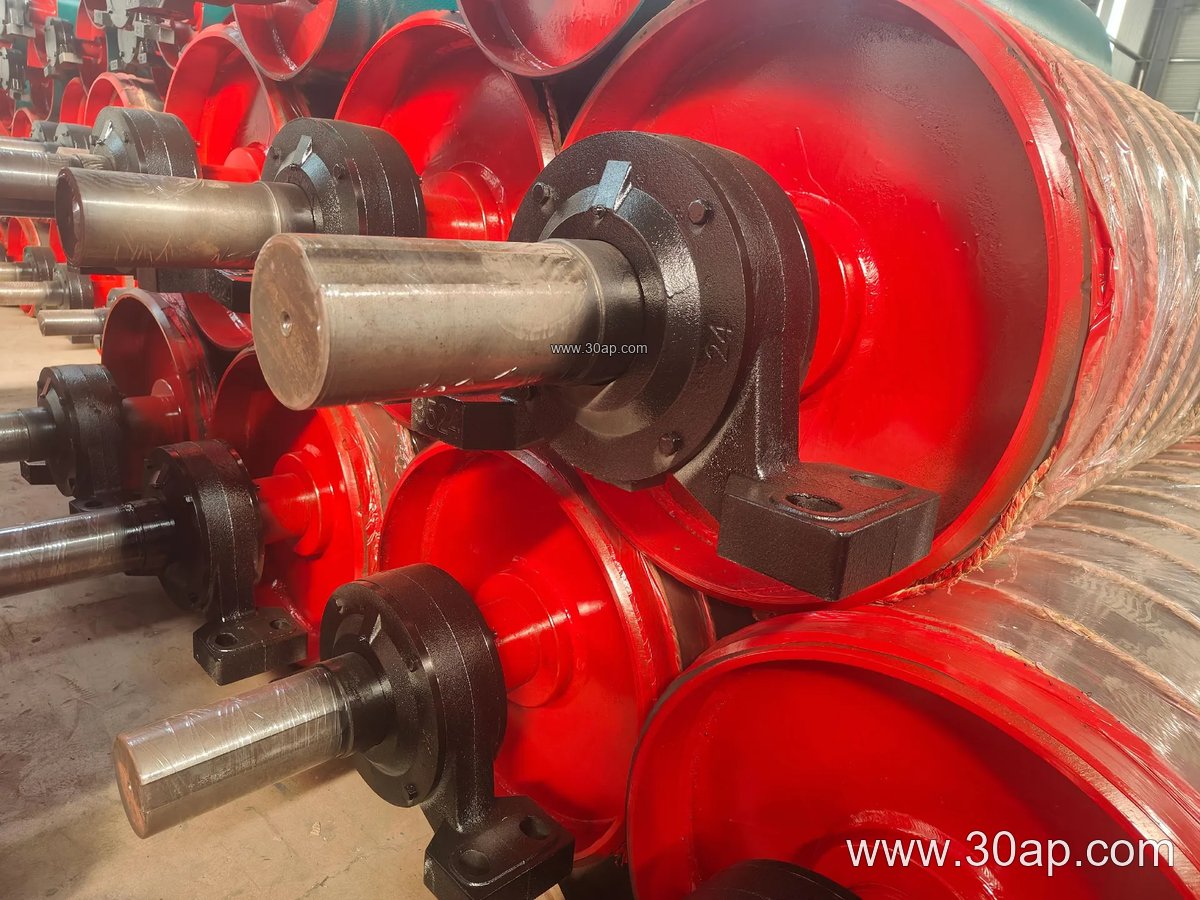
Most units use a welded steel shell, end discs, a shaft, and bearing housings. The shell is machined to run true, and the shaft is sized by torque and radial load rather than belt width alone. A common mistake is to assume a fixed shaft diameter for a given belt width; in practice, the shaft is determined by the drive power, pulley diameter, and the loads imposed by the conveyor belt and material.
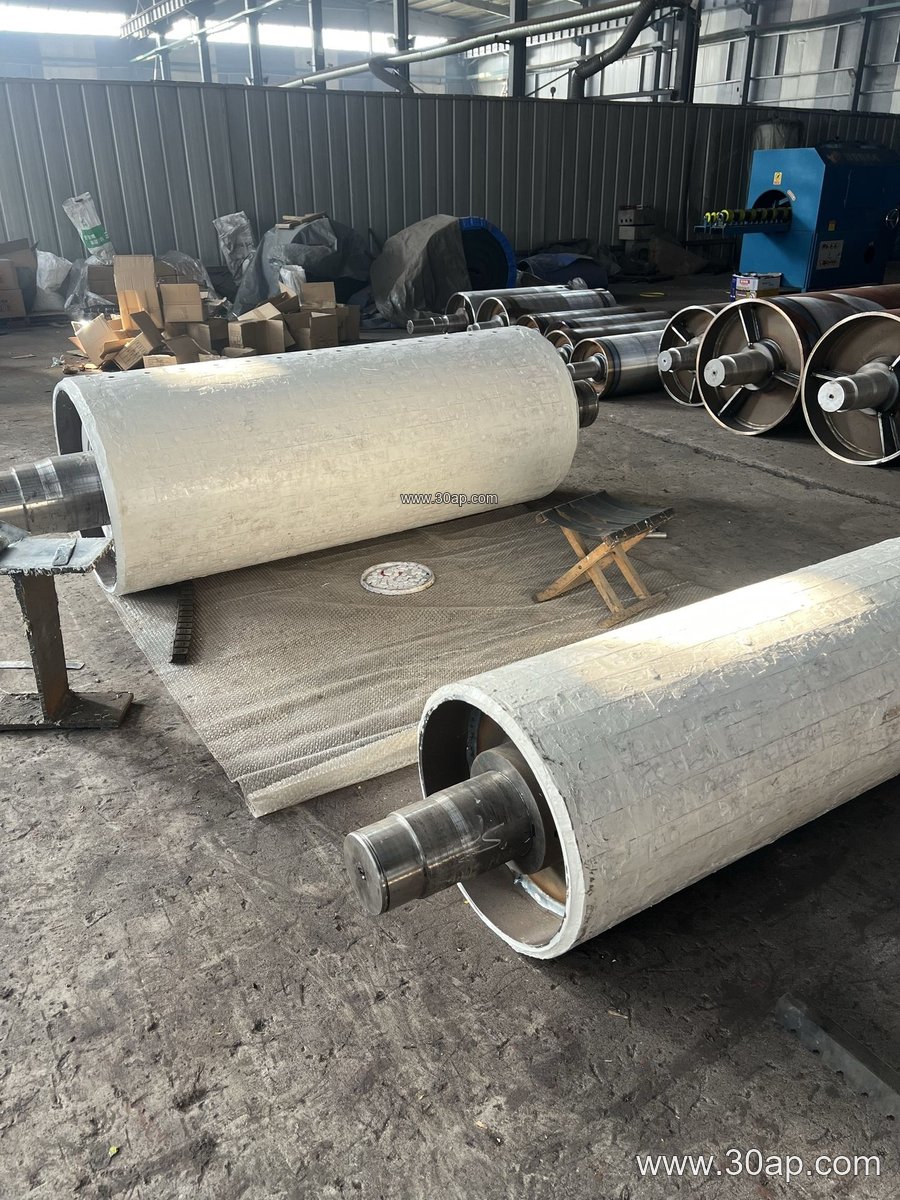
Surface treatment is a major decision. Plain shells are used where grip is not critical, while lagging improves traction and protects the shell. Common surface forms include:
- Plain finish for light-duty or non-drive positions
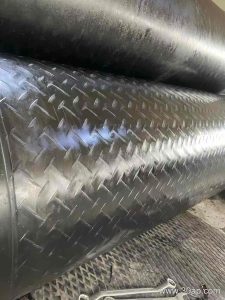
- Diamond lagging for general grip and water shedding
- Herringbone lagging for directional traction
- Ceramic lagging for high-wear, high-traction drive positions
Lagging thickness commonly ranges from 8 mm to 20 mm depending on duty. Rubber lagging is often cold-bonded or hot-vulcanized, and the choice affects how well the surface holds up in a damp, gritty environment.
Common Sizes and Configurations
Pulley dimensions are usually matched to the conveyor design rather than picked from a single table. Typical belt widths in aggregate plants run from B400 up to B2400, with pulley face widths slightly wider than the belt. Diameters commonly range from Ø200 to Ø1800 for plant conveyors, though larger units exist in heavy-duty mining and port applications.
The following reference values show how face width and diameter are often paired in practice. They are design examples, not fixed rules:
- B800 belt with Ø500 pulley, face width about 950 mm
- B1000 belt with Ø630 pulley, face width about 1150 mm
- B1200 belt with Ø1000 pulley, face width about 1400 mm
- B1400 belt with Ø800 pulley, face width about 1600 mm
Note that one belt width can work with several pulley diameters. A B1200 conveyor might use a smaller tail pulley and a larger head pulley, and the correct combination depends on wrap angle, belt tension, and space available.
Where It Fits in the Plant
In a sand and gravel operation, the drive or head pulley pulls the loaded belt and discharges onto a screen or stockpile. The tail pulley at the feed end redirects the returning belt, while bend and take-up pulleys route the belt through the frame and maintain tension. These positions are not interchangeable: a drive pulley needs lagging and torque capacity, a tail pulley needs protection from material buildup, and a bend pulley is selected mainly for geometry and bearing life.
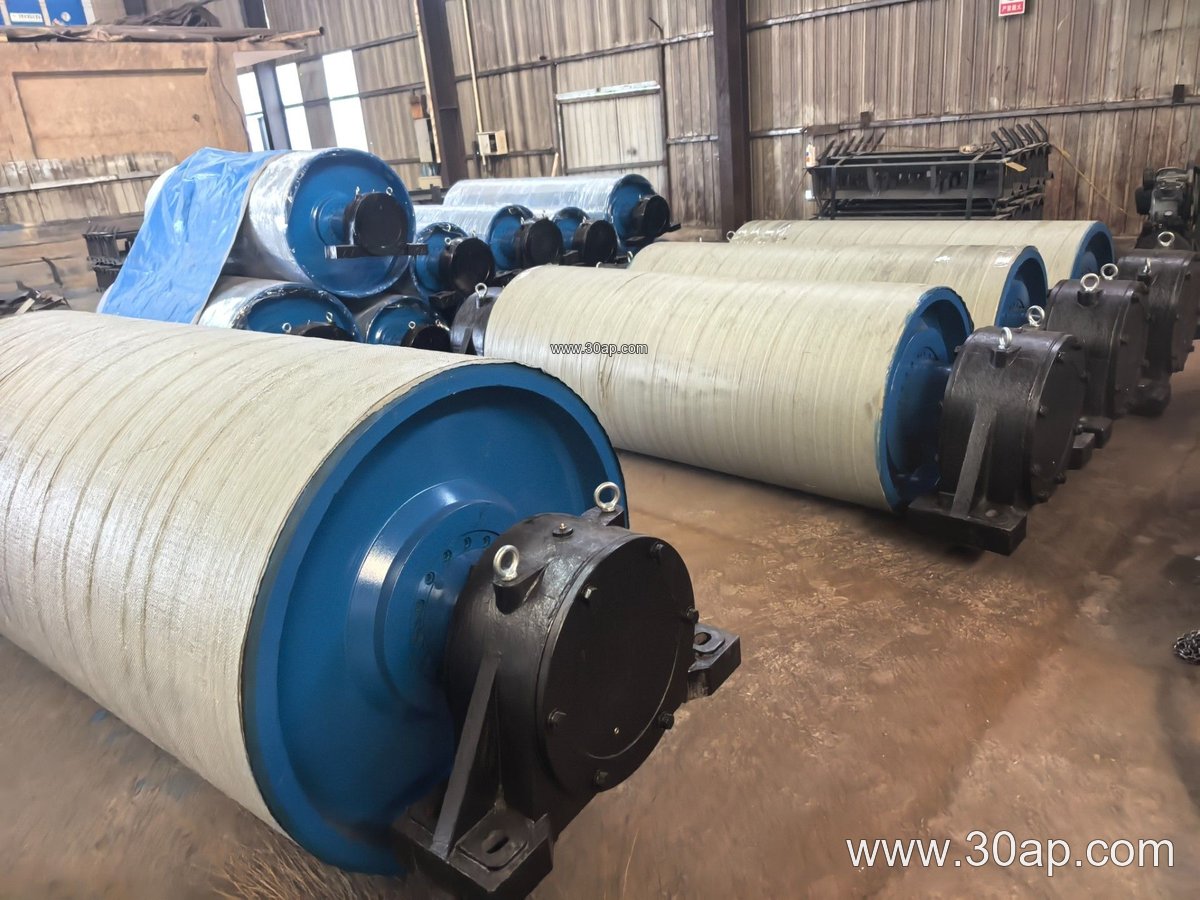
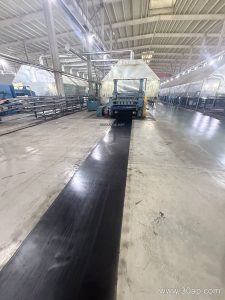
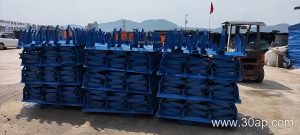
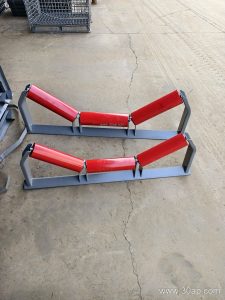
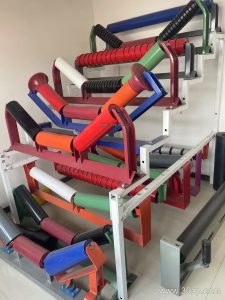
The pulley works together with the conveyor belt, idler rollers, and conveyor brackets. In a quarry or aggregate line, an abrasion resistant conveyor belt is common, and matching the pulley lagging to that belt helps prevent slip and premature cover wear. For lines handling wet or sticky material, a chevron conveyor belt or skirted conveyor belt may be used, and the pulley face width and lagging pattern should suit the belt profile.
Buyer Checklist
Before ordering, confirm the belt width, pulley diameter, shaft size, bearing type, lagging pattern, and mounting position. Ask whether the pulley is for a drive, tail, bend, or take-up location, because the requirements differ. Check that the face width suits the belt and that the lagging thickness matches the wear conditions. For dusty aggregate plants, sealed bearings and adequate drainage help extend service life.
Finally, review the conveyor layout as a system. A well-matched sand and gravel plant conveyor pulley, combined with suitable idlers and a quality conveyor belt, reduces downtime and keeps material moving through the crushing and screening circuit.