What a Heavy-Duty Ceramic Lagged Pulley Is
A heavy-duty ceramic lagged pulley is a conveyor pulley whose shell is covered with ceramic tiles bonded into a rubber or epoxy matrix. This ceramic lagging replaces plain rubber or bare steel on the drive face, giving the pulley a hard, wear-resistant surface that grips the conveyor belt under high tension. It is not a different pulley type; it is a standard drive, head, tail, or bend pulley with a ceramic lagging applied to its drum surface.
The ceramic lagging is built from small, raised ceramic tiles set in a pattern across the pulley face. The tiles provide a high-friction contact patch, while the surrounding rubber or polymer helps absorb shock and protect the belt. This combination is especially useful where the pulley must transmit torque without slipping, such as on a heavy-duty mining conveyor belt or a long overland system.
Construction and Surface Details
A typical heavy-duty ceramic lagged pulley starts with a steel shell and shaft, machined to the required diameter and face width. The lagging is then applied in one of two common ways: hot-vulcanized ceramic rubber or cold-bonded ceramic tiles. The ceramic tiles are usually 8–20 mm thick, and the lagging thickness can be selected to match the duty. Common lagging thicknesses include 8, 10, 12, 15, and 20 mm.
The surface pattern may be flat ceramic, diamond ceramic, or ceramic with grooves for water and fines drainage. For comparison, a standard rubber lagged pulley is softer and may wear faster in abrasive conditions, while a ceramic lagged pulley offers better cut and abrasion resistance. However, ceramic lagging is not a substitute for a different pulley subtype; a drive pulley remains a drive pulley, and a tail pulley remains a tail pulley.
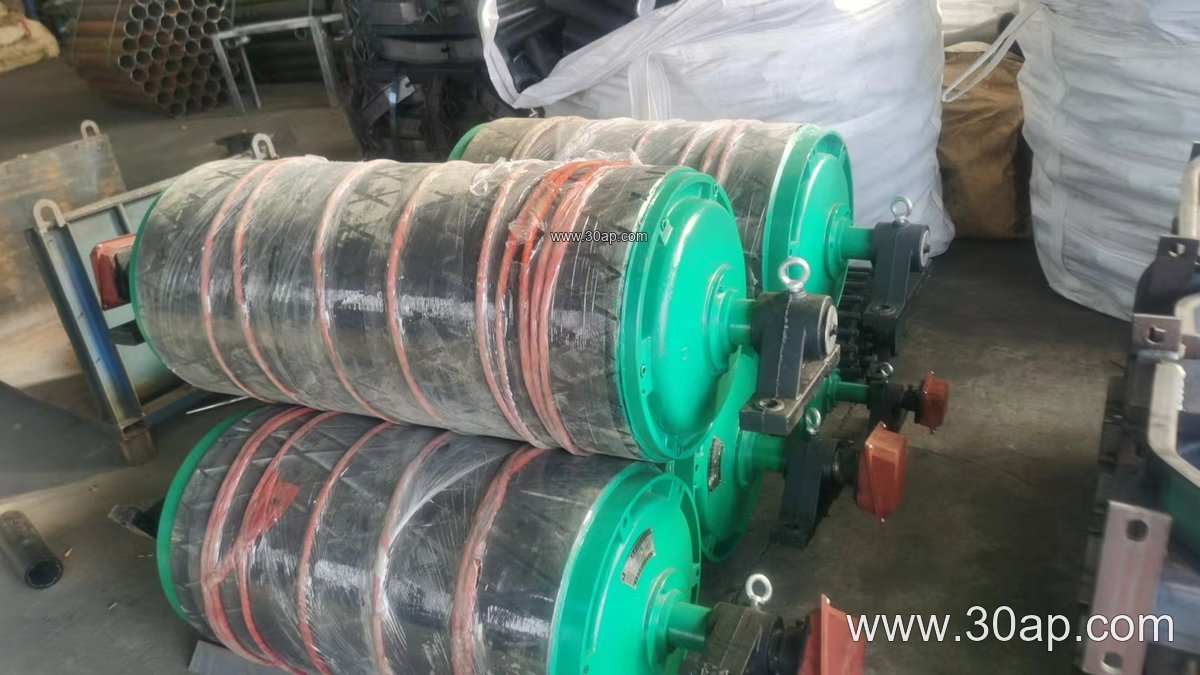
Common pulley diameters for heavy-duty service include Ø500, Ø630, Ø800, Ø1000, Ø1250, and Ø1400 mm. Face widths are usually wider than the belt width to allow for belt tracking. For example, a B800 belt may use a pulley face around 950 mm, while a B1200 belt may use about 1400 mm. These are typical references, not fixed rules; final dimensions are determined by conveyor design.
Where It Fits in the Conveyor
Ceramic lagged pulleys are often found at the head drive position, where the conveyor belt wraps the pulley and torque is highest. They are also used on tail pulleys in abrasive service, on bend pulleys in long systems, and on take-up pulleys where slip must be controlled. In a coal mining conveyor belt system, a ceramic lagged drive pulley can reduce belt slip under wet or dusty conditions. In a quarry conveyor belt line, the same pulley helps maintain grip when crushed rock fines coat the belt.
These pulleys work together with the conveyor belt, idler roller, and conveyor bracket. The belt type matters: a steel cord conveyor belt or a heavy-duty fabric core belt may require a different pulley face pattern than a chevron conveyor belt or a corrugated sidewall belt. For high-abrasion materials, an abrasion resistant conveyor belt paired with ceramic lagging can extend service life. In fire-sensitive areas, a flame retardant conveyor belt may be used, but the pulley itself is selected for mechanical grip and wear resistance.
Typical Applications and Industry Use
You will see heavy-duty ceramic lagged pulleys in limestone mines, iron ore plants, copper ore concentrators, coal washing plants, cement clinker lines, power plant coal handling, and port bulk terminals. They are also used in aggregate crushing and screening plants, where a crusher conveyor belt carries sharp rock. In each case, the ceramic surface helps resist wear from abrasive dust and reduces the risk of belt slippage.
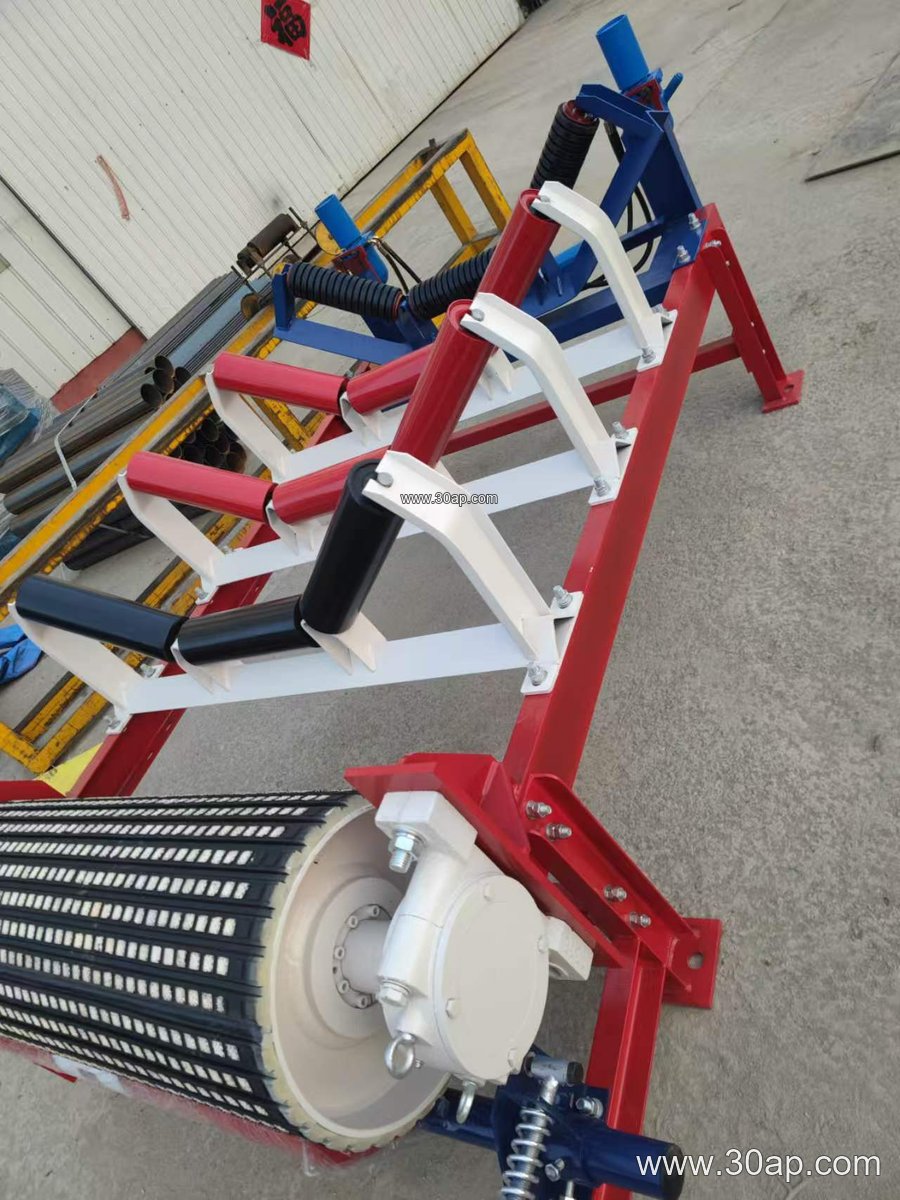
For a conveyor pulley in a tunnel muck removal system, ceramic lagging can handle wet, gritty conditions. In a fertilizer or grain silo application, a smoother rubber lagging may be preferred, but ceramic lagging is chosen when abrasion and torque demand are high. The key is to match the lagging to the actual material and belt tension, not to assume one surface fits every conveyor.
Buyer Checklist for Heavy-Duty Ceramic Lagged Pulleys
When specifying a heavy-duty ceramic lagged pulley, confirm the pulley subtype first: drive, head, tail, bend, take-up, or snub. Then provide the belt width, pulley diameter, face width, shaft diameter, and lagging thickness. Shaft diameter is determined by torque and load, not by belt width alone; common shaft sizes include Ø80, Ø100, Ø120, Ø140, Ø160, and Ø200 mm. Do not assume a fixed shaft size from a given belt width.
Ask about the ceramic tile bond, tile pattern, and rubber hardness. Verify that the lagging is suitable for the conveyor belt type and environmental conditions. For example, a heat resistant conveyor belt may need a lagging that tolerates higher temperatures, while an oil resistant conveyor belt may require a different rubber compound. Check that the pulley face width allows proper belt tracking and that the conveyor bracket and idler roller spacing are compatible.
Finally, consider maintenance. Ceramic lagging can chip if struck, so proper installation and belt alignment matter. Spare ceramic tiles and repair kits may be useful in remote sites. A well-selected ceramic lagged pulley can improve traction and reduce downtime in abrasive, high-load conveyor systems.