What a Rubber Lagged Pulley Does on a Conveyor
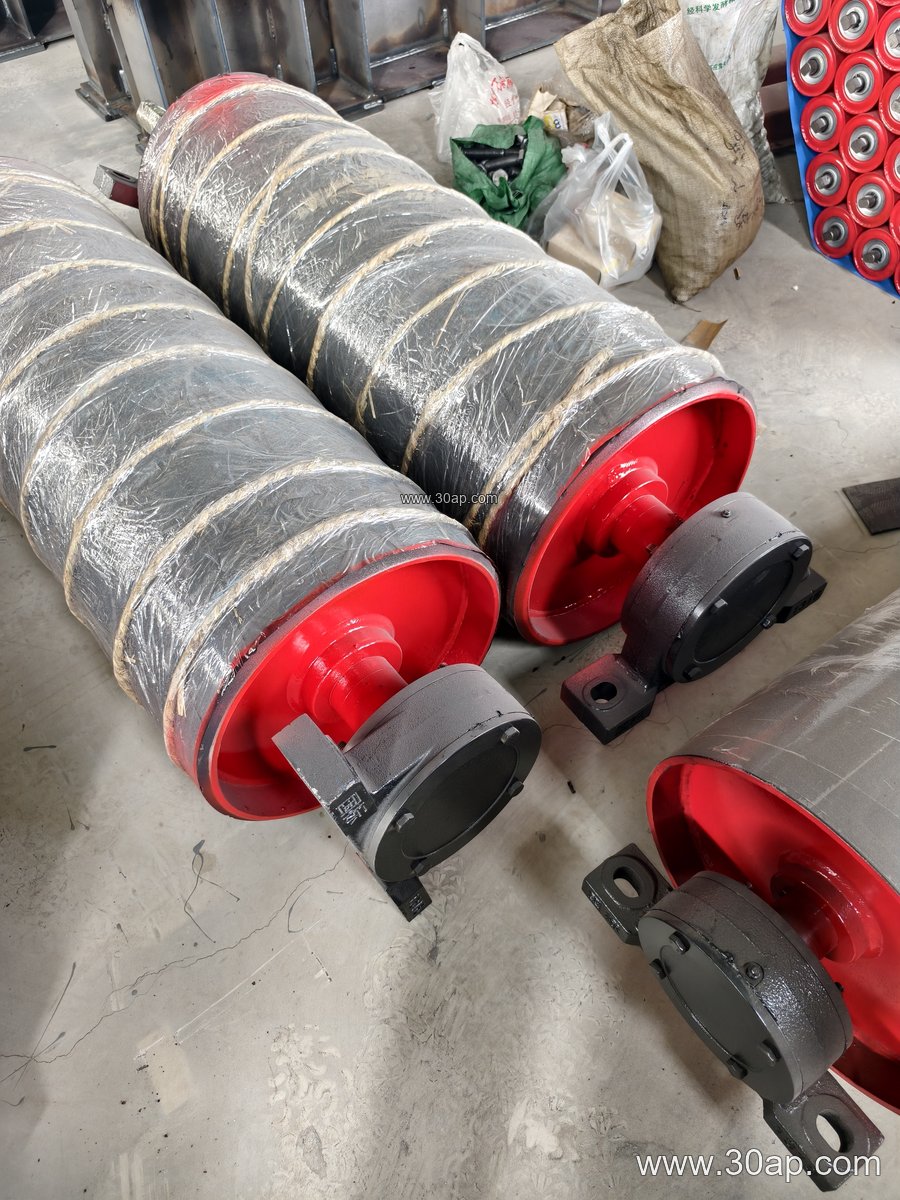
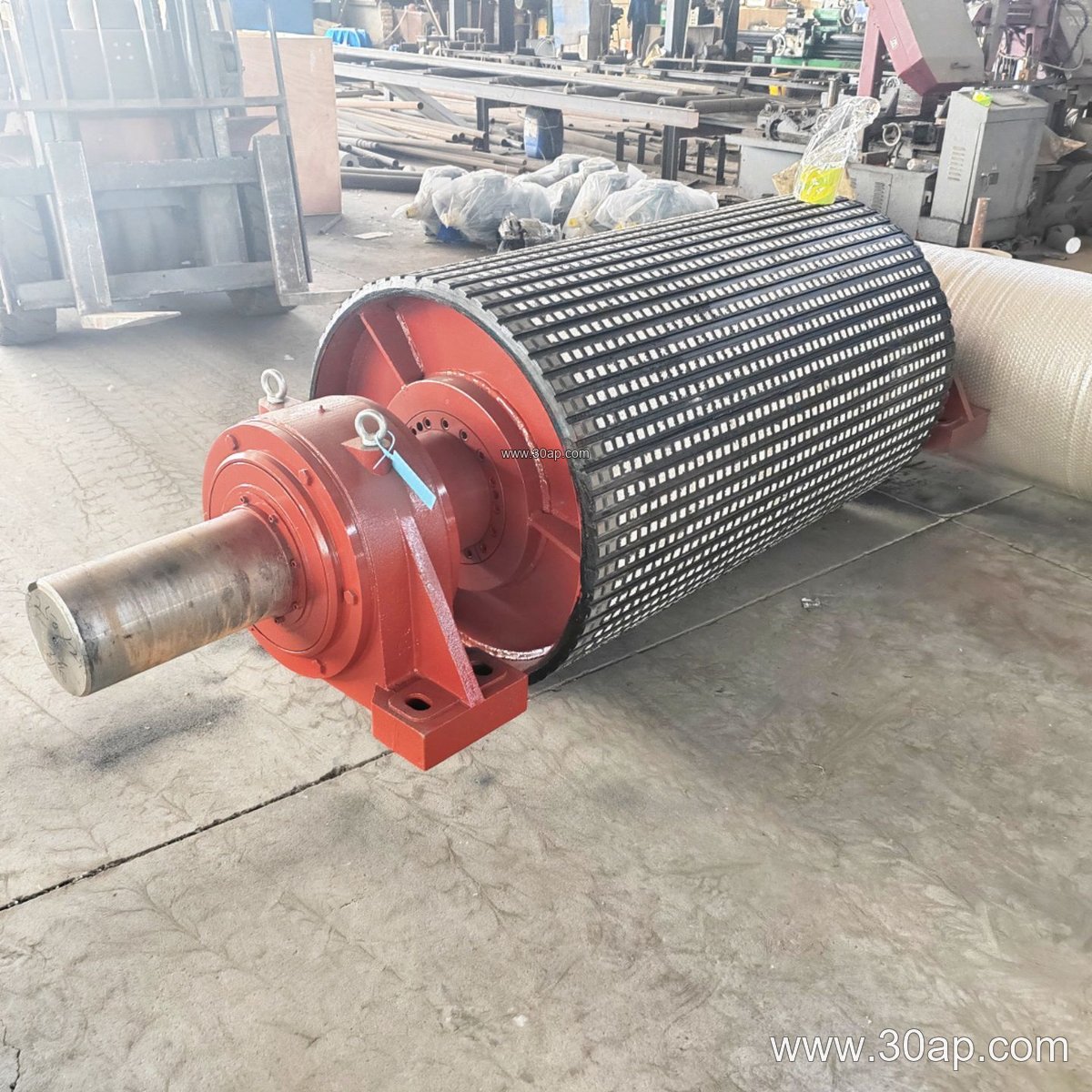
A belt conveyor rubber lagged pulley is a drum with a rubber layer bonded to its shell, installed where the conveyor belt needs reliable traction or protection from wear. The lagging raises friction between the pulley face and the belt, which matters most at the drive position where torque is transferred. It also cushions the belt and reduces the chance of material build-up sticking to a bare steel shell.
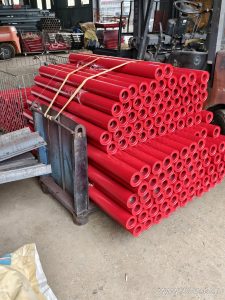
In a typical stone crushing line or cement plant, the head pulley drives the belt while the tail pulley returns it. A rubber-coated drum at either position works together with the conveyor belt, conveyor pulley and idler roller set to keep the line running smoothly. The coating is not cosmetic; it is a wear part that can be replaced when it thins or glazes over.
Construction and Surface Options
The base is a welded steel cylinder with shafts, hubs and end discs sized to the load. Rubber is applied in one of several ways: hot vulcanized bonding, cold bonded rubber, or cast rubber. Common lagging thicknesses are 8, 10, 12, 15 and 20 mm, chosen according to belt tension and the abrasiveness of the material.
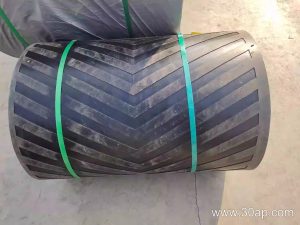
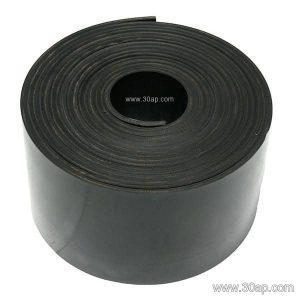
Surface patterns include plain, diamond and herringbone forms. Diamond lagging sheds water and fine dust well, while herringbone grooves channel moisture outward and suit wet or muddy conditions. Ceramic lagging is available for extremely abrasive service but is a different surface family and should be specified only when the duty demands it.
- Plain rubber: general duty, easy cleaning
- Diamond: improved grip in damp conditions
- Herringbone: water and fines evacuation
- Hot vulcanized: strongest bond, longer service life
Typical Sizes and Dimensional Relationships
Pulley diameter and face width are matched to the belt and the shaft load, not to a single fixed formula. A B800 belt often runs on a drum with roughly 950 mm face width, and B1200 around 1400 mm, but the final figure follows the conveyor design. Diameter choices commonly range from Ø200 to Ø1800, with drive pulleys usually larger than tail or bend pulleys.
| Belt width | Typical pulley face width | Common diameter range |
|---|---|---|
| B500 | about 600 mm | Ø250–Ø500 |
| B800 | about 950 mm | Ø400–Ø800 |
| B1000 | about 1150 mm | Ø500–Ø1000 |
| B1400 | about 1600 mm | Ø630–Ø1250 |
| B1800 | about 2000 mm | Ø800–Ø1600 |
Shaft diameters such as Ø80, Ø100, Ø120 or Ø160 are determined by torque and bearing load. A wider belt does not automatically mean a fixed shaft size. Combinations like B1200 × Ø1000 or B800 × Ø500 are common references, not universal rules.
Where It Fits in the Plant
In a coal washing plant or power station coal yard, a rubber lagged drive pulley helps start a fully loaded belt without slip. In a limestone quarry or aggregate line, the same drum resists the cutting action of sharp rock dust. A cement plant clinker conveyor benefits from a heat-tolerant rubber grade, while a port bulk terminal may prefer diamond lagging for wet ore handling.
At the tail position, a lagged pulley is sometimes used to protect the shell from abrasive fines, though a plain or wing pulley may be chosen where self-cleaning matters more. This is a design choice, not a rule; drive, tail and bend pulleys serve different functions and are not interchangeable.
Buyer Checklist
Before ordering, confirm the belt width, the required diameter, the shaft size, the lagging thickness and the surface pattern. State the material being carried and whether the environment is wet, dusty or hot. Ask how the rubber is bonded, since hot vulcanized lagging generally outperforms cold bonded work in heavy duty. Check that the drum face width suits the conveyor bracket spacing and that the bearing housings match the frame.
On the belt side, note whether the conveyor uses an EP conveyor belt, an NN conveyor belt or a steel cord conveyor belt, because tension levels affect the traction requirement. A flame retardant conveyor belt in an underground coal mine may call for a specific rubber compound, while a heat resistant conveyor belt needs a lagging grade that tolerates elevated temperature. Matching the drum to the belt and the duty keeps the whole conveyor pulley assembly reliable.