What a Heavy-Duty Trough Idler Set Does
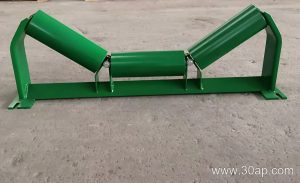
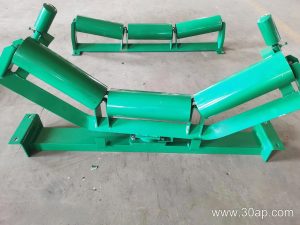
A heavy-duty trough idler set is a group of three or more idler rollers arranged in a trough shape to support the loaded run of a conveyor belt. The set sits on the carrying side of the conveyor and forms the belt into a curved profile, which keeps bulk material centered and reduces spillage. This assembly is also known as a heavy-duty carrying idler set. It is not a conveyor pulley; drive, tail, and bend pulleys serve completely different functions at the ends of the belt.
The trough shape is created by mounting two side rollers at an angle and one or more center rollers horizontally. Common arrangements include single-roller, two-roller, and three-roller trough sets. The three-roller version is widely used in heavy-duty applications because it distributes the load across multiple idler rollers and maintains a stable trough profile.
How the Set Is Built
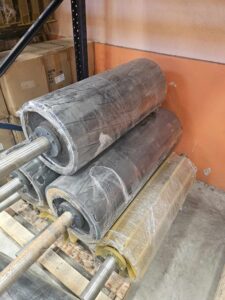
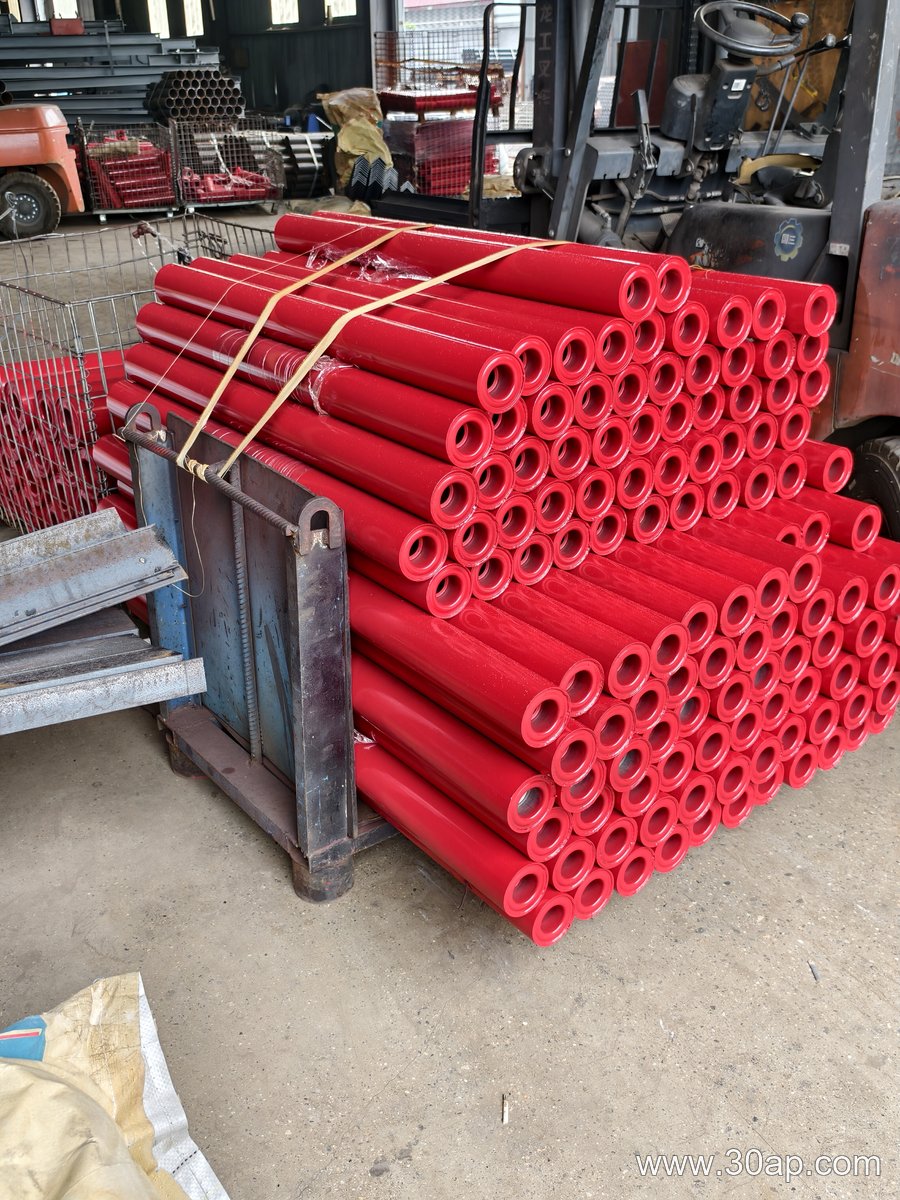
Each roller in a heavy-duty trough idler set consists of a steel tube shell, bearing housings, a shaft, and seals. Roller diameters commonly range from Ø63 to Ø219, though larger diameters are selected for higher belt speeds and heavier loads. The roller surface may be plain steel, nylon, ceramic, or rubber rings. Rubber rings are often chosen for impact zones, while ceramic or nylon surfaces can help with sticky or abrasive materials.
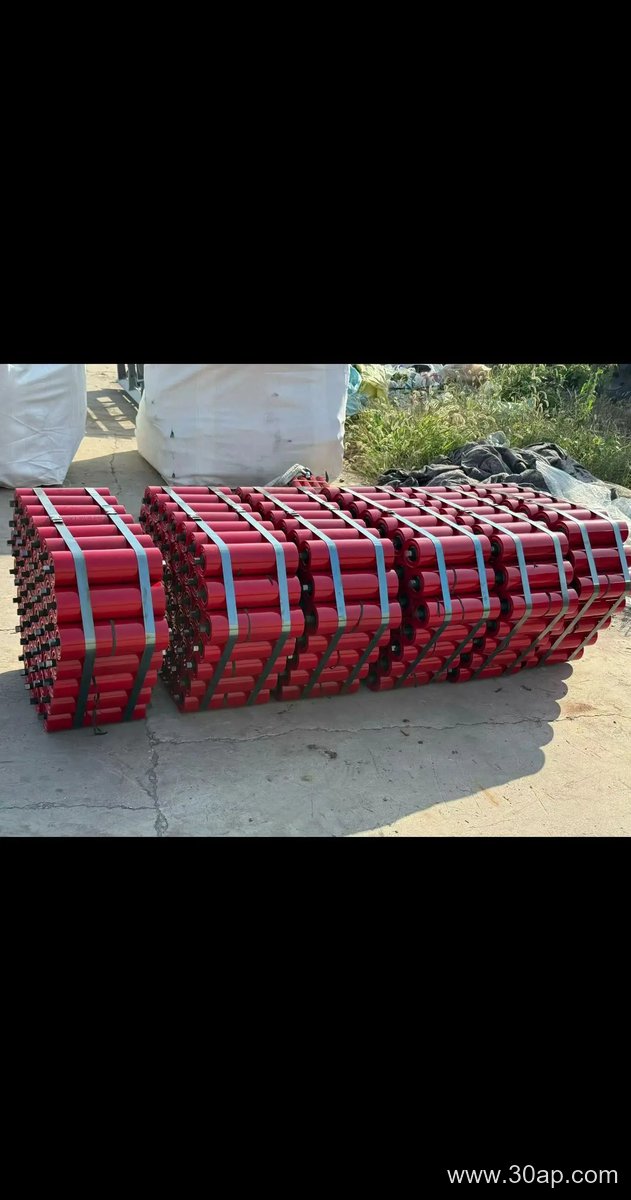
Bearings are typically deep-groove ball bearings such as 6204, 6205, 6305, 6306, 6308, or 6310. The bearing size is matched to the roller diameter and load rating, not to the belt width alone. Seals are critical in dusty or wet conditions; a heavy-duty set usually uses labyrinth or contact seals to keep fine particles out.
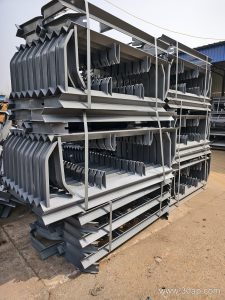
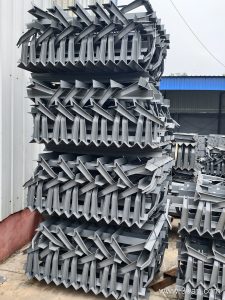
The rollers are held in a frame or brackets. The conveyor bracket connects the idler set to the conveyor structure and allows for height adjustment. Trough angles are commonly 20, 30, 35, or 45 degrees. A 35-degree trough is a frequent choice for heavy bulk materials, but the correct angle depends on belt width, material characteristics, and conveyor design.
Where It Is Used
Heavy-duty trough idler sets are found in punishing environments where the belt carries dense, abrasive, or lumpy material. In a limestone quarry, for example, the set supports the loaded belt after the primary crusher. In a coal-fired power plant, it carries coal on the main feed conveyor. The set is also used in sand and gravel pits, copper and iron ore operations, and cement plants. In each case, the idler set must handle continuous loading, occasional impact, and fine dust.
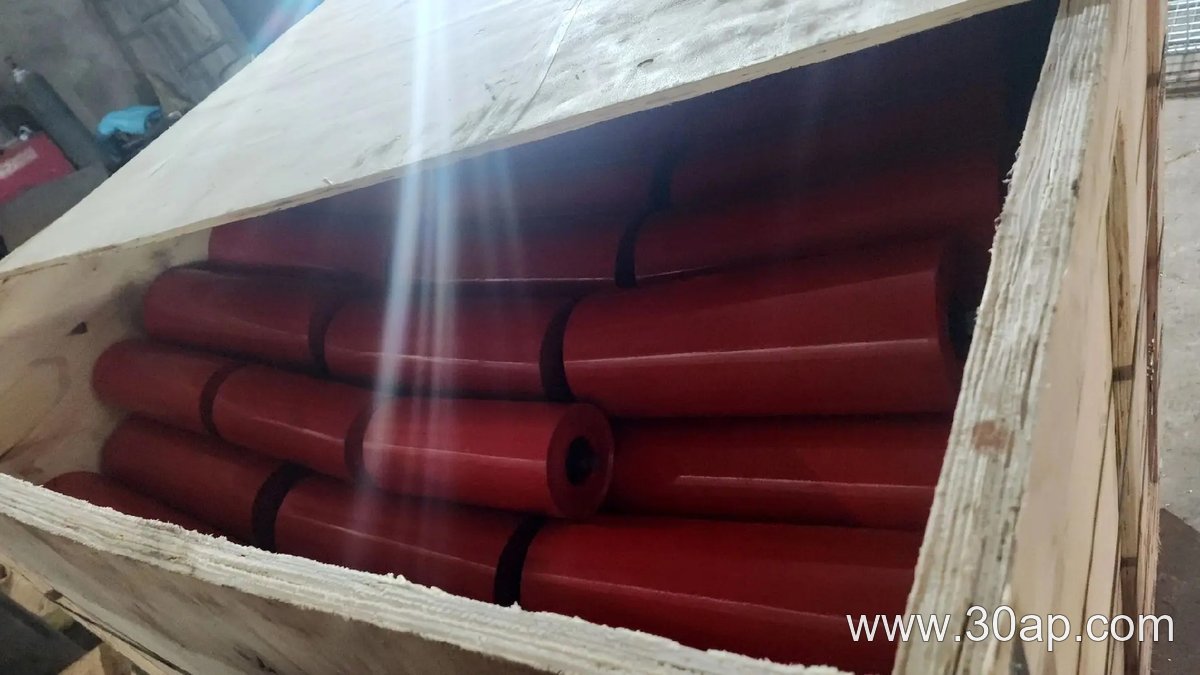
For comparison, a return idler set supports the empty side of the belt and is often a flat or V-shaped roller. A buffer idler set is used at transfer points to absorb impact. These are different subtypes and should not be confused with the heavy-duty trough idler set, which is specifically for the carrying run.
Selection Points for Buyers
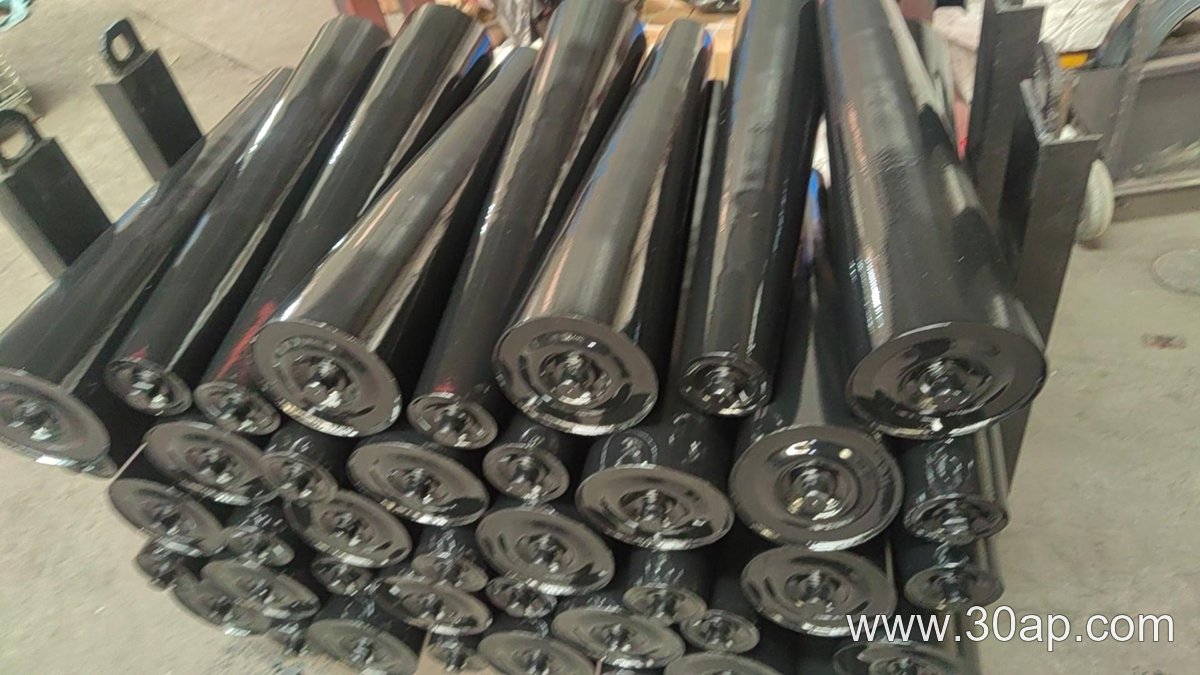
When choosing a heavy-duty trough idler set, start with the belt width. Common belt widths include B400, B500, B650, B800, B1000, B1200, B1400, B1600, B1800, B2000, B2200, and B2400. The roller length changes with belt width and trough angle. For a three-roller trough set, typical center roller lengths are about 200 mm for B500, 250 mm for B650, 315 mm for B800, 380 mm for B1000, 465 mm for B1200, 530 mm for B1400, 600 mm for B1600, 670 mm for B1800, and 750 mm for B2000. These are common examples, not fixed rules; side rollers and center rollers can differ.
- Check the load capacity and bearing life for the actual material weight and belt speed.
- Match the trough angle to the material’s angle of repose and the belt’s ability to trough.
- Confirm the shaft diameter and bracket mounting dimensions before ordering.
- Consider sealed bearings and wear-resistant roller surfaces for dusty or wet conditions.
- For sticky materials, a spiral or rubber-disc roller may reduce buildup, but it remains a trough idler set variant.
Maintenance is straightforward: inspect rollers for seizure, check seals for damage, and replace any roller that no longer turns freely. A worn idler roller can damage the conveyor belt and increase power consumption. Keeping the set aligned and the brackets tight helps extend service life.
In short, a heavy-duty trough idler set is a robust, multi-roller assembly that shapes and supports the loaded belt. Buyers should base their selection on belt width, material, trough angle, and environmental conditions rather than a single universal specification.