What a Heavy-Duty Belt Conveyor Idler Does on Site
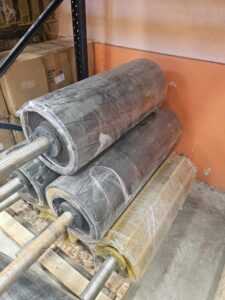
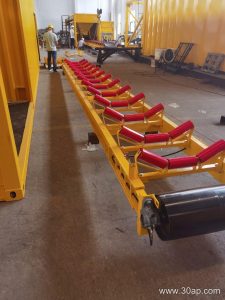
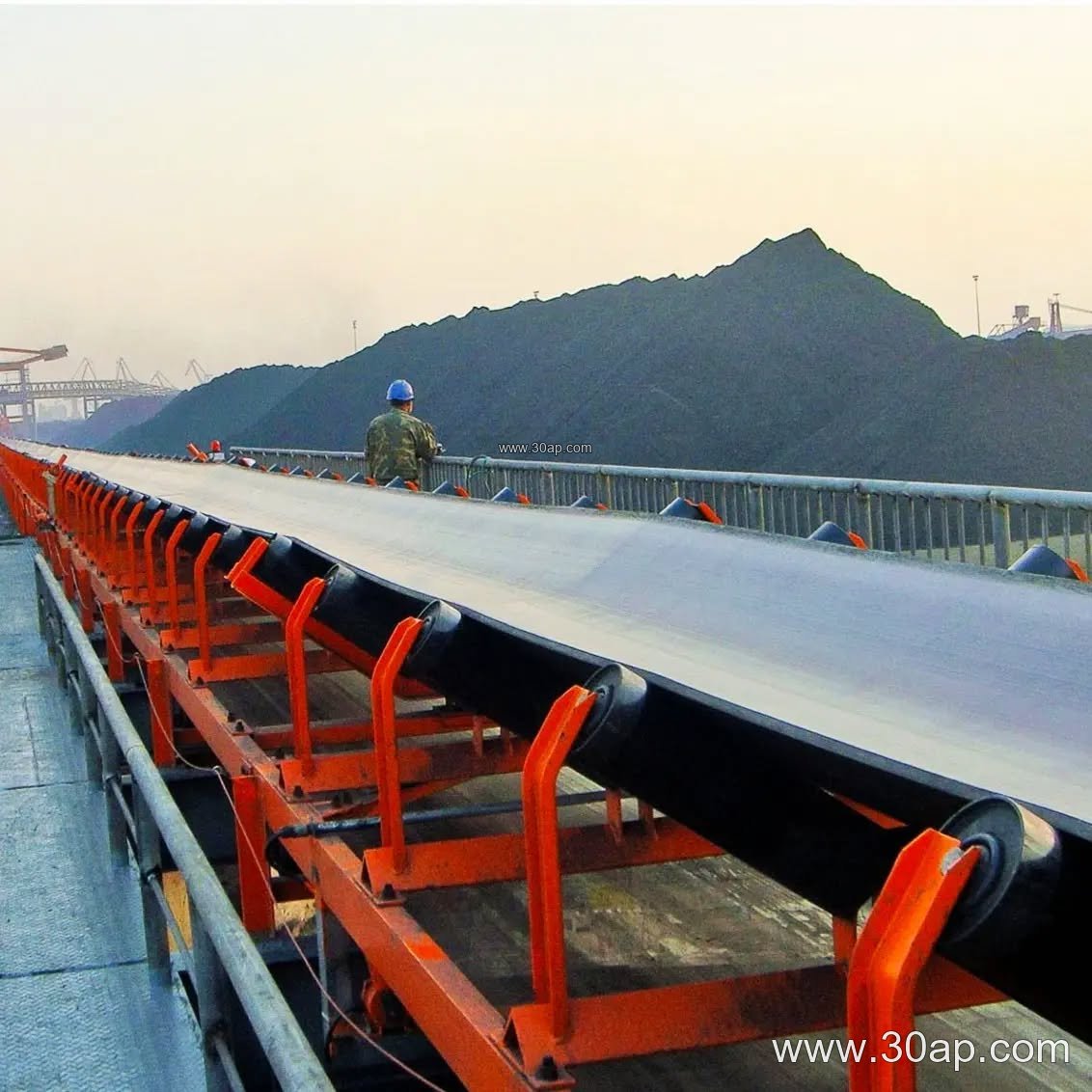
A heavy-duty belt conveyor idler is the rotating support that carries the loaded conveyor belt and keeps it tracking along the structure. In a quarry, limestone mine, or iron ore operation, the belt may run fully loaded for long shifts, so the idler must hold the belt profile, resist dust and grit, and turn freely under load. The idler roller is not a passive accessory; it directly affects belt life, energy draw, and the amount of spillage along the line. On a typical three-roll troughing set, the center roll and the two side rolls form the trough that shapes the belt carrying bulk material.
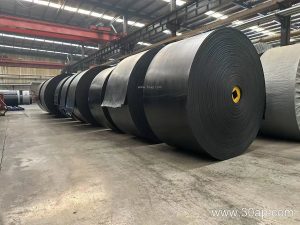
Buyers often ask how a heavy-duty belt conveyor idler differs from a standard roll. The answer usually lies in wall thickness, bearing protection, shaft size, and the sealing arrangement rather than in one single feature. A heavier roll shell and a robust bearing housing help the idler survive impact at transfer points and continuous abrasion from ore or aggregate. When the conveyor belt is a thick, abrasion resistant conveyor belt or a steel cord conveyor belt carrying high tonnage, the idler set must be matched to that duty.
Construction Details That Matter
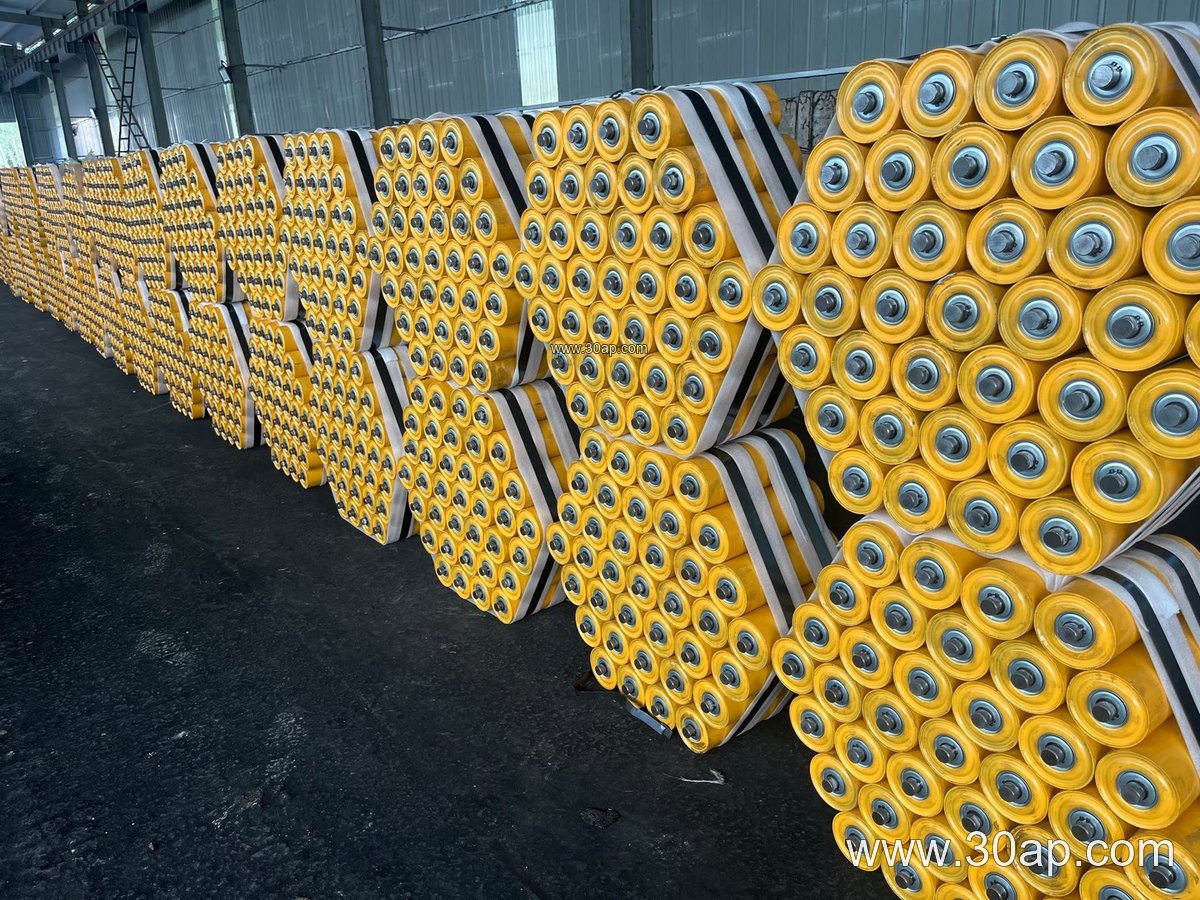
Most heavy-duty belt conveyor idlers use a steel tube shell, a through shaft, and a bearing assembly at each end. Common roll diameters in heavy service include Ø127, Ø133, Ø159, Ø178, Ø194, and Ø219, though the correct choice depends on belt width, load, and speed rather than on habit. Bearing sizes such as 6305, 6306, 6308, and 6310 appear in many heavy-duty designs, and no single bearing should be assumed to fit only one roll diameter.
- Shell: steel tube with machined ends; thicker walls resist denting at impact zones.
- Bearing: deep-groove ball bearings in a protected housing, often with a labyrinth seal.
- Sealing: multi-stage seals keep fine dust and water away from the bearing cavity.
- Shaft: sized to the load and the bracket, not chosen from belt width alone.
- Surface: plain steel, rubber rings for cushioning, or ceramic for certain wear duties.
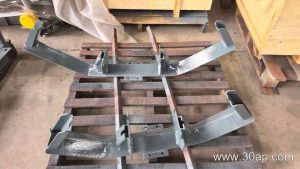
The conveyor bracket and the frame spacing also influence idler life. A roll that fits loosely in its bracket can vibrate, wear the shaft flat, and eventually seize. For that reason, buyers should confirm the bracket type and the roll end dimensions before ordering a replacement set.
Where Heavy-Duty Idlers Are Used
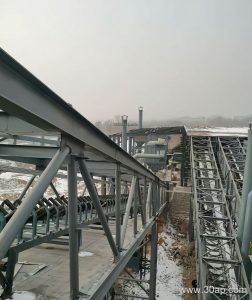
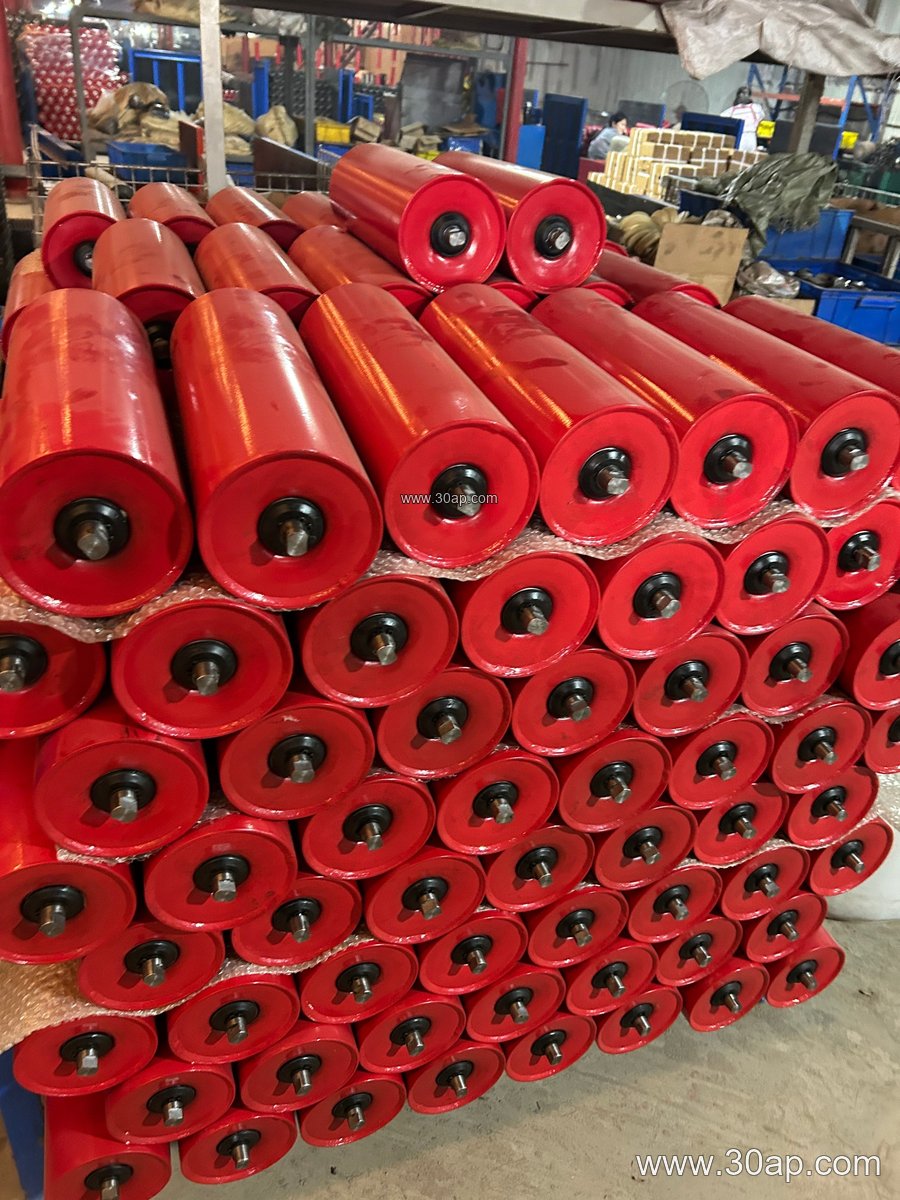
These rolls are common in a limestone quarry feeding a crusher, and in a coal handling system at a power plant where dust and continuous operation are normal. In both cases, the idler set works alongside the conveyor pulley at the head and tail, but the pulley and the idler are different components with different functions. The drive pulley pulls the belt, while the idler supports it. A bend pulley changes belt direction; it is not a substitute for a carrying idler.
Other typical locations include cement plants moving clinker and raw meal, sand and gravel lines, and port terminals handling bulk material. In a wash plant or a coal preparation facility, a flame retardant conveyor belt may be required, and the idler specification should still match the load and the environment. The same heavy-duty belt conveyor idler may also appear on a pipe conveyor belt line or a corrugated sidewall conveyor belt system, where the roll set must suit the belt profile.
Matching Idler Diameter and Belt Width
Belt width and roll diameter are related through the conveyor design, but they are not locked one-to-one. A B800 belt and a B1200 belt may both use Ø127 rolls in some designs, while a heavier B1400 line may call for Ø159 or larger. Roll length also changes with belt width and trough angle. For a three-roll troughing set, common roll lengths are roughly 200 mm for B500, 250 mm for B650, 315 mm for B800, 380 mm for B1000, 465 mm for B1200, 530 mm for B1400, 600 mm for B1600, 670 mm for B1800, and 750 mm for B2000. These are reference examples only; side rolls and center rolls can differ, and final dimensions should follow the conveyor design.
Trough angles of 20, 30, 35, and 45 degrees are common. A deeper trough helps contain bulk material, but it also increases belt bending and load on the side rolls. Forward tilt of about 1.5 to 2 degrees is sometimes used on training idlers to help belt tracking, and it should not be confused with the trough angle itself.
Buyer Checklist Before Ordering
- Confirm the roll diameter, roll length, and shaft end that fit the existing bracket.
- State the belt width and the trough angle so the roll set matches the frame.
- Describe the material: ore, coal, clinker, or aggregate, and whether it is wet, sticky, or abrasive.
- Check whether the line uses an EP conveyor belt, an NN conveyor belt, or a steel cord belt, because belt stiffness affects idler spacing.
- Ask about seal type and bearing size for dusty or washdown conditions.
- For impact zones, consider rubber-ring impact rolls rather than standard carrying rolls.
Finally, keep spare idler rollers on hand for the highest-wear positions, such as transfer points and the tail area. A seized roll can cut a conveyor belt quickly, and the cost of one spare set is small compared with an unplanned stoppage. Buyers who record roll diameter, bearing number, and bracket style for each conveyor will find replacements far easier to source.