What a Bend Pulley Assembly Does
A bend pulley assembly is the redirected-pulley group that changes the path of a conveyor belt without driving it or setting its final tension. It sits between the head and tail of the conveyor, guiding the return strand around corners, under structural steel, or into a take-up zone. Because it does not transmit drive torque, its job is to support the belt, hold a wrap angle, and keep the return run tracking cleanly.
The assembly usually combines a cylindrical shell, shaft, bearing housings, and a mounting frame. In many plants the same item is called a conveyor bend pulley assembly or a redirect pulley assembly, and those names refer to the same product. It should not be confused with a drive pulley, which transmits power, or a tail pulley, which returns the belt at the loading end.
Construction and Surface Options
The shell is commonly welded steel, machined for concentricity, and fitted with a shaft sized by torque and bearing load rather than by belt width alone. Bearings may be greased-for-life or relubricable, and the frame is drilled to match the conveyor bracket spacing on site.
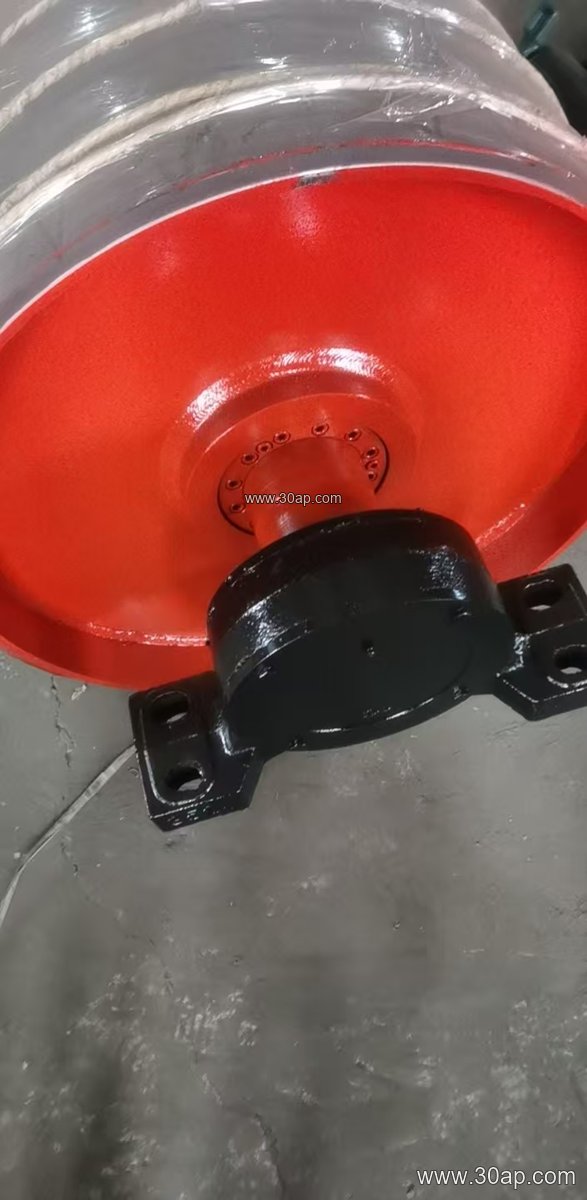
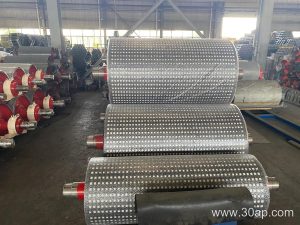
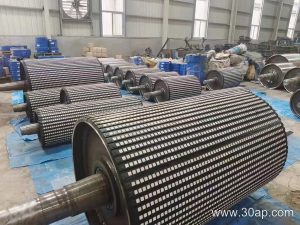
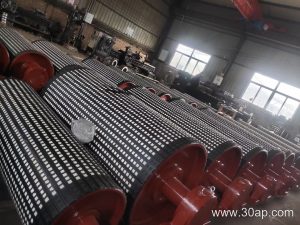
Surface treatment depends on belt contact and material carryback. Plain shells are common on clean return runs, while rubber lagging improves friction and protects the shell. Diamond or herringbone grooving helps shed water and fines, and ceramic lagging suits abrasive service. Lagging thickness is often quoted at 8, 10, 12, 15, or 20 mm.
- Plain face for light return-side contact
- Cold-bonded or hot-vulcanized rubber for grip and wear protection
- Diamond or chevron pattern for wet, dusty conditions
- Ceramic tiles for high-abrasion ore and aggregate duty
Sizing by Belt Width and Geometry
Face width normally exceeds belt width so the belt stays fully supported. Typical reference values are shown below; final dimensions follow the conveyor design.
| Belt width | Typical pulley face width | Example diameter range |
|---|---|---|
| B400 | about 500 mm | Ø200 to Ø315 |
| B650 | about 750 mm | Ø250 to Ø400 |
| B800 | about 950 mm | Ø315 to Ø500 |
| B1000 | about 1150 mm | Ø400 to Ø630 |
| B1200 | about 1400 mm | Ø500 to Ø800 |
| B1400 | about 1600 mm | Ø630 to Ø1000 |
| B1600 | about 1800 mm | Ø800 to Ø1250 |
Combinations such as B800 × Ø500 or B1200 × Ø1000 are common in catalogs, but no single belt width locks the pulley to one diameter. Wrap angle, belt stiffness, and take-up travel decide the final geometry.
Where It Fits in the Plant
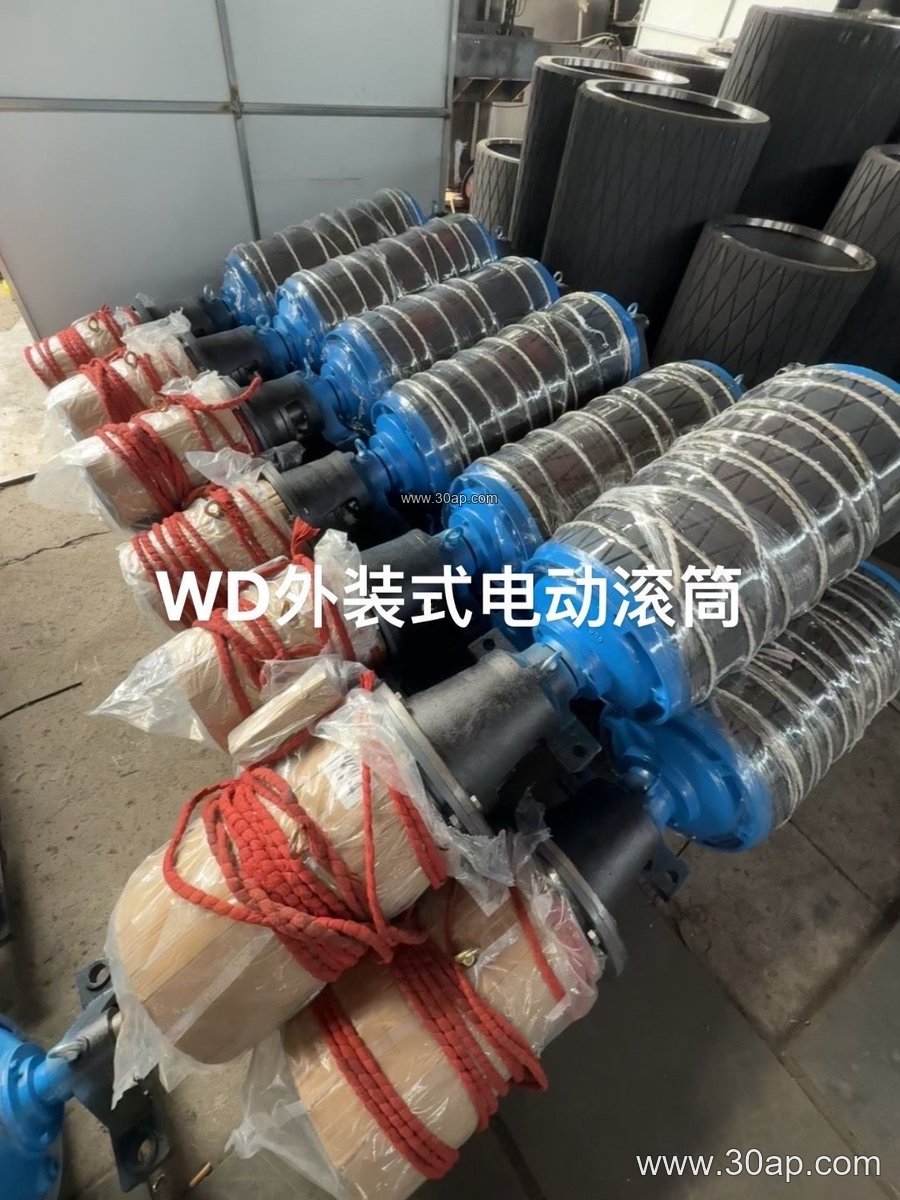
In a quarry or aggregate line, a bend pulley assembly guides the return belt around a transfer tower or into a gravity take-up. In a coal washing plant or power station coal yard, it keeps the return strand clear of structural columns and chute supports. The same hardware appears in cement plants, steel sintering lines, and port bulk terminals where space under the conveyor is tight.
Because it works with the belt rather than driving it, matching matters. A stiff steel cord conveyor belt needs a larger diameter than a thin fabric belt to avoid high bending stress. Abrasive loads such as iron ore or copper ore favour lagged shells, while a food or fertilizer line may call for a clean, non-marking face. On long overland runs, a heat resistant conveyor belt or an abrasion resistant conveyor belt may pass over the same redirect pulley, so lagging choice should suit the belt cover.
Buyer Checklist
- Confirm the mounting position: return-side redirect, take-up, or snub duty.
- Give belt width, belt type, and expected wrap angle.
- State shaft and bearing load requirements rather than guessing from width.
- Choose lagging pattern and thickness for the material carried.
- Check bracket hole spacing and available clearance before ordering.
- Ask for concentricity and balance records where vibration is a concern.
Inspect lagging wear, bearing temperature, and shell runout during shutdowns. A worn bend pulley can misalign the return strand and shorten belt life, so replacing lagging early is usually cheaper than replacing the belt. For related components, see conveyor pulley and conveyor bracket references, and match the assembly to the actual belt and idler roller layout on site.