What a Four-Roll Idler Bracket Does
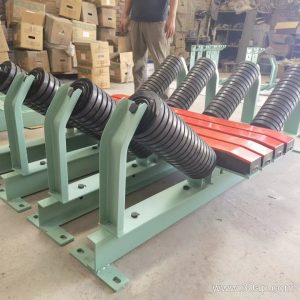
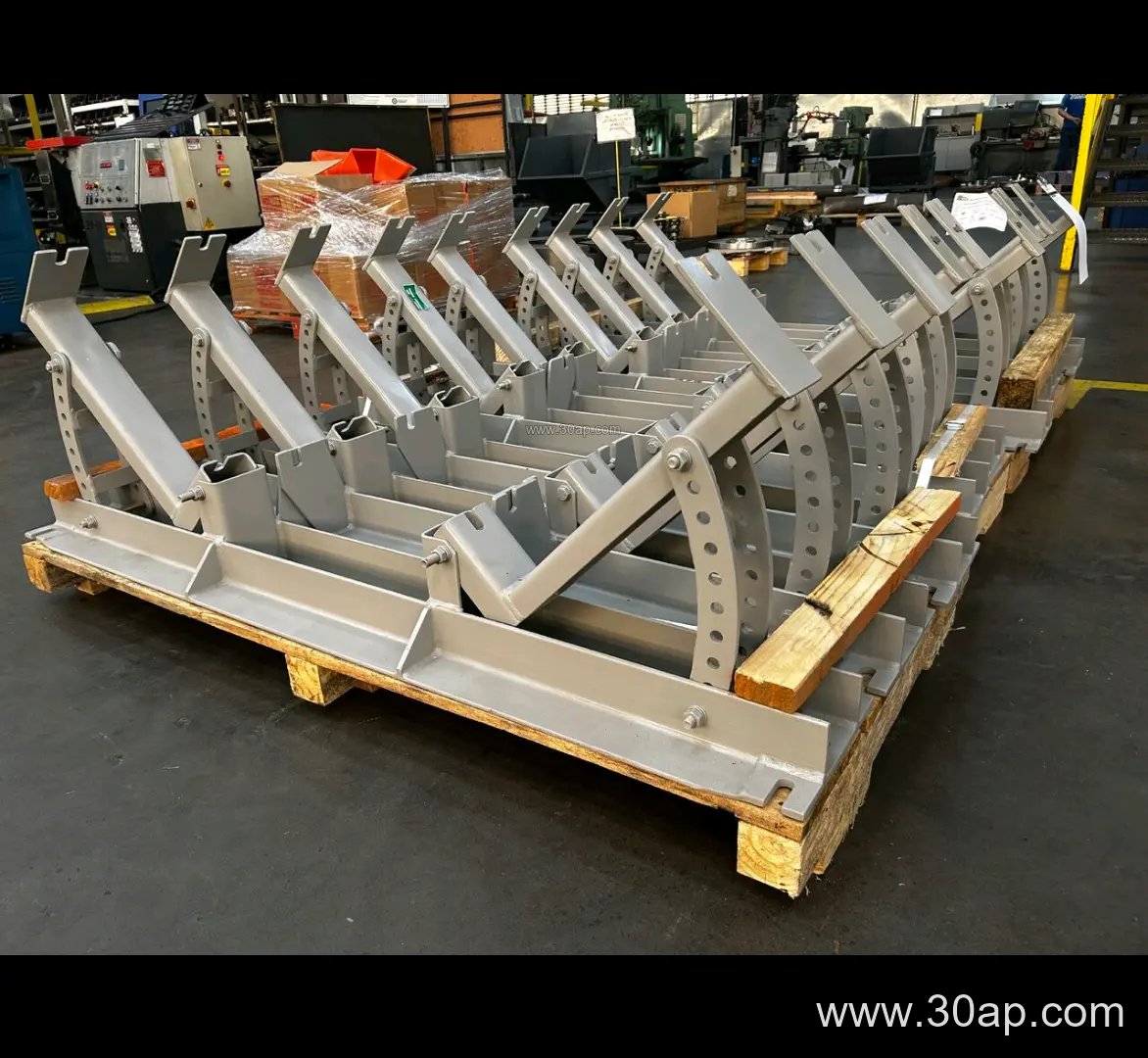
A four-roll idler bracket is a support frame that carries four idler rollers under the belt line, usually arranged in a deep trough. It is also called a four-roller idler bracket or four-roll troughing bracket in conveyor engineering. Unlike a standard three-roll set, this bracket uses two side rolls and two center rolls to form a wider, deeper belt profile. The result is better load containment and less spillage on high-capacity conveyors. The bracket itself is not a pulley; it does not drive or redirect the belt. Drive pulleys, tail pulleys, and bend pulleys are separate components with different functions. The four-roll idler bracket works together with the conveyor belt, idler rollers, and the main conveyor bracket structure.
Construction and Materials
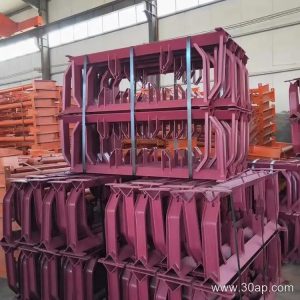
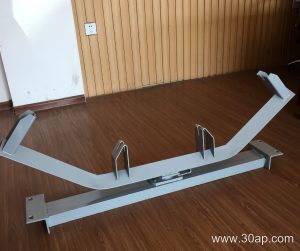
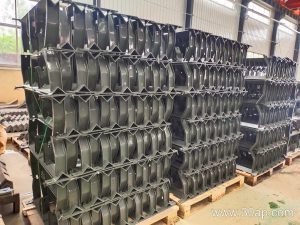
Most four-roll idler brackets are fabricated from angle steel, channel steel, or folded steel plate. The frame may be fixed or adjustable. Adjustable versions allow the trough angle to be set between common values such as 20, 30, 35, and 45 degrees. Fixed versions are welded or bolted at one angle. The bracket has mounting slots or holes for the idler shafts, and the hole spacing changes with belt width and trough angle. It is not possible to state one fixed shaft diameter from belt width alone; the roller diameter and shaft size are selected by the conveyor designer.
Common Roller Diameters
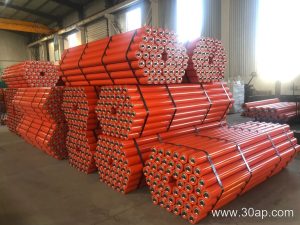
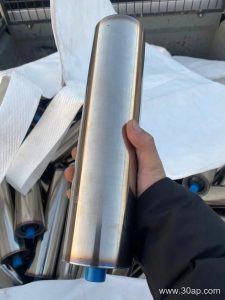
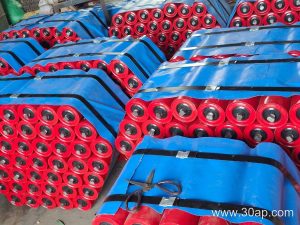
Four-roll brackets are often used with idler rollers in diameters such as Ø89, Ø108, Ø133, Ø159, and Ø194. The bracket must match the roller shaft and the mounting position. A heavier bracket is typical for larger diameters and wider belts.
Where It Is Used
This type of bracket appears in bulk material handling where the belt is wide and the load is heavy. Typical places include coal preparation plants, cement plants, iron ore mines, and port bulk terminals. It is also found in power plant coal conveying, crushed stone lines, and sinter plants. In these settings, a four-roll troughing bracket helps keep the belt centered and reduces material spillage at transfer points. It is not a substitute for a drive pulley, tail pulley, or bend pulley. Those pulleys handle power transmission and belt direction, while the four-roll idler bracket supports the belt between pulleys.
Key Parameters for Selection
When choosing a four-roll idler bracket, buyers should confirm the belt width, trough angle, roller diameter, and mounting dimensions. The table below shows common reference combinations, but these are examples only. Actual values depend on the conveyor design and the manufacturer’s data.
| Belt Width | Trough Angle | Typical Roller Diameter | Bracket Type |
|---|---|---|---|
| B800 | 35 degrees | Ø108 | Fixed or adjustable |
| B1000 | 35 degrees | Ø133 | Adjustable |
| B1200 | 45 degrees | Ø133 | Fixed or adjustable |
| B1400 | 45 degrees | Ø159 | Adjustable |
| B1600 | 35 degrees | Ø159 | Fixed |
Other belt widths such as B500, B650, B1800, B2000, and B2200 can also be supported with the right bracket design. The bracket’s crossbeam length and mounting hole spacing are not fixed across all widths and angles. They must be specified for each application.
Buyer Checklist
- Confirm the belt width and the required trough angle.
- Check the roller diameter and shaft size used with the bracket.
- Decide between fixed and adjustable bracket designs.
- Verify the mounting hole pattern against the conveyor frame.
- Consider the material and coating for the working environment.
- Ensure the bracket is compatible with the selected idler rollers and conveyor belt.
A four-roll idler bracket is a specialized support component, not a universal replacement for other bracket types such as V-return brackets, impact brackets, or self-aligning brackets. When specified correctly, it helps a conveyor run smoothly in demanding bulk handling conditions.