What a Conveyor Tail Pulley Does
The conveyor tail pulley sits at the rear of a belt conveyor and closes the loop. It returns the belt after discharge and, in most layouts, works with a tensioning device to keep the belt tight enough to drive without slipping. Because it turns against the belt’s return side, it is often one of the first components to show wear when a system has misalignment, spillage, or a dragging belt. In aggregate plants, cement plants, and power stations, the tail pulley is a small part of the capital cost but a large part of uptime.
A tail pulley is not a drive pulley and not a bend pulley. The drive pulley transmits torque; the bend pulley changes belt direction; the tail pulley supports the belt at the loading end and helps maintain tension. These roles are not interchangeable, so when ordering a replacement, the position and function should be stated clearly.
Construction and Common Options
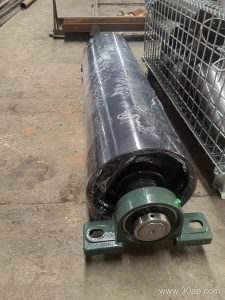
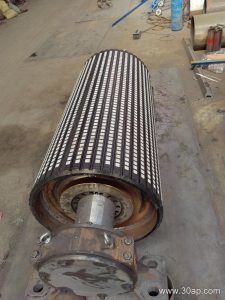
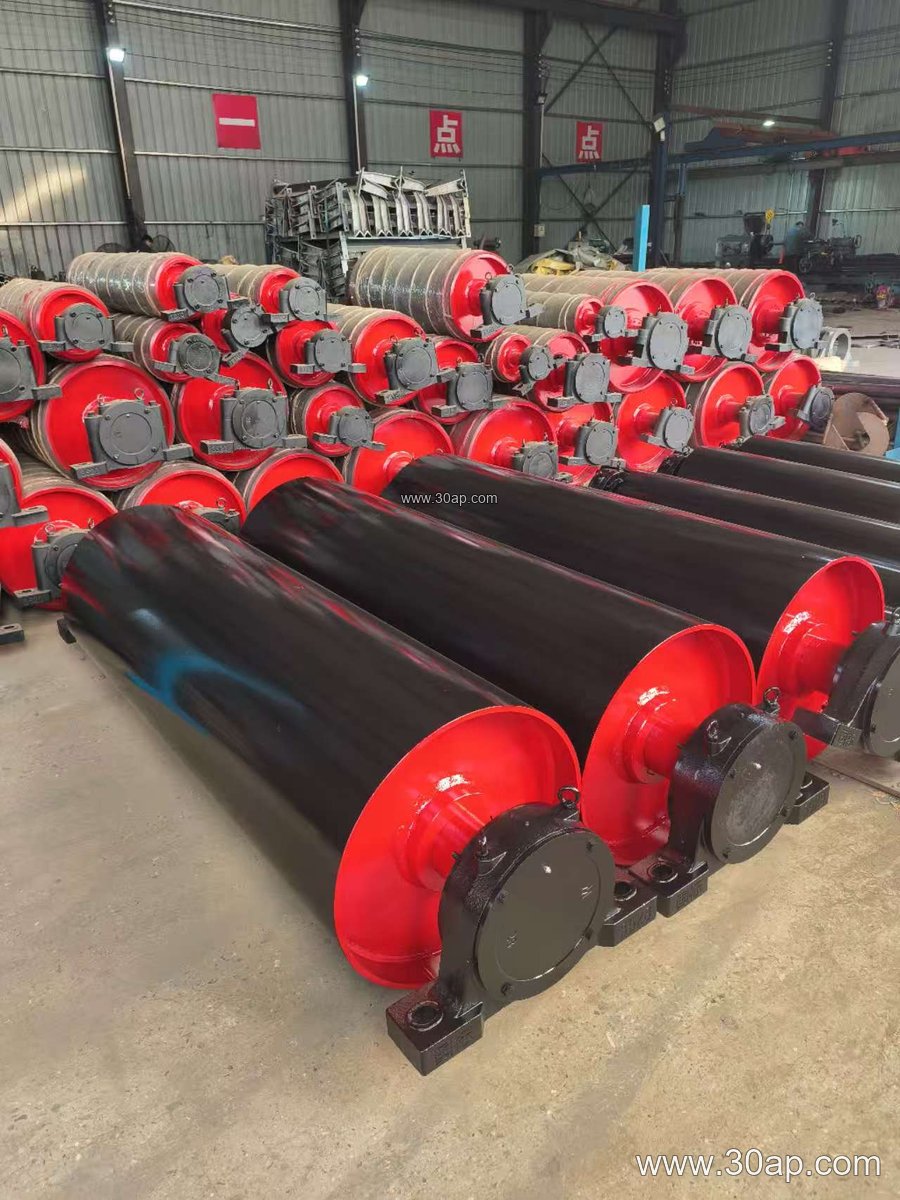
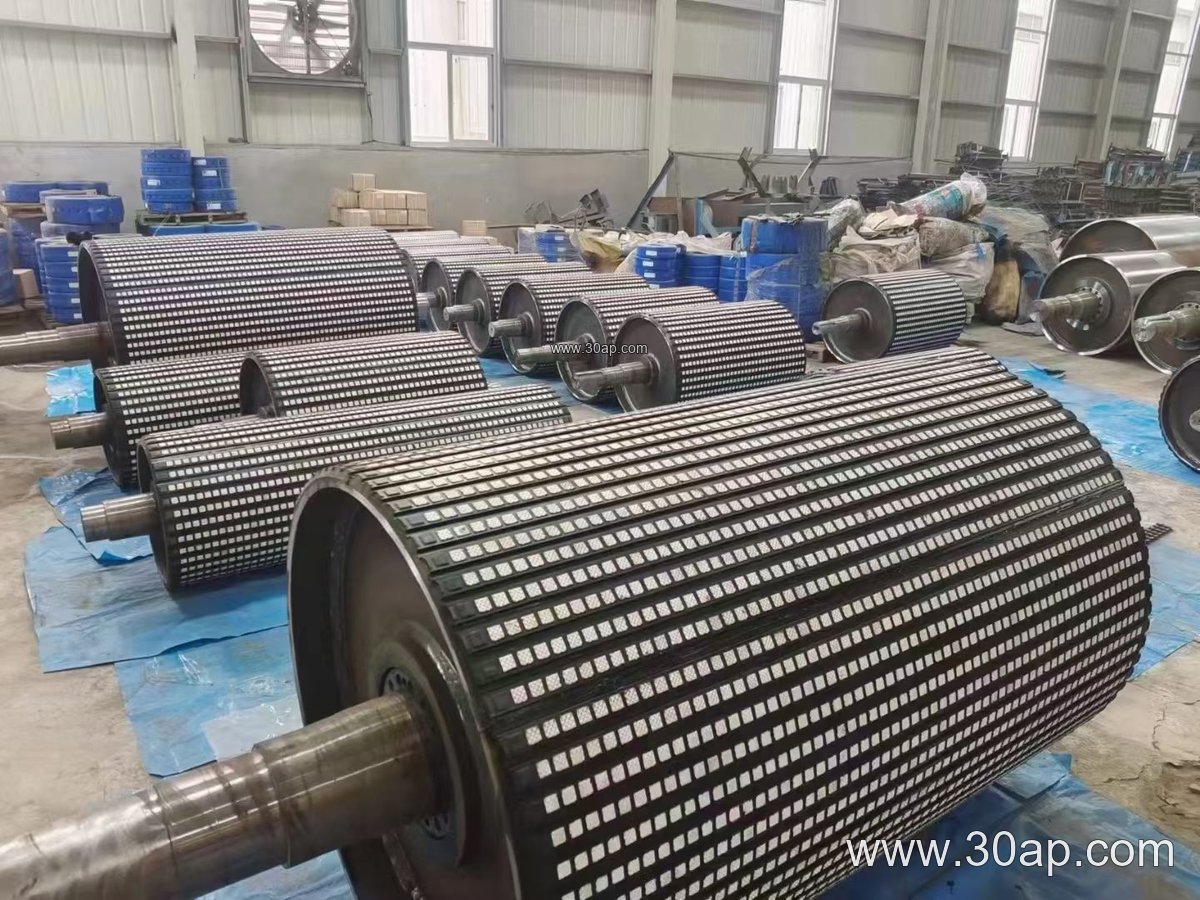
A typical tail pulley is a welded steel drum with a shaft, bearing housings, and a machined face. It may be supplied as a plain steel drum or with lagging for better grip and cleaner tracking. Common surface forms include smooth finish, cast rubber, cold-bonded rubber, hot vulcanized rubber, diamond lagging, and ceramic lagging. Lagging thickness is often 8, 10, 12, 15, or 20 mm, depending on belt condition and loading.
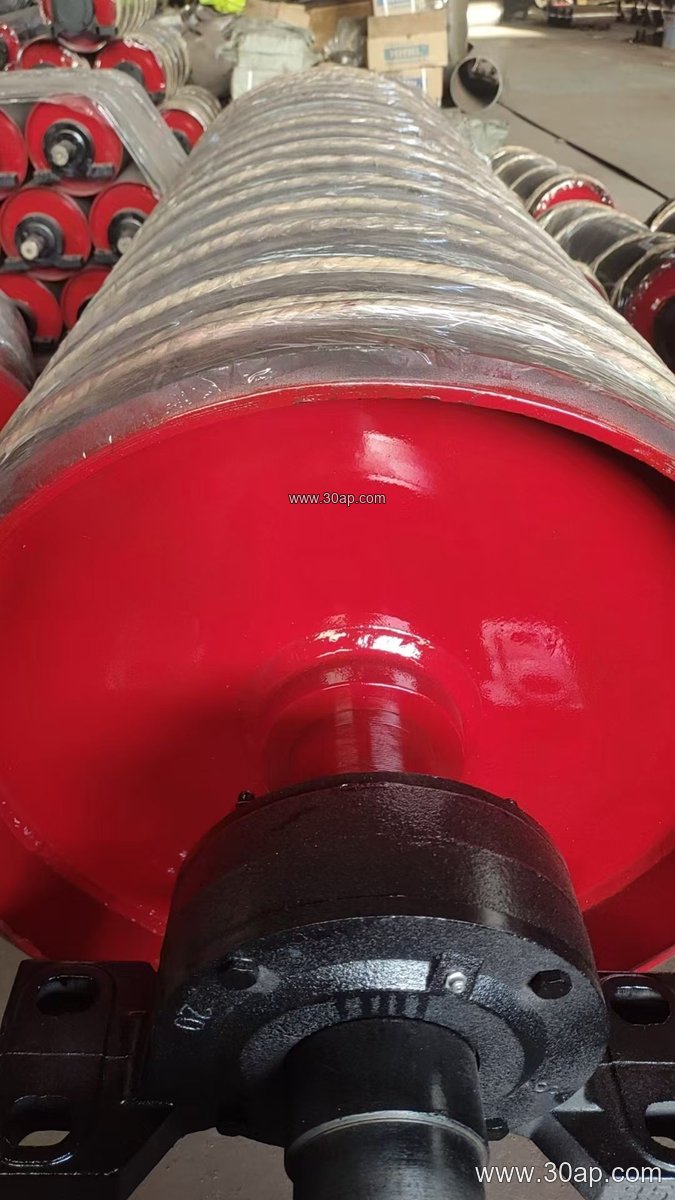
The pulley face width is usually wider than the belt. For example, a B650 belt commonly matches a face around 750 mm, and a B1200 belt around 1400 mm. Diameters vary with conveyor design: Ø320, Ø400, Ø500, Ø630, and Ø800 are all common for tail positions, and larger drums are used where belt tension and space allow. Shaft diameter is determined by torque and bearing load, not by belt width alone, so a B800 system may use different shaft sizes depending on the drive and loading.
| Parameter | Common reference range |
|---|---|
| Belt width | B400, B500, B650, B800, B1000, B1200, B1400 |
| Pulley diameter | Ø200 to Ø1250, selected by design |
| Face width | Usually wider than the belt, e.g., B800 around 950 mm |
| Shaft diameter | Ø50 to Ø200, based on torque and load |
| Lagging | Smooth, rubber, diamond, ceramic; 8–20 mm thick |
Bearings may be grease-lubricated or sealed for life. Bearing housings and conveyor brackets should be checked for corrosion and bolt condition at each service interval.
Where It Fits in the Plant
In a quarry or stone crushing line, the tail pulley on the head-end discharge conveyor often sees dust, fines, and occasional spillage. In a cement plant, the pulverized material and high temperatures near the kiln area call for heat-resistant belt grades and careful lagging choice. In a coal handling system, flame retardant and anti-static belt grades are common, and the tail pulley should be matched to the same duty. A coal mining conveyor belt and its tail drum must be selected as a system, not as separate parts.
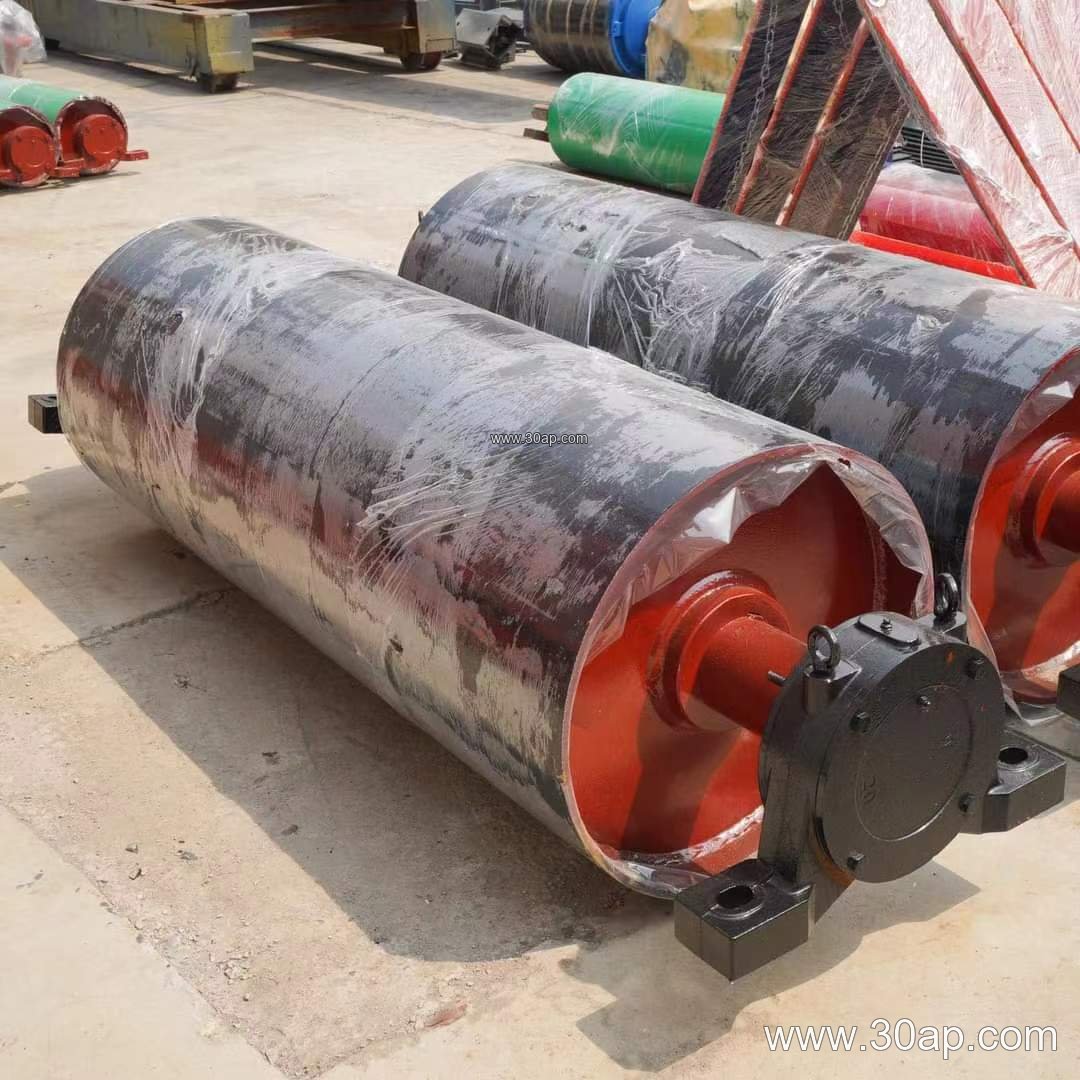
Other industries include iron ore and copper ore handling, port bulk terminals, and fertilizer or grain silos. In every case, the tail pulley works with the conveyor belt, idler roller, and frame to keep the line running straight.
Selection and Maintenance Notes
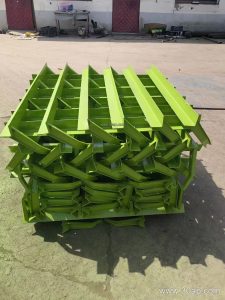
When specifying a tail pulley, the buyer should provide belt width, belt type, belt tension, pulley diameter, face width, shaft size, lagging preference, bearing type, and mounting position. A rubber conveyor belt and a steel cord conveyor belt impose different loads, so the shaft and bearing selection should follow the actual belt tension. For abrasive ore or aggregate, ceramic or diamond lagging can reduce slip; for sticky materials, smooth or lightly lagged faces may be easier to clean.
Maintenance checks include lagging wear, bearing temperature, shaft runout, and belt tracking at the tail. A tail pulley that is out of square with the belt will cause edge wear and mistracking, even if the idler roller frames are aligned. Keeping the tail area clean and checking the conveyor bracket bolts after startup are simple habits that extend drum life.
For more information on matching pulleys, belts, and frames, visit conveyorpulley.example.com and review the tail pulley options alongside conveyor belt and conveyor bracket data.