What a Head Pulley Does
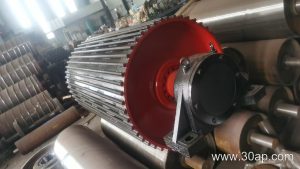
The head pulley is the drum at the discharge end of a belt conveyor. It does two jobs at once: it drives the belt forward and it sets the point where material leaves the conveyor. Because it carries the full drive torque and the belt tension, it is usually the most heavily loaded drum on the machine. In a quarry, a coal preparation plant, or a cement clinker line, the head pulley is often the single component that determines how much power the conveyor can transmit.
It is also called a drive pulley or a conveyor head drum. The name describes position and function, so a head pulley always sits at the head of the conveyor rather than at the tail, at a take-up station, or at a bend. A tail pulley, a bend pulley, and a take-up pulley are different parts with different loads and different jobs, and none of them can be swapped for a head pulley in a drive system.
How the Drum Is Built
A typical unit has a steel shell, two end discs, a hub on each side, and a shaft that passes through the hubs and carries the bearings. The shell is machined or rolled to a true circle so the belt tracks evenly. Larger drums are sometimes built with a slightly crowned face to help center the belt, though crowned and flat faces are both used depending on the conveyor design.
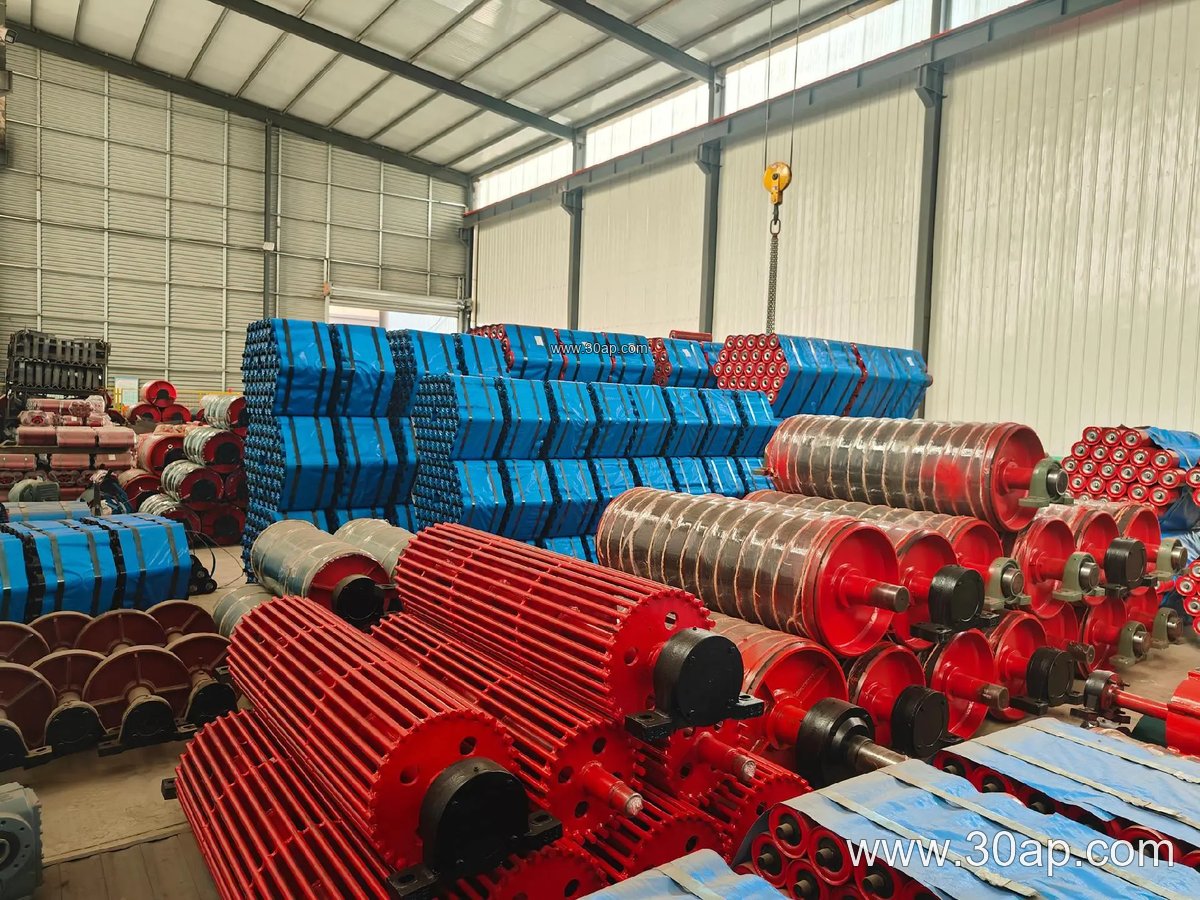
The shaft diameter is chosen from torque and bearing load, not from belt width alone. Common shaft sizes run from about Ø50 mm on small units up to Ø200 mm and beyond on heavy drives, and the final figure comes from the conveyor designer’s calculation.
Surface Options and Grip
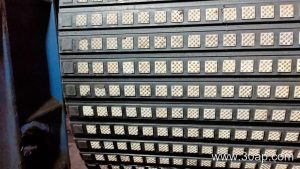
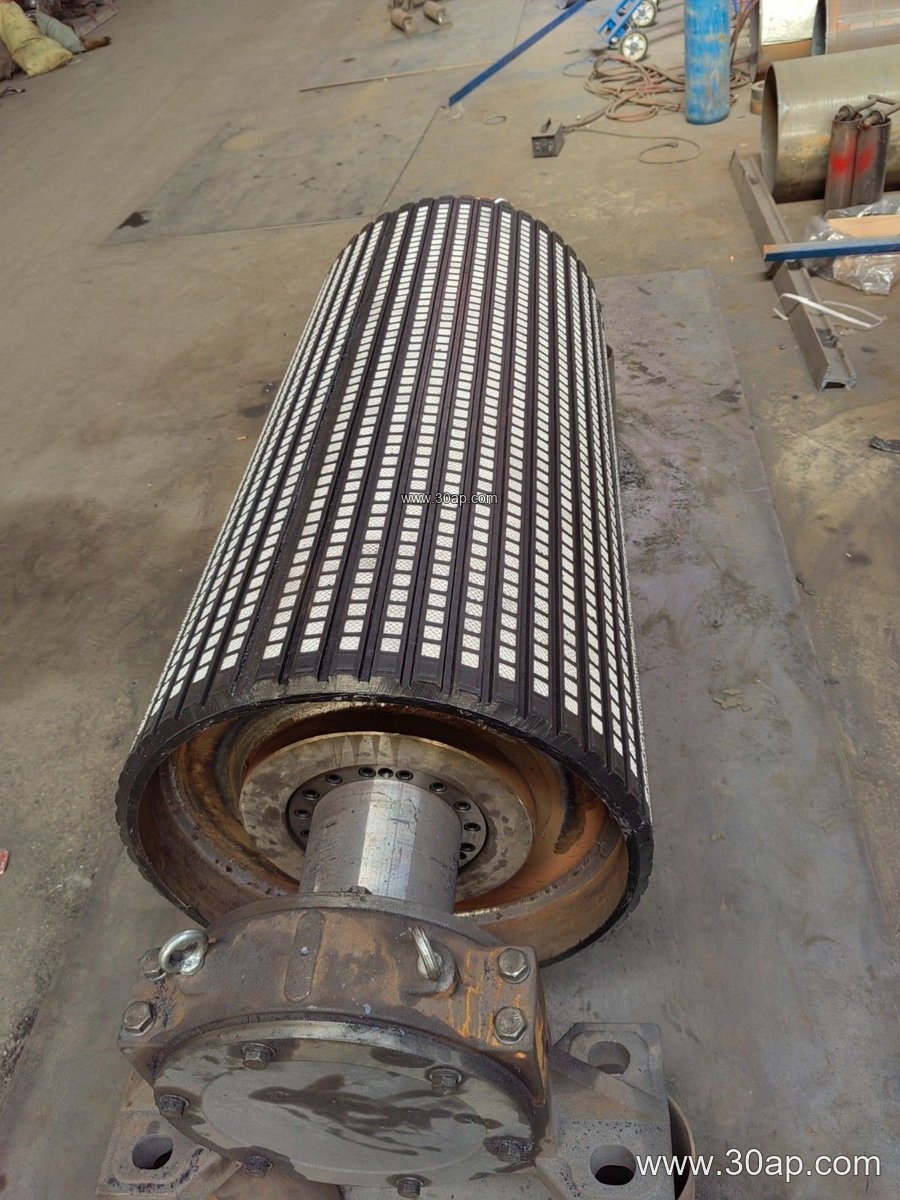
The surface of the shell is where friction happens. Plain steel is used where the wrap angle and tension already give enough grip. Rubber lagging, applied by cold bonding or hot vulcanizing, raises the friction coefficient and protects the shell from wear. Patterned lagging such as diamond or herringbone improves water shedding and grip on wet belts, while ceramic lagging is chosen for abrasive duty in iron ore, copper ore, and hard rock operations.
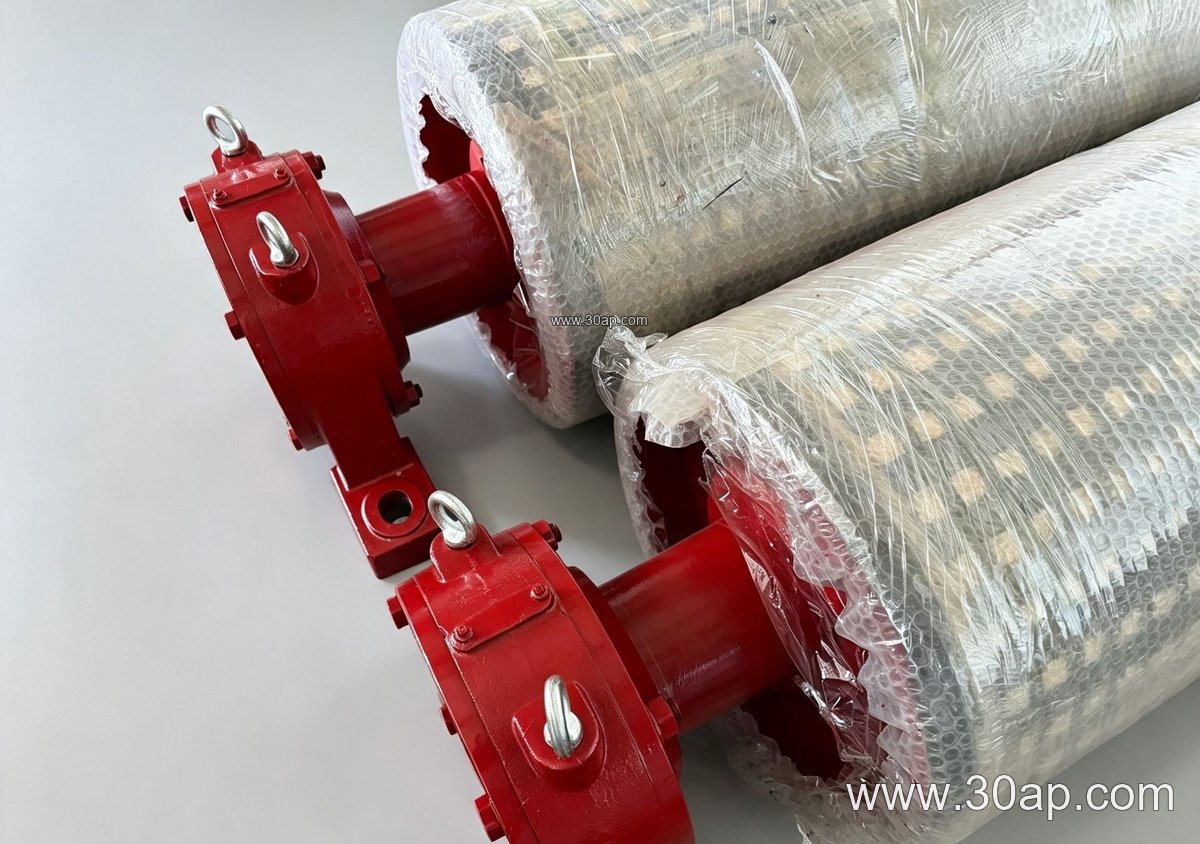
- Plain face – light duty, clean and dry belts
- Cold-bonded rubber – general purpose, easy to replace in the field
- Hot-vulcanized rubber – stronger bond for high-torque drives
- Diamond or herringbone pattern – wet or dusty conditions
- Ceramic lagging – severe abrasion and slip risk
Lagging thickness is commonly 8, 10, 12, 15, or 20 mm. Thicker lagging lasts longer but adds to the drum diameter, so the belt speed and the discharge trajectory should be checked when a drum is re-lagged.
Sizing the Head Pulley
Drum diameter is normally set by the belt construction, not the other way round. A steel cord belt needs a larger diameter relative to its cord pitch than a fabric belt of the same width, and a thick, multi-ply fabric belt needs more diameter than a thin one. This is why the same belt width can appear with very different drum sizes on different conveyors.
Shell face width is usually a little wider than the belt. The table below shows common pairings; these are typical references, not fixed rules.
| Belt width | Typical face width | Example drum combination |
|---|---|---|
| B400 | about 500 mm | B400 x Ø315 |
| B650 | about 750 mm | B650 x Ø500 |
| B800 | about 950 mm | B800 x Ø500 |
| B1200 | about 1400 mm | B1200 x Ø1000 |
| B1400 | about 1600 mm | B1400 x Ø800 |
| B1800 | about 2000 mm | B1800 x Ø1250 |
| B2000 | about 2200 mm | B2000 x Ø1400 |
Standard diameter steps commonly include Ø200, Ø250, Ø315, Ø400, Ø500, Ø630, Ø800, Ø1000, Ø1250, Ø1400, Ø1600, and Ø1800. A wider belt does not automatically mean a bigger diameter, and a narrow belt does not limit the drum to one size.
Where It Fits on the Conveyor
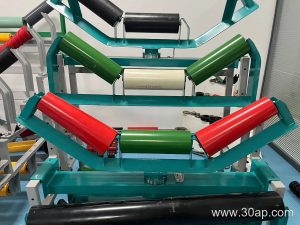
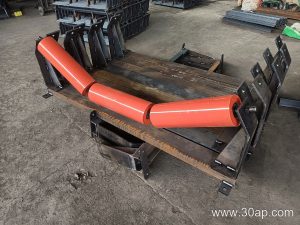
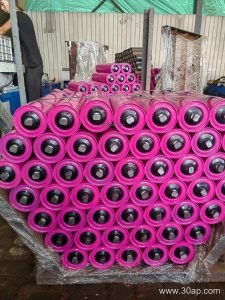
The head pulley sits in the discharge frame, supported by conveyor brackets and pillow block bearings that must be aligned to the frame. It works together with the troughing idler roller sets along the carrying run and the return rollers underneath. The belt itself has to match the duty: a heavy-duty mining conveyor belt or a steel cord conveyor belt in a long overland line will transfer far more pull than a light fabric belt in a food plant.
In a coal mining conveyor or an underground coal mining conveyor, flame retardant conveyor belt and anti-static properties matter, and the drive drum is often specified with fire resistant lagging. In a power plant coal handling system or a port bulk terminal, the head pulley may run at high speed for long hours, so bearing selection and balance get more attention than lagging pattern.
What Buyers Should Check
- Belt width, belt type, and the drum diameter recommended by the belt maker
- Drive power, wrap angle, and the resulting torque on the shaft
- Lagging type and thickness for the material and moisture level
- Shaft size, bearing type, and keyway dimensions
- Balance grade and runout for high-speed drives
- Whether the drum is supplied with hubs, bearings, and locking assemblies
Maintenance is mostly about the lagging and the bearings. Worn lagging causes slip, which raises belt tension and heat; a failed bearing can destroy the shaft and the shell together. Checking lagging wear, bolt torque, and bearing temperature at each shutdown keeps the drive point reliable, whether the conveyor handles limestone, sinter, grain, or tunnel spoil. More reference information on drums, idlers, and belts is available at beltconveyorparts.com head pulley and conveyor pulley pages.