What a Trough Idler Does on the Load Side
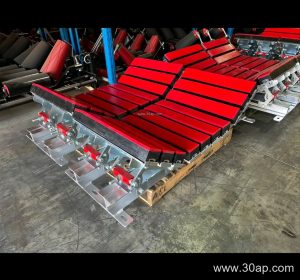
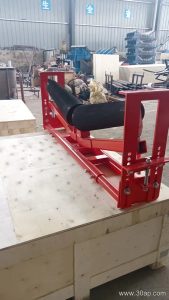
A trough idler is the carrying idler that shapes a flat conveyor belt into a trough so bulk material stays centered during transport. It sits on the load-carrying side of the conveyor, usually in three-roll assemblies, with two side rolls angled upward and a center roll forming the bottom of the trough. This arrangement is common in quarry lines, cement plants, coal handling systems, and power plant coal yards where loose material must be contained without spilling.
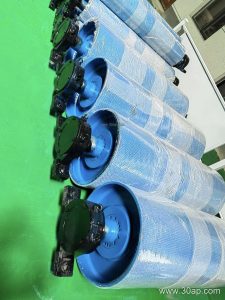
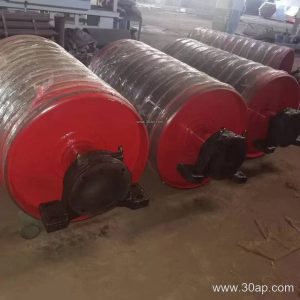
By contrast, a bend pulley changes belt direction at a terminal or curve, and a conveyor pulley at the drive or tail end transmits tension. Those are not substitute names for a trough idler. The trough idler belongs to the idler roller family and works together with the conveyor belt to keep the material profile stable.
Construction Details That Affect Service Life
A typical trough idler includes a steel tube shell, bearing housings, a shaft, and a sealing arrangement. Roll surface options include plain steel, nylon, ceramic, and rubber rings. Bearing sizes such as 6204, 6205, 6305, 6306, 6308, and 6310 appear across different idler series, but no single bearing is tied to one roll diameter by rule. The seal design matters in dusty conditions, especially in stone crushing and aggregate conveying where fine dust can enter the bearing cavity.
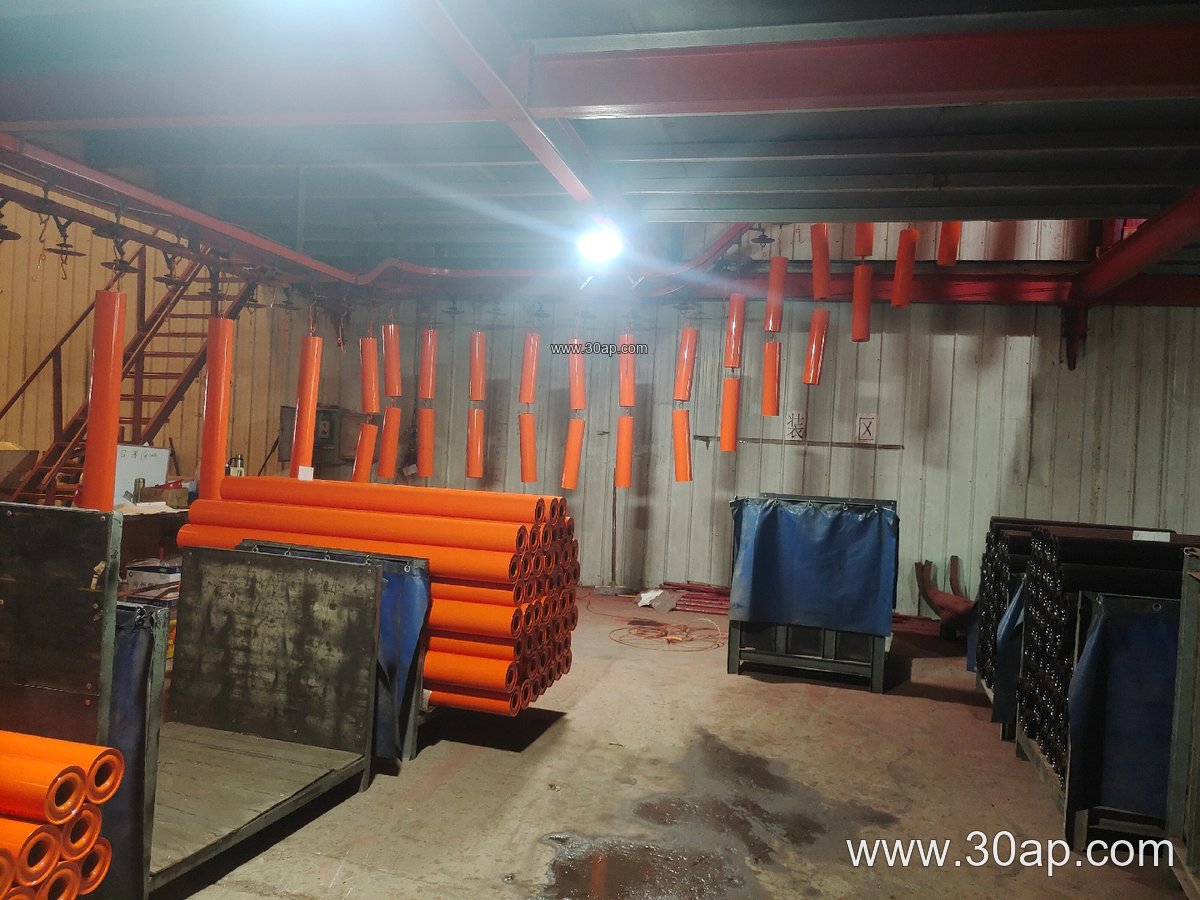
The trough angle is another construction choice. Common trough angles are 20, 30, 35, and 45 degrees. A steeper angle deepens the trough and helps contain material, while a shallower angle suits wider belts or materials that should not be over-compressed. Forward tilt of about 1.5 to 2 degrees is used in some training idler designs, but it is not a universal feature of every trough idler.
Where Trough Idlers Fit in the Conveyor Line
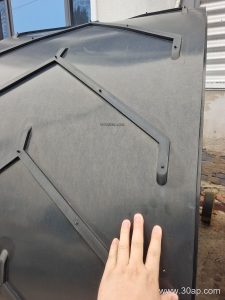
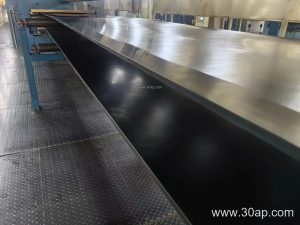
In a limestone quarry or iron ore mine, trough idlers support the conveyor belt on the carrying run between the tail and head. They are spaced according to belt sag and material load, with closer spacing near loading points where impact is higher. In a cement plant, they handle clinker and raw meal on enclosed conveyors, often paired with a rubber conveyor belt or an EP conveyor belt that resists abrasion. In a coal mining conveyor system, flame retardant conveyor belt and anti-static conveyor belt grades are common, and the trough idler assembly must match the belt width and trough angle.
Trough idlers are not used on the return run; there, flat return idlers or V-return idlers support the belt. A transition idler may be placed near the tail pulley to gradually change the belt from flat to troughed, reducing edge stress. The trough idler itself remains the main carrying element along the straight sections.
Common Dimensions and How They Relate
Roll diameter and belt width are selected together, but they are not locked in a one-to-one match. A 500 mm conveyor belt may use smaller diameter rolls, while a 1200 mm or 1400 mm belt often calls for larger rolls and longer roll lengths. The table below shows common reference values; actual roll length depends on belt width, trough angle, and idler assembly type.
| Belt width (mm) | Typical center roll length (mm) | Common roll diameter range (mm) |
|---|---|---|
| 500 | 200 | 63 to 89 |
| 650 | 250 | 76 to 102 |
| 800 | 315 | 89 to 108 |
| 1000 | 380 | 102 to 127 |
| 1200 | 465 | 108 to 133 |
| 1400 | 530 | 127 to 159 |
| 1600 | 600 | 133 to 178 |
| 1800 | 670 | 159 to 194 |
| 2000 | 750 | 178 to 219 |
Side rolls are usually shorter than the center roll in a three-roll trough set. The values above are examples, not fixed combinations. A conveyor bracket or frame must match the idler assembly and belt width, and the shaft diameter is determined by load and bearing selection rather than belt width alone.
Buyer Checklist for Trough Idler Selection
- Confirm belt width and trough angle before choosing roll length.
- Match roll diameter to load and belt speed, not to a single reference value.
- Specify the material being conveyed, since abrasive ore and sticky clay place different demands on the roll surface.
- Check seal type for dusty environments such as crushing and screening plants.
- Verify bearing size and shaft diameter with the idler manufacturer, as these are design choices rather than universal rules.
- Consider transition idlers near the tail pulley if the belt is wide or stiff.
For a heavy-duty mining conveyor belt or a high abrasion resistant conveyor belt, the trough idler assembly should be robust enough to handle impact and misalignment. A trained maintenance team can extend idler life by checking roll rotation, cleaning spillage, and replacing worn rolls before they damage the belt.