What a Ceramic Lagged Bend Pulley Does
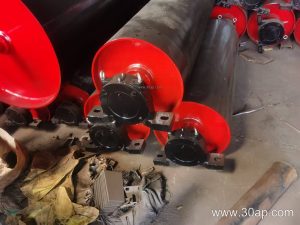
A ceramic lagged bend pulley is a conveyor pulley used to redirect the conveyor belt, typically changing its path by a modest angle around the return side or at a transition point. Because it contacts the belt with a ceramic-covered surface, it combines the redirection duty of a bend pulley with the grip and wear resistance of ceramic lagging. In a coal handling system or a limestone crushing line, this pulley often sits where the belt must be steered without adding drive force.
The product is also known as a ceramic-coated bend pulley or ceramic rubber-lagged bend pulley. These are accurate equivalent names for the same item. A bend pulley is not a drive pulley, head pulley, or tail pulley, and its role should not be confused with those positions.
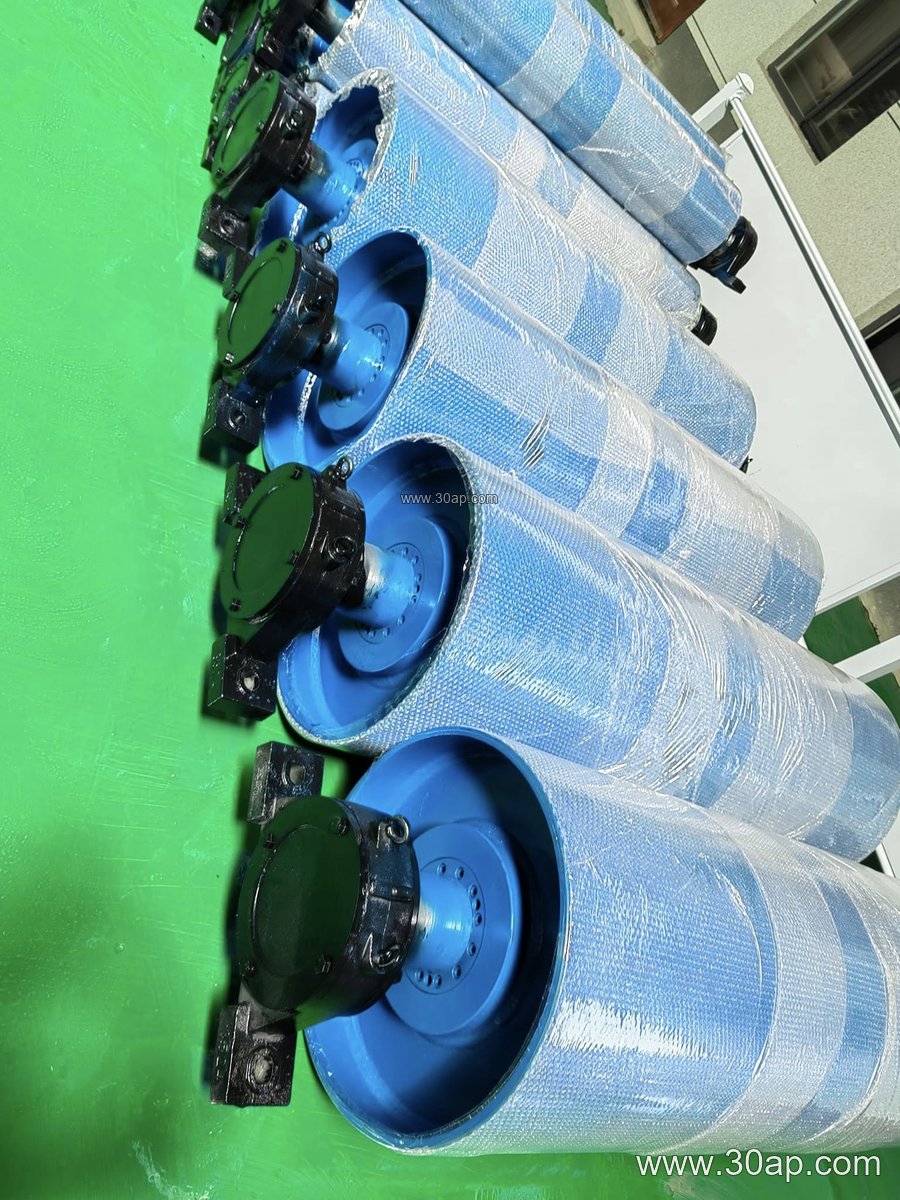
Construction and Surface Details
The body is usually a welded steel drum with a machined face, fitted with end discs and a shaft. The ceramic lagging is applied as tiles or panels embedded in a rubber or adhesive layer, giving a hard, textured surface that resists abrasion from gritty material and reduces belt slip on the return run.
Common surface choices for a bend pulley include plain face, rubber lagging, diamond lagging, and ceramic lagging. Ceramic is chosen where the belt carries abrasive dust or where the pulley must hold traction in wet conditions. Lagging thickness is often specified at 8, 10, 12, 15, or 20 mm, depending on the belt and load.
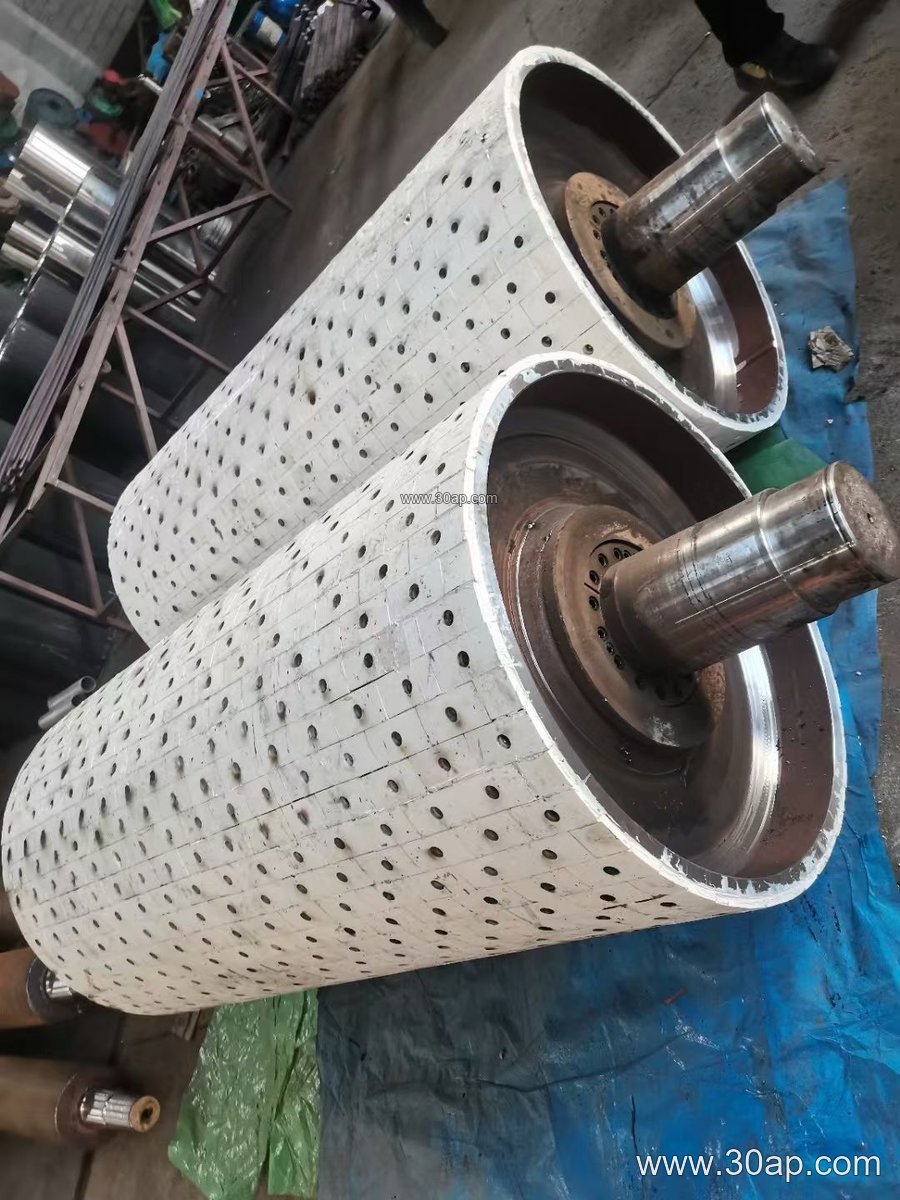
Typical Sizes and Reference Data
Sizes follow the conveyor design rather than a fixed catalogue rule. The following values are common reference points, not a supply promise.
- Belt width examples: B500, B650, B800, B1000, B1200, B1400, B1600, B1800
- Diameter examples: Ø250, Ø315, Ø400, Ø500, Ø630, Ø800, Ø1000
- Face width examples: B800 about 950 mm, B1000 about 1150 mm, B1200 about 1400 mm, B1400 about 1600 mm
- Shaft diameter examples: Ø60, Ø80, Ø100, Ø120, Ø140, Ø160
A combination such as B1200 × Ø1000 or B800 × Ø500 can occur, but no single belt width fixes one pulley diameter. Shaft size is determined by torque and load, not by belt width alone.
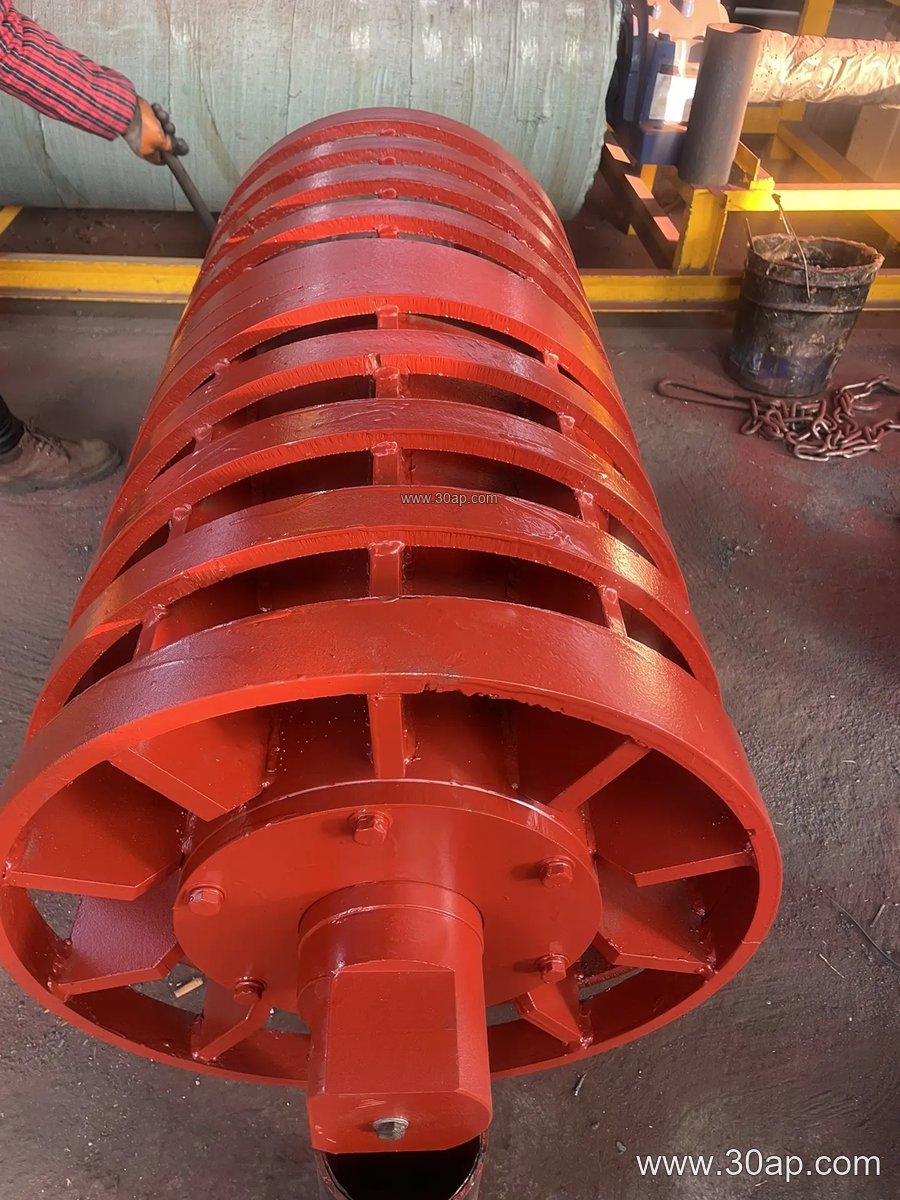
Where It Fits on the Conveyor
Bend pulleys appear at points where the belt changes direction without being driven, such as before a tension pulley or around a structural transition. In a quarry or sand and gravel plant, a ceramic lagged bend pulley may be used on the return strand to keep the belt aligned and reduce wear. In a cement plant or power station coal yard, the same pulley helps manage abrasive dust and moisture. Other pulley types, such as a tail pulley or a take-up pulley, serve different functions; a bend pulley is selected for its position in the belt path, not as a substitute for those roles.
Buyer Checklist
Before ordering, confirm the belt width, the required redirect angle, the pulley diameter, the face width, and the shaft diameter. Check the lagging type and thickness, and ask whether the ceramic surface is suitable for the belt cover grade. Review the bearing arrangement and the conveyor bracket interface, since the pulley must fit the existing frame. Also consider the environment: a wash-down area, a dusty coal yard, or a wet aggregate line may call for different sealing and lagging choices.
Inspect the ceramic tiles for bonding quality, confirm that the drum is balanced, and verify that the shaft keyway and bearing seats match the drive or support components. A ceramic lagged bend pulley is a durable redirecting component, but its service life depends on correct alignment with the conveyor belt, suitable lagging thickness, and regular inspection of the ceramic surface.