What a Belt Conveyor Guide Idler Does
A belt conveyor guide idler is a specialized roller assembly used to keep the conveyor belt centered on its intended path. Unlike standard carrying or return idlers that primarily support the belt and material load, guide idlers are installed at strategic points where misalignment tends to occur—typically near the head pulley, tail pulley, or along long straight sections. Their role is to apply gentle corrective forces when the belt begins to drift, reducing edge damage and spillage without interfering with normal material flow.
In industries such as quarrying, cement production, and coal handling, even a small amount of belt wander can lead to costly downtime. A well-placed set of guide idlers helps maintain stable tracking, protecting both the conveyor belt and the structure.
Construction and Key Components
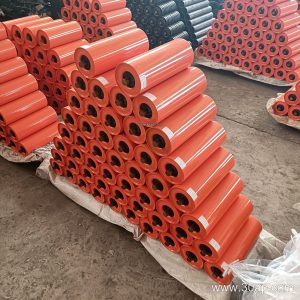
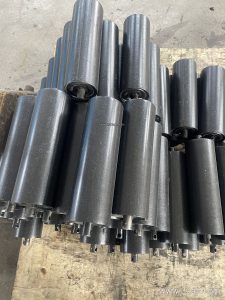
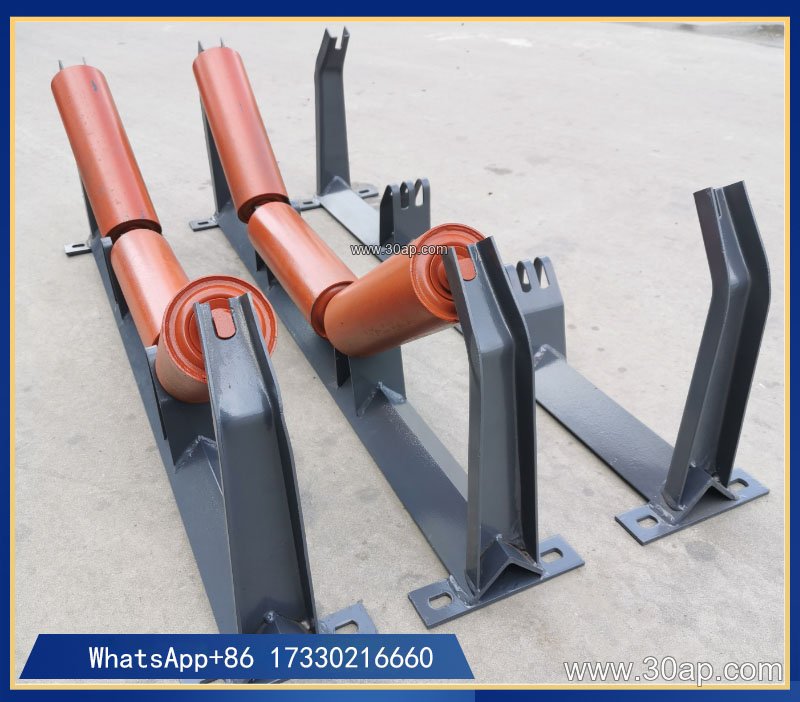
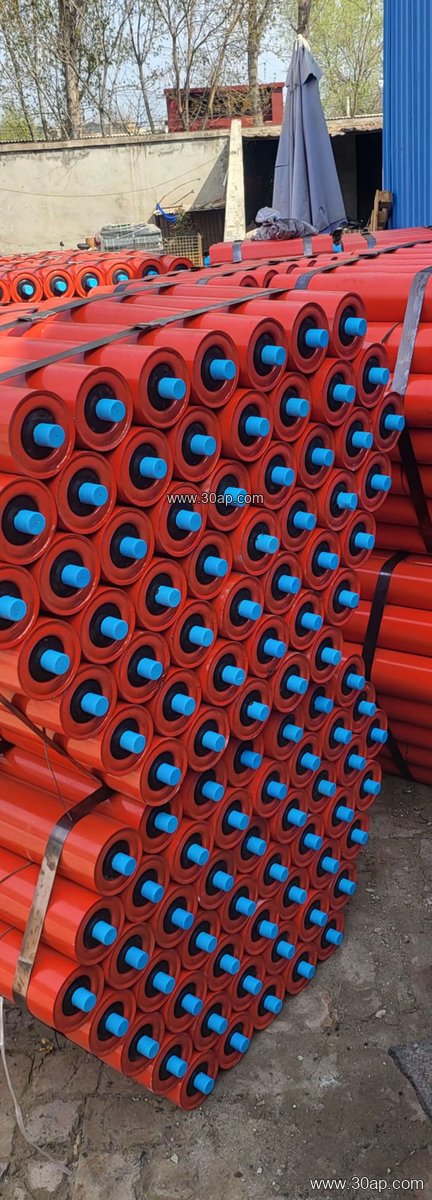
Most guide idlers share the basic anatomy of a conveyor idler roller: a steel tube shell, bearing housings, a shaft, and some form of sealing arrangement. What sets them apart is often the roller surface and mounting configuration. For example, some designs use rubber-covered rollers to increase friction and lateral grip, while others employ a slight forward tilt (commonly around 1.5 to 2 degrees) to encourage self-centering.
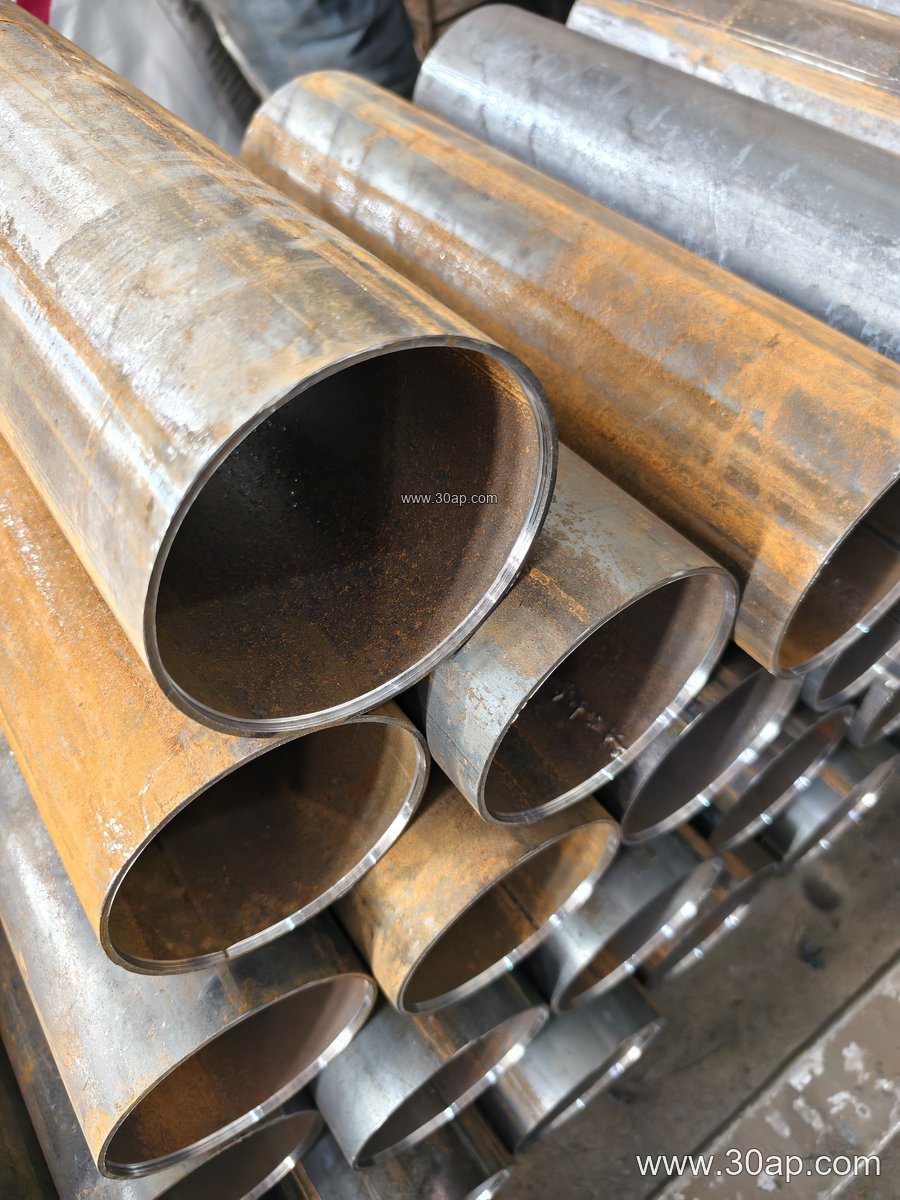
The idler roller body is usually made from seamless steel pipe, with bearing sizes selected according to load and speed. Common bearing numbers include 6204, 6205, 6305, 6306, 6308, and 6310, but these are matched to the specific idler design rather than fixed to a particular roll diameter. Sealing is critical in dusty environments—labyrinth seals or triple-lip seals help keep out fines and moisture, extending service life in applications like sand and gravel plants or power station coal yards.
Where Guide Idlers Are Used
Guide idlers appear in a wide range of bulk material handling systems. In a limestone quarry, they might be positioned after a crusher discharge to stabilize the belt before the material reaches the main incline. In a cement plant, they help control belt tracking on long overland conveyors exposed to wind and uneven loading. Coal mining operations, both surface and underground, use guide idlers to counter lateral forces from uneven feed and to protect the belt edges from rubbing against structure.
Other common settings include port ship loaders, steel plant sinter lines, and aggregate washing circuits. The exact placement is determined by conveyor design, belt width, and the nature of the material—whether it is abrasive iron ore, sticky clay, or hot clinker.
Types and Configurations
Although the guide idler is a distinct product category, it can be supplied in several forms to suit different tracking problems. Common variations include:
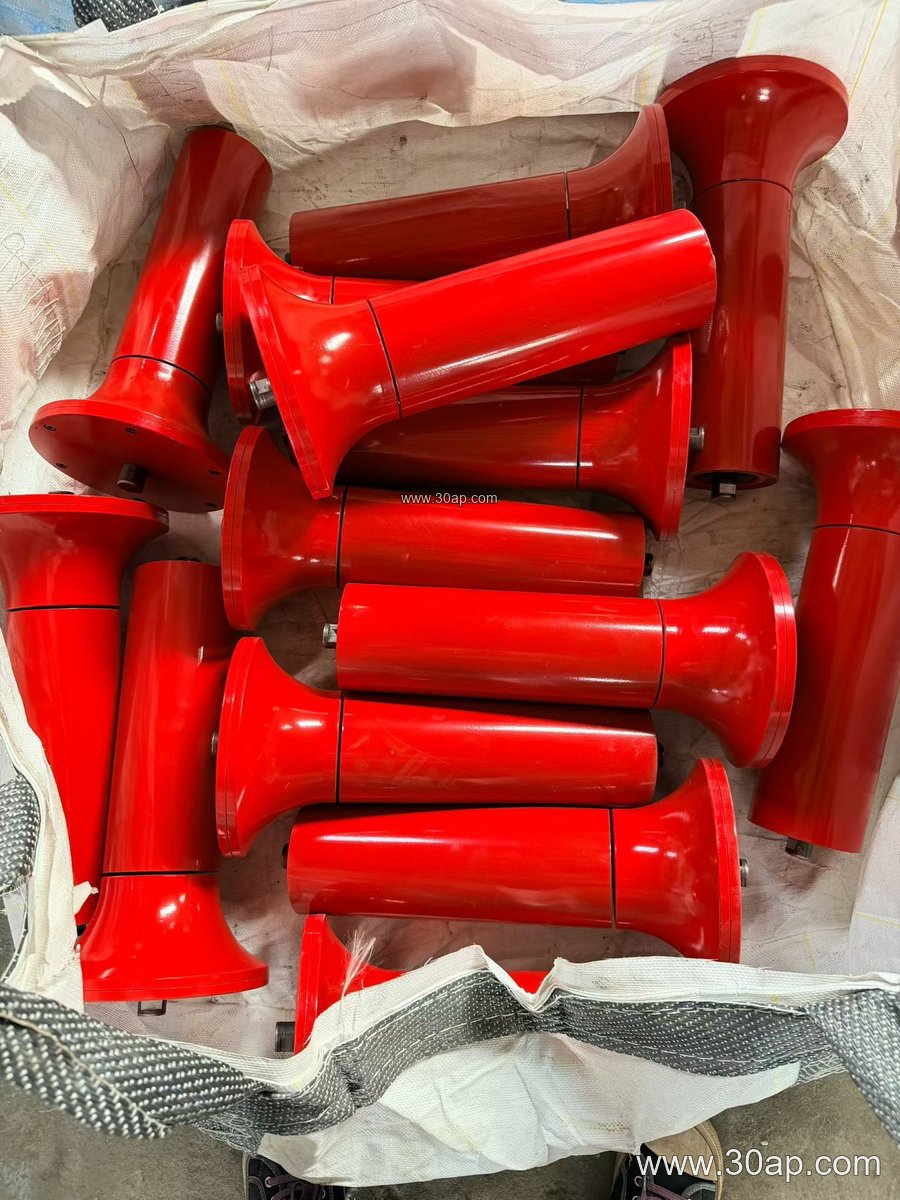
- Vertical-axis guide idlers, mounted on the belt edge to act as a physical stop
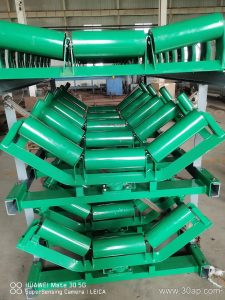
- Forward-tilted carrying idlers used as guide rolls in the transition zone
- Rubber-disc guide rollers for high-friction centering
- Return-side guide idlers to keep the empty belt aligned
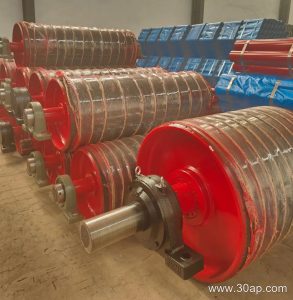
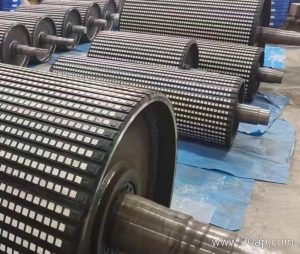
These are not interchangeable with drive pulleys, tail pulleys, or bend pulleys, which serve entirely different functions in the conveyor drive and tensioning system. When specifying, it is important to distinguish guide idlers from standard troughing idlers or impact idlers, as each has a unique role.
Sizing and Selection Notes
Guide idlers are available in a range of roll diameters and belt width matches. Typical roll diameters include Ø63, Ø76, Ø89, Ø102, Ø108, Ø127, Ø133, Ø159, Ø178, Ø194, and Ø219 mm. Belt widths from B400 to B2400 are commonly accommodated, but the idler length and mounting arrangement are determined by the conveyor design, trough angle, and idler group configuration.
For reference, a three-roll troughing set might use roll lengths around 200 mm for B500, 250 mm for B650, 315 mm for B800, 380 mm for B1000, 465 mm for B1200, 530 mm for B1400, 600 mm for B1600, 670 mm for B1800, and 750 mm for B2000. These are common examples only—side rolls and center rolls can differ, and no single size is mandatory for a given belt width.
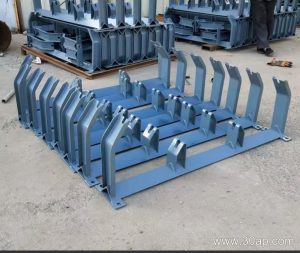
Buyers should also consider the belt type in use. A heavy-duty mining conveyor belt or an abrasion resistant conveyor belt may require more robust guide idlers with thicker shells and enhanced sealing. In food or chemical applications, smooth, cleanable surfaces may be preferred. The guide idler should complement the conveyor pulley and bracket system, not replace them.
Maintenance and Buyer Checklist
Regular inspection of guide idlers helps prevent belt tracking issues from escalating. Check for seized bearings, worn roller surfaces, and loose mountings. In dusty or wet conditions, confirm that seals are intact and that the idler rotates freely. Keep a spare set of guide idlers on hand for critical conveyors to minimize downtime.
When purchasing, specify the belt width, material being conveyed, ambient conditions, and the mounting location. Ask for the idler’s load rating and sealing type. Remember that guide idlers are one part of a complete conveyor system that includes the conveyor belt, idler rollers, conveyor pulleys, and brackets—each component must work together for reliable operation.