What Is a Four-Roll Idler Bracket?
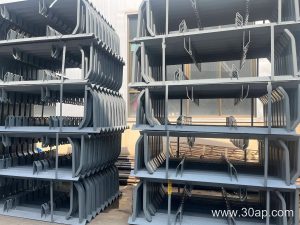
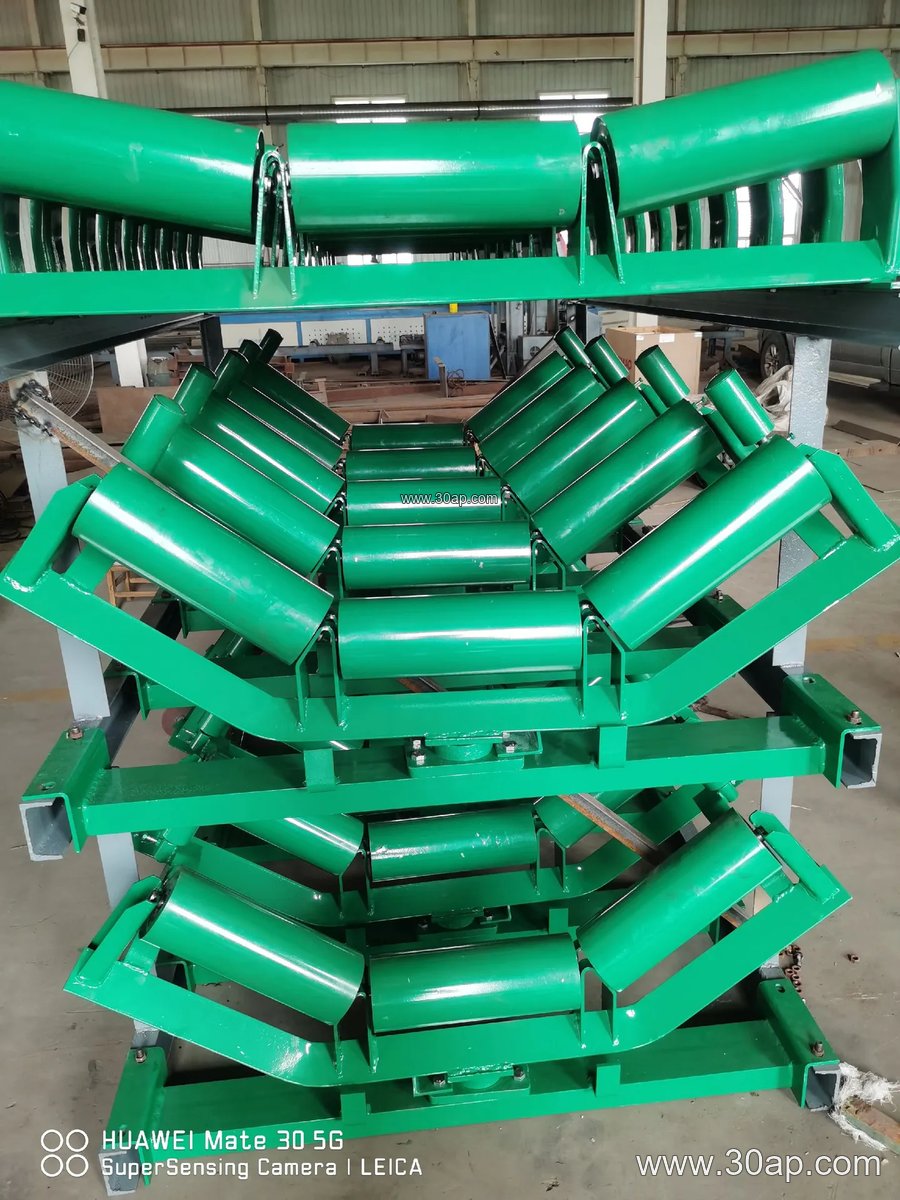
A four-roll idler bracket is a support frame that carries four idler rollers in a troughing arrangement, typically two side rollers and two center rollers, to form the belt into a deep trough. This bracket is often used where a standard three-roll set cannot provide enough support or where the belt needs a deeper trough for higher capacity. In many plants, the four-roll idler bracket is also called a four-roller idler support or four-roll troughing bracket. It is a distinct component from drive, tail, and bend pulleys, and it should not be confused with those parts.
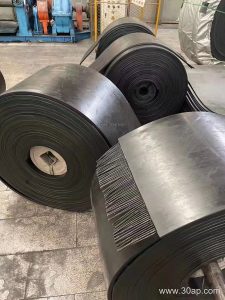
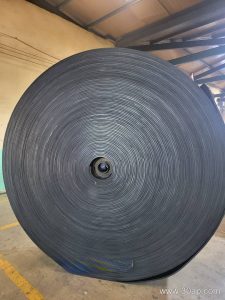
The bracket works together with the conveyor belt and the idler roller set to keep the belt aligned and supported along the carrying side. In quarry, cement, and power plant coal handling lines, this type of bracket helps manage heavy loads and reduces belt sag.
Construction and Mounting
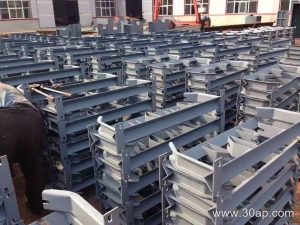
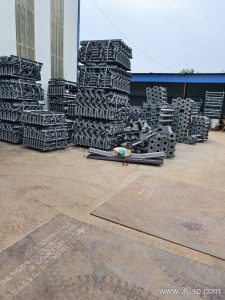
Most four-roll idler brackets are fabricated from angle steel, channel steel, or folded steel plate. The frame includes mounting slots or holes that match the conveyor stringer spacing. The roll positions are arranged to create a specific trough angle, and the bracket may be fixed or adjustable. Adjustable versions allow the trough angle to be set between common values such as 20, 30, 35, or 45 degrees, depending on the design.
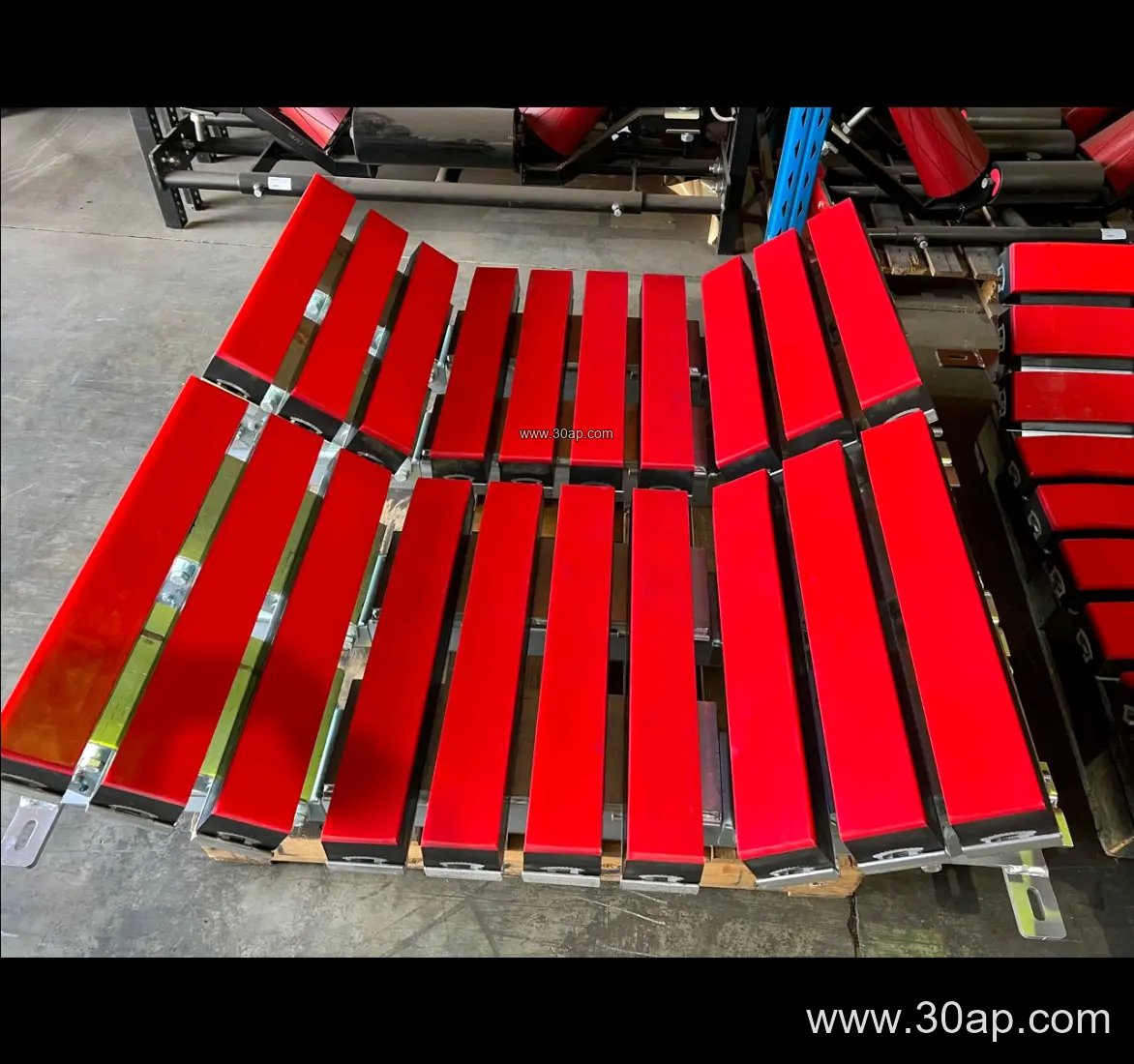
Installation is usually on the carrying side of the conveyor, between the stringers. The bracket must be aligned so that all four rollers contact the belt evenly. Proper tightening and periodic inspection of the mounting bolts are important to avoid vibration and premature roller wear.
Where It Is Used
Four-roll idler brackets are common in bulk material handling where belt widths are large and loads are heavy. Typical sites include limestone quarries, iron ore beneficiation plants, and cement clinker lines. In these environments, the bracket supports the belt and helps maintain a stable trough profile under impact and abrasion. They are also found in coal preparation plants and aggregate crushing circuits, where a deep trough improves material containment.
For wider belts, such as 1200 mm or 1400 mm, a four-roll bracket can distribute the load across more rollers, which may reduce individual roller load. This is particularly useful when transporting abrasive materials like iron ore or coarse rock.
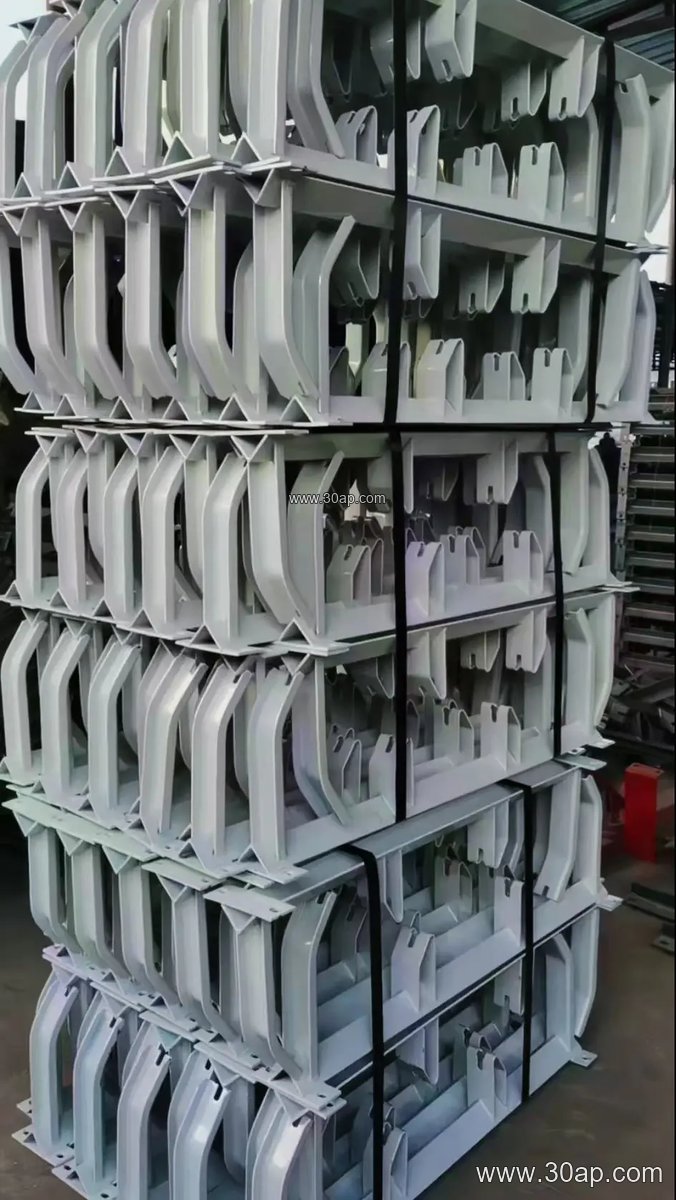
Key Parameters and Selection
When selecting a four-roll idler bracket, several parameters should be considered. The table below lists common reference values; actual dimensions are determined by the conveyor design.
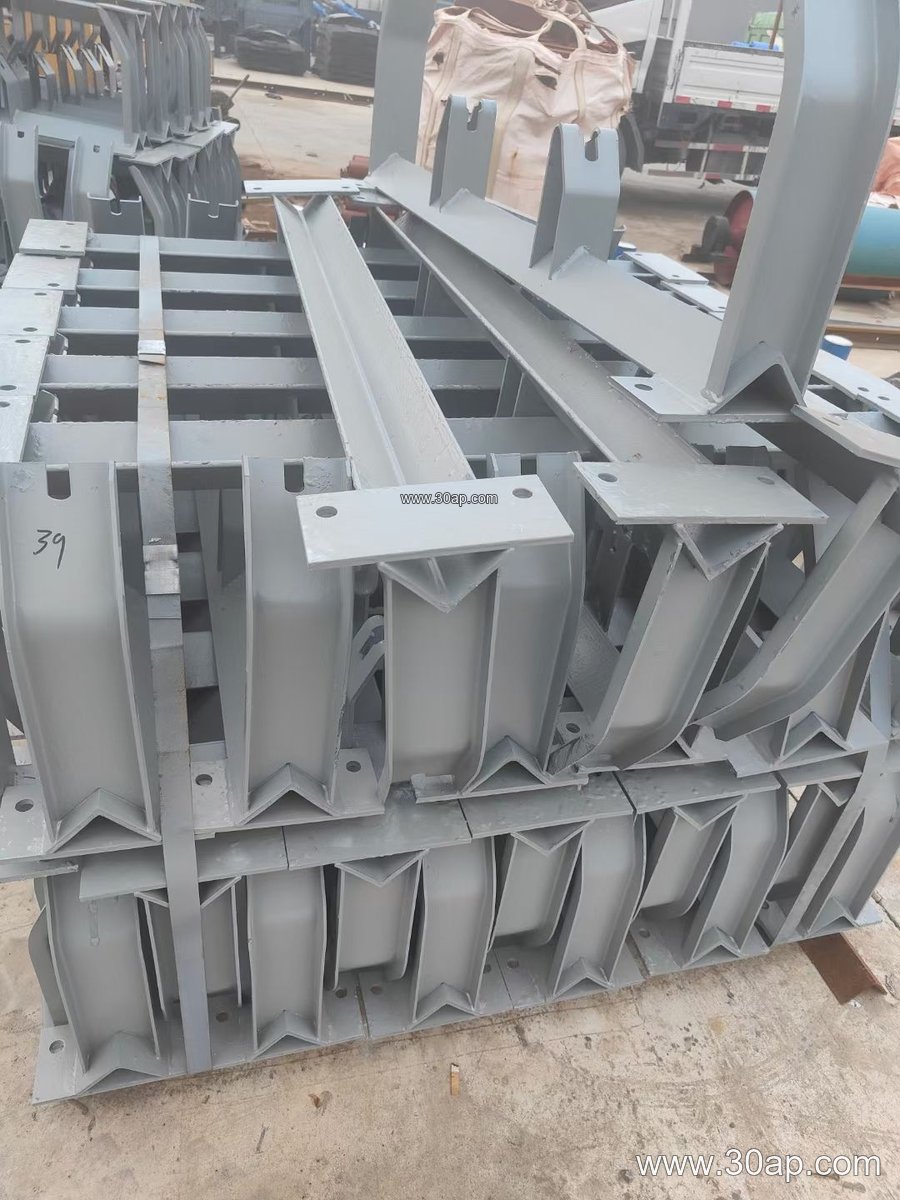
| Parameter | Common Reference Values |
|---|---|
| Belt width (B) | B500, B650, B800, B1000, B1200, B1400, B1600, B1800, B2000 |
| Trough angle | 20°, 30°, 35°, 45° (adjustable brackets may cover a range) |
| Roller diameter | Ø89, Ø108, Ø133, Ø159, Ø194 |
| Bracket material | Angle steel, channel steel, folded steel plate |
| Mounting | Fixed or adjustable; hole spacing varies with belt width and trough angle |
Belt width and roller diameter are not fixed pairs. For example, a B800 belt might use Ø108 or Ø133 rollers depending on load and speed. A B1200 conveyor could use Ø133 or Ø159 rollers with a 35° or 45° trough. The bracket must be chosen to match the idler roller dimensions and the stringer spacing.
Buyer Checklist
- Confirm the belt width and the required trough angle for your application.
- Check the roller diameter and the bracket mounting dimensions.
- Decide between fixed and adjustable design based on maintenance needs.
- Verify material thickness and coating for the site environment (e.g., dusty, wet, or corrosive).
- Ensure the bracket is compatible with the existing idler rollers and conveyor structure.
For harsh conditions, such as those in a coal mining conveyor belt system, consider brackets with reinforced construction and corrosion protection. The four-roll idler bracket should be inspected regularly for wear and loose fasteners to maintain belt training and extend service life.
Related components such as the conveyor pulley and conveyor bracket also affect overall performance, but the four-roll idler bracket remains the focus for trough support on the carrying side.