What a Carrying Idler Set Does on the Load Side
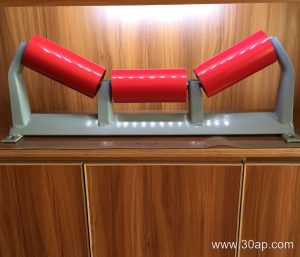
A carrying idler set is the group of rollers mounted on the load-carrying side of a belt conveyor, supporting the conveyor belt and the material on it between the feed point and the discharge pulley. Unlike a single idler roller, the set is a matched assembly: rollers, shaft, bearing housings, seals, and the frame or brackets that hold the rollers at a defined angle. In a typical three-roll troughing arrangement, the two side rollers incline upward while the center roller stays flat, forming the trough that keeps bulk material centered on the belt.
These assemblies appear throughout quarry, cement, and power plant conveying lines. A quarry conveyor belt handling blasted rock, a cement plant feeding clinker, or a coal yard moving fuel to the boiler all depend on the load side being supported evenly, because sag between idlers increases belt stress and spills material at the edges.
How the Set Is Built
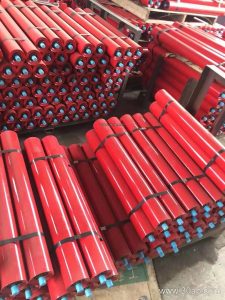
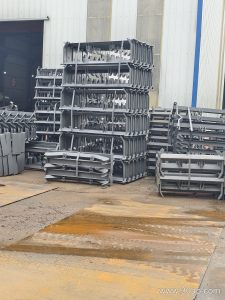
Each roller in the set usually consists of a steel tube shell, a through shaft or stub shafts, stamped or cast bearing housings, and deep-groove ball bearings protected by labyrinth seals. Roller surfaces may be plain steel, nylon, ceramic-coated, or fitted with rubber rings where impact and noise need to be reduced. The frame that ties the rollers together determines the trough angle and the spacing of the rollers relative to the belt width.
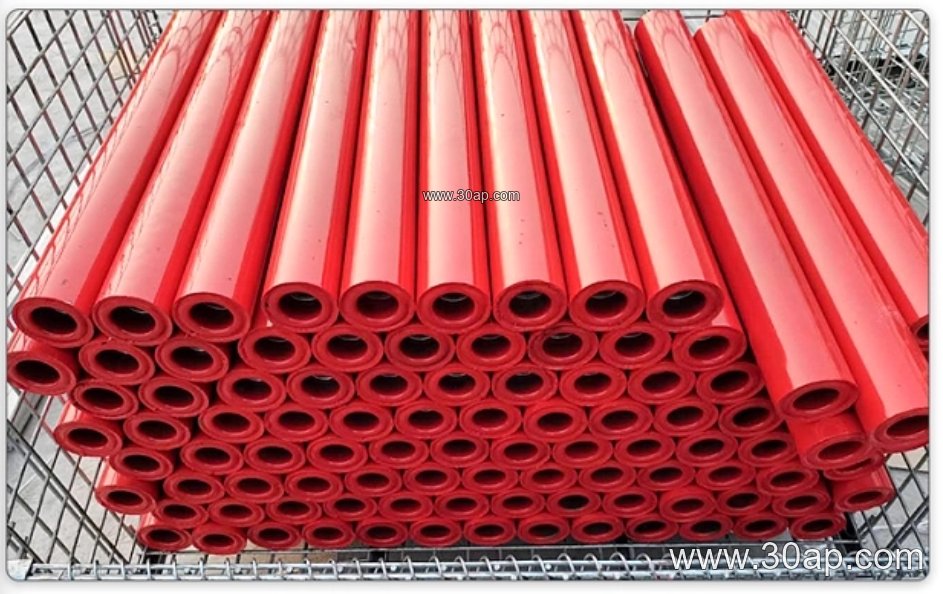
- Roller diameter is normally chosen from a range such as Ø89, Ø108, Ø127, Ø133, Ø159, or Ø178 mm according to belt width and load.
- Common trough angles are 20, 30, 35, and 45 degrees; a 35-degree set is widely used for general bulk handling.
- Bearing sizes such as 6204, 6205, 6305, 6306, 6308, and 6310 are matched to shaft and load requirements rather than to one fixed roller diameter.
- Forward tilt of about 1.5 to 2 degrees is used on some troughing sets to assist belt tracking.
Roller length changes with belt width, trough angle, and set configuration. As a rough reference, a three-roll troughing set for B800 may use side rollers around 315 mm long, while B1200 may call for roughly 465 mm and B1600 around 600 mm. Side rollers and the center roller can differ, so these figures are examples rather than fixed pairings.
Choosing Diameter, Angle, and Spacing Together
Buyers often ask for a roller diameter first, but the diameter only makes sense alongside belt width, belt speed, material lump size, and the load per meter. A wider, heavier belt carrying abrasive ore benefits from a larger shell diameter and heavier bearings, while a short transfer in a concrete mixing plant may run comfortably on smaller rollers. The trough angle also matters: a 45-degree set deepens the trough for higher capacity but can pinch the belt on tight transitions, so transition idler sets are sometimes placed near pulleys to ease the belt from flat to troughed profile.
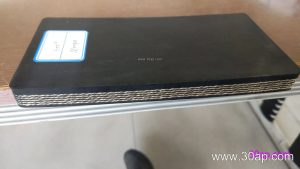
The conveyor belt itself should guide the decision. A heavy-duty mining conveyor belt or a steel cord conveyor belt running at high tension needs a stiff support line and well-aligned rollers, while a fabric core conveyor belt on a moderate-duty line tolerates closer spacing and lighter frames. Matching the set to the belt rather than to a catalog page keeps wear even and reduces edge damage.
Where These Sets Fit in the Line
Carrying idler sets run along the full load-carrying length, but the first meters after the feed chute are the most punishing. There, impact idler sets with rubber rings absorb the drop energy before the belt reaches standard troughing sets. Farther along, self-aligning sets correct minor drift on long straight runs. On the return side, the belt is supported by return rollers, flat or V-shaped, which are a separate group and not part of the carrying set.
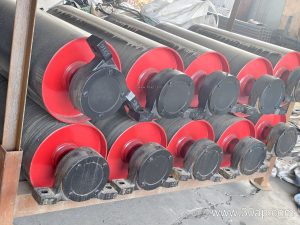
In a limestone mine or a copper ore concentrator, load-side support is often specified together with the conveyor pulley and conveyor bracket layout, since frame height, pulley diameter, and idler position must agree for the belt to track cleanly. A cement plant or a port ship loader applies the same logic at a different scale.
What to Check Before Ordering
- Confirm belt width and trough angle, then confirm roller length for each position in the set.
- State the material, lump size, and expected load so roller diameter and bearing class can be selected.
- Ask about seal type and grease retention for dusty or wet conditions.
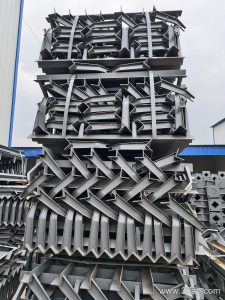
- Check that the frame or brackets match the existing conveyor structure and pulley alignment.
- For hot or oily cargo, confirm that roller and seal materials suit the environment.
Well-chosen carrying idler sets protect both the belt and the structure. For related components such as conveyor idler rollers, conveyor pulleys, and conveyor brackets, buyers can review the full range at beltconveyorparts.com and match each part to the same duty class before placing an order.