What the EP200 Conveyor Belt Is
The EP200 conveyor belt is a fabric-core rubber belt built around polyester (E) and nylon (P) warp and weft yarns. In the EP family, the number 200 indicates the nominal tensile strength of the carcass in newtons per millimeter of belt width. This places it in the middle range of the EP conveyor belt series, above lighter EP100 and EP160 grades and below heavier EP315, EP400 and EP500 constructions. Because the polyester warp limits stretch while the nylon weft absorbs impact, an EP200 belt is often chosen for main haulage lines where both length and load matter.
It is also called an EP rubber conveyor belt or EP fabric core conveyor belt. Those names describe the same product: a multi-ply fabric core protected by rubber covers. It should not be confused with an NN conveyor belt, whose carcass uses nylon in both directions, or with a steel cord conveyor belt, which relies on steel wires rather than fabric plies.
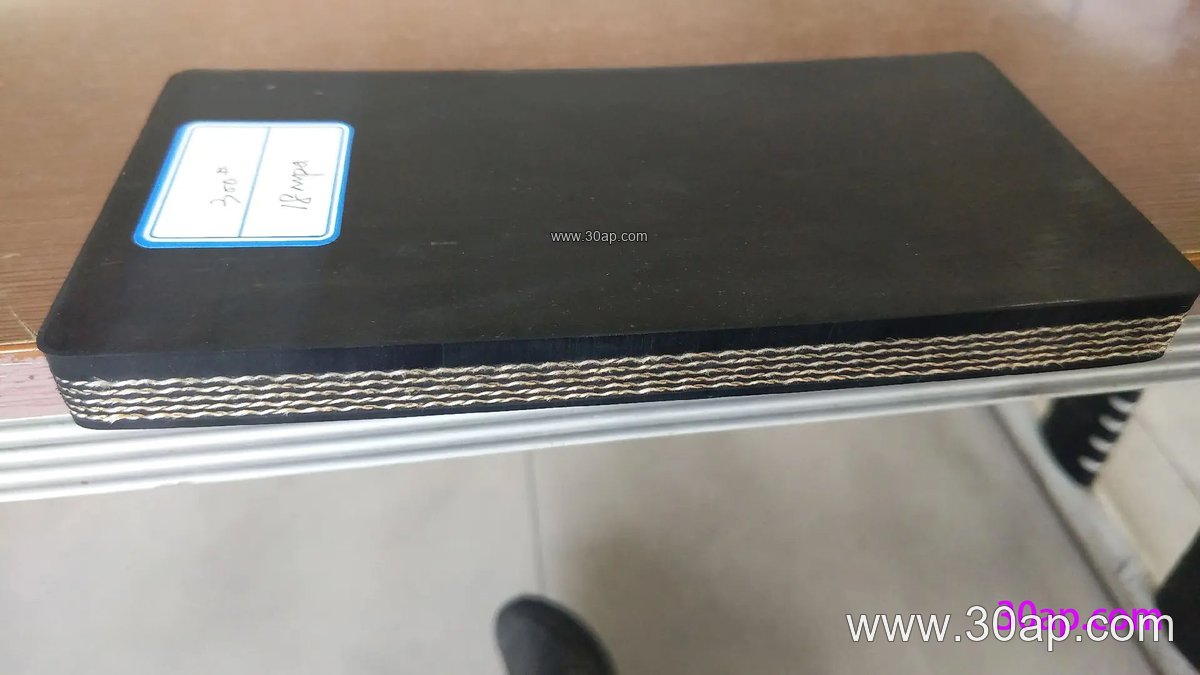
Construction and Typical Specifications
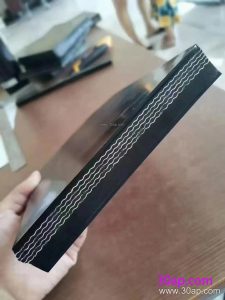
The carcass usually contains two to six plies of EP fabric, bonded with skim rubber and protected by top and bottom covers. Cover thickness is selected for the duty: common combinations include 3+1.5 mm, 4+2 mm, 5+2 mm, 6+2 mm and 8+3 mm. Wider and heavier belts may use thicker covers or additional plies. Belt width is normally matched to the conveyor design, and common widths in this class include 500 mm, 650 mm, 800 mm, 1000 mm, 1200 mm, 1400 mm, 1600 mm and 1800 mm.
The table below shows reference figures for the EP200 grade. Values are typical and should be confirmed against the actual design requirement.
| Property | Typical reference |
|---|---|
| Carcass type | Polyester-nylon fabric, multi-ply |
| Nominal strength | 200 N/mm |
| Common ply count | 2 to 6 |
| Cover thickness | 3+1.5, 4+2, 5+2, 6+2, 8+3 mm |
| Common widths | 500, 650, 800, 1000, 1200, 1400, 1600, 1800 mm |
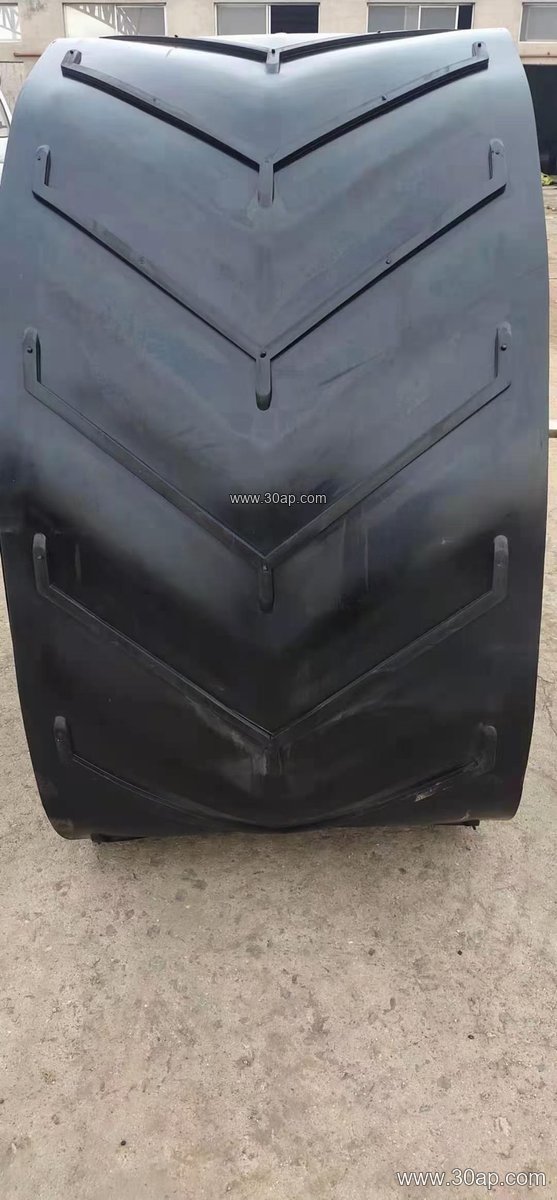
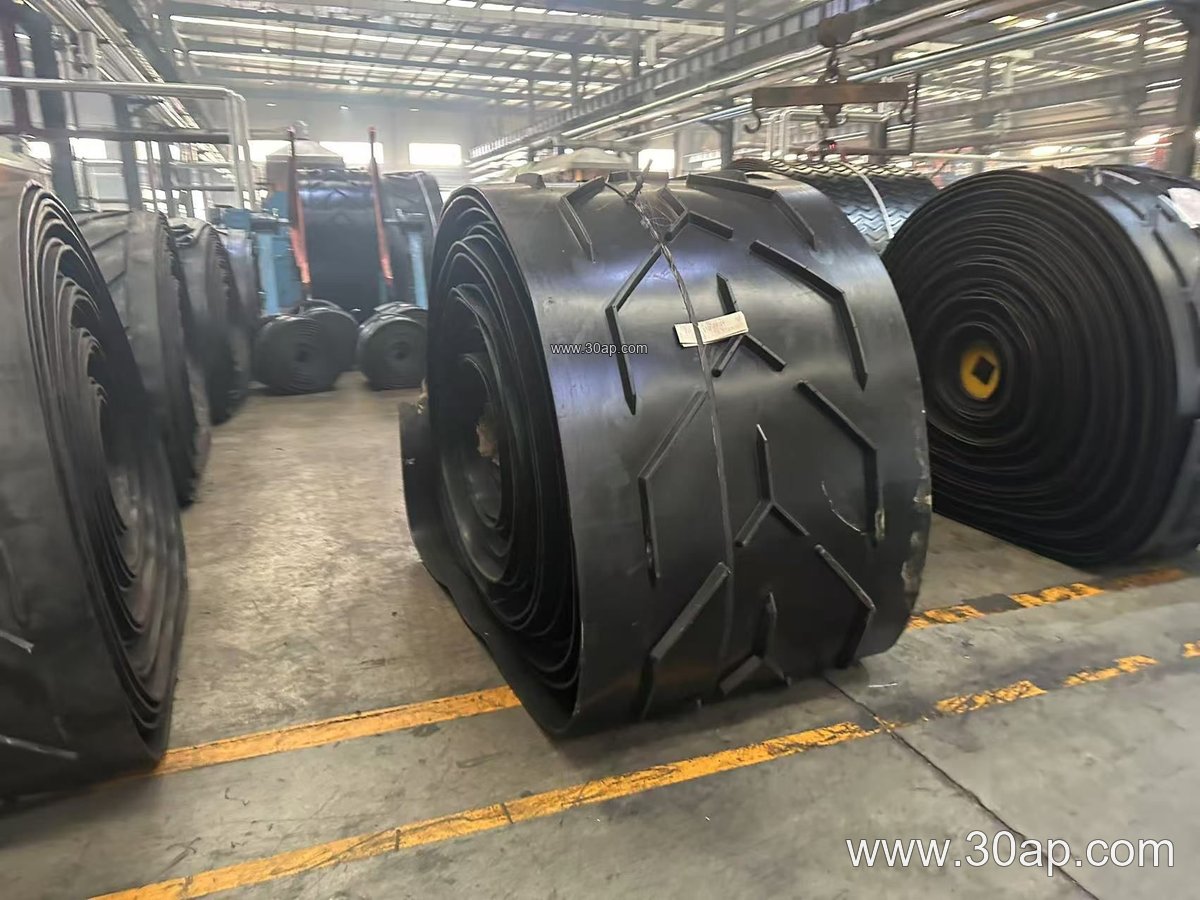
Special constructions may add a chevron pattern, corrugated sidewalls or a skirted edge for inclined or confined routes. Those variants change the belt profile, not the underlying EP200 carcass grade.
Where It Fits in a Conveyor System
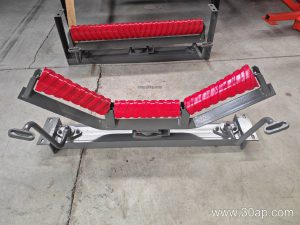
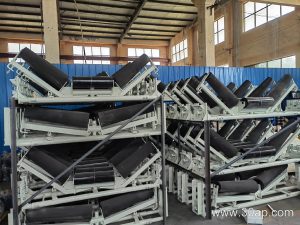
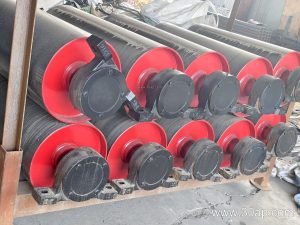
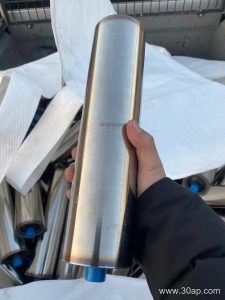
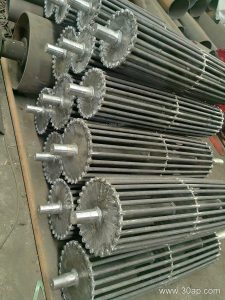
An EP200 belt runs over a drive pulley, tail pulley and bend pulleys, and is supported by idler rollers along the carrying and return sides. The drive pulley transmits power through friction, the tail pulley sets the return point, and bend pulleys redirect the belt where the route changes. These components are not interchangeable by name; each has a specific role. Conveyor brackets hold the idlers and pulleys in alignment, and a well-aligned frame reduces edge wear on the belt.
Typical industries include mining and quarrying, cement plants, power stations, steel works, sand and aggregate plants, ports and recycling facilities. An EP200 belt can handle crushed rock, ore, clinker, coal, sand, gravel and similar bulk materials. For underground coal mining, a flame retardant and anti-static version is normally specified; for hot clinker or sinter, a heat resistant cover is used; for oily scrap or recycled material, an oil resistant cover helps protect the carcass.
Selection Points for Buyers
Start with the actual duty, not just the belt label. Confirm the material, lump size, tonnage per hour, incline, pulley diameters and ambient temperature. Check that the selected cover grade matches the abrasion, heat, oil or fire risk. For long center distances or high lift, verify the belt’s elastic stretch and the take-up travel. The EP200 grade is often a practical choice for medium-duty main lines, while a high strength conveyor belt such as EP315 or EP400 may be needed for heavier loads. A heavy-duty mining conveyor belt may also use thicker covers and additional plies.
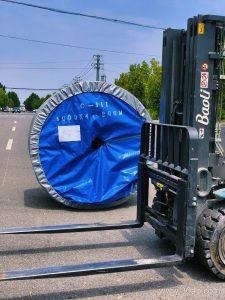
Ask the supplier for the ply count, cover thickness, width, roll length and edge condition in writing. Confirm whether the belt is supplied as an endless conveyor belt or with ends prepared for mechanical splicing or vulcanized jointing. On site, keep idler rollers turning freely, check pulley lagging and alignment, and avoid material buildup at transfer points. These checks extend belt life more reliably than over-specifying one parameter.