What a Conveyor Bracket Does on a Belt Conveyor
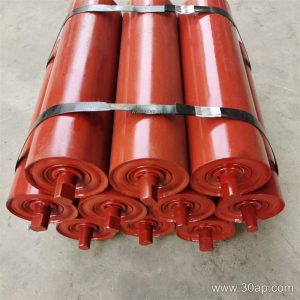
A conveyor bracket is the structural support that holds idler rollers in the correct position under and over the conveyor belt. It connects the roller frame to the conveyor stringer or main steel structure, keeping the belt profile stable along the entire route. On a quarry conveyor line, a cement plant raw material transfer, or a power plant coal handling system, the bracket is a small part that carries a large responsibility: it fixes the trough angle, sets the roller spacing, and keeps the belt tracking within acceptable limits.
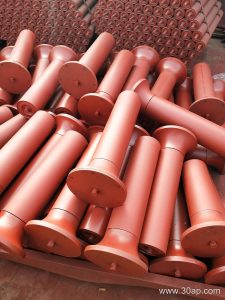
Brackets are usually fabricated from angle steel, channel steel, or folded steel plate. The material thickness and surface treatment are chosen according to the load, the environment, and the expected service life. A bracket that is too light for the belt width and material weight will deflect, which changes the belt profile and accelerates wear on both the belt and the rollers.
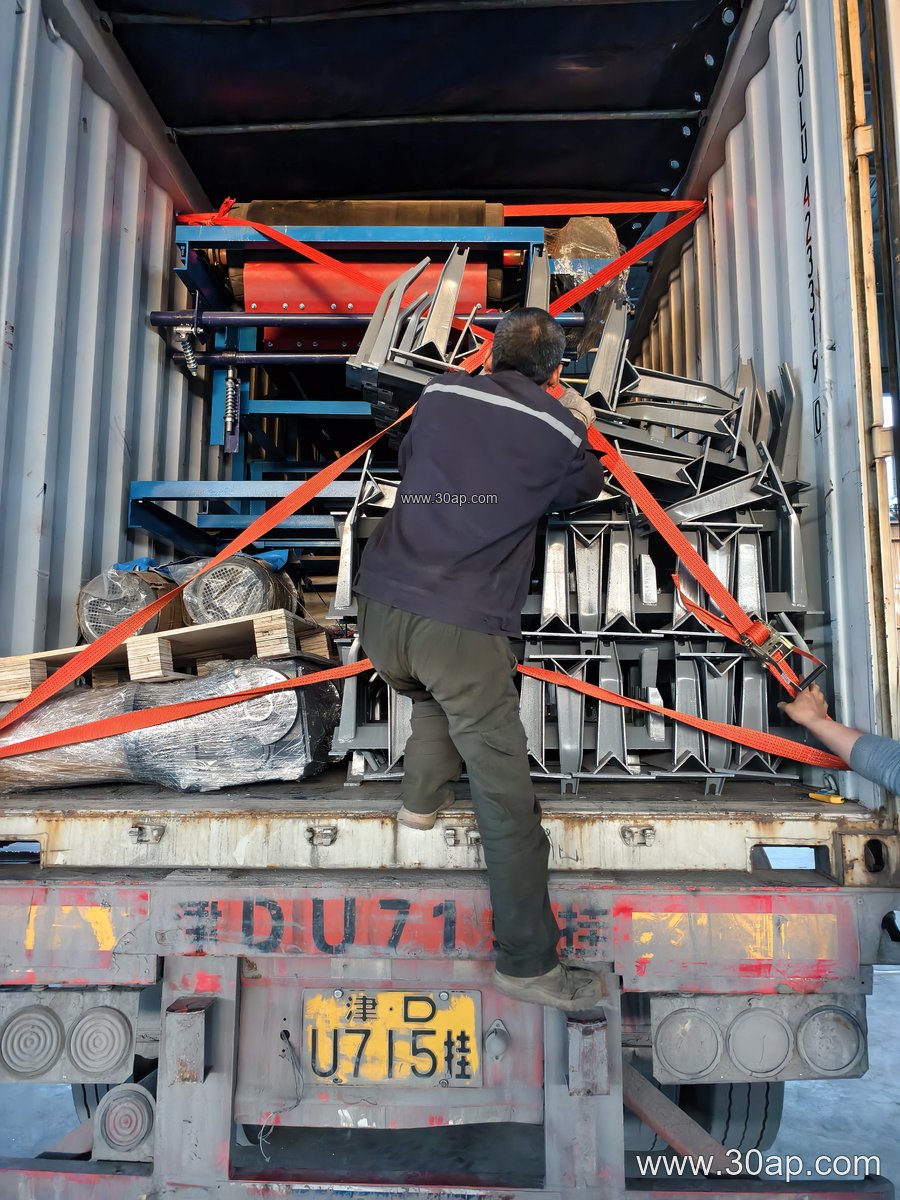
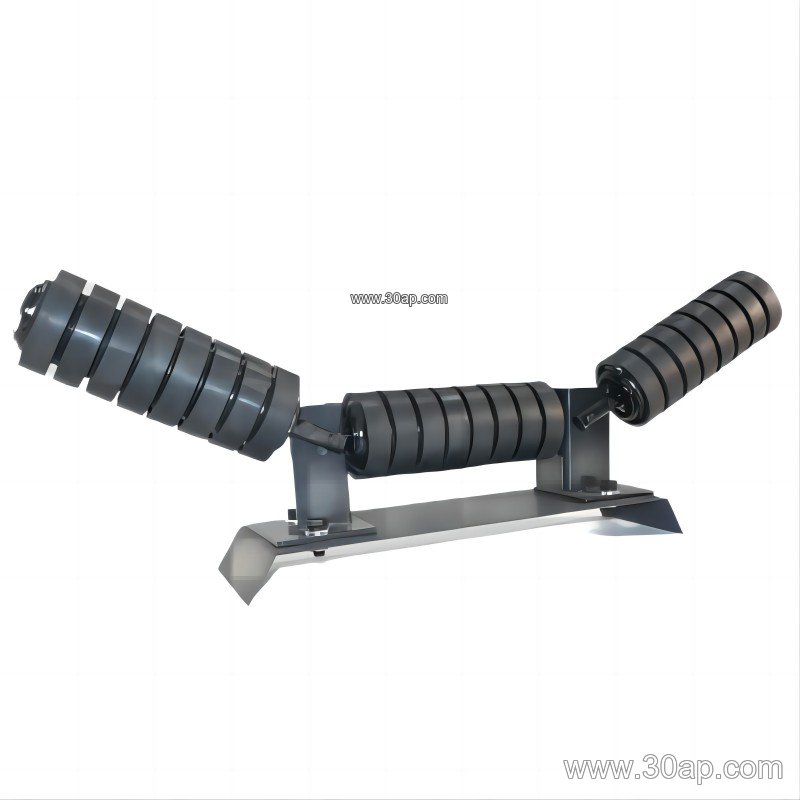
Common Bracket Types and Their Positions
The type of bracket follows the job it performs on the conveyor. Carrying side brackets hold the troughing idlers, return side brackets support the belt on its way back, and special brackets handle transitions, impact zones, and self-aligning duties. The table below lists typical types and where they are normally used.
| Bracket Type | Typical Position | Notes |
|---|---|---|
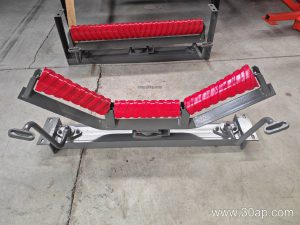
| Troughing bracket (upper) | Carrying side | Sets the trough angle, commonly 20°, 30°, 35°, or 45° |
| Transition bracket | Near pulleys | Guides the belt from flat to troughed profile |
| Return bracket (flat) | Return side | Supports the empty belt |
| V-return bracket | Return side | Helps center the belt and remove carried material |
| Impact bracket | Loading point | Used with impact rollers to absorb material drop energy |
| Self-aligning bracket | Long straight runs | Corrects minor belt misalignment |
| Adjustable bracket | Carrying side | Allows the trough angle to be changed on site |
Trough Angle and Roller Diameter Considerations
Trough angle and roller diameter are selected together with belt width and material characteristics. A wider belt carrying a heavy bulk material may use a 35° or 45° trough to increase capacity, while a moderate duty line may stay at 30°. Roller diameters of Ø89, Ø108, Ø133, Ø159, and Ø194 are common, and the correct choice depends on belt speed, load, and the bearing class of the roller. There is no fixed rule that one belt width matches only one roller diameter; the bracket design must accommodate the selected roller and the mounting hole spacing that goes with it.
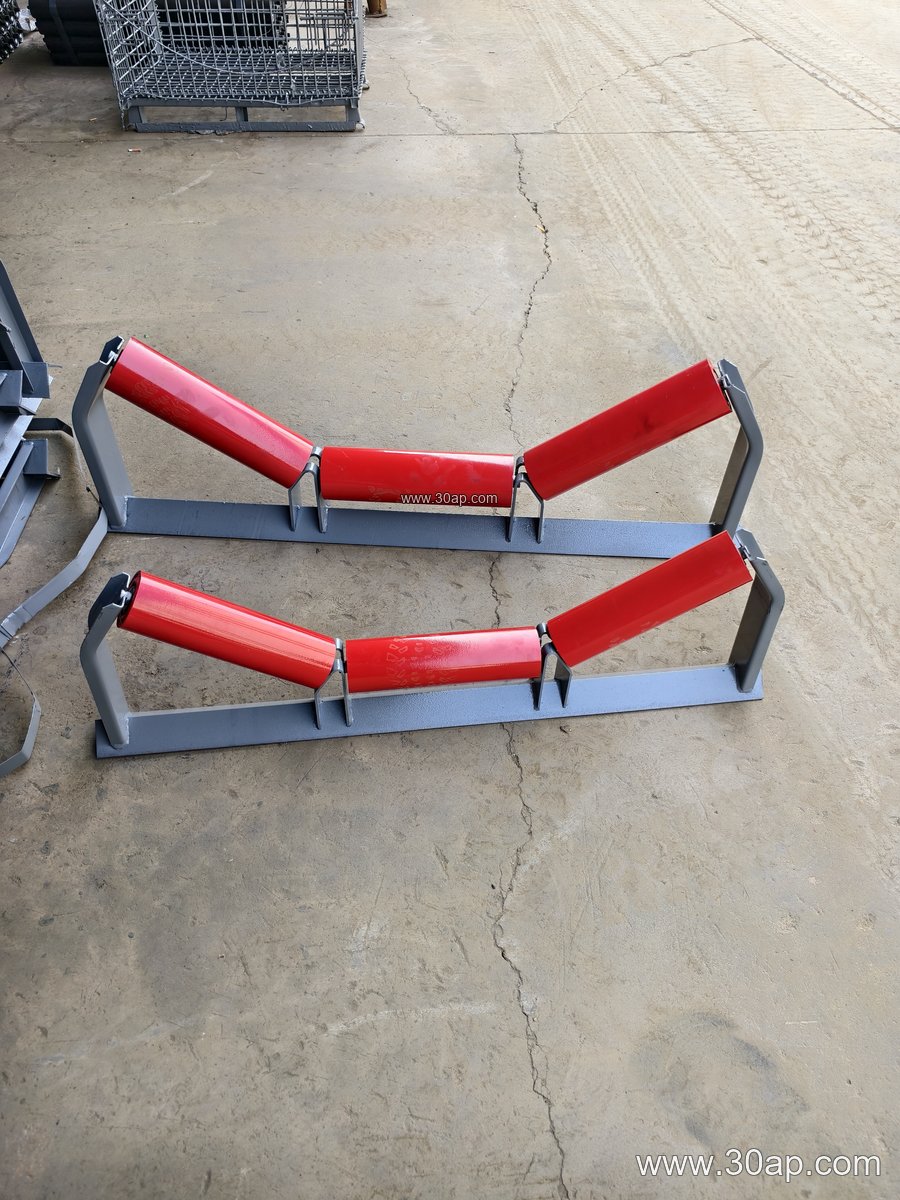
For example, a B800 conveyor with a 35° trough and Ø108 rollers is a familiar combination in aggregate plants, while a B1200 line with a 45° trough and Ø133 rollers may suit a higher-capacity ore application. A B650 conveyor with a 30° trough and Ø89 rollers is often seen on lighter auxiliary belts. These are common references, not mandatory pairings.
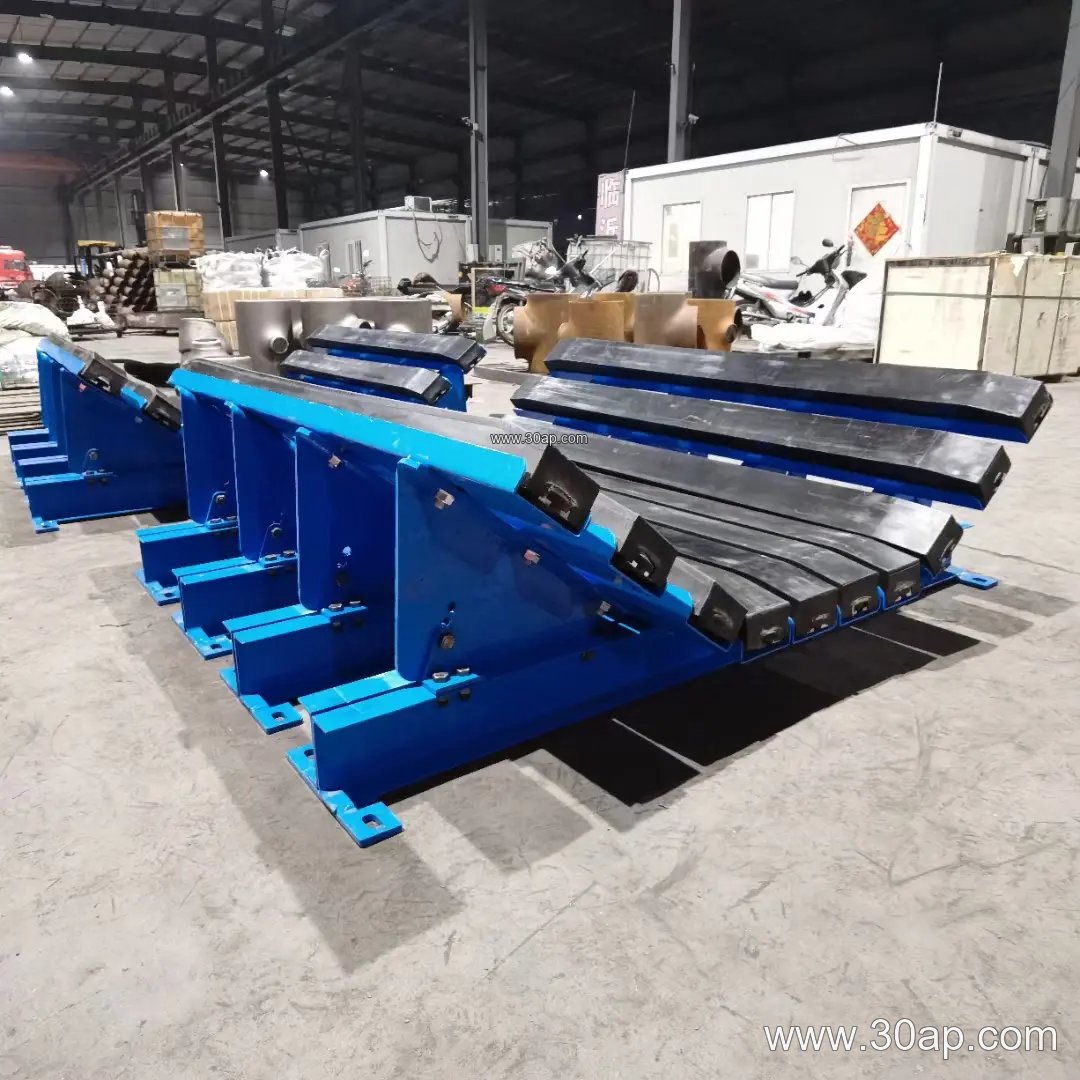
Matching the Bracket to Belt and Roller Components
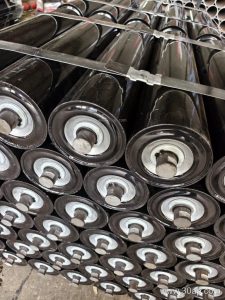
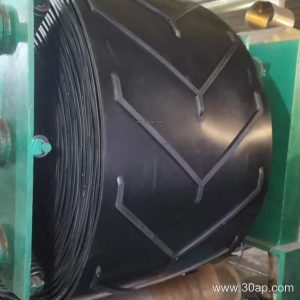
The bracket works as part of a system. A heavy-duty mining conveyor belt running over a steel cord conveyor belt structure at a coal mine will need brackets sized for the belt load and roller spacing, while a smaller aggregate conveyor belt on a crusher discharge may use lighter folded plate brackets. Where a heat resistant conveyor belt or a flame retardant conveyor belt is used, the bracket and roller assembly should still follow the same mechanical rules; the belt compound does not change the structural duty of the bracket.
Installation hole spacing and crossbeam length vary with belt width and trough angle, so these dimensions are determined by design rather than taken as universal values. Buyers should confirm the roller diameter, the trough angle, the belt width, and the mounting interface before ordering.
Buyer Checklist Before Ordering
- Confirm belt width class, such as B500, B650, B800, B1000, B1200, B1400, B1600, B1800, B2000, or B2200.
- State the required trough angle and whether adjustment on site is needed.
- Specify roller diameter and the mounting hole spacing required by the idler frame.
- Describe the environment: dust, moisture, temperature, and material abrasiveness.
- Confirm material and finish, for example angle steel, channel steel, or folded plate with a suitable coating.
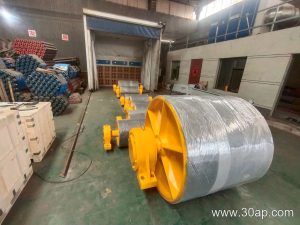
For related components such as the conveyor pulley, idler roller, and conveyor bracket assemblies, consistent specifications across the whole conveyor reduce installation problems and keep maintenance predictable. A well-chosen bracket is a low-cost way to protect the belt, the rollers, and the structure around them.