What a Spiral Idler Does
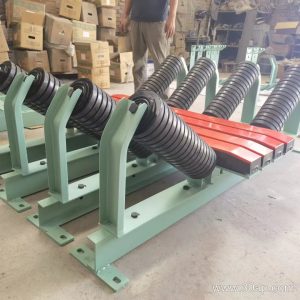
A spiral idler is a return-side roller with a helical steel strip wrapped around its shell. Instead of a plain cylindrical surface, the spiral creates a continuous screw-like path that contacts the conveyor belt. This design is used mainly on the return run to keep the belt centered and to shed sticky material before it builds up on the roller face. In quarry and aggregate lines, a spiral idler often sits just behind the tail area where fines and moisture tend to cling to the belt.
Construction and Common Forms
The body is usually a steel tube with a welded spiral flight. Standard roller diameters for this family include Ø89, Ø108, Ø127, Ø133, and Ø159, though larger sizes such as Ø178 and Ø194 are also made for wide belts. Bearing sizes commonly used are 6204, 6205, 6305, 6306, 6308, and 6310, matched to the load and shaft design rather than to belt width alone. Surface options range from plain steel to nylon, ceramic, or rubber-covered versions, depending on whether the priority is wear life or material release.
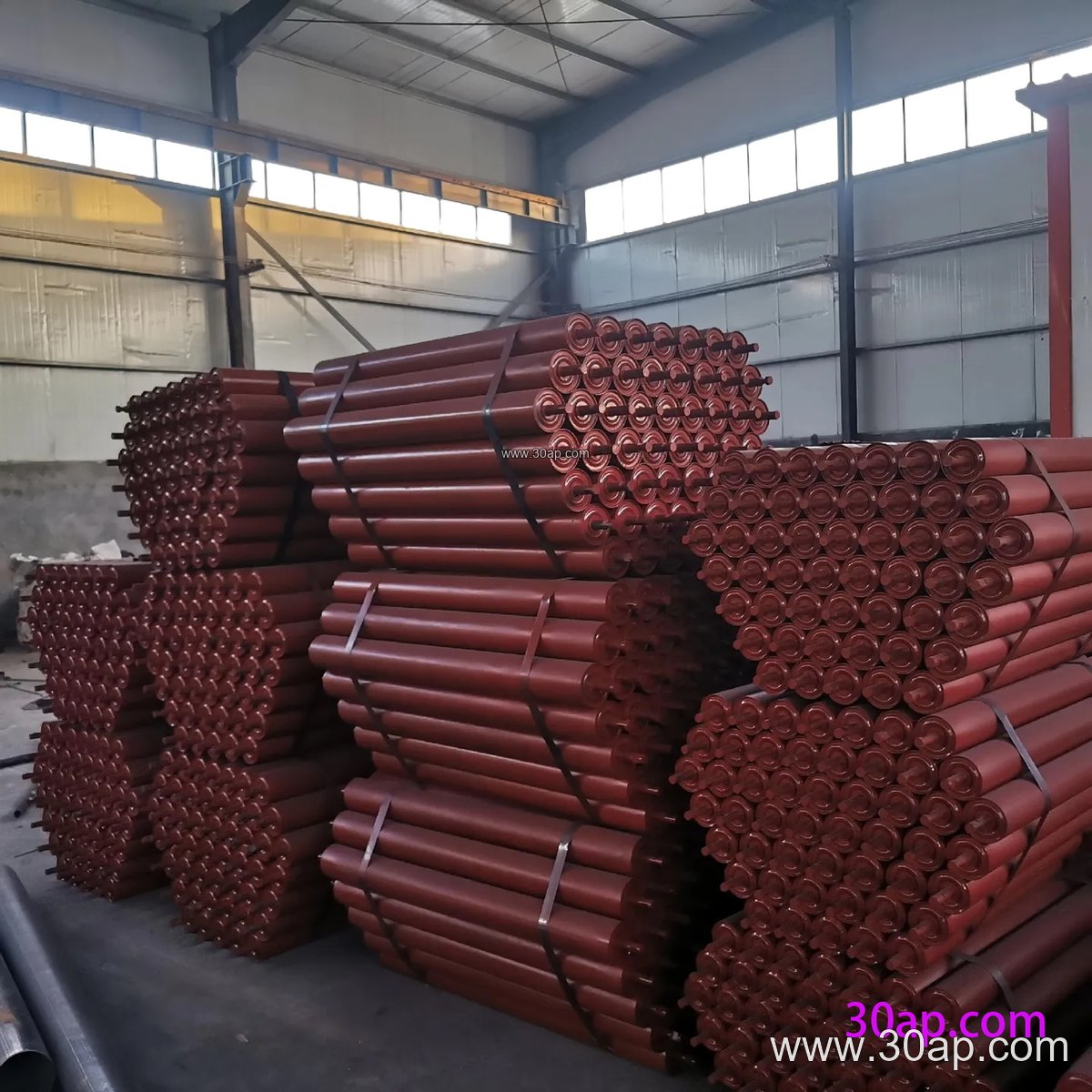
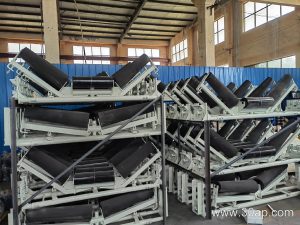
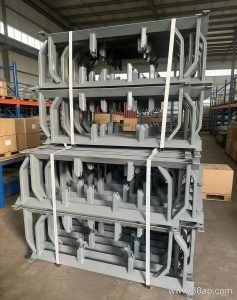
Spiral idlers can be supplied as single rollers or as part of a return idler set. For comparison, a V-type return idler uses two angled rollers to train the belt, while a flat return idler is a simple straight roller. The spiral type is not a replacement for either; it is chosen when self-cleaning and centering on the return strand are the main concerns.
Where It Fits in the Conveyor
Spiral idlers are common in cement plants, coal handling systems, and sand and gravel operations. They are often installed on the return side of a rubber conveyor belt that carries damp or dusty bulk material. In a coal mining conveyor belt system, the spiral helps prevent fines from wrapping around the roller and causing misalignment. In a limestone quarry, the same roller can reduce the need for frequent manual cleaning under the belt.
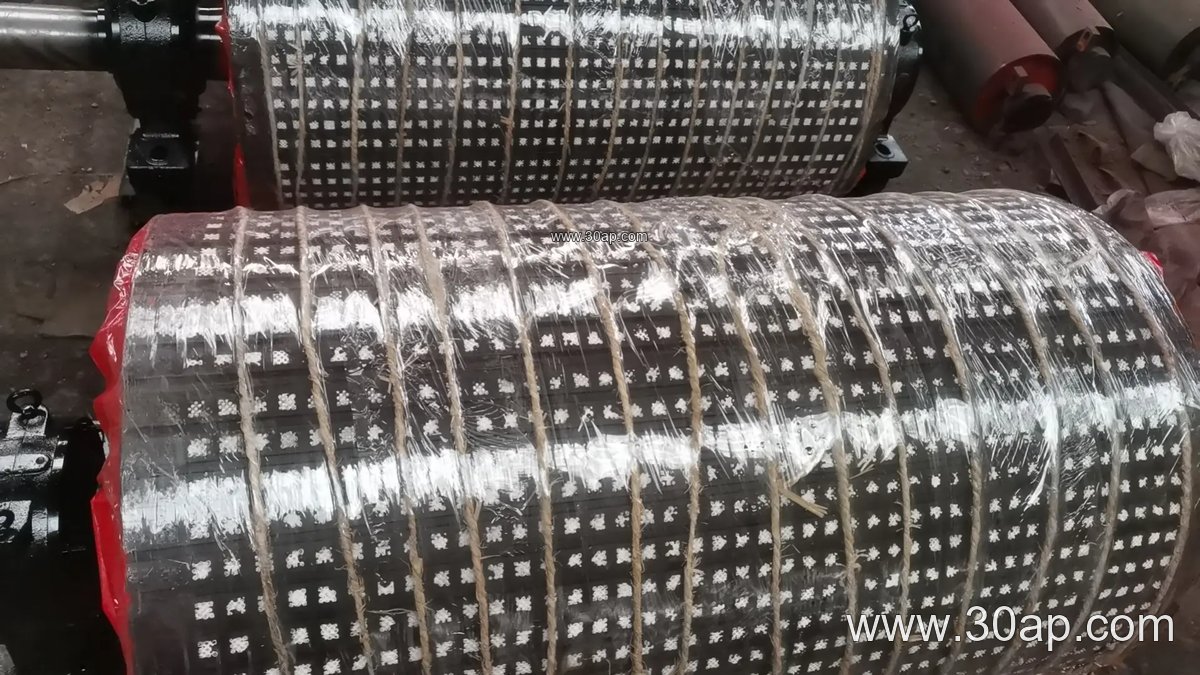
They are not used as drive, tail, or bend pulleys. Those are separate components: the drive pulley transmits power, the tail pulley forms the return end, and the bend pulley changes belt direction. A spiral idler only supports and guides the belt on its return path.
Size and Selection Notes
Roller length follows belt width, trough angle, and the idler set arrangement. For a three-roll troughing set, common roll lengths are roughly 200 mm for B500, 250 mm for B650, 315 mm for B800, 380 mm for B1000, 465 mm for B1200, 530 mm for B1400, 600 mm for B1600, 670 mm for B1800, and 750 mm for B2000. These are examples only; side rolls and center rolls can differ, and the spiral return roll is usually specified separately from the carrying idlers.
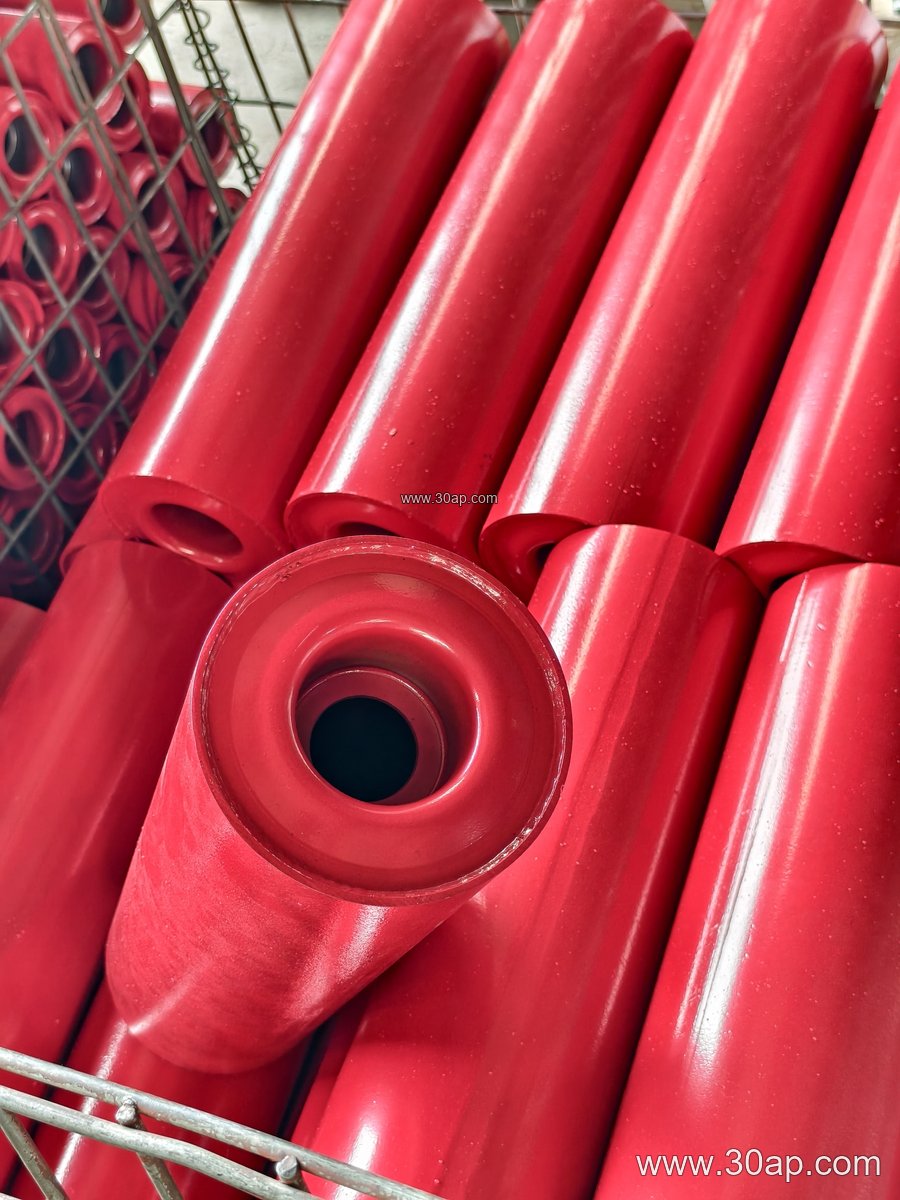
Typical reference data for spiral idlers are summarized below. Values are common ranges, not fixed supply promises.
| Parameter | Common Reference |
|---|---|
| Roller diameter | Ø89, Ø108, Ø127, Ø133, Ø159, Ø178, Ø194 |
| Belt width | B500 to B2000 |
| Bearing | 6204, 6205, 6305, 6306, 6308, 6310 |
| Surface | Steel, nylon, ceramic, rubber |
| Set form | Single return roller or return set |
When selecting, match the roller to the belt speed, material stickiness, and ambient conditions. A high-abrasion application may call for a ceramic or rubber surface, while a food or clean-material line may prefer nylon. Buyers should confirm shaft diameter, bearing type, and mounting dimensions with the conveyor bracket design rather than assuming a standard fit.
Buyer Checklist
- Confirm the return idler position and whether a single spiral roller or a full return set is needed.
- Check roller diameter and bearing size against the actual load and shaft, not just belt width.
- Specify the surface form based on material buildup and wear.
- Verify mounting with the existing conveyor bracket and frame dimensions.
- Consider the belt type: an EP conveyor belt or steel cord conveyor belt may need different support spacing on the return side.
Spiral idlers are a practical choice for keeping the return strand clean and aligned in dusty, damp, or high-fines service. They work alongside carrying idlers, pulleys, and brackets as part of the complete conveyor system.