What a Fixed Conveyor Bracket Does on a Conveyor Line
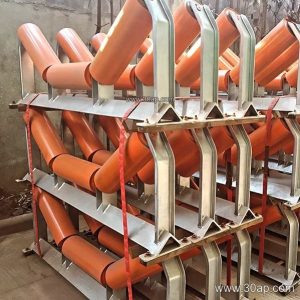
A fixed conveyor bracket is the non-adjustable support that holds idler rollers at a set position and angle along a conveyor frame. Once bolted or welded in place, it locks the roller height, the trough angle, and the lateral spacing, so the belt runs on a predictable path. Maintenance teams like it because there is nothing to drift out of alignment, while planners like it because the bracket can be produced to match a specific belt width and roller diameter.
In a quarry or a sand and gravel line, these brackets often sit under an abrasion resistant conveyor belt carrying crushed stone, while a cement plant may use the same style of support under a heat resistant conveyor belt on a clinker route. The bracket itself is simple, but its placement decides how evenly the load is shared across the rollers.
Construction and Common Materials
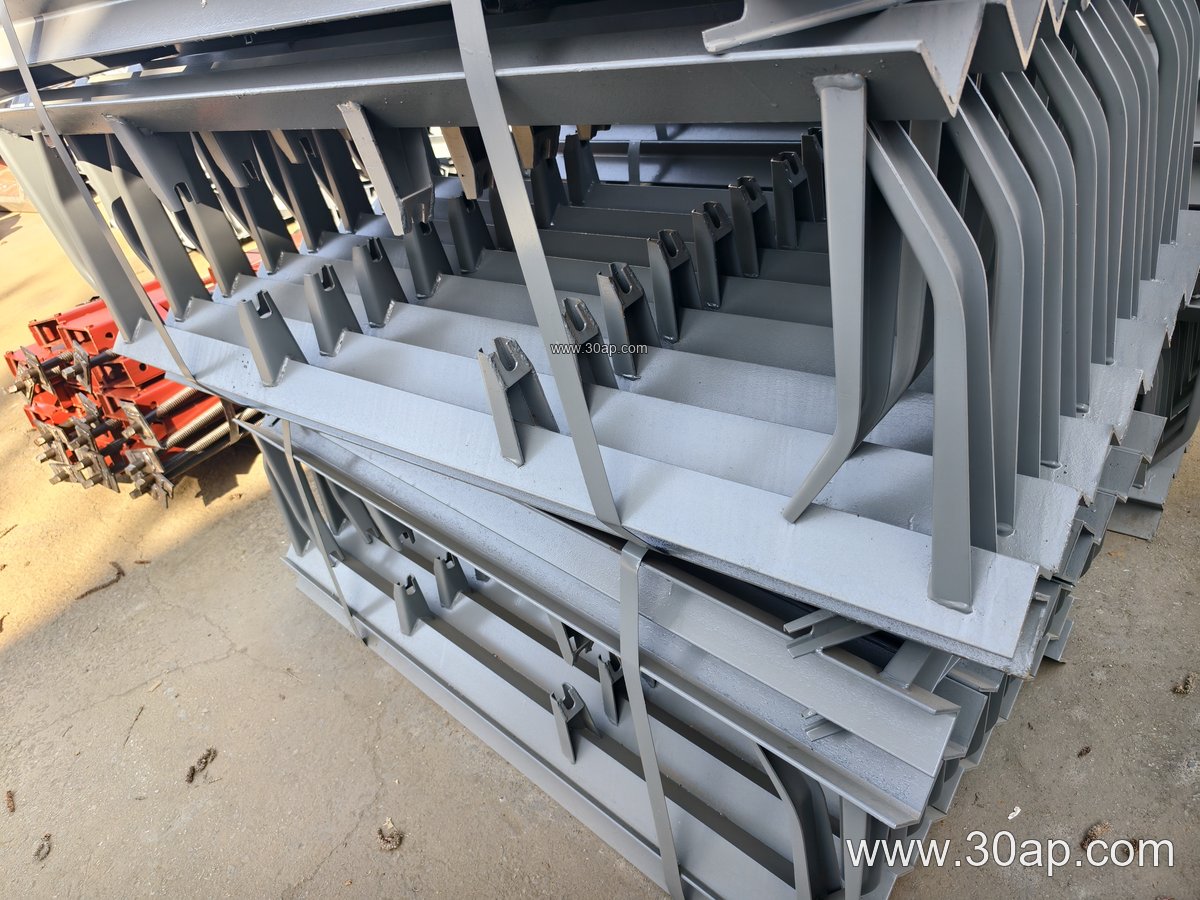
Most fixed brackets are fabricated from angle steel, channel steel, or folded steel plate. The frame is drilled with mounting slots for the roller shaft, and the crossbeam length follows the belt width and trough angle rather than a single universal dimension. A powder-coated or galvanized finish is common in damp conditions such as a wash plant or a port terminal.
Typical bracket reference data
| Item | Common range | Notes |
|---|---|---|
| Belt width B | B500, B650, B800, B1000, B1200, B1400, B1600, B1800 | Crossbeam length changes with B |
| Trough angle | 20°, 30°, 35°, 45° | Fixed at build; adjustable versions differ |
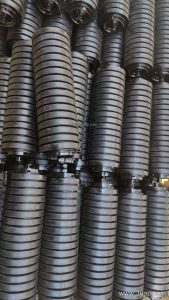
| Roller diameter | Ø89, Ø108, Ø133, Ø159, Ø194 | Chosen with load and belt speed |
| Material | Angle steel, channel steel, folded plate | Finish depends on site conditions |
These values are reference points for design discussion, not a rule that a given belt width can only pair with one roller diameter or one trough angle. A B800 frame may carry Ø108 rollers at 35° on one conveyor and a different combination on another, depending on capacity and material.
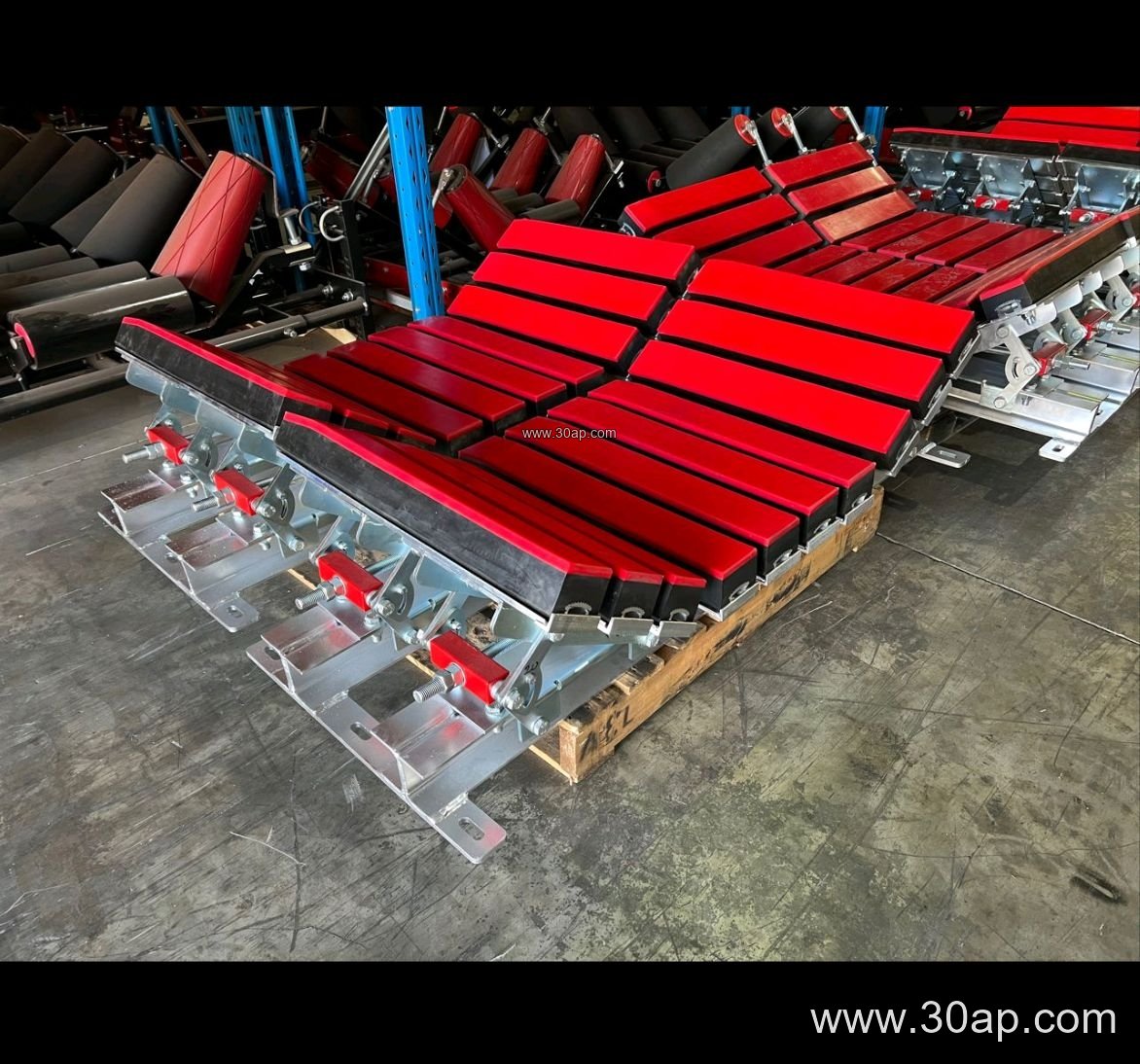
Where Fixed Brackets Fit in a Conveyor
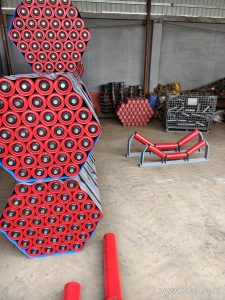
Fixed brackets appear on the carrying side as troughing supports that form the belt into a trough, and on the return side as flat or V-return supports that keep the belt from sagging. They are also used at transition zones where the belt moves from a flat pulley into a trough, and under impact points where a cushion bracket absorbs falling material. In a coal mining conveyor belt system or an underground mining conveyor belt, the return-side brackets are often paired with a training idler to control misalignment.
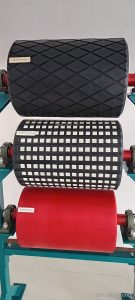
Because the bracket is fixed, it is usually specified together with the conveyor pulley layout, since the drive pulley, tail pulley, and bend pulley each set the belt line that the brackets must follow. A mismatch between bracket height and pulley centerline shows up quickly as belt wander or edge wear.
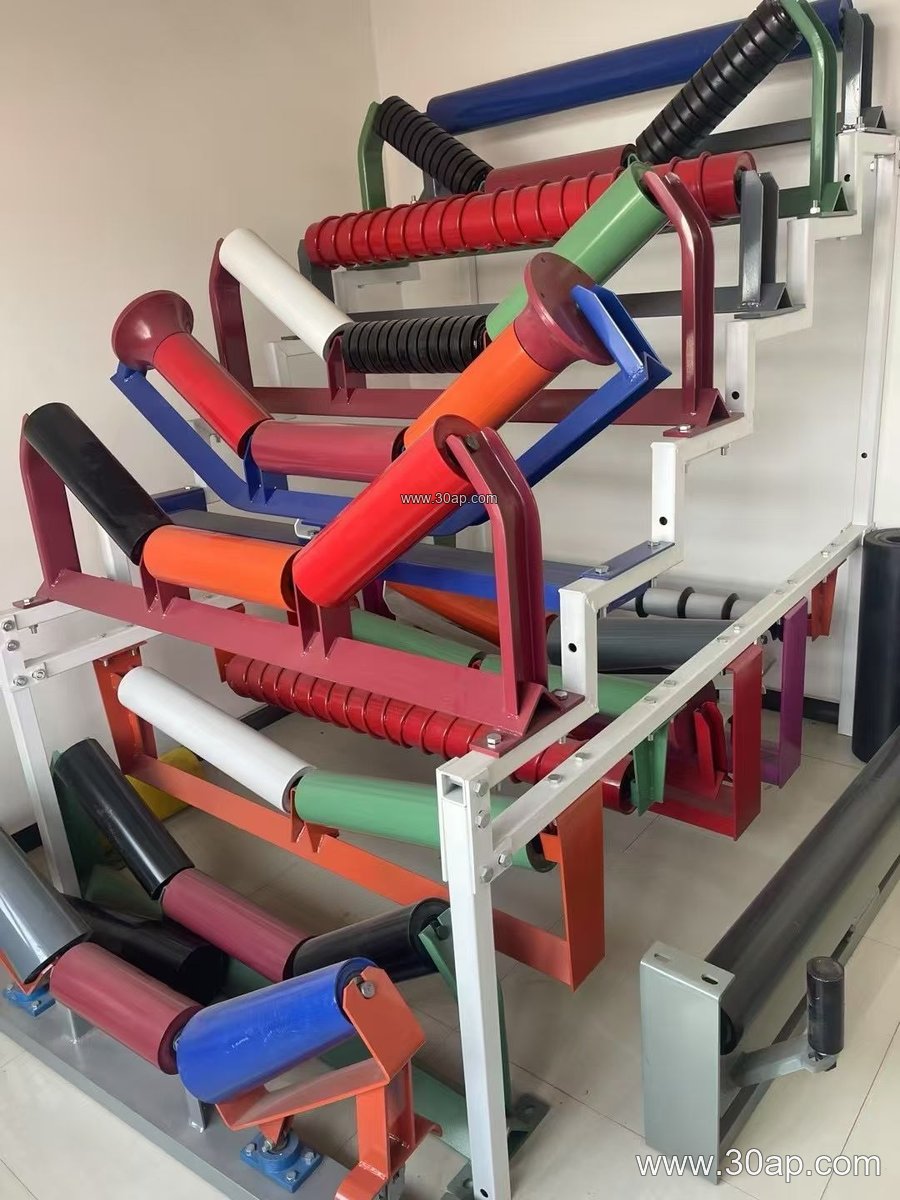
Fixed or Adjustable, and How to Choose
The main alternative is an adjustable bracket, which lets crews change the trough angle between positions such as 20°, 30°, 35°, and 45° after installation. That flexibility helps during commissioning or when a line changes duty. A fixed bracket trades that flexibility for rigidity, fewer moving parts, and a lower chance of loosening under vibration.
Buyers should confirm the belt width, the roller diameter, the required trough angle, the mounting hole pattern, and the frame material before ordering. For a heavy-duty mining conveyor belt carrying iron ore or copper ore, thicker steel and a wider crossbeam are usually worth discussing. For a food grade conveyor belt in a grain silo, a clean, well-finished bracket reduces material build-up.
Installation and Maintenance Notes
- Align brackets to a string line so roller tops sit at a consistent height.
- Check bolt torque after the first week of running and again after a month.
- Keep the bracket free of spilled material, especially in wet or sticky duty.
- Inspect for bent crossbeams after impact events at transfer points.
- Replace a deformed bracket rather than bending it back, since alignment is hard to restore.
Well-matched brackets, rollers, and belts keep a line running quietly. Whether the site is a power plant coal yard, a steel plant sinter line, or a tunnel spoil conveyor, the fixed conveyor bracket is the quiet component that holds the whole belt path together.