What a Ceramic Lagged Pulley Does
A wear-resistant ceramic lagged pulley is a conveyor pulley whose shell is covered with ceramic tiles set in a rubber or epoxy matrix. The ceramic studs sit slightly proud of the backing, so the belt rides on thousands of small, hard contact points instead of a smooth steel face. On a drive pulley, that surface raises friction between the shell and the belt, which lets the pulley transmit torque with less tension and reduces the chance of belt slip under load. The same ceramic lagging also protects the shell from the abrasive action of a conveyor belt carrying rock, ore, clinker, or aggregate.
This is a conveyor pulley built for the punishing end of the duty range. In a limestone quarry, a copper concentrator, a cement plant feeding clinker to the mill, or a power plant coal handling line, fine dust and grit work their way between belt and shell. Plain steel wears smooth and loses grip; a ceramic lagged unit keeps its bite far longer, which is why maintenance teams often specify it for head pulleys and other high-traction positions.
Construction of the Lagged Shell
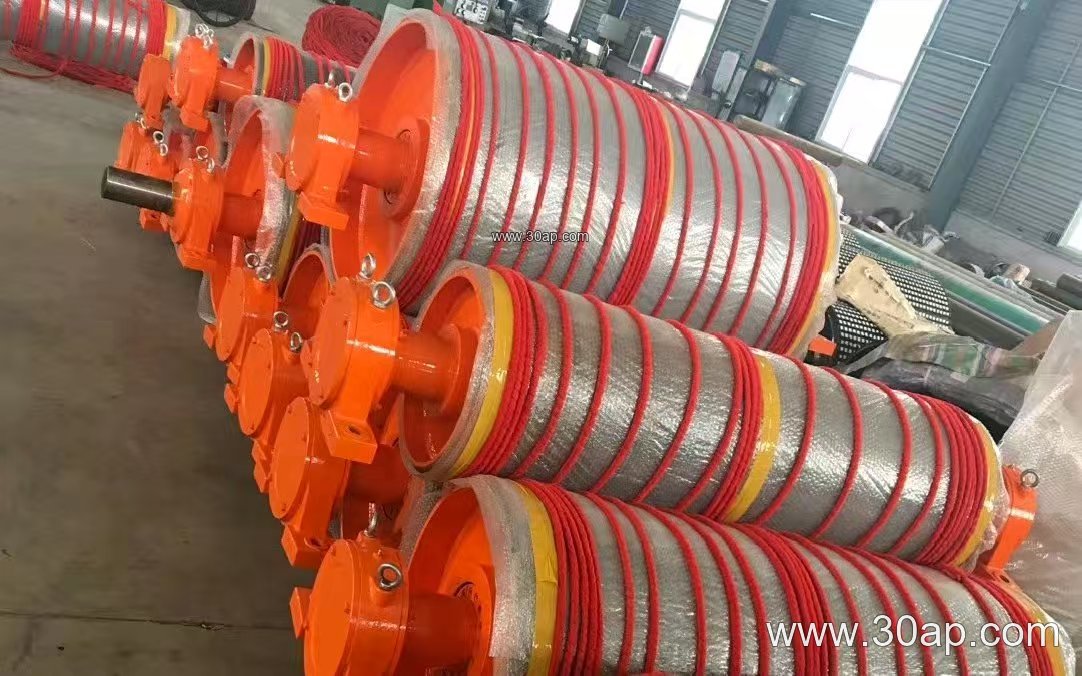
The base is a fabricated or cast steel drum with a machined face, welded to the shaft and end discs. Lagging is applied as ceramic tiles bonded in a rubber sheet, or as individual tiles set into a polymer bed, typically 8 to 20 mm thick depending on the duty. The tiles are usually alumina ceramic, hard and chemically stable, arranged in a pattern that leaves channels for water and fines to escape. That drainage matters on wet or dusty belts: trapped material between belt and lagging can cause tracking problems and rapid wear.
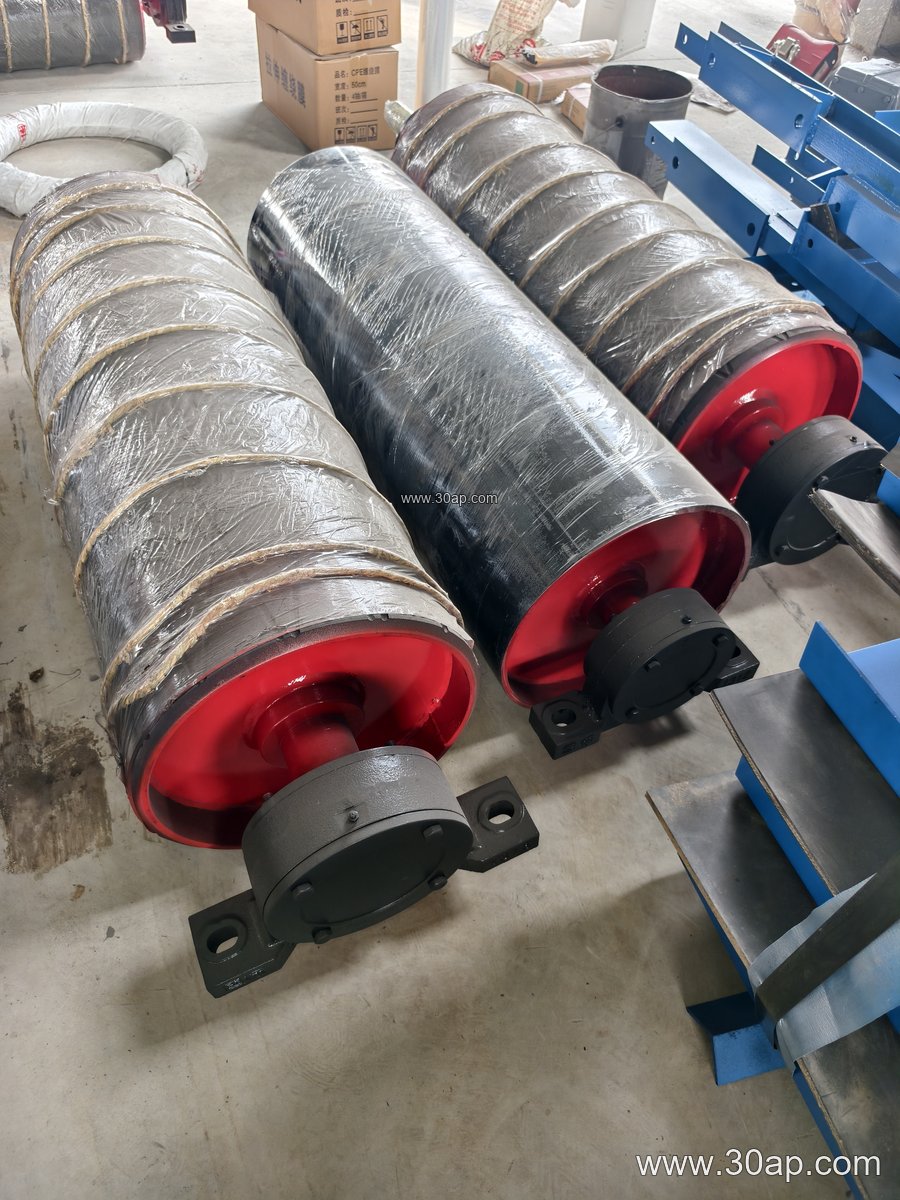
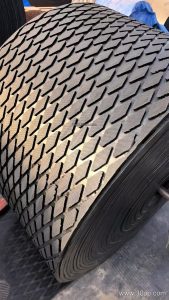
Surface form is a design choice. A plain ceramic tile face suits general abrasion resistance, while diamond or herringbone patterns are used where extra grip under wet conditions is needed. The ceramic lagged pulley is not the same as a drive pulley or a tail pulley; those describe the pulley’s role in the conveyor, while ceramic lagging describes the surface. A tail pulley or bend pulley can carry ceramic lagging too, though the traction benefit is most valuable on the driving position.
Where It Fits on the Conveyor
Ceramic lagging is most often found on the head or drive pulley of a heavy-duty conveyor, where the belt wraps the shell and all the drive torque passes through that contact. It is also seen on tension or take-up pulleys in long overland systems where belt slip would be costly to correct. Typical service locations include:
- Primary crushing and screening plants handling run-of-mine rock
- Iron ore, copper ore, and gold mining conveyor drives
- Coal washing and power station coal handling systems
- Cement plant raw material and clinker transport
- Port bulk terminals loading abrasive cargo
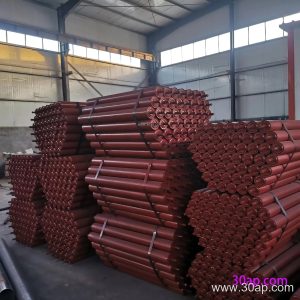
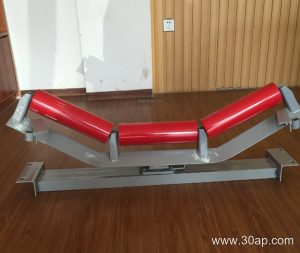
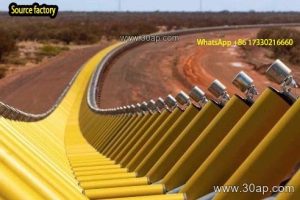
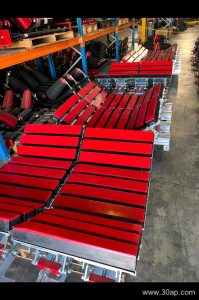
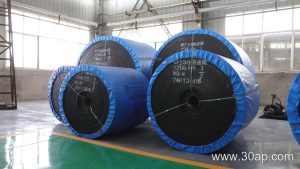
In these settings the pulley usually works with a heavy-duty mining conveyor belt, an abrasion resistant conveyor belt, or a steel cord conveyor belt carrying high tension. A matched conveyor bracket and properly aligned conveyor pulley keep the wrap angle correct, and the idler roller set on the carry and return sides keeps the belt tracking steadily into the lagged face.
Sizing Notes for Buyers
Pulley diameter and face width follow belt width and the required wrap angle, not a fixed rule. Common face widths run a little wider than the belt, for example about 500 mm for B400, about 750 mm for B650, about 1150 mm for B1000, and about 1600 mm for B1400. Diameters commonly range from Ø200 up to Ø1800 depending on torque and belt tension. Shaft diameter is set by torque and load, with common sizes from Ø50 to Ø200, and must never be guessed from belt width alone. A few reference combinations appear in the table below; these are examples, not universal matches.
| Belt width | Typical face width | Example pulley combination | Common lagging thickness |
|---|---|---|---|
| B800 | approx. 950 mm | B800 x Ø500 | 8–12 mm |
| B1000 | approx. 1150 mm | B1000 x Ø630 | 10–15 mm |
| B1200 | approx. 1400 mm | B1200 x Ø1000 | 12–20 mm |
| B1400 | approx. 1600 mm | B1400 x Ø800 | 12–20 mm |
| B1600 | approx. 1800 mm | B1600 x Ø1250 | 15–20 mm |
Selection and Maintenance Advice
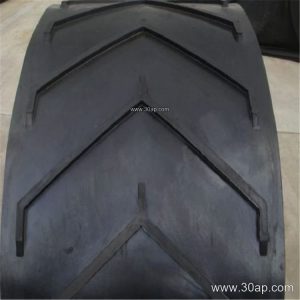
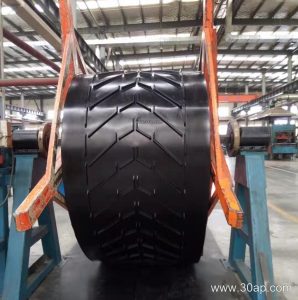
Choose ceramic lagging when abrasion and slip risk are both high, and when downtime for re-lagging is expensive. Confirm the belt type first: a pipe conveyor belt, chevron conveyor belt, or corrugated sidewall conveyor belt may need a different pulley face treatment than a flat EP conveyor belt or NN conveyor belt. For hot service, pair the pulley with a heat resistant conveyor belt and check that the lagging compound suits the temperature. For underground coal work, a flame retardant conveyor belt and fire resistant conveyor belt are normally required alongside the pulley specification.
Inspection is straightforward. Check tile loss, backing cracks, and material build-up at the belt entry, and verify that the belt is not polishing the ceramic tips. Keep the conveyor bracket bolts tight and the idler roller frames aligned so the belt enters the pulley squarely. A well-chosen wear-resistant ceramic lagged pulley, matched to the belt and the duty, usually outlasts plain rubber lagging several times over in abrasive service.