What a Heavy-Duty Mining Conveyor Belt Is
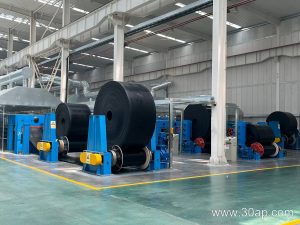
A heavy-duty mining conveyor belt is the load-carrying component on a bulk material conveyor in mines, quarries, cement plants, power stations, and aggregate yards. It is designed to move crushed rock, ore, coal, and other abrasive bulk materials over long distances and steep inclines. Unlike a light-duty belt, this mining conveyor belt usually combines a strong carcass with thick rubber covers to resist cutting, impact, and wear. The same product is also described as a heavy-duty conveyor belt for the mining industry, and the two names refer to the same belt family.
Construction and Common Belt Types
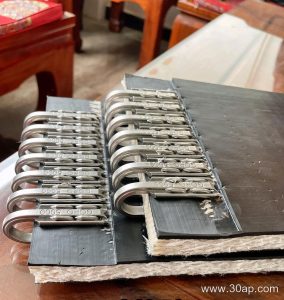
The carcass gives the belt its tensile strength. Common options include EP conveyor belt (polyester-cotton fabric), NN conveyor belt (nylon-nylon fabric), and steel cord conveyor belt for very high tension and long center distances. A fabric core conveyor belt may have multiple plies, often 2 to 6 layers, depending on the duty. The cover rubber protects the carcass and is selected for the working environment.
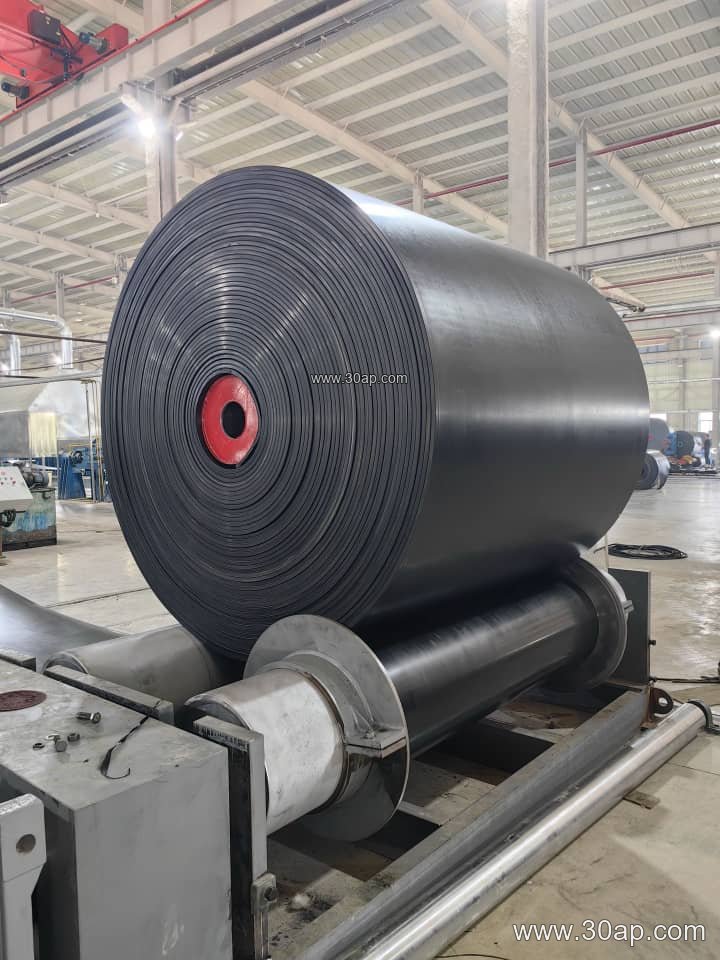
- EP conveyor belt, such as EP200, EP400, EP630, EP1000, and EP1250, is widely used for general mining duty.
- NN conveyor belt, such as NN200, NN300, and NN400, offers good flexibility and fatigue resistance.
- Steel cord conveyor belt, such as ST1000, ST1600, and ST2500, suits high-strength main haulage lines.
- PVG conveyor belt and PVC conveyor belt are often chosen for underground coal mining where flame resistance is required.
Cover compounds can be abrasion resistant, heat resistant, oil resistant, flame retardant, anti-static, or cold resistant. A chevron conveyor belt or corrugated sidewall belt is a different surface form and is used when the conveyor needs extra grip or a contained material path. These are separate subtypes, not replacements for the standard heavy-duty belt described here.
Typical Sizes and Reference Data
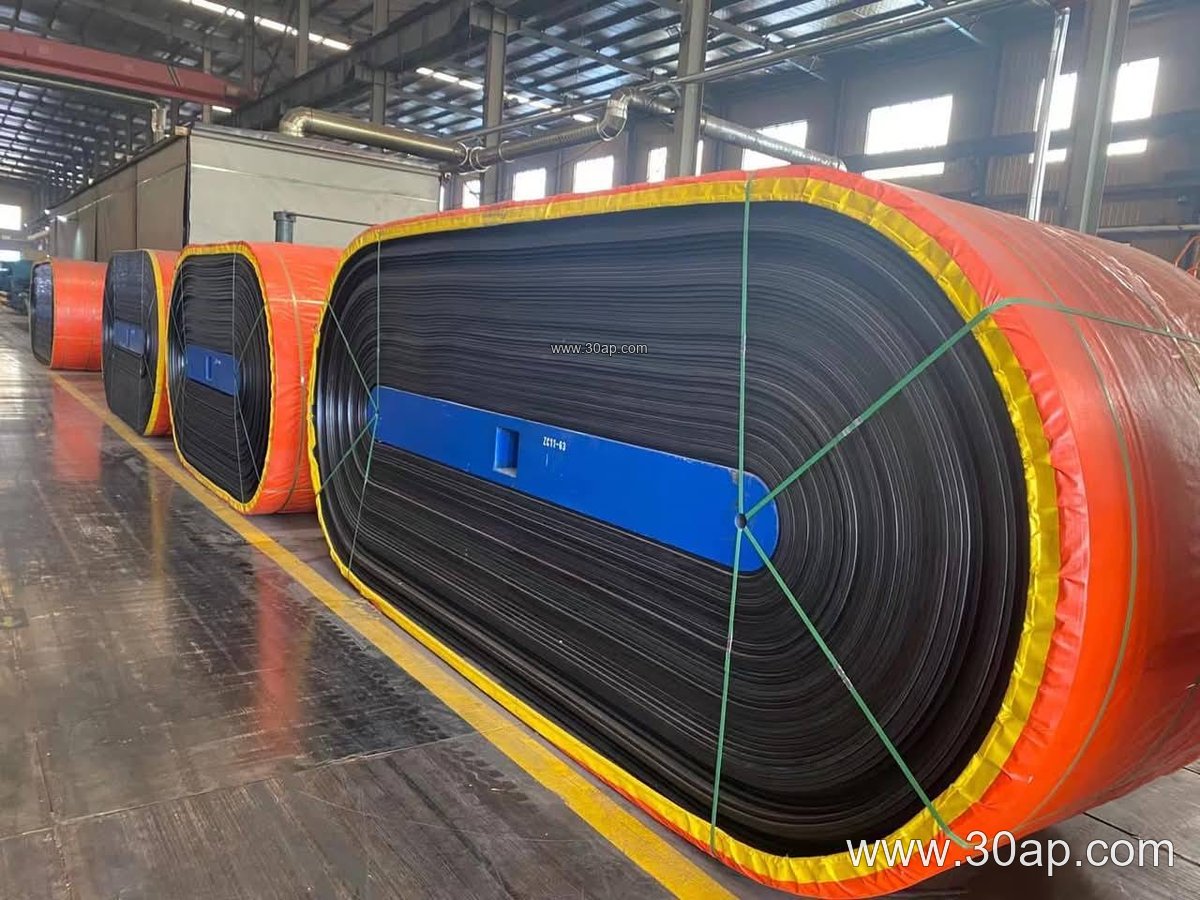
Belt width and strength are selected together with the conveyor design. The values below are common reference ranges, not fixed supply promises. Widths usually run from B500 to B2000, and wider belts may be called a wide conveyor belt or extra-wide conveyor belt. Cover thickness is often written as top plus bottom, for example 4+2 mm or 6+2 mm.
| Parameter | Common Reference Range |
|---|---|
| Belt width | B500, B650, B800, B1000, B1200, B1400, B1600, B1800, B2000 |
| EP strength grades | EP200, EP315, EP400, EP500, EP630, EP800, EP1000, EP1250, EP1600, EP2000 |
| Steel cord grades | ST1000, ST1250, ST1600, ST2000, ST2500, ST3150 |
| Cover thickness | 3+1.5 mm, 4+2 mm, 5+2 mm, 6+2 mm, 8+3 mm |
| Carcass plies | Usually 2 to 6 plies for fabric core belts |
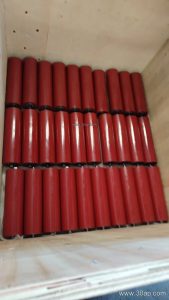
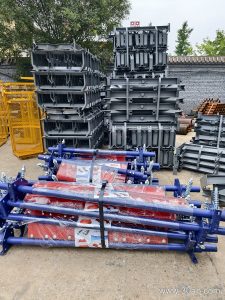
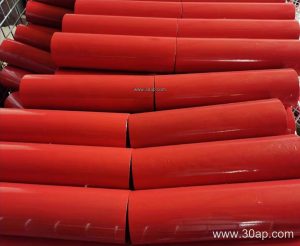
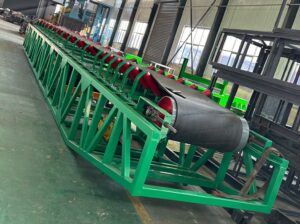
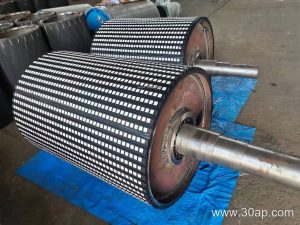
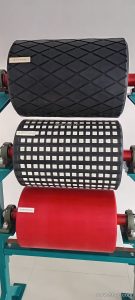
One belt width does not dictate one pulley diameter. The conveyor pulley, drive pulley, tail pulley, and bend pulley are sized from the belt tension, carcass type, and load, so the final match should come from the conveyor designer. Likewise, idler roller spacing and conveyor bracket layout are set by the belt width and material load, not by a single rule.
Where It Is Used
These belts appear in coal mining conveyor systems, underground mining conveyor lines, iron ore and copper ore handling, gold mining operations, quarry conveyor belts, aggregate conveyor belts, crusher conveyor belts, cement plant conveyor belts, power plant conveyor belts, and ship loading conveyor belts. A coal mining conveyor belt may need flame retardant and anti-static properties, while a rock conveyor belt in a quarry usually prioritizes abrasion resistance. In a cement plant, heat resistant conveyor belt grades help where clinker or hot material is present. For port and bulk material conveyor belt systems, wide belts such as 1200mm, 1400mm, or 1600mm are common.
Buyer Checklist
Before ordering, confirm the material type, lump size, throughput, incline angle, and the longest unsupported span. Check whether the belt must be flame retardant, anti-static, oil resistant, or heat resistant. Ask for the carcass type and ply count, the cover thickness, and the belt width in millimeters. A heavy-duty mining conveyor belt should also match the conveyor pulley and idler roller selection, so share the conveyor layout with the belt supplier. When replacing a belt, record the old belt marking, such as EP1000 or ST1600, and confirm that the new belt meets the same duty. For more product information, visit www.example.com/conveyor-belt and review the available mining conveyor belt options.