What an EP Rubber Conveyor Belt Is
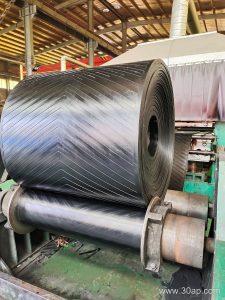
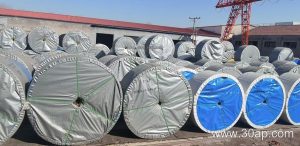
An EP rubber conveyor belt is a fabric-core belt whose carcass is built from polyester warp yarns and polyamide (nylon) weft yarns, bonded in rubber. The EP fabric core gives the belt low elongation in service, good troughability and strong resistance to repeated flexing around pulleys. In daily plant language, people often shorten the name to EP conveyor belt or EP fabric core conveyor belt, and all three refer to the same product family.
It is a workhorse choice for moving bulk materials in mines, coal preparation plants, cement works, power stations, quarries, sand and gravel yards, ports and steel plants. Where a buyer needs higher tension than a light fabric belt can carry but does not need the very long centre distances typical of a steel cord belt, an EP rubber belt is usually the first option checked.
How the Belt Is Built
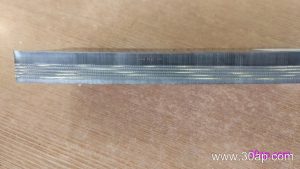
The carcass is the load-bearing part. EP fabric plies are calendered with rubber skim, stacked to the required ply count, and then the top and bottom cover rubbers are applied before vulcanisation. A typical construction includes:
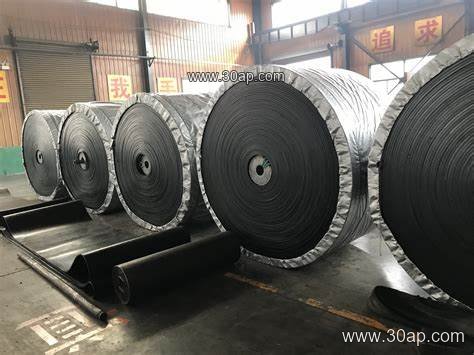
- EP fabric plies, commonly 2 to 6 layers depending on duty
- Rubber skim between plies to prevent separation under flexing
- Top cover and bottom cover in various thickness combinations
- Edge protection, either cut edges or moulded edges for heavier service
Cover compounds are selected for the working environment. Abrasion resistant, heat resistant, oil resistant, flame retardant, anti-static and cold resistant versions are all made on the same EP carcass platform. A flame retardant conveyor belt for underground coal service, for example, uses the same fabric core idea but with covers and formulations that meet the relevant fire performance requirements agreed with the supplier.
Common Strength Grades and Dimensions
EP belts are graded by the nominal tensile strength of the carcass, expressed in N/mm. The following values are common reference grades; actual availability and construction differ between manufacturers.
| Grade | Nominal strength (N/mm) | Typical use |
|---|---|---|
| EP200 | 200 | Light to medium duty, short conveyors |
| EP315 | 315 | General bulk handling |
| EP400 | 400 | Aggregate, sand and gravel |
| EP500 | 500 | Medium duty quarry and cement |
| EP630 | 630 | Heavier quarry and plant duty |
| EP800 | 800 | Mining and cement main lines |
| EP1000 | 1000 | Heavy-duty mining and port duty |
| EP1250 | 1250 | High tension bulk systems |
| EP1600 | 1600 | Very heavy duty main haulage |
| EP2000 | 2000 | Highest fabric-core demands |
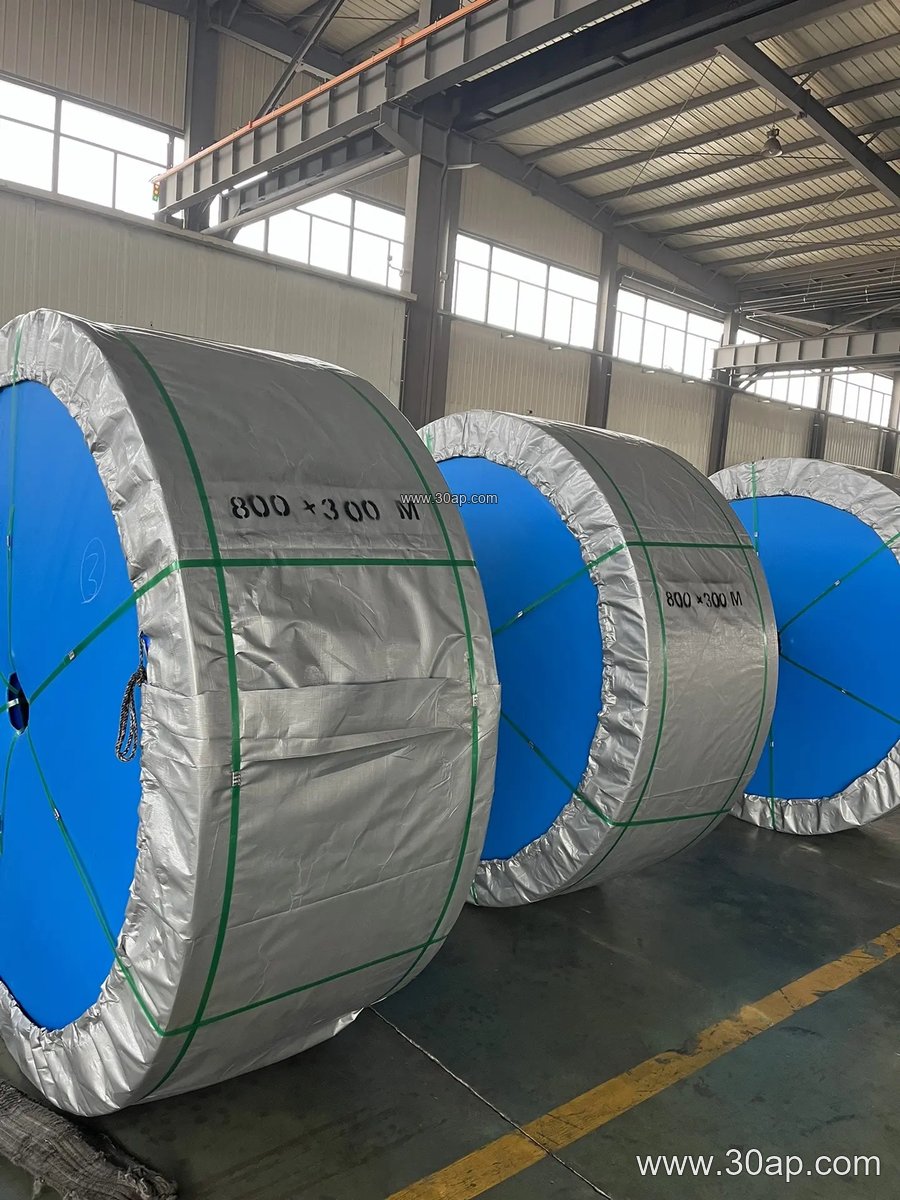
Belt width is chosen from the material size, tonnage and troughing arrangement, not from the pulley alone. Reference widths include B500, B650, B800, B1000, B1200, B1400, B1600, B1800 and B2000. Cover thickness is usually written as top plus bottom, for example 4+2 mm, 5+2 mm, 6+2 mm or 8+3 mm. A heavy-duty 1200mm wide conveyor belt with 6+2 mm covers is a common combination in crushing circuits, but the final specification should always follow the conveyor design.
Where It Fits in a Conveyor
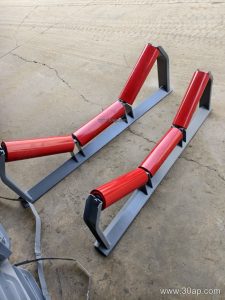
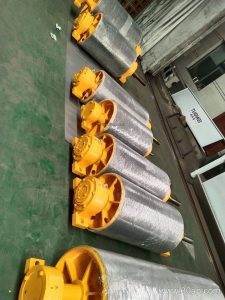
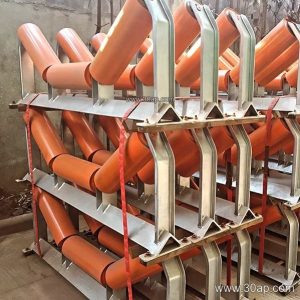
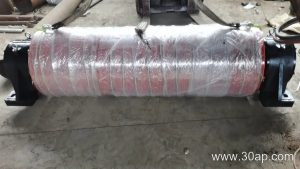
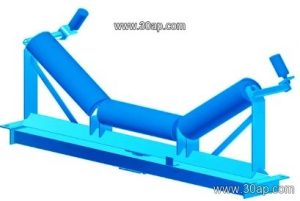
The belt runs over idler rollers on the carrying side and return rollers underneath, wraps the drive pulley and tail pulley, and is kept aligned by bend pulleys and training idlers. Conveyor pulleys, brackets and frames must match the belt width and tension, and the drive, tail and bend pulleys each have their own function and are not interchangeable. A skirted conveyor belt or a corrugated sidewall conveyor belt may be used where material must be contained on steep inclines, and a chevron conveyor belt is another option for gradient work. These are different subtypes and should be selected for the specific duty rather than substituted for a standard EP belt.
For very long overland routes or extremely high tensions, a steel cord conveyor belt is often compared with the EP range, while an NN conveyor belt using nylon warp and weft is another fabric option. The choice depends on tension, elongation limits, splice method and site conditions.
Buyer Checklist
- Confirm the required strength grade and safety factor with the conveyor designer.
- State the material, lump size, temperature and any oil or chemical exposure.
- Specify cover thickness and grade, for example abrasion resistant or heat resistant covers.
- Give belt width, ply count and whether endless splicing is needed on site.
- Check pulley diameters and idler roller spacing so the belt is not over-flexed.
- Ask for the manufacturer’s data sheet and confirm tolerances before ordering.
Well-matched EP rubber belting, together with correctly sized conveyor pulleys, idler rollers and brackets, keeps a bulk handling line running with fewer stoppages. Buyers who define the duty clearly usually get a belt that lasts longer and tracks better from the first day of installation. You can review belt, roller and pulley options at rubberbeltsolution.com before finalising a specification.