What the Trough Idler Bracket Set Does
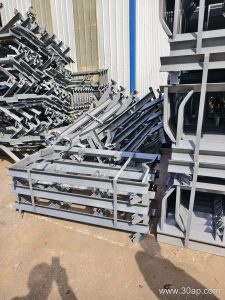
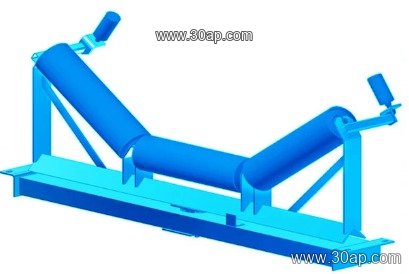
A trough idler bracket set is the supporting frame that holds the carry-side idler rollers in a troughed shape so the conveyor belt forms a shallow channel. In a quarry, a crushing and screening line, or a cement plant, this set keeps the loaded belt from flattening between stringers and helps center bulk material as it travels. The set is usually supplied as a matched pair of side brackets plus the cross member that ties them together, and it is installed on the conveyor frame at regular spacing along the carrying run.
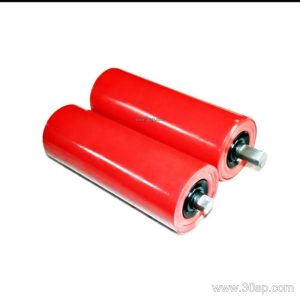
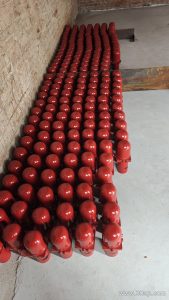
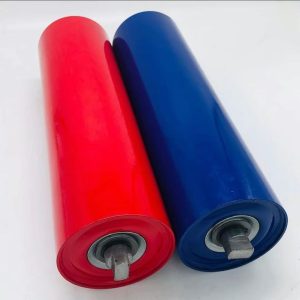
The assembly is distinct from the rollers it carries. An idler roller is the rotating part; the bracket set is the stationary geometry that positions those rollers at the chosen trough angle. Buyers often order brackets and rollers together, but the two are separate line items with separate wear lives.
How a Bracket Set Is Built
Most sets are fabricated from angle steel, channel steel, or folded steel plate. The side brackets carry slotted or drilled mounting faces where the idler shafts sit, and the cross beam sets the spacing between the left and right wings. Common constructions include:
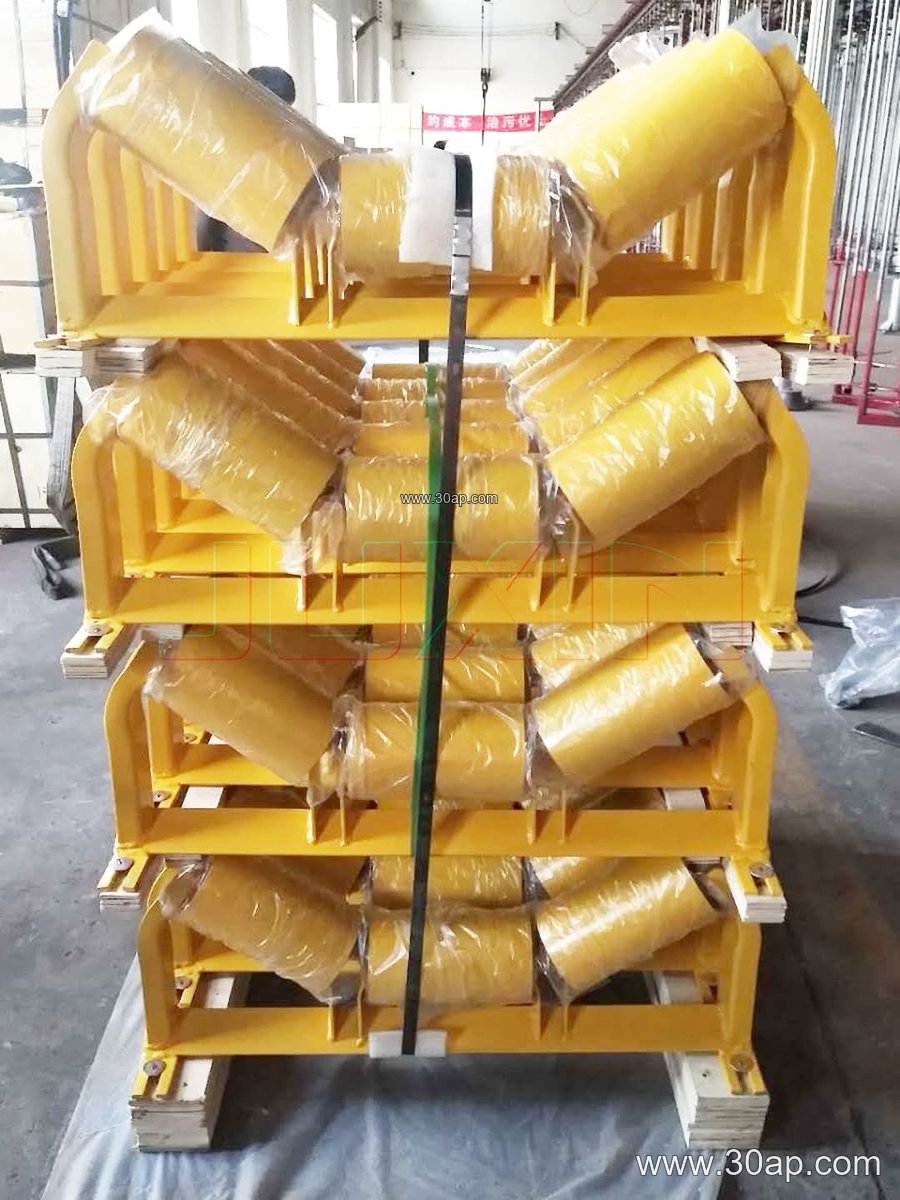
- Fixed trough brackets welded or bolted at one preset angle
- Adjustable brackets with multiple hole positions or a pivoting wing
- Transition brackets used near the head and tail to ease the belt from flat to troughed
- Impact bracket sets placed under loading points, often paired with cushion rollers
- Return brackets, including V-return and flat return styles, for the empty strand
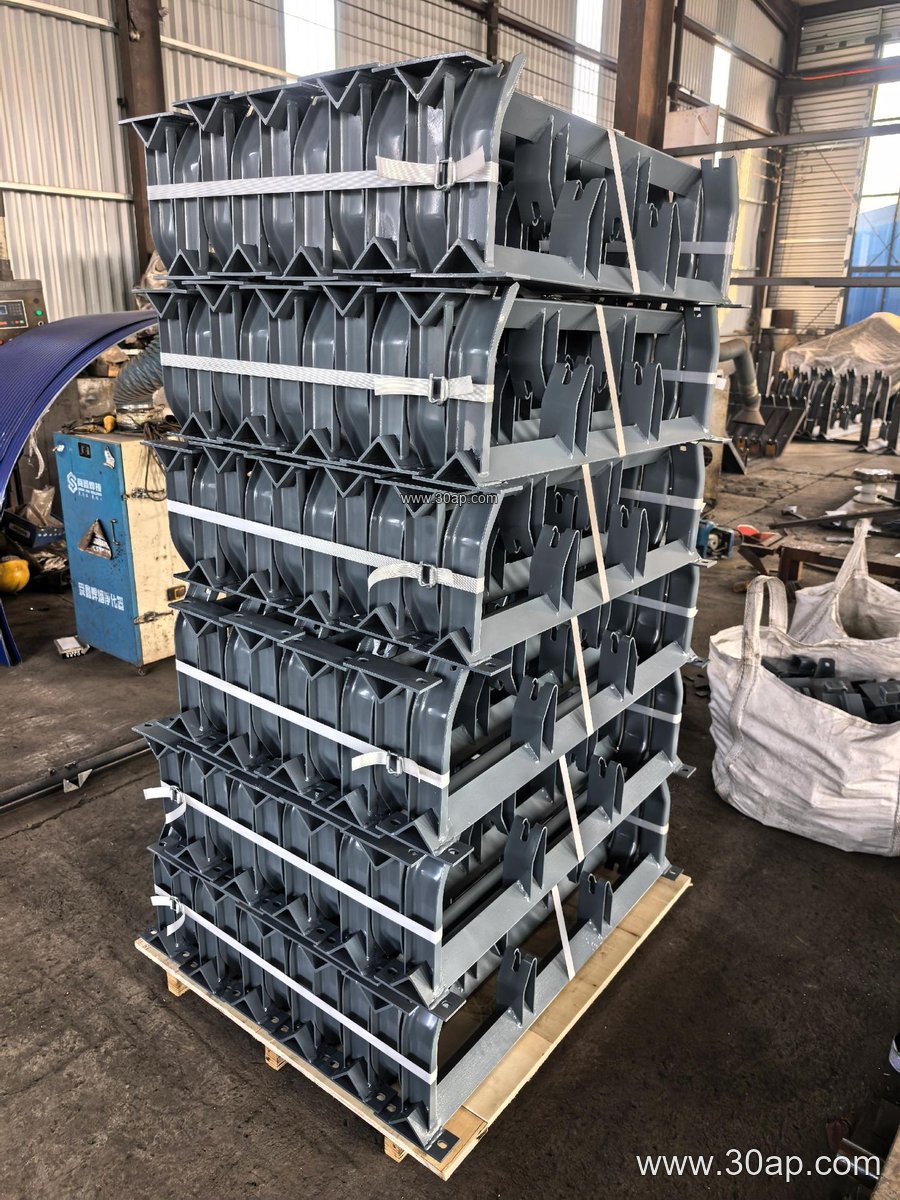
Surface finish is normally painted or galvanized. Heavier plate and reinforced gussets are typical where a conveyor belt carries dense ore or sharp rock, while lighter folded designs suit smaller aggregate lines.
Matching Trough Angle, Belt Width, and Roller Diameter
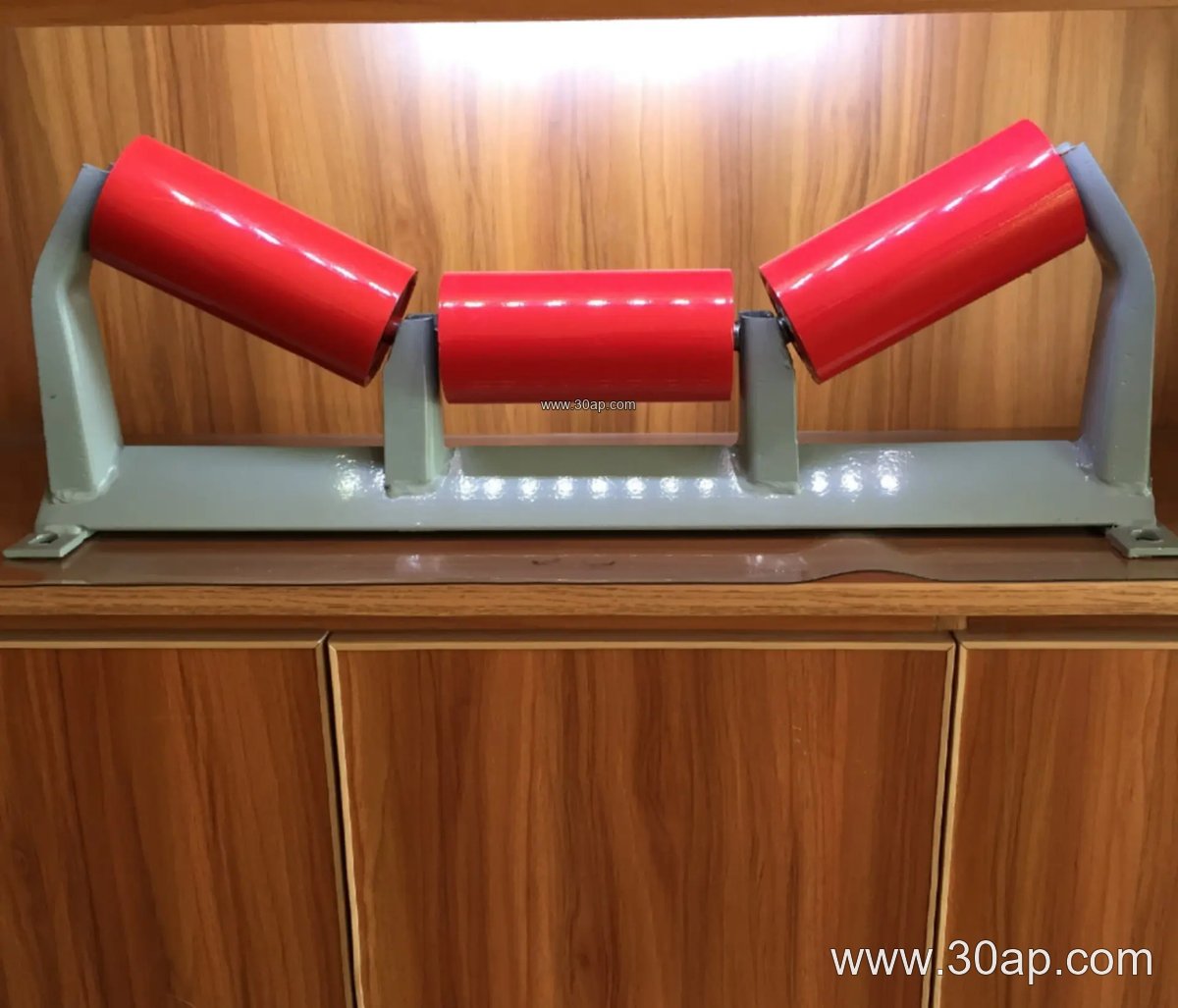
The bracket set has to agree with three things at once: the belt width, the trough angle, and the roller diameter. These are related but not locked to one another, so a given width can be run at more than one angle and with more than one roller size depending on the duty. Common reference combinations look like this:
| Belt width | Typical trough angle | Common roller diameter | Typical setting |
|---|---|---|---|
| B500 | 20 to 30 degrees | Ø89 | Small aggregate, sand |
| B650 | 30 degrees | Ø89 / Ø108 | Stone crushing feed |
| B800 | 30 to 35 degrees | Ø108 | General bulk handling |
| B1000 | 35 degrees | Ø108 / Ø133 | Cement, power plant coal |
| B1200 | 35 to 45 degrees | Ø133 | Iron ore, heavy duty |
| B1400 | 35 to 45 degrees | Ø133 / Ø159 | Port and stockyard |
| B1600 | 35 to 45 degrees | Ø159 | High tonnage primary lines |
| B1800 to B2200 | 35 to 45 degrees | Ø159 / Ø194 | Large mining conveyors |
These figures are reference ranges, not fixed pairings. Mounting hole spacing and cross beam length change with belt width and trough angle, so the bracket drawing should always be confirmed against the conveyor frame rather than assumed from the belt size alone.
Where These Sets Are Used
In a coal washing plant, trough bracket sets run along the main haulage conveyors where the belt must hold a deep load without spilling. In a limestone quarry or a sand and gravel line, adjustable sets are useful at transfer points where the belt path shifts slightly during installation. Belt cleaners, skirt rubber, and loading chutes all depend on the belt staying properly troughed, and the bracket set is what maintains that shape.
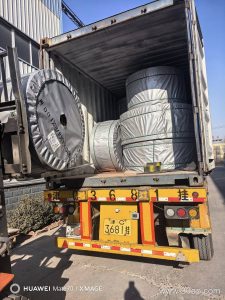
Where the belt itself is a heavy-duty mining conveyor belt, the bracket set usually needs thicker plate and a wider base. For abrasive loads such as iron ore or copper ore, an abrasion resistant conveyor belt reduces top cover wear, but the bracket still has to resist vibration and impact from the load zone.
Selection and Maintenance Notes
Check that the bracket set matches the existing stringer hole pattern before ordering. Confirm the trough angle, the roller shaft diameter, and whether the set is fixed or adjustable. For loading points, consider impact brackets; for long carry runs, standard fixed sets are usually sufficient. During service, inspect for bent wings, worn mounting slots, and loose bolts, since a distorted bracket will misalign the rollers and cause the belt to track poorly. Replacing a bracket set is far cheaper than replacing a damaged belt, so it is worth treating these frames as a scheduled inspection item.