What a Loading Point Impact Idler Does
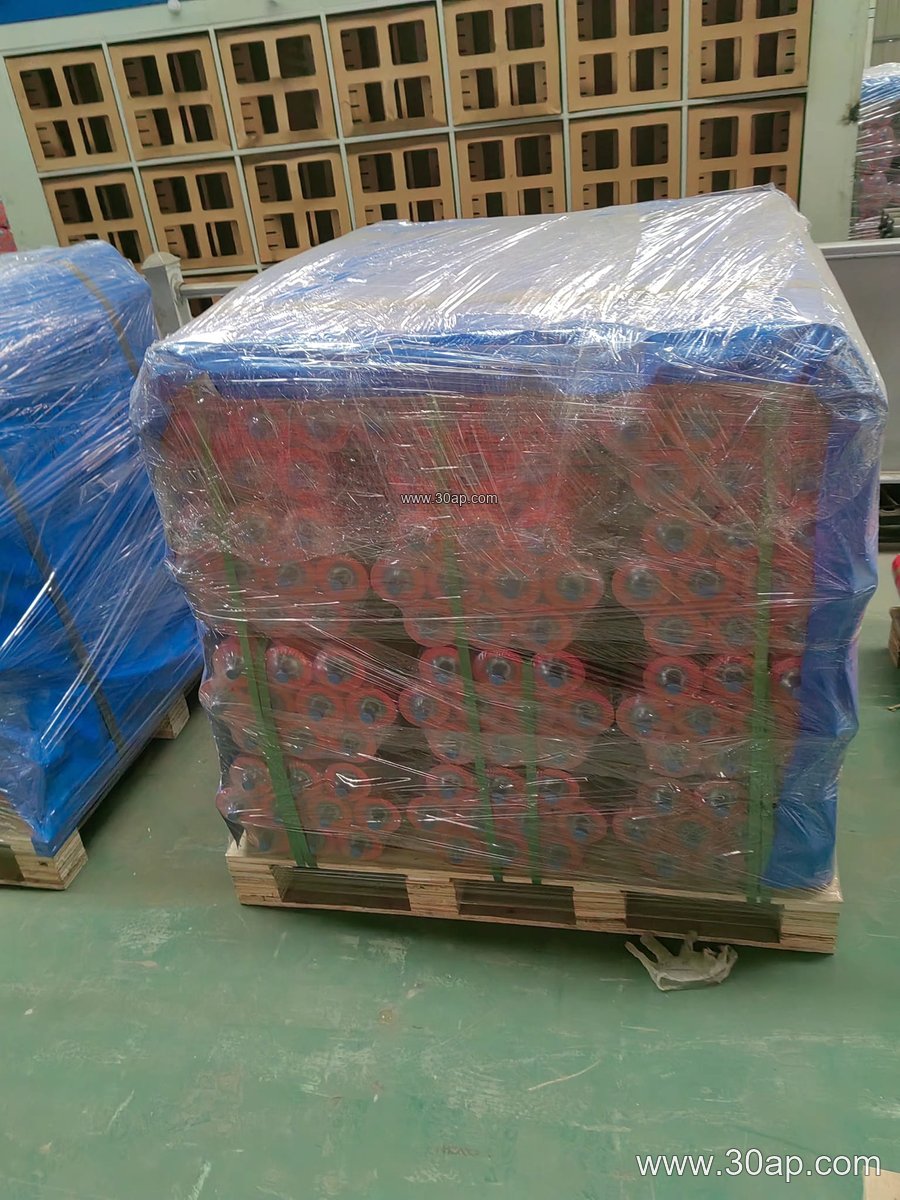
A conveyor loading point impact idler is the shock-absorbing roller set placed directly under the chute or transfer point where material first lands on the belt. Instead of a standard steel troughing roll, this position uses an impact roller, often fitted with rubber rings, to cushion the falling load. The goal is simple: protect the belt carcass and the roller frame from repeated hammering by lump coal, run-of-mine ore, crushed stone, or clinker. In a quarry or a coal mining conveyor, this is one of the hardest-working positions on the whole line, and specifying it correctly matters as much as choosing the right conveyor belt.
Construction and Surface Options
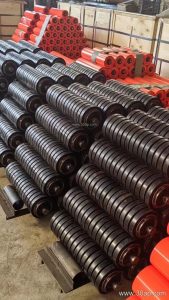
The core of the impact idler is a heavy-gauge steel tube carried on sealed bearings, with the shock-absorbing layer applied to the outside. Common surface forms include rubber rings, solid rubber sleeves, and reinforced nylon or ceramic-faced variants for special duties. Rubber-ring impact rollers are the usual choice at primary transfer points because the rings flex under impact and can be replaced individually. Bearing selection is matched to load and speed, with sizes such as 6204, 6205, 6306, 6308, and 6310 appearing across the range; no single bearing is tied to one roller diameter.
The roller set itself is usually a two-roll or three-roll troughing arrangement, mounted on a reinforced conveyor bracket or frame that is stronger than a normal carry idler station. Trough angles of 20, 30, 35, and 45 degrees are common, and the roll length follows belt width, trough angle, and frame design.
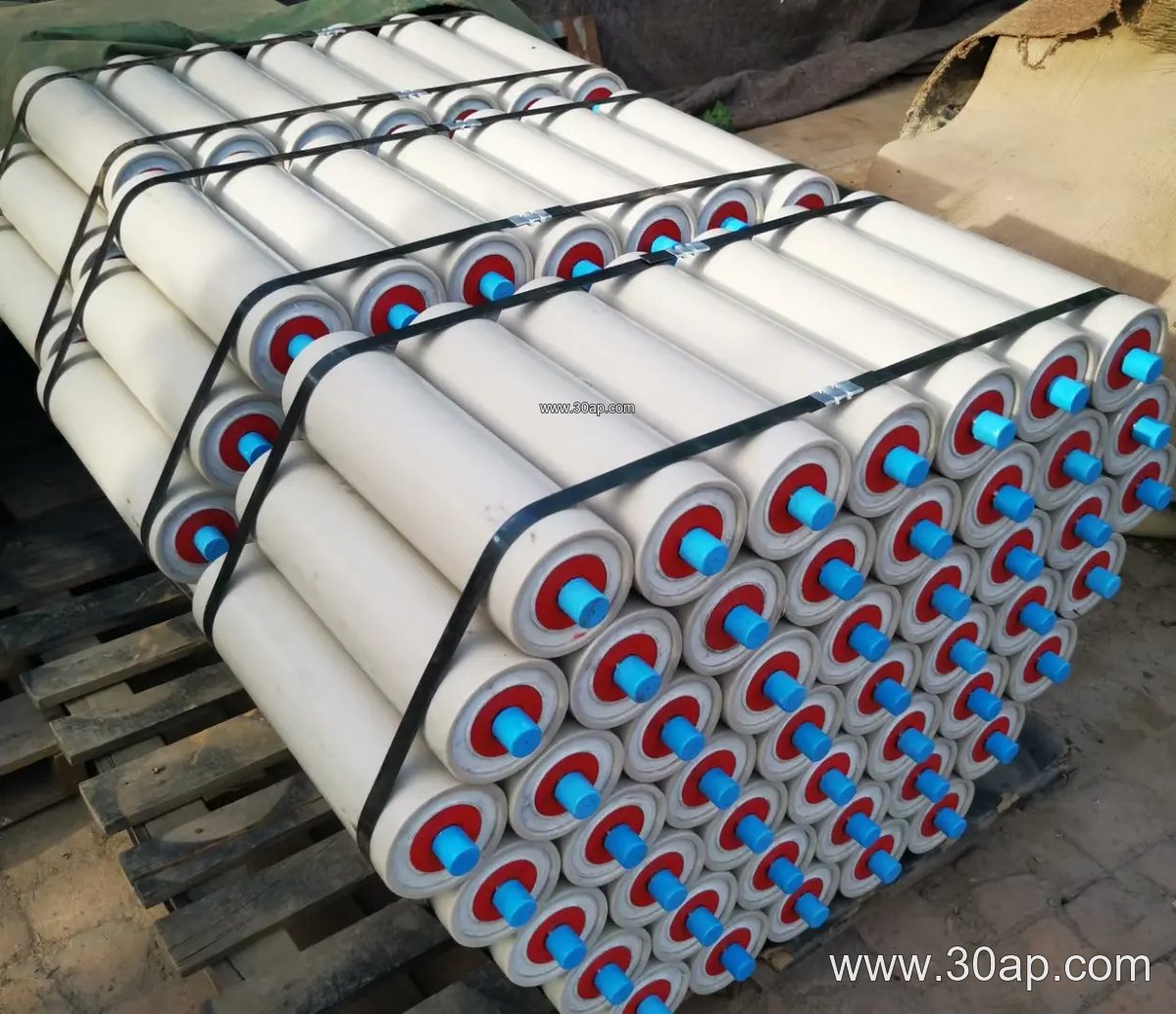
Typical Roller Diameter and Belt Width Reference
The values below are common reference examples, not fixed pairings; final selection depends on the conveyor design and the drop height at the transfer point.
| Roller diameter (mm) | Typical belt width range |
|---|---|
| Ø89, Ø102, Ø108 | B500 to B800 |
| Ø127, Ø133, Ø159 | B800 to B1400 |
| Ø178, Ø194, Ø219 | B1400 to B2400 |
For three-roll troughing sets, common roll lengths are roughly 200 mm at B500, 250 mm at B650, 315 mm at B800, 380 mm at B1000, 465 mm at B1200, 530 mm at B1400, 600 mm at B1600, 670 mm at B1800, and 750 mm at B2000. Side rolls and centre rolls can differ, so these are guides rather than rules.
Where Impact Idlers Are Used
You will find impact roller stations at crusher discharge, screen feed points, silo and bunker outlets, and truck or ship loading transfers. In a cement plant they sit under the clinker and limestone chutes; in a power plant coal yard they handle the drop from the stacker or the bunker; in a sand and gravel plant they take the first hit after the primary crusher. A steel cord conveyor belt or a heavy-duty EP conveyor belt on a long overland line still needs cushioning at the load point, because belt strength does not remove the local shock of a large lump.
Selection Points for Buyers
- Match the impact rating to the maximum lump size and the drop height, not only to belt width.
- Check that the frame and bracket are rated for impact duty; a standard carry frame may distort.
- Confirm roller diameter and roll length against the existing conveyor structure before ordering.
- Consider rubber-ring rollers where rings can be changed without removing the whole roller.
- For dusty or wet conditions, specify sealed bearings and check the sealing arrangement.
- Review belt support either side of the impact station so the belt transitions smoothly.
Where the conveyed material is hot, abrasive, or oily, the belt itself may be a heat resistant conveyor belt, an abrasion resistant conveyor belt, or an oil resistant conveyor belt, and the impact idler should be chosen to suit the same environment. In underground coal mining, a flame retardant conveyor belt is normal, and the roller set should be specified for the same fire-safety expectations as the rest of the line.
Installation and Maintenance Notes
Impact idlers work best when they are set at the correct height so the belt rests lightly on the rings rather than being pushed upward. Check for worn rings, flat spots, and loose brackets at each inspection, and replace damaged rings early so the belt does not run on exposed steel. Keep the load point centred so material does not pile against one side of the trough. A well-chosen conveyor loading point impact idler, paired with a suitable conveyor pulley at the drive and a sound idler roller train along the line, keeps transfer points running quietly and extends belt life.