What a Drive Pulley Does
A drive pulley, often simply called the head pulley when it sits at the discharge end, is the component that turns belt tension into forward motion. It is the powered drum in a conveyor system: the motor and gearbox rotate the shaft, the shaft turns the pulley shell, and friction between the shell surface and the belt pulls the whole conveyor belt along its path. Everything downstream, from the idler roller sets to the return strand, follows the motion this drum creates.
Its job sounds simple, but the drive pulley carries a large share of the conveyor’s mechanical load. It must transfer torque without slipping, resist wear from the belt, and stay aligned so the belt tracks straight. That is why the drum is specified as carefully as the belt itself.
Construction and Key Parts
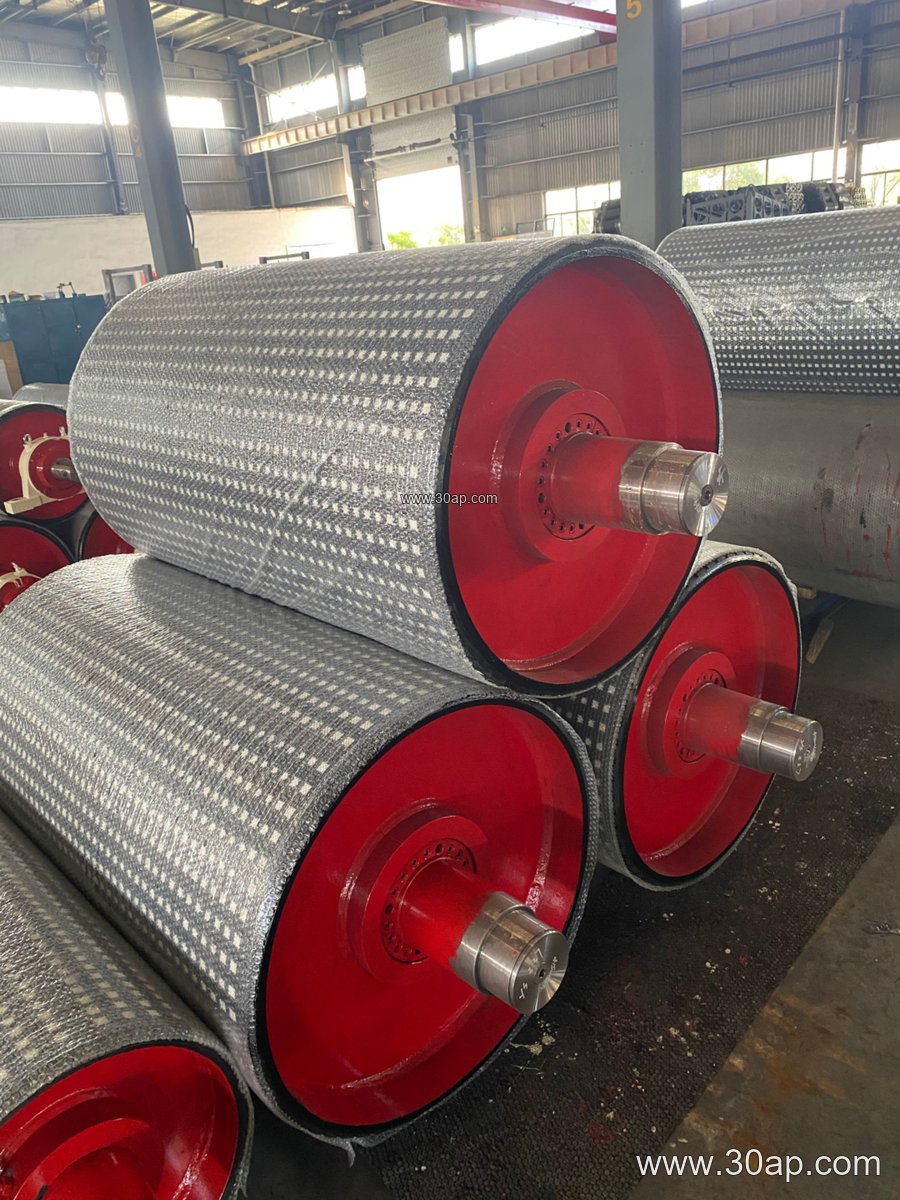
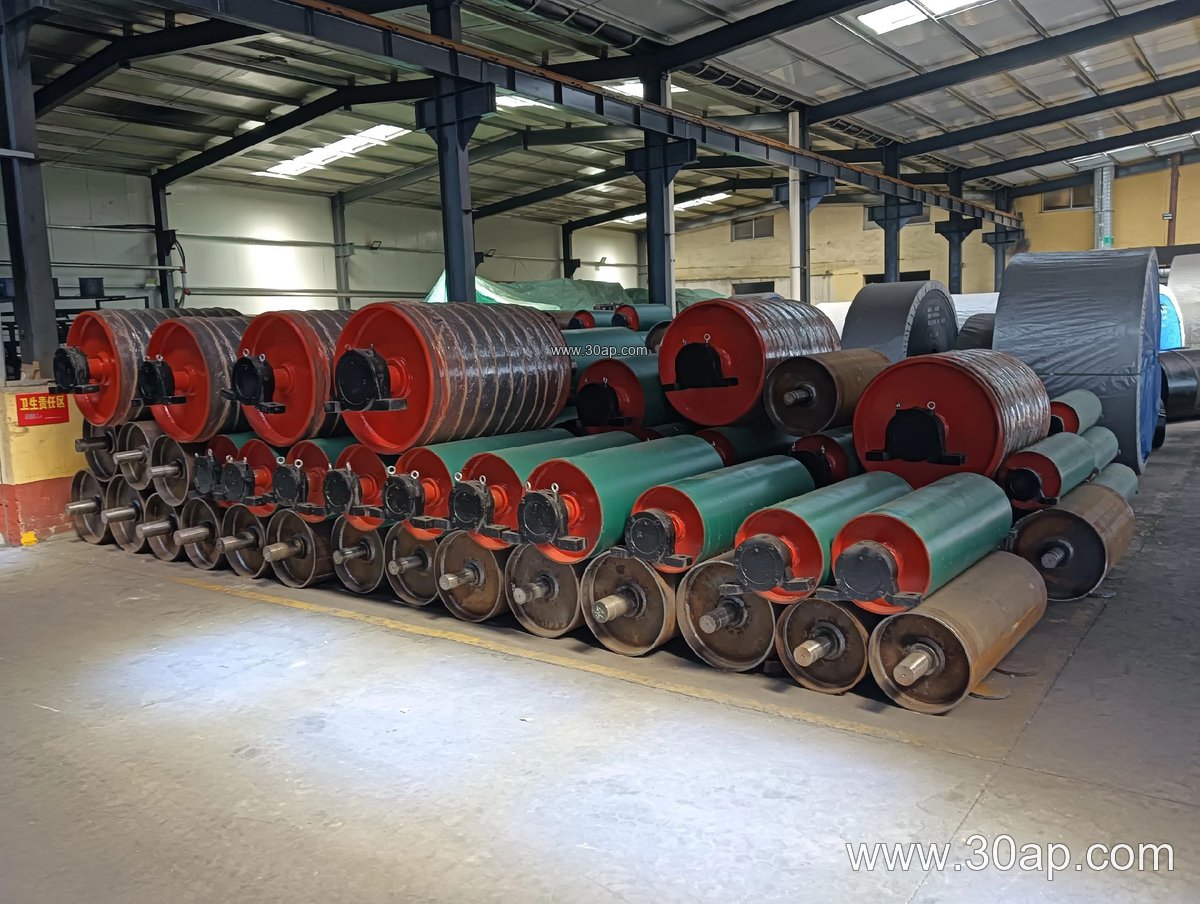
A typical unit is built around a steel shell welded to end discs, with a shaft running through the centre and bearing housings on both sides. The shell is machined so the rubber lagging sits evenly, and the lagging is the part that actually grips the belt.
- Shell – rolled steel plate, machined for balance and concentricity.
- Shaft – sized by torque and radial load, not by belt width alone.
- Bearings and housings – usually mounted on a conveyor bracket at the head frame.
- Lagging – plain, cast rubber, cold-bonded or hot-vulcanised rubber, diamond or herringbone pattern, ceramic, or flat rubber sheet.
Lagging thickness commonly runs at 8, 10, 12, 15 or 20 mm. Diamond lagging helps shed water and fines, while ceramic lagging suits high-torque drives where slip is a concern. The right choice depends on the material being carried and the wetness of the site.
Matching the Drum to the Belt
Buyers often ask how to pair a drum with a belt. There is no single rule that locks one belt width to one diameter. Instead, the drum diameter is chosen from belt tension, the number of plies or steel cords, and the minimum bend radius the belt maker allows. A wider belt usually needs a wider shell face, but the diameter and shaft size are separate decisions.
The shell face is normally a little wider than the belt. Reference examples include B400 with roughly 500 mm face, B650 with about 750 mm, B1000 with about 1150 mm, and B1200 with roughly 1400 mm. These are common proportions, not fixed pairings.
| Belt width | Typical face width | Common diameter range |
|---|---|---|
| B500 | about 600 mm | Ø250 – Ø500 |
| B800 | about 950 mm | Ø400 – Ø800 |
| B1000 | about 1150 mm | Ø500 – Ø1000 |
| B1400 | about 1600 mm | Ø630 – Ø1250 |
| B1800 | about 2000 mm | Ø800 – Ø1400 |
Shaft diameters in common use include Ø50, Ø60, Ø70, Ø80, Ø90, Ø100, Ø120, Ø140, Ø160, Ø180 and Ø200 mm; the final size is set by torque and load calculations. A B1200 × Ø1000 drum and a B800 × Ø500 drum are both normal combinations in different duty classes.
Where It Is Used
Drive pulleys appear wherever bulk material must move continuously. In a quarry or aggregate line, the head drum discharges crushed stone onto a screen. In a coal handling plant at a power station, a lagged drum pulls a flame retardant conveyor belt through the transfer house. Cement plants use them on clinker and raw meal lines, while ports rely on large units for ship loading. The same principle applies in a tunnel spoil line or a fertiliser plant.
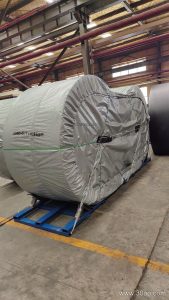
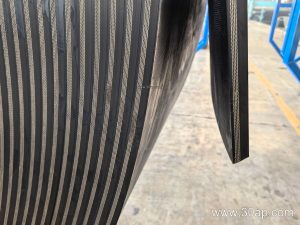
On high-capacity routes the drum may work with a steel cord conveyor belt or a heavy-duty fabric belt such as EP200 or EP300; on shorter runs, an NN conveyor belt or a multi-ply fabric core belt is common. The drum’s grip and the belt’s cover quality together decide whether the drive runs cleanly.
Drive Pulley Versus Other Pulleys
Not every drum is a drive. A tail pulley at the loading end only redirects the belt, and a bend pulley changes its direction without adding power. A tension pulley takes up slack. These are separate functions and not interchangeable with the drive unit, even though they may look similar. A buyer specifying a head drum should not assume a tail or bend drum can be substituted.
What Buyers Should Check
- Confirm the belt width, the belt type, and the required pull before choosing a shell diameter.
- Ask for the lagging form and thickness; diamond, herringbone and ceramic each suit different conditions.
- Check that the shaft size matches the calculated torque, not just the belt width.
- Verify bearing housing dimensions against the existing conveyor bracket.
- For dusty or wet sites, consider a rubber lagging that resists abrasion and slip.
For related components, see the conveyor pulley range and matching conveyor brackets at www.example.com/conveyor-pulley, and belt options at www.example.com/conveyor-belt.