What the feed-end pulley does
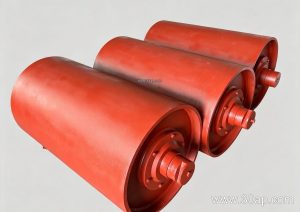
The feed-end pulley is the conveyor pulley positioned at the loading end of a belt conveyor, where bulk material first lands on the belt. In many layouts this is the tail pulley, and in others it is a separate bend or snub position that guides the belt into the loading zone. Its job is to keep the belt tracking steadily under the chute, support the belt at the point of impact, and return the belt cleanly to the carrying run. On a quarry or aggregate line it often sits below a hopper; in a coal handling system it may be enclosed in a transfer tower. It is not a drive pulley, and it should not be confused with a bend pulley used purely to change belt direction elsewhere in the run.
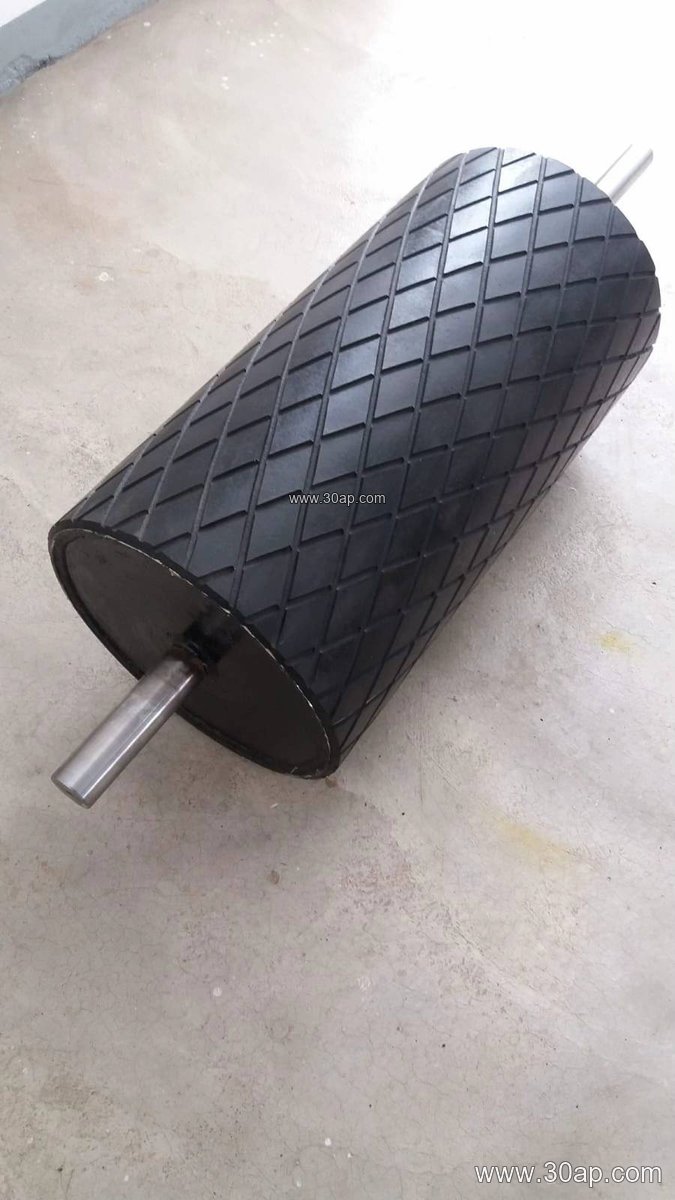
Construction and surface options
A feed-end pulley is typically a welded steel drum with a shaft, end discs, and a hub assembly, balanced for the belt speed of the conveyor. The shell may be plain, or it may carry lagging to improve grip and protect the surface. Common lagging choices include plain rubber, diamond grooved rubber, ceramic tiles, and hot-vulcanized or cold-bonded rubber sheets. Lagging thickness is usually 8, 10, 12, 15, or 20 mm depending on duty. For a loading point handling wet or sticky material, a grooved or ceramic surface can help shed fines; for a clean, dry feed, a plain rubber face is often enough.
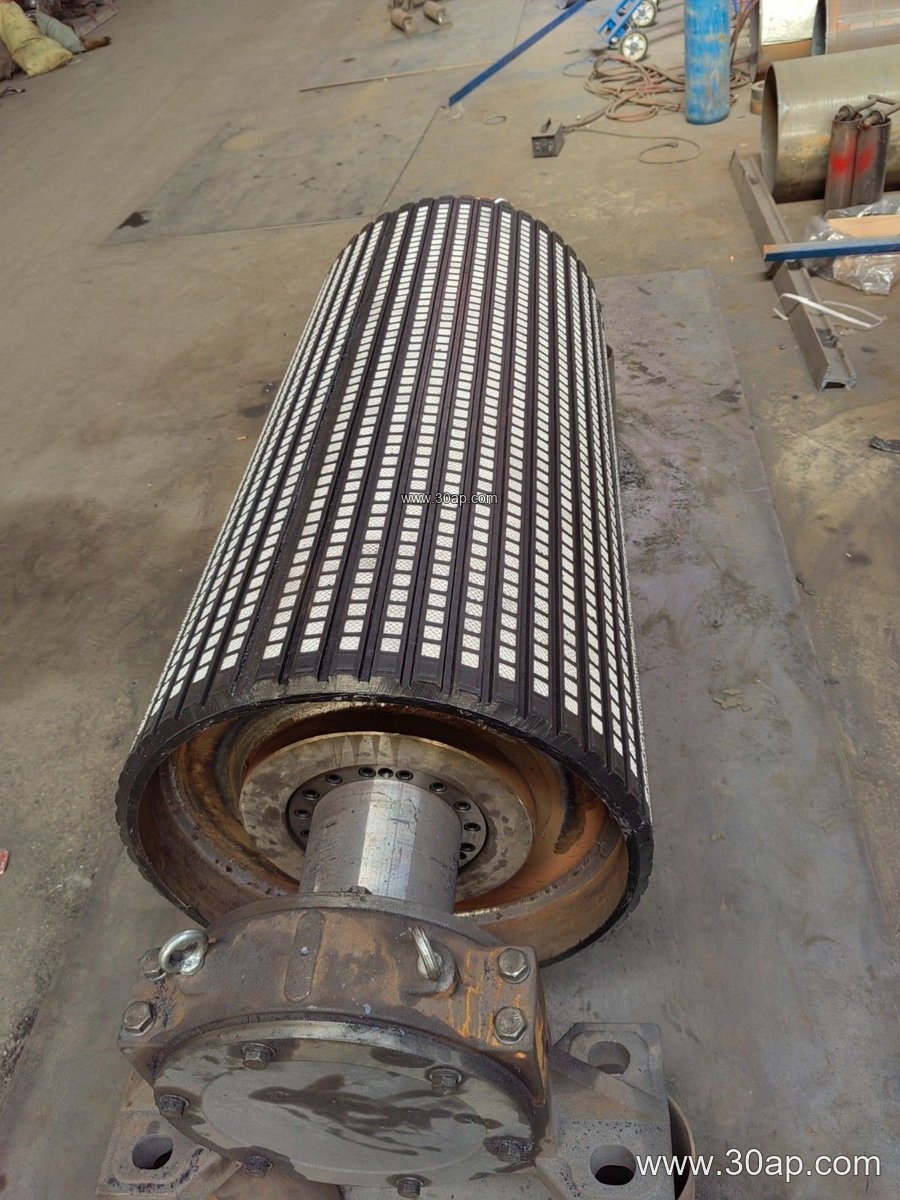
Typical reference dimensions
The table below shows common reference ranges, not fixed rules. Final diameter, shaft, and face width are determined by belt tension, torque, and the conveyor design.
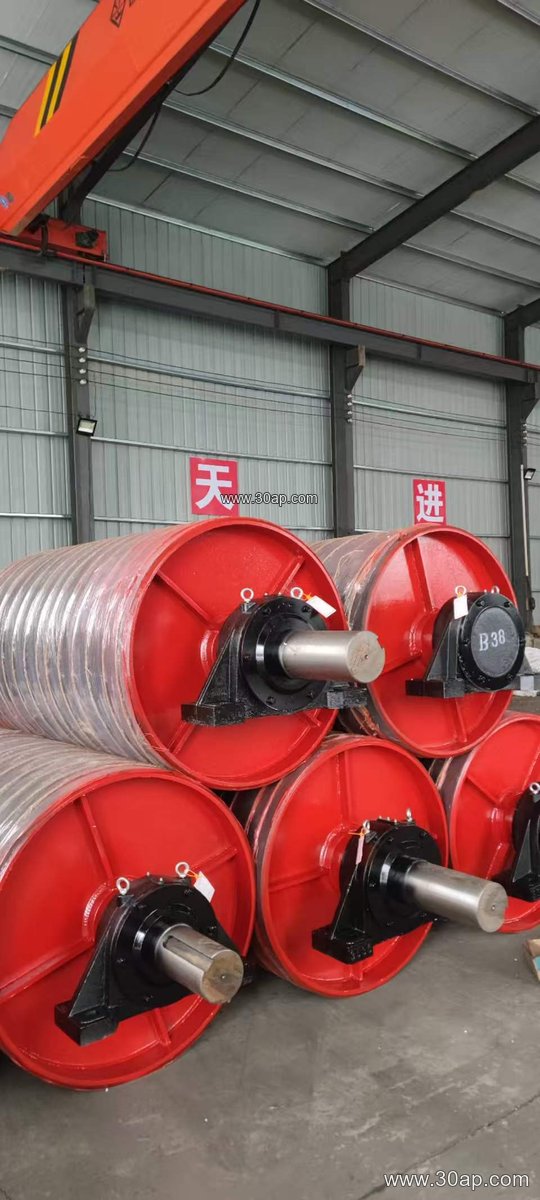
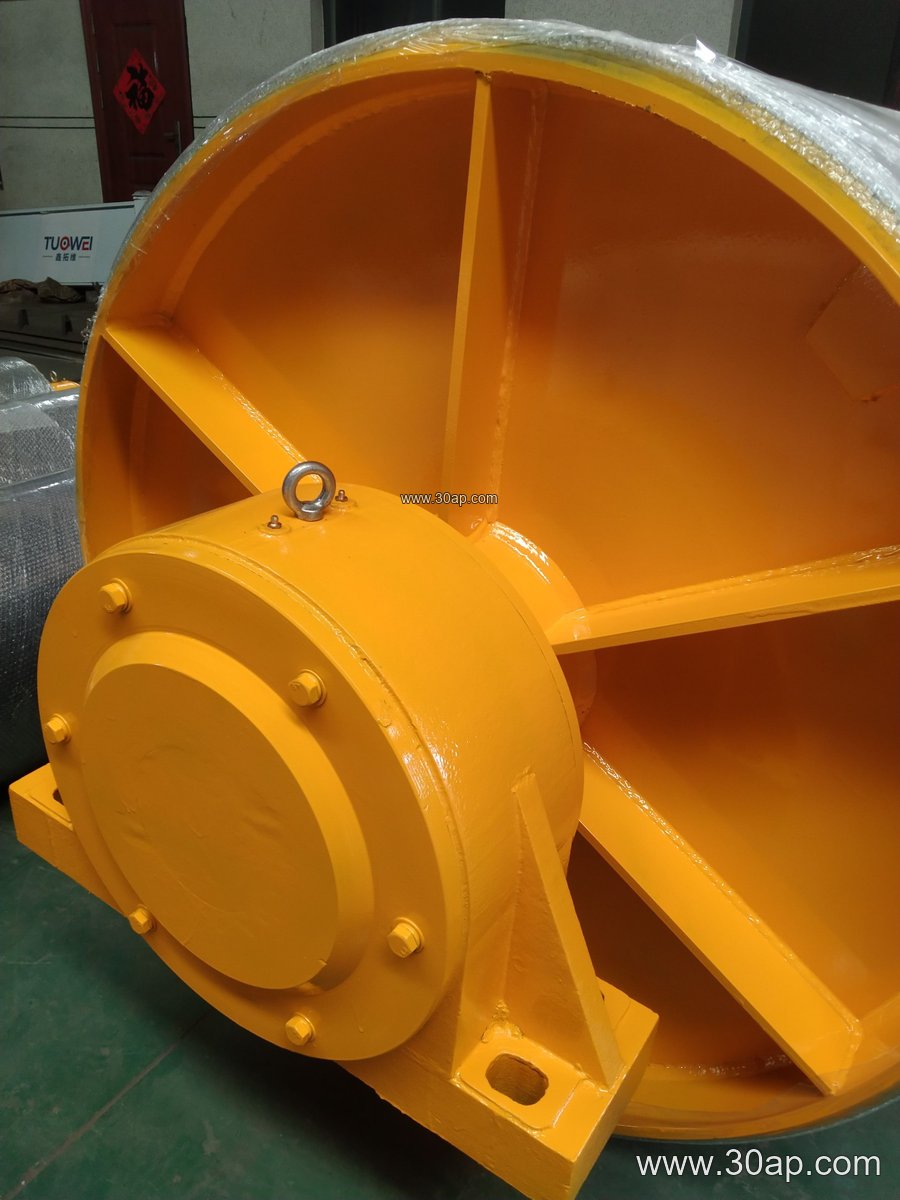
- Belt width B400 to B2400, with pulley face usually wider than the belt, for example B800 about 950 mm and B1200 about 1400 mm.
- Pulley diameter commonly Ø200, Ø250, Ø315, Ø400, Ø500, Ø630, Ø800, Ø1000, Ø1250, Ø1400, Ø1600, or Ø1800.
- Shaft diameter commonly Ø50 to Ø200, selected by torque and bearing load, not by belt width alone.
- Example combinations seen in design work include B800 × Ø500 and B1200 × Ø1000; a given belt width can match more than one pulley diameter.
Where it fits in the plant
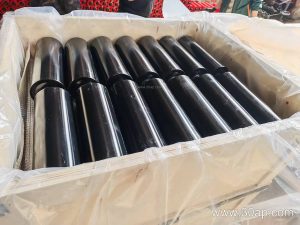
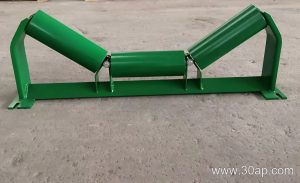
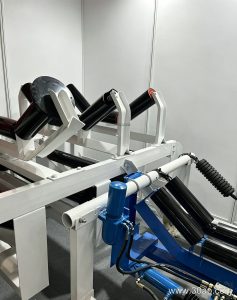
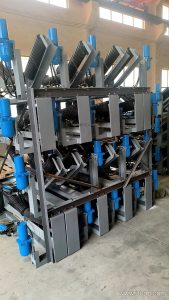
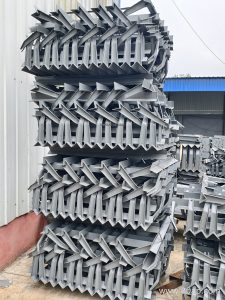
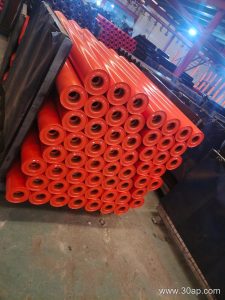
In a limestone mine or stone crushing line, the feed-end pulley sits under the primary crusher discharge or the transfer chute, where impact and dust are constant. In a cement plant it may handle clinker or raw meal on a short infeed conveyor. At a power plant coal yard, it works with a flame retardant conveyor belt and a set of idler rollers to keep the loading zone stable. The same pulley type appears in sand and gravel plants, fertilizer handling, and tunnel muck removal. In each case the surrounding equipment matters: the conveyor belt, the idler roller set, the conveyor bracket, and the chute all influence how the pulley performs.
Matching the pulley to the belt
The feed-end pulley should be sized together with the belt, not in isolation. A heavy-duty mining conveyor belt carrying iron ore or copper ore needs a robust shell and bearing selection, while a lighter aggregate conveyor belt may use a smaller drum. Belt construction also matters: an EP conveyor belt or multi-ply fabric core belt behaves differently from a steel cord conveyor belt under tension, and a pipe conveyor belt or corrugated sidewall belt imposes its own tracking requirements. Where the environment is hot, a heat resistant conveyor belt may run alongside a pulley with heat-tolerant lagging. In cold climates, a cold resistant conveyor belt and suitable bearing grease are equally important. For dusty coal work, an anti-static conveyor belt and flame retardant conveyor belt are common choices, and the pulley should be earthed as part of the conveyor structure.
Buyer checklist
- Confirm the mounting position: tail, bend, or snub at the feed point, and the belt travel direction.
- Provide belt width, belt type, speed, and the expected tension range so the diameter and shaft can be checked.
- State the material and conditions: abrasive rock, wet coal, hot clinker, or food-grade product.
- Choose lagging by duty: plain, diamond, ceramic, or rubber sheet at 8 to 20 mm.
- Check bearing type, sealing, and lubrication access, especially in dusty or washdown areas.
- Ask for balance and runout data, and confirm the pulley face width against the belt width.
A well-matched feed-end pulley protects the belt at its most vulnerable point and keeps the loading zone running smoothly. Review the whole infeed area, including the conveyor belt, idler roller, and conveyor bracket, before ordering.