What a Plastic Idler Is and Where It Fits
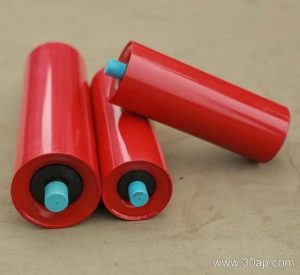
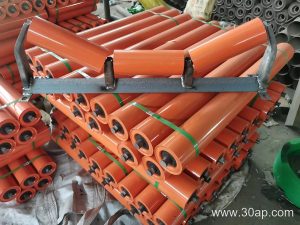
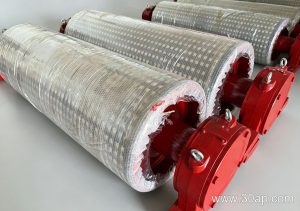
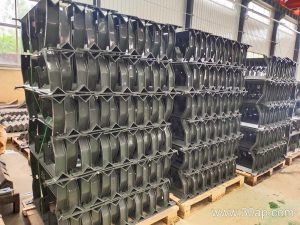
A plastic idler is a conveyor idler roller whose shell, end caps, or bearing housing are made from engineering polymer instead of steel. It sits under the conveyor belt on the carrying or return side and supports the belt and the material load while letting the belt run with low rolling resistance. In a quarry, a coal washing plant, or a cement kiln feed line, these rollers are often chosen where corrosion, noise, or belt wear matter more than pure load capacity. The plastic idler roller works alongside the conveyor pulley that drives the belt, the tail pulley that returns it, and the conveyor bracket that holds each idler station in line.
How the Roller Is Built
Most plastic idlers use a polymer tube or a steel tube with a polymer outer layer, fitted with sealed bearings at each end. The bearing housing is usually molded into the end cap, and a labyrinth or lip seal keeps dust and water away from the bearing. Common bearing sizes include 6204, 6205, 6305, and 6306, matched to the shaft and load rather than to a single shell diameter. The shaft may be steel or a reinforced polymer, and the roller ends are often fitted with a plastic end cap that also acts as a dust cover.
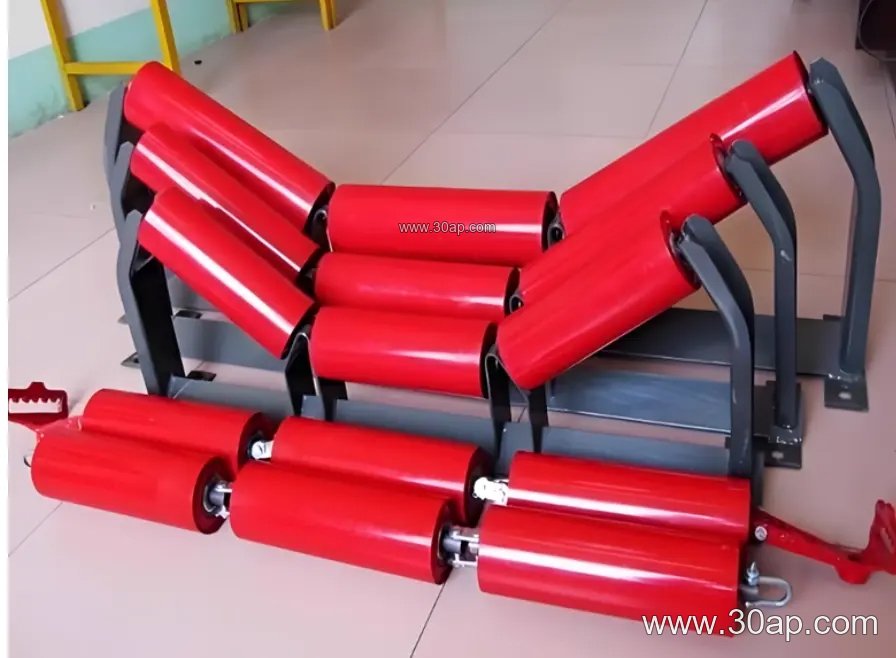
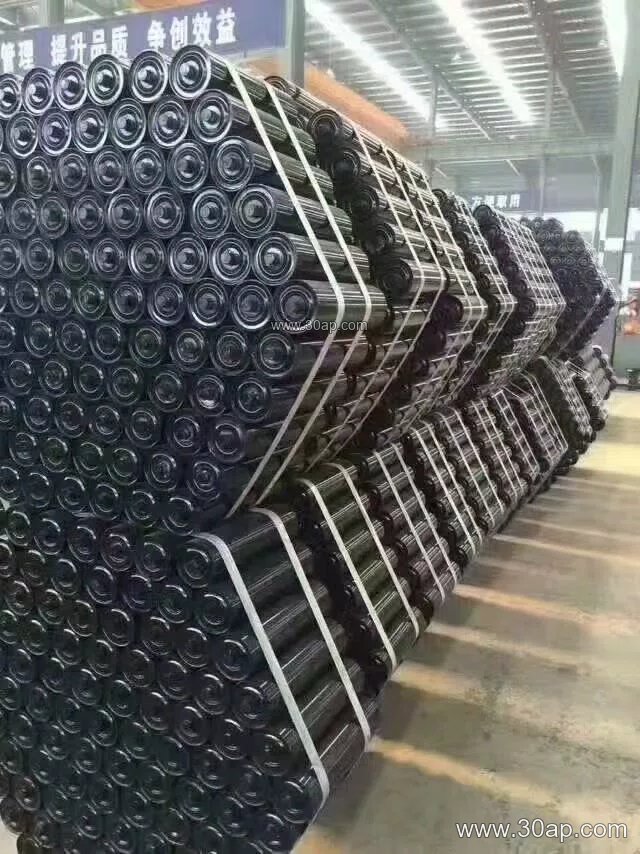
Because the shell is non-metallic, the roller is lighter than a comparable steel idler, which reduces the effort needed during installation and can lower the risk of belt damage if a roller seizes. The trade-off is that plastic idlers are generally used in lighter to medium duty stations, not in the heaviest impact zones where a rubber-disc impact idler would be the normal choice.
Typical Sizes and Configurations
Plastic idlers follow the same dimensional language as other conveyor idlers. Shell diameters commonly range from Ø63 mm up to Ø159 mm for this product family, with larger sizes available in some designs. Roller length depends on belt width, trough angle, and the idler arrangement. The table below gives common reference values, not fixed rules.
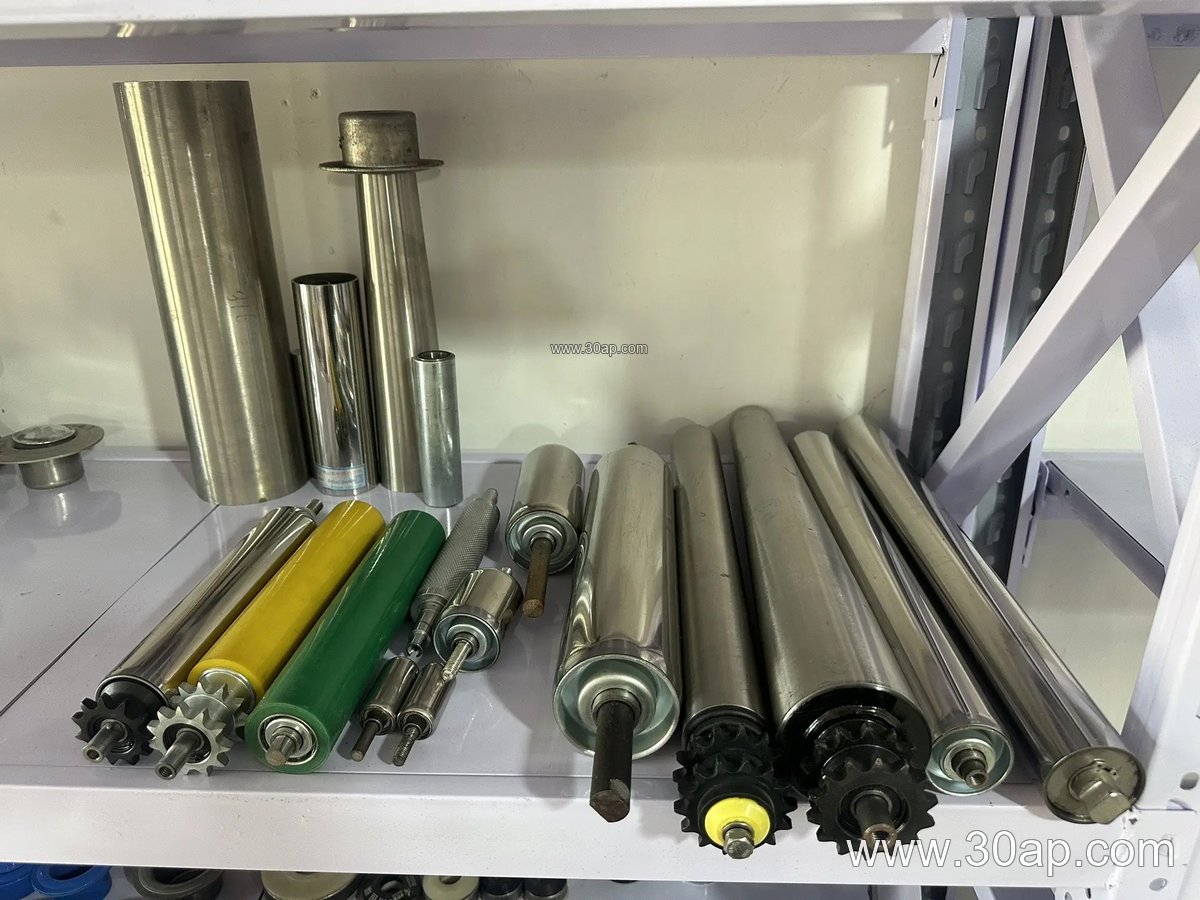
| Belt width | Typical roller length, three-roll trough | Common shell diameter |
|---|---|---|
| B500 | about 200 mm | Ø63 to Ø89 mm |
| B650 | about 250 mm | Ø76 to Ø102 mm |
| B800 | about 315 mm | Ø89 to Ø108 mm |
| B1000 | about 380 mm | Ø102 to Ø127 mm |
| B1200 | about 465 mm | Ø108 to Ø133 mm |
| B1400 | about 530 mm | Ø127 to Ø159 mm |
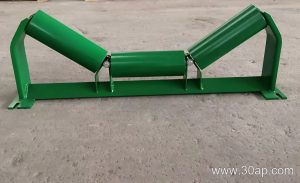
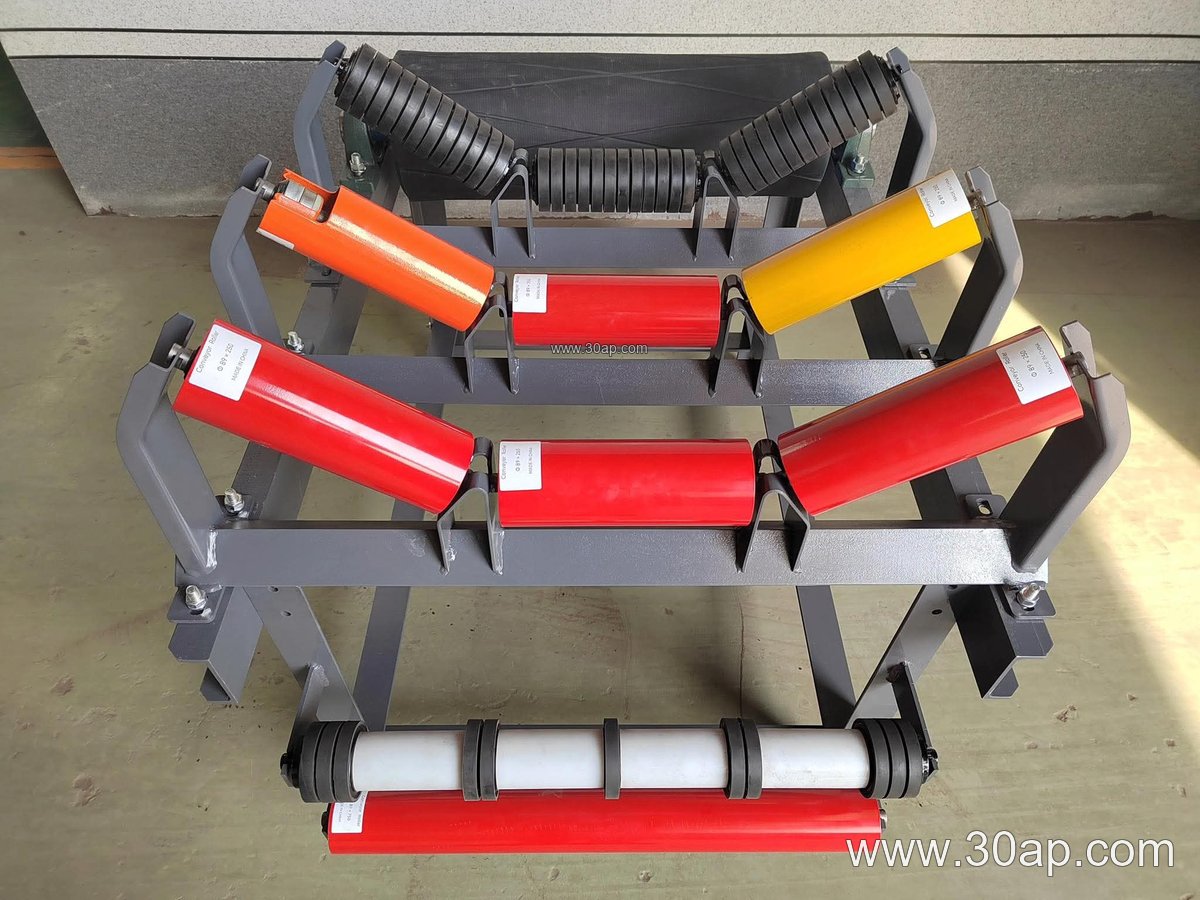
Trough angles of 20, 30, 35, and 45 degrees are common, and a slight forward tilt of about 1.5 to 2 degrees is sometimes used on training idlers to help keep the belt centered. A plastic idler can be supplied as a single roll, a two-roll set, or a three-roll trough set. Return-side versions include flat and V-shaped arrangements. The side rollers and the center roller may differ in length, so the figures above should be treated as examples only.
Where Plastic Idlers Are Used
These rollers suit lines handling sand, gravel, crushed stone, fertilizer, grain, and similar bulk materials where moisture or fine dust is present. In a sand and aggregate plant, a plastic idler on the return side can reduce buildup and belt tracking problems. In a fertilizer or salt handling system, the polymer shell resists the corrosion that shortens steel roller life. They are also used in light-duty sections of coal handling and in tunnel spoil lines where weight and quick replacement matter.
They are not a substitute for a drive pulley, a tail pulley, or a bend pulley, and they are not a replacement for a heavy impact idler at the loading point. The conveyor pulley does the driving; the idler only supports.
What a Buyer Should Check
- Load and speed: confirm the roller is rated for the belt speed and the material weight per meter on that station.
- Bearing and seal: ask which bearing size and seal type are used, and whether the seal suits dusty or wet conditions.
- Shaft and mounting: check shaft diameter, flat or groove details, and that the conveyor bracket matches the idler end.
- Shell material: confirm whether the tube is all-polymer or polymer-coated steel, since the two behave differently under impact.
- Alignment: plastic idlers are sensitive to misalignment, so check that the frame is square before blaming the roller for belt wander.
Spare parts should be ordered by shell diameter, roller length, shaft size, and bearing number together, not by belt width alone. A single belt width can accept more than one roller diameter, and a single roller diameter can serve several belt widths depending on the trough set and load. Keeping a small stock of the most-used plastic idler sizes, with matching end caps and seals, usually keeps a plant running through a weekend breakdown.