What the EP1000 1200mm Conveyor Belt Is
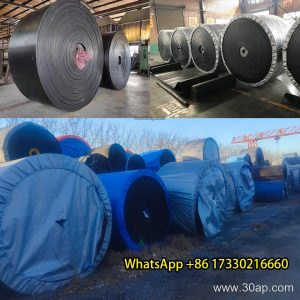
The EP1000 1200mm conveyor belt is a fabric-core rubber belt built for high-tension conveying duties. The designation EP1000 refers to the belt’s nominal tensile strength of 1000 N/mm per ply, while 1200mm is the full belt width. This combination places it among the stronger multi-ply fabric belts, making it suitable for main haulage lines in mines, quarries, cement works, power stations and bulk terminals where a 1200mm wide conveyor belt must carry dense, abrasive material over long distances.
As an EP conveyor belt, it uses polyester warp and polyamide weft cords in the carcass. This fabric construction gives low elongation under load, good troughability and resistance to repeated flexing around pulleys. The belt is not a steel cord conveyor belt, nor is it an NN conveyor belt; those are different carcass types with their own tension and elongation behaviour.
Construction and Common Specifications
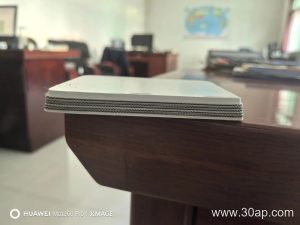
The belt is usually built with two to six fabric plies, depending on the required safety factor and the pulley diameter in the conveyor design. Top and bottom cover rubber grades are selected to match the duty: abrasion resistant for crushed rock and ore, flame retardant for coal mining conveyors, heat resistant for cement clinker or sinter, and oil resistant where lubricated parts or oily loads are present.
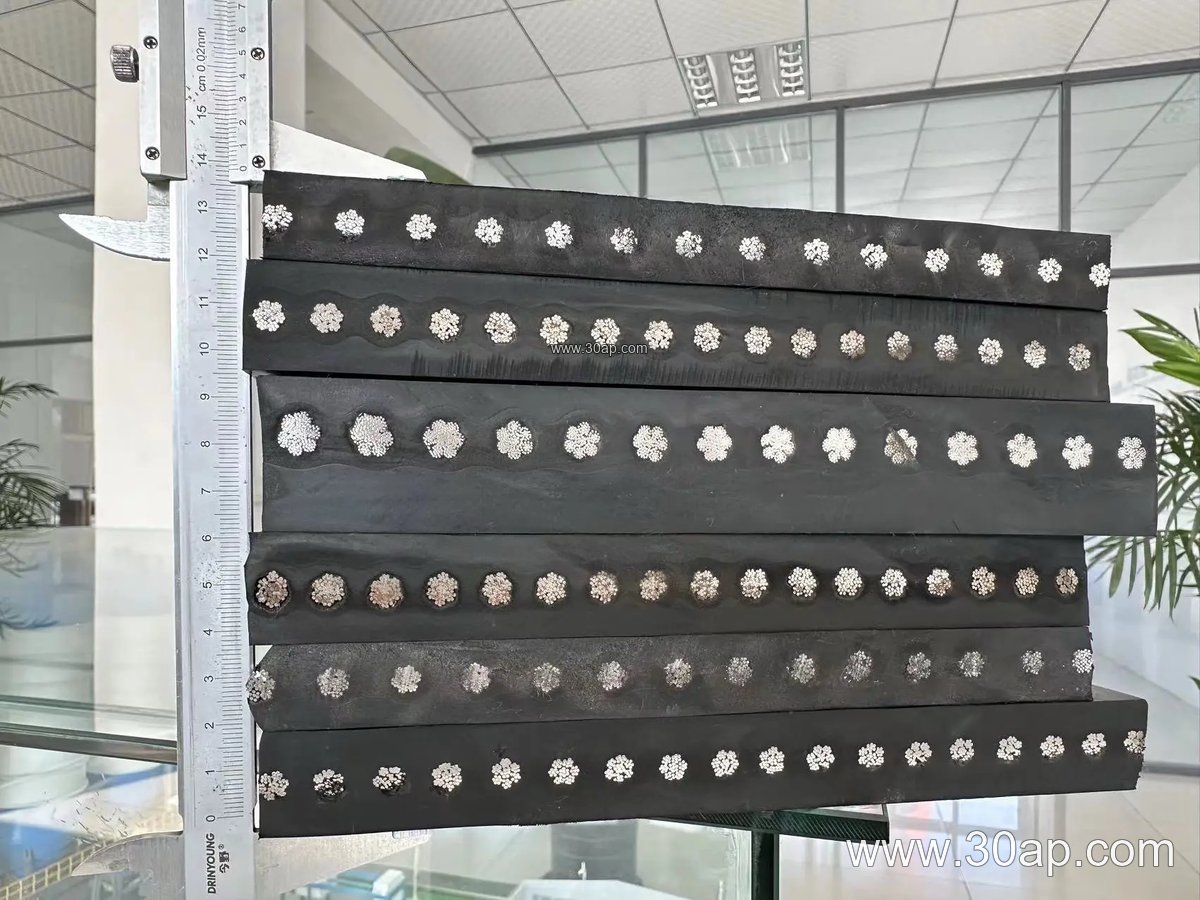
Typical reference values for an EP1000 1200mm conveyor belt are shown below. These are common ranges, not fixed universal specifications; actual values are confirmed by the manufacturer against the conveyor design.
- Belt width: 1200mm
- Nominal strength: EP1000 (1000 N/mm per ply)
- Carcass plies: commonly 3 to 5
- Cover thickness: examples include 5+2 mm, 6+2 mm and 8+3 mm
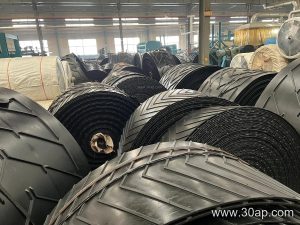
- Surface forms: plain, chevron or corrugated sidewall on request
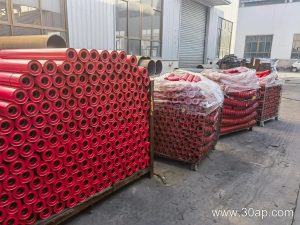
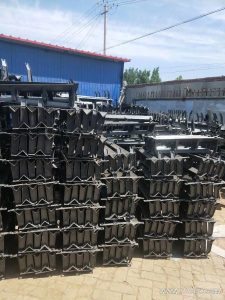
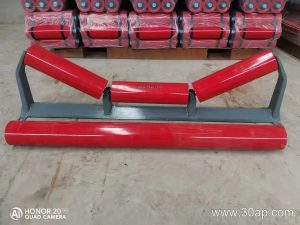
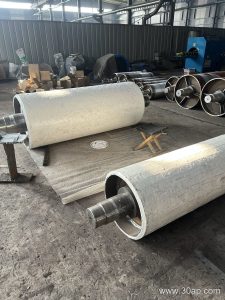
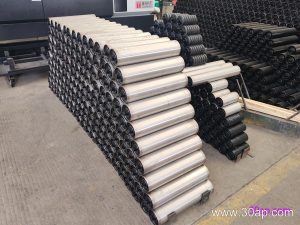
A 1200mm wide conveyor belt is often paired with a drive pulley, tail pulley and bend pulleys sized by the conveyor engineer. Belt width alone does not determine shaft diameter or pulley diameter; those depend on tension, wrap angle and the number of plies. Carrying idler rollers and return idler rollers should be selected for the belt width and load, and conveyor brackets must match the frame.
Where It Fits in the Plant
In a quarry or sand making plant, an EP1000 1200mm conveyor belt often runs from a primary crusher to a screening station, carrying coarse aggregate at high tonnage. In a coal mining conveyor, a flame retardant and anti-static version may be specified for underground mining conveyor duty. Cement plants use heat resistant belts on clinker lines, while power plants handle coal and limestone with abrasion resistant covers. Port and ship loading conveyors also use wide fabric belts where impact and wear are moderate to heavy.
Where the route includes an incline, a chevron conveyor belt or a corrugated sidewall conveyor belt may be considered instead of a plain belt. For very long, high-tension routes, a steel cord conveyor belt or an EP1250 belt may be evaluated. These are design alternatives, not substitutes for the EP1000 1200mm belt in every case.
Buyer Checklist
Before ordering, confirm the material type, lump size, temperature, moisture and any fire or oil exposure. Check the conveyor’s rated tension, pulley diameters, trough angle and transition distance. Ask for the cover grade, ply count and cover thickness in writing. For replacement work, measure the existing belt and inspect pulley lagging, idler rollers and conveyor brackets so the new belt is not damaged by worn components. A correctly specified EP1000 1200mm conveyor belt, matched to its conveyor pulley and idler roller set, gives reliable service in demanding bulk material handling.