What a Cleaning Idler Does
A cleaning idler is a roller assembly mounted under or along the return strand of a conveyor, positioned so its surface wipes or scrapes carryback material from the belt. Instead of letting fines, dust and sticky residue travel back to the tail pulley, the cleaning idler works the belt surface and drops the loosened material into a collection point. In quarry, cement and power plant circuits, this small component often decides how often the whole line has to be stopped for manual cleanup.
The device is not a drive, tail or bend pulley, and it should never be ordered as a substitute for one. Those pulleys transmit power or change belt direction, while a cleaning idler only contacts the belt to remove material. A common comparison is with a return idler: both sit on the return run, but a plain return roller only supports the belt, whereas the cleaning version adds a scraping or wiping action.
How the Roller Is Built
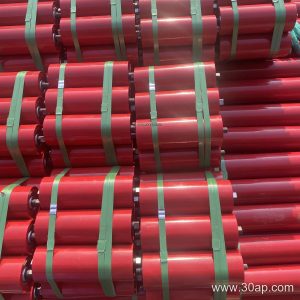
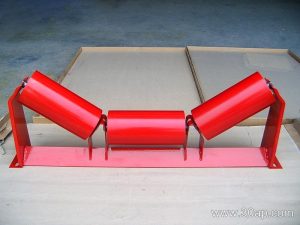
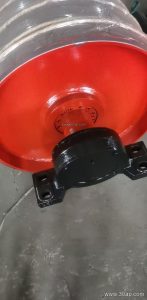
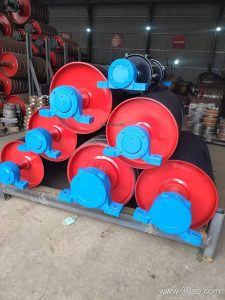
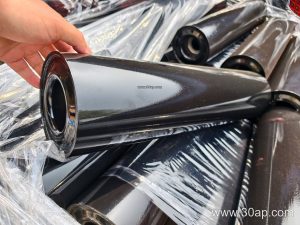
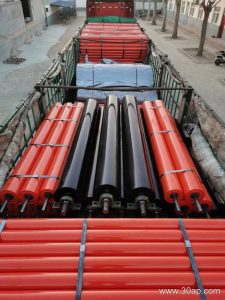
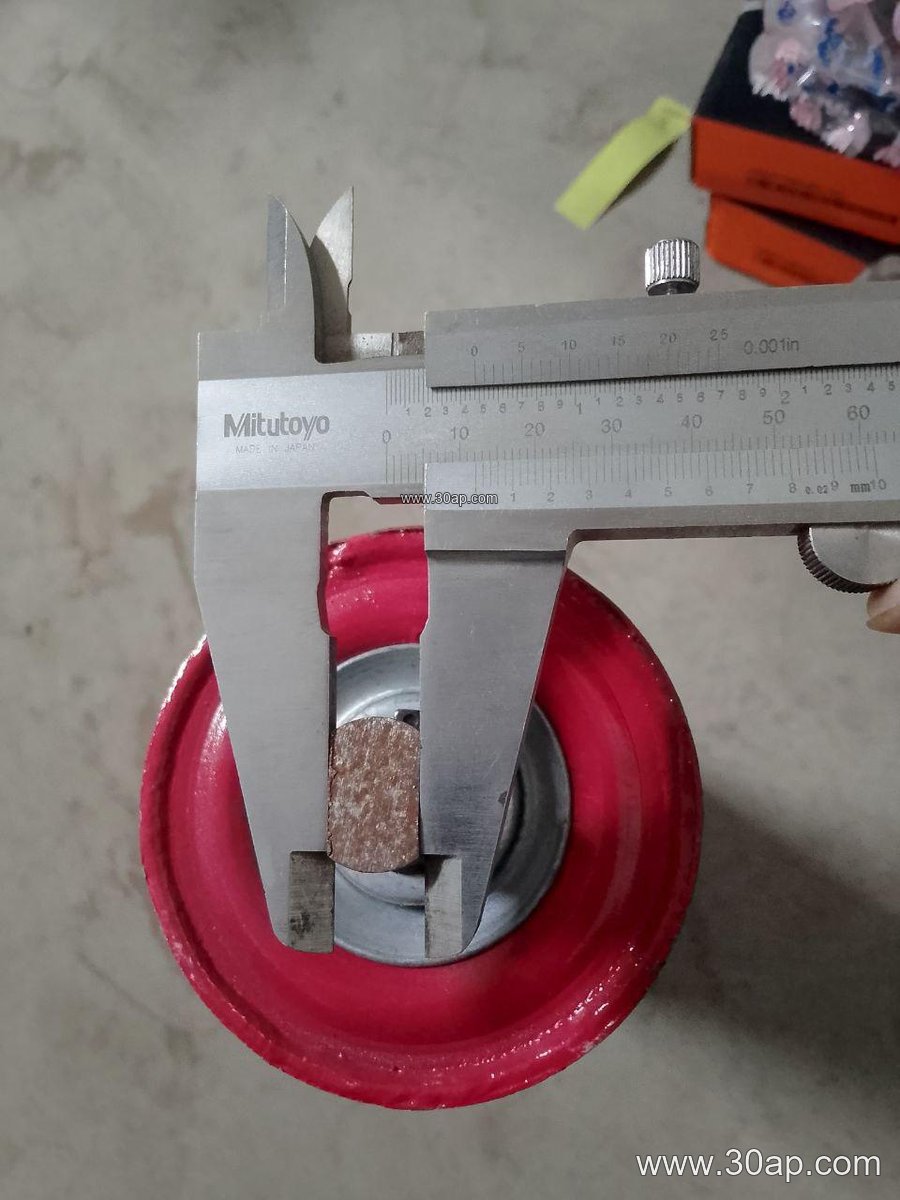
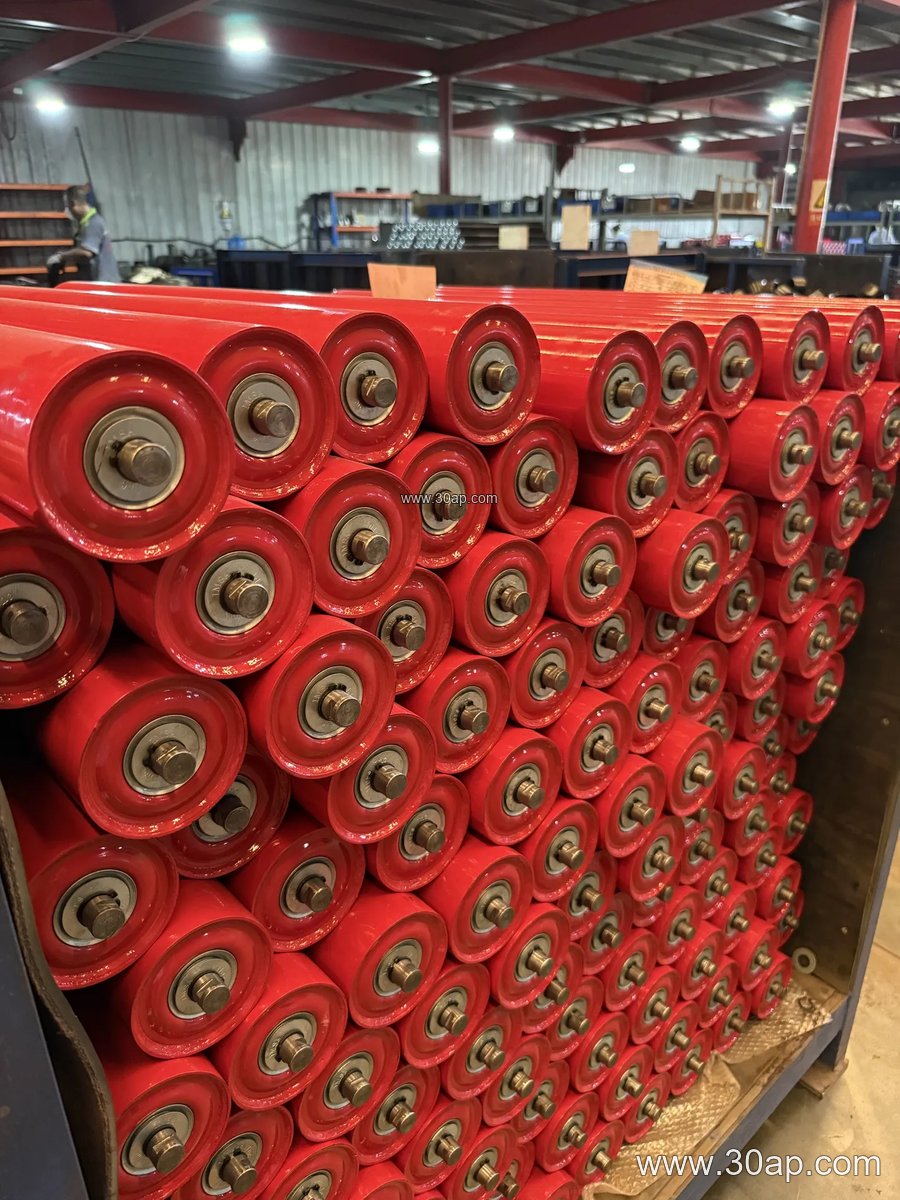
Most cleaning idlers use a steel tube body with welded end discs and a through shaft carried on two bearing housings. The working surface may be a plain steel shell, a rubber-covered shell, a nylon sleeve or a segmented rubber ring arrangement, depending on how abrasive or sticky the carryback is. Sealed bearings are usual, with common sizes such as 6204, 6205, 6305, 6306, 6308 and 6310 appearing across the range. The bearing must suit the actual load and shaft design, not an assumed belt width.
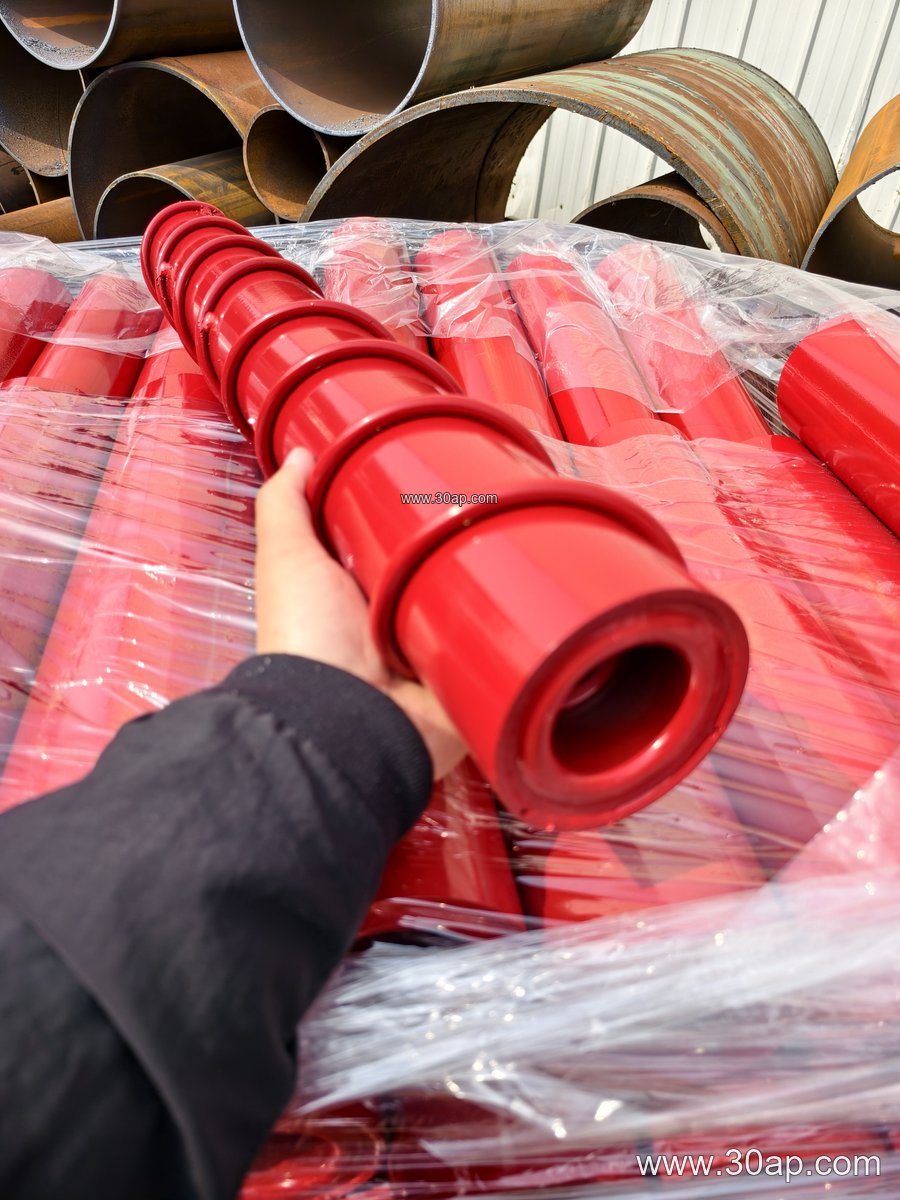
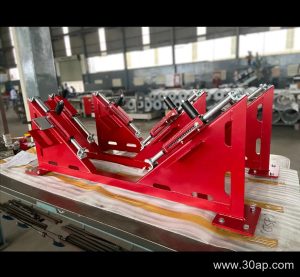
Mounting is through a conveyor bracket, usually a fixed frame or an adjustable slide that lets maintenance staff set the contact pressure. Too much pressure wears the belt cover and the roller surface; too little leaves material behind. Many designs include a small scraper blade or a helical flight on the shell to break up compacted fines.
Where It Fits on the Line
Typical positions are just behind the head pulley on the return strand, before the tail pulley, and at transfer points where wet or dusty material clings. In a limestone quarry or a sand and gravel plant, a cleaning idler after the primary crusher keeps the return belt from carrying dust back into the tension area. In coal handling at a power plant or a coal preparation plant, the same roller helps control fine coal carryback and reduces spillage along the return run.
It is often used together with a rubber conveyor belt or an abrasion resistant conveyor belt whose cover can tolerate regular scraping. On a steel cord conveyor belt running at high tension, the cleaning idler is placed where belt support is already stable, so the scraping action does not add unnecessary flexing.
Common Sizes and Arrangements
Cleaning idlers follow the same roller diameter and belt width families as other idlers, but the final dimensions depend on the frame design and the space available under the belt. The table below lists reference values often seen in catalogs; treat them as starting points for discussion, not fixed supply promises.
| Parameter | Common Reference Values |
|---|---|
| Roller diameter | Ø63, Ø76, Ø89, Ø102, Ø108, Ø127, Ø133, Ø159, Ø178, Ø194, Ø219 mm |
| Belt width | B400, B500, B650, B800, B1000, B1200, B1400, B1600, B1800, B2000, B2200, B2400 |
| Roller surface | Steel tube, nylon, ceramic, rubber ring |
| Bearing size | 6204, 6205, 6305, 6306, 6308, 6310 |
| Mounting | Fixed bracket or adjustable slide frame |
Roller length changes with belt width, trough angle and frame type. As a reference, a three-roll troughing set might use a roller length near 200 mm at B500, 315 mm at B800, 465 mm at B1200 and 600 mm at B1600, but side rollers and center rollers can differ. A single belt width can be served by more than one roller diameter, and a given belt width does not fix the shaft diameter on its own.
Buyer Checklist
- Confirm the belt width, return strand height and available bracket space before choosing a roller diameter.
- Match the shell material to the carryback: rubber for wet fines, nylon or ceramic where abrasion is severe, steel for general duty.
- Check that the bearing seal suits dust and moisture levels at the installation point.
- Ask for the mounting bracket drawing so the cleaning idler aligns with the existing conveyor bracket.
- Plan an inspection interval; a worn scraper edge or a seized bearing can damage the belt cover quickly.
For a mine or a cement plant running an EP conveyor belt or a multi-ply fabric core belt, the cleaning idler should be specified together with the belt cover grade so the scraping pressure stays within the cover’s tolerance. In port and ship loading duty, where belts often run wide, checking the roller length against the actual frame is more useful than copying a catalog number.
Maintenance Notes
Inspect the cleaning idler at the same time as the return idlers and the conveyor pulley lagging. Look for material build-up on the shell, a polished or grooved surface, and any play in the bearing housing. Replace worn rubber rings or scraper edges before they cut into the belt. Keeping the area below the roller clear of piled fines also helps the unit work as intended.
Because carryback varies with season and material moisture, a cleaning idler that works well in dry aggregate service may need a different surface in a wet coal or slurry-adjacent application. Buyers should describe the material, the belt type and the installation position clearly, then let the roller supplier confirm the diameter, bearing and bracket combination that fits the conveyor.