What a Five-Roll Idler Set Does
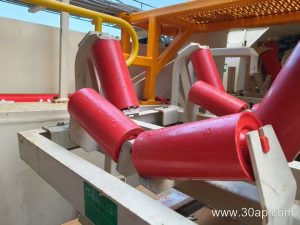
A five-roll idler set is a support station for the carrying side of a conveyor belt, built around five idler rollers instead of the usual three. The extra rolls shape the belt into a deeper, more gradual trough, so bulk material sits more securely on the belt and the belt itself is supported at more points across its width. In quarry and aggregate lines, cement plants, power plant coal yards, and iron ore or copper ore handling, this arrangement is often chosen where belt width is large and material is heavy or abrasive.
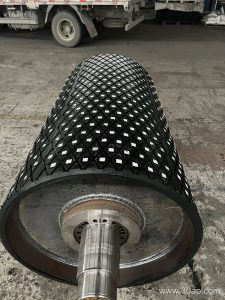
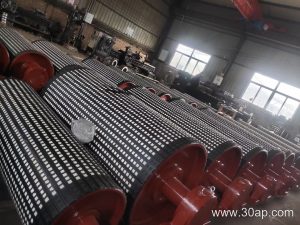
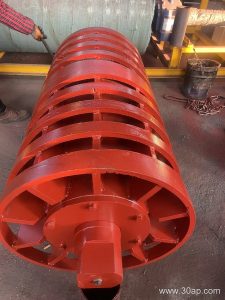
The set is not a substitute for a conveyor pulley. Drive pulleys, tail pulleys, and bend pulleys each do a different job at the ends and corners of the conveyor, while the five-roll idler set works along the carrying run. The same distinction applies to other idler subtypes: a return roller, a V-return set, or a rubber-disc impact roller serves a different position or purpose and is only mentioned here for comparison.
How the Set Is Built
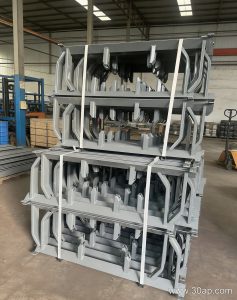
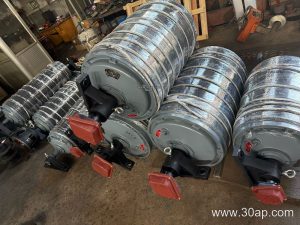
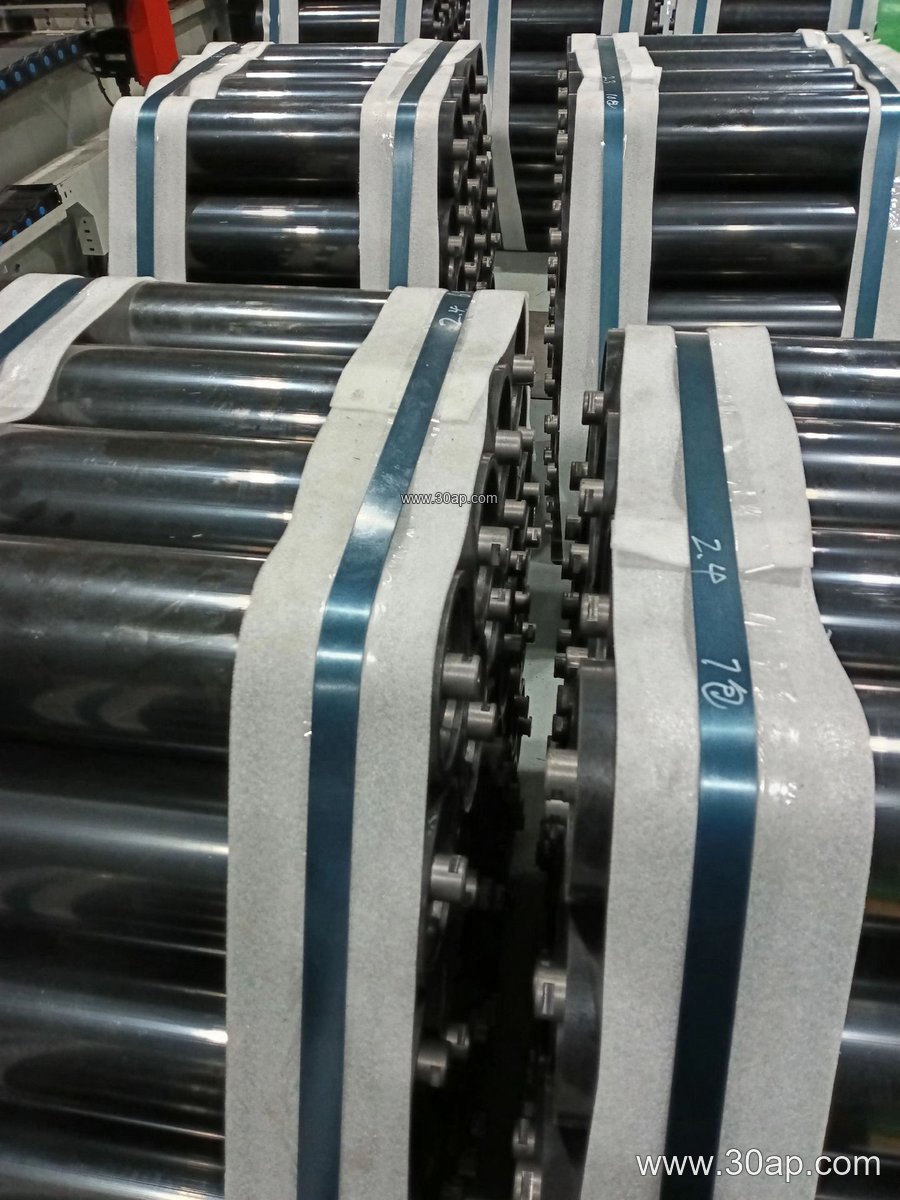
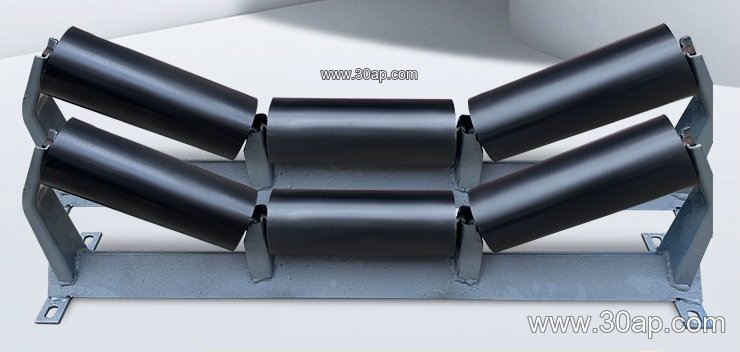
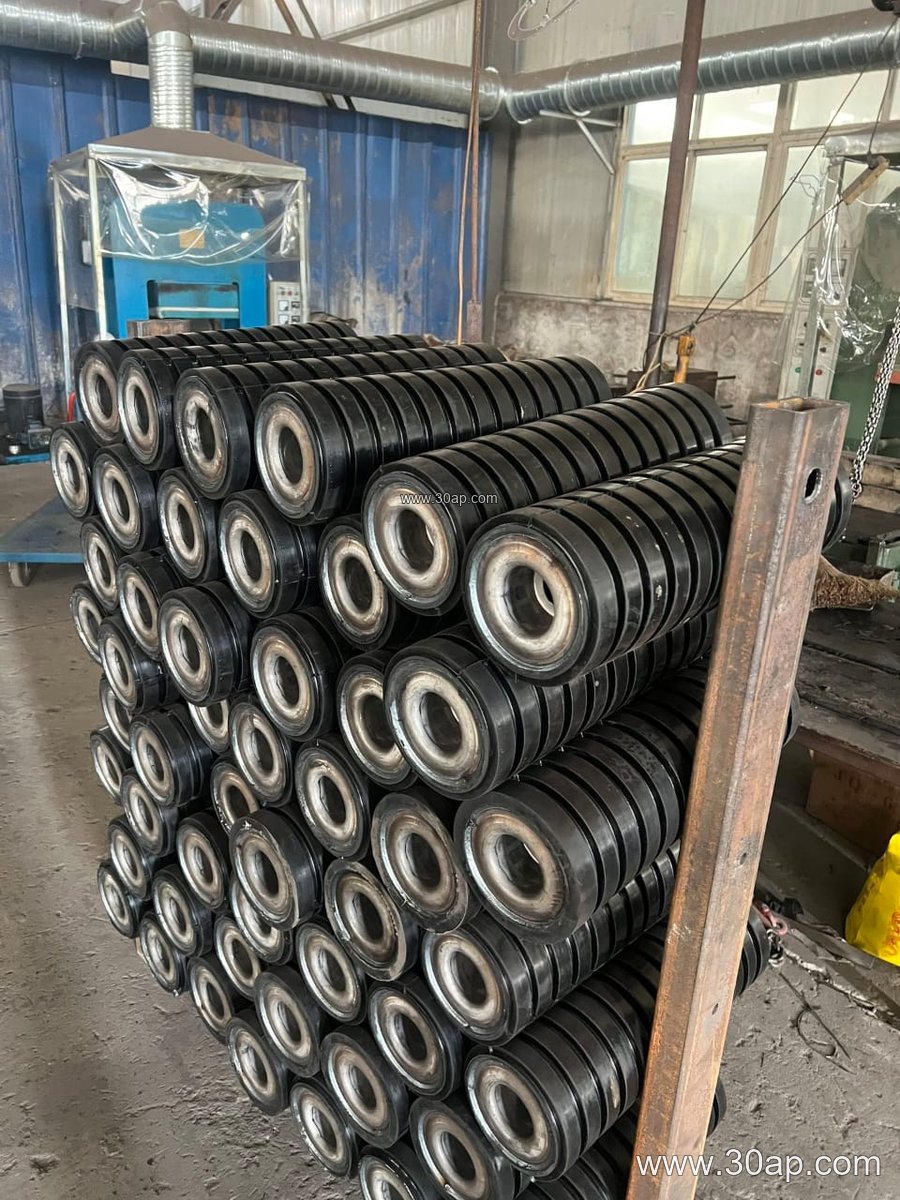
A typical five-roll station uses a center roll and two pairs of side rolls mounted on a common frame, with the outer rolls set at a steeper angle than the inner ones. The frame is fixed to the conveyor bracket or stringer, and each roller turns on its own shaft and bearing housing. Roll shells are usually steel tube, and options such as nylon, ceramic, or rubber rings are used where wear or impact calls for them. Seals and bearing choices are what keep the set running quietly in dusty conditions.
Because there are more contact points, the belt is guided more smoothly through the transition from flat to troughed. This matters when the conveyor carries a heavy-duty mining conveyor belt or a thick abrasion resistant conveyor belt that does not flex easily.
Common Reference Dimensions
The figures below are typical references, not fixed rules. Final roll length, diameter, and bearing size follow the belt width, trough angle, and frame design.
- Roll diameter options commonly include Ø89, Ø108, Ø127, Ø133, Ø159, and Ø178 mm.
- Belt widths are often B800, B1000, B1200, B1400, B1600, B1800, B2000, and larger.
- Trough angles are usually 20, 30, 35, or 45 degrees.
- Bearings commonly used include 6205, 6305, 6306, 6308, and 6310.
| Belt width | Typical roll length (three-roll example, mm) | Typical roll diameter range (mm) |
|---|---|---|
| B800 | 315 | Ø89 to Ø127 |
| B1000 | 380 | Ø108 to Ø133 |
| B1200 | 465 | Ø108 to Ø159 |
| B1400 | 530 | Ø127 to Ø159 |
| B1600 | 600 | Ø133 to Ø178 |
| B1800 | 670 | Ø133 to Ø178 |
| B2000 | 750 | Ø159 to Ø194 |
For a five-roll set, the center and side roll lengths are set by the frame geometry, so the values above are only a starting point for discussion. A belt width does not dictate one pulley diameter, and a roll diameter does not dictate one bearing number.
Where It Fits on the Conveyor
Five-roll stations are most often found on wide carrying runs in the mining and quarry sector, on cement plant clinker lines, and on power plant coal conveyors. They are also used where a pipe conveyor belt or a corrugated sidewall conveyor belt needs careful support at the load point, though in those cases the idler layout must match the belt profile. In a sand and gravel plant or a crushing and screening circuit, the set helps keep a heavy load centered as it travels toward the next crusher or screen.
Where the material is hot, an oil resistant conveyor belt or heat resistant conveyor belt may be running nearby, and the idler specification should be checked against the belt’s operating temperature. Flame retardant conveyor belt and anti-static conveyor belt grades are common in underground coal mining, and the roller seals and bearing grease should suit that environment as well.
Buyer Checklist
- Confirm belt width, trough angle, and the exact frame mounting pattern before ordering.
- Check whether the station is a carrying set only, or whether return and transition positions need separate components.
- Match roll shell and seal material to dust, moisture, and material abrasiveness.
- Ask for the bearing number and lubrication plan, and keep spare rollers on site.
- Inspect rollers for smooth rotation and seal damage during routine maintenance.
Well-chosen idlers and rollers, together with a suitable conveyor belt and correctly sized conveyor pulleys, keep a bulk handling line running with fewer stoppages. For more on related components, see the idler roller and conveyor pulley ranges.