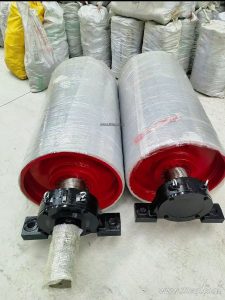
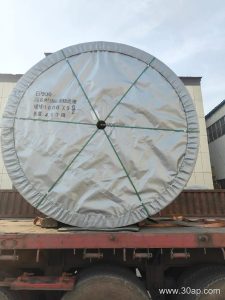
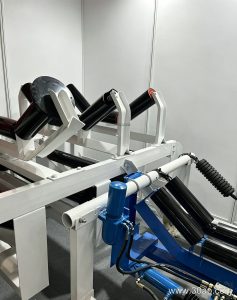
What a 630mm Diameter Conveyor Pulley Is
A 630mm diameter conveyor pulley is a large-diameter drum used in bulk material handling systems to drive, tension, or redirect a conveyor belt. With a nominal diameter of Ø630 mm, this pulley sits in the mid-to-heavy range of standard drum sizes, making it suitable for high-capacity lines where belt tension and torque are substantial. It is often found at the head or discharge end of a conveyor, but the same diameter can also serve as a tail pulley, take-up pulley, or bend pulley depending on the layout. In quarry and aggregate operations, a 630mm pulley frequently pairs with wide, heavy-duty belts such as an EP conveyor belt or a steel cord belt to maintain reliable traction.
Design and Construction Details
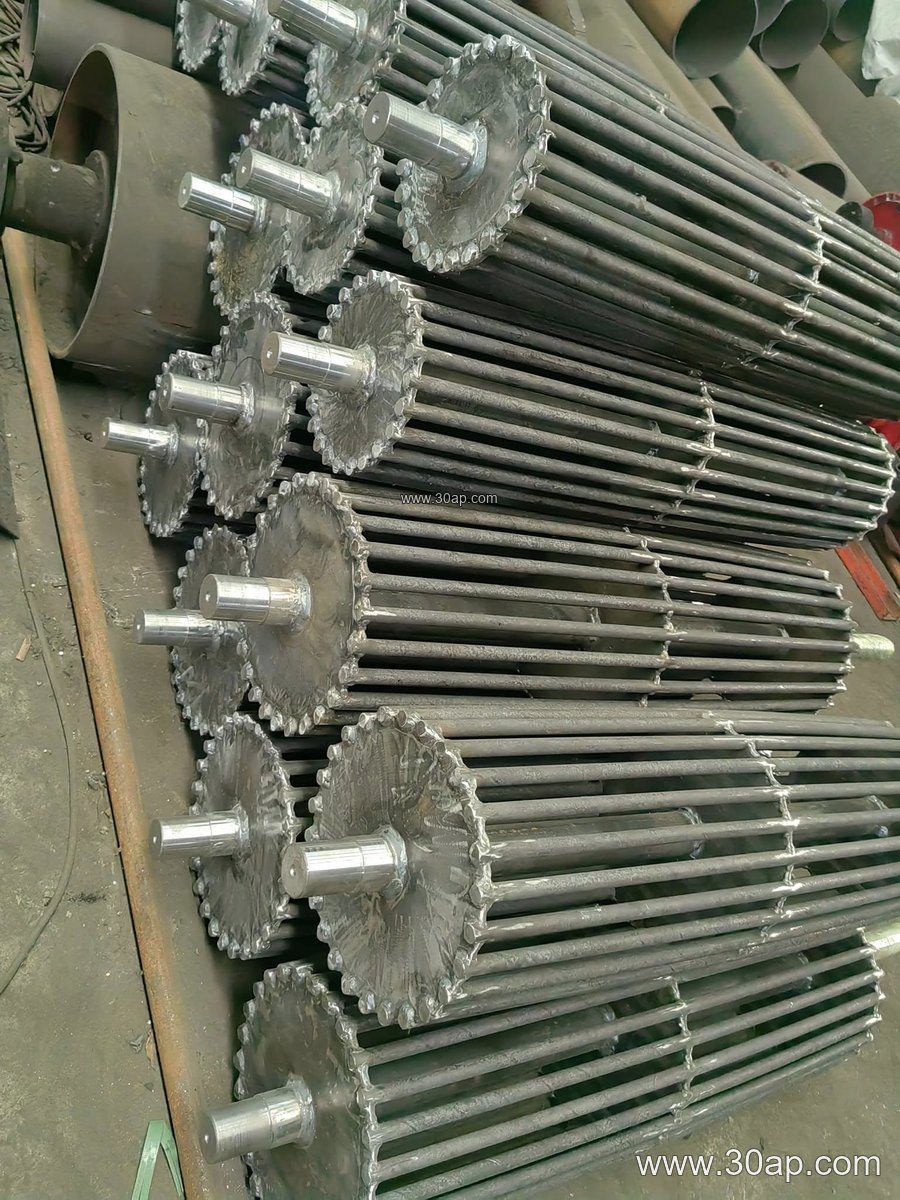
The pulley body is typically built from a rolled steel shell, welded to end discs, with a shaft that runs through the center. For a Ø630 mm unit, the shell thickness and shaft diameter are chosen according to the calculated torque and radial load — not simply the belt width. Common shaft sizes may range from Ø100 to Ø180 mm, but the final value depends on the drive arrangement and bearing selection. The pulley face width is usually wider than the belt: for a B1200 belt, the face might be around 1400 mm, while a B1000 belt could use a face near 1150 mm. These are typical references, and exact dimensions are confirmed at the design stage.
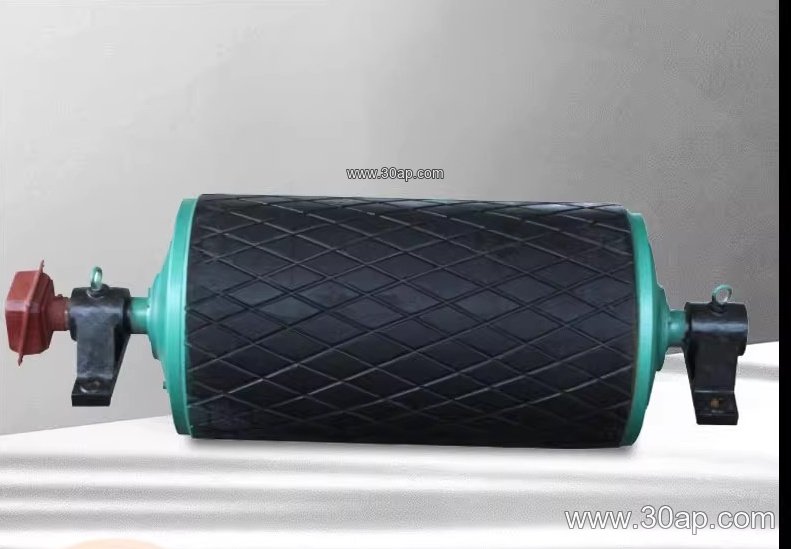
Surface options are a key part of the build. Plain (smooth) finish is used where slip is not a concern. For higher grip, lagging is applied — cold-bonded rubber, hot-vulcanized rubber, diamond pattern, herringbone, or ceramic lagging. Lagging thickness commonly ranges from 8 mm to 20 mm. In dusty or wet conditions, diamond or ceramic lagging helps maintain friction between the pulley and the belt.
Where It Fits in a Conveyor System
A 630mm diameter pulley is often selected for main haulage conveyors in crushing and screening plants, cement clinker lines, and power plant coal handling. It can act as a drive pulley at the head, a tail pulley at the loading point, or a bend pulley where the belt path changes direction. In a tunnel or underground mining application, a Ø630 mm bend pulley may help route a flame retardant conveyor belt around obstructions. The size also suits mobile crushing stations and overland conveyors that carry abrasive rock or ore. When used with a corrugated sidewall belt or a pipe conveyor belt, the pulley dimensions must match the belt’s special profile and the manufacturer’s recommendations.
Matching Pulley to Belt and Load
There is no universal rule that one belt width only matches one pulley diameter. A B800 belt might run on a Ø500 pulley in a light-duty line, while the same width could use a Ø630 pulley in a high-tension, long-distance system. The choice depends on belt type, speed, wrap angle, and the modulus of the belt — for instance, an EP1000 or NN300 belt will transfer different loads than a ST1600 steel cord belt. Buyers should provide the belt width, belt type (such as multi-ply fabric core, steel cord, or heat resistant), operating tension, and pulley position (drive, tail, bend, take-up) so the supplier can calculate the required shaft and bearing size. The conveyor pulley should also be checked for balance and runout, especially at higher speeds.
Buyer Checklist for a Ø630 Pulley
- Duty and location: specify drive, tail, bend, or take-up. Drive and tail pulleys are not interchangeable; each has its own load profile.
- Belt data: belt width, belt type (e.g., abrasion resistant, oil resistant, fire resistant), and tension rating.
- Lagging: choose plain, rubber, or ceramic based on grip and environment. State the lagging thickness if needed.
- Shaft and bearings: confirm shaft diameter from torque calculations, not from belt width alone.
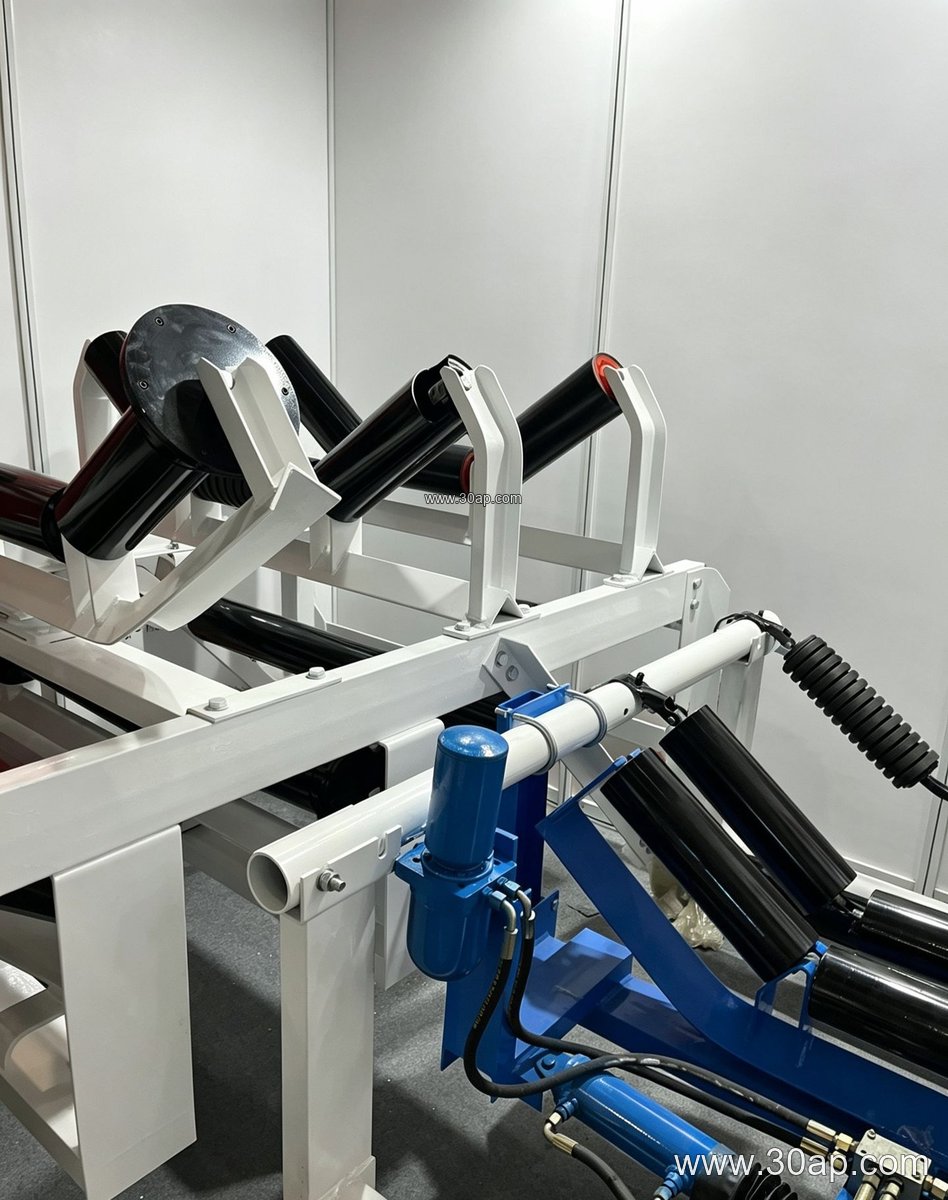
- Supporting parts: check compatibility with conveyor brackets, idler rollers, and the take-up frame.
For reliable operation, the pulley should be inspected for weld quality, lagging bond, and dynamic balance before installation. In a sand and gravel plant or a cement plant, a well-matched Ø630 mm pulley helps keep the belt tracking true and reduces downtime. More technical details on related components such as the conveyor idler and belt selection are available from the supplier’s engineering team.