What a Four-Roll Idler Bracket Does
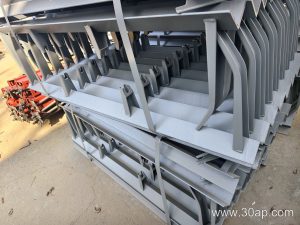
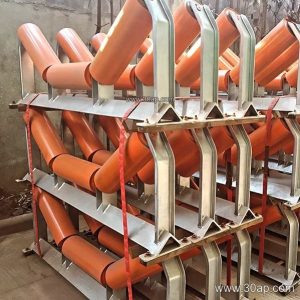
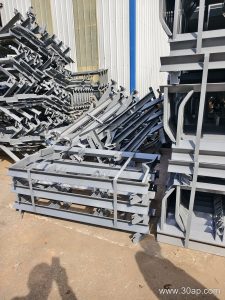
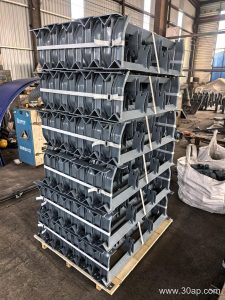
A four-roll idler bracket is the support frame that carries four idler rollers under the belt on the load side of a conveyor. Instead of the usual three rolls in a single trough, it arranges four rolls so the belt forms a wider, deeper trough profile. This bracket is common on high-capacity lines where the belt must hold a large load cross-section, and it is often seen on overland and plant conveyors in quarry, cement, and bulk handling service. The frame itself is usually a fabricated steel assembly made from angle, channel, or folded plate, with mounting positions that match the chosen roll spacing.
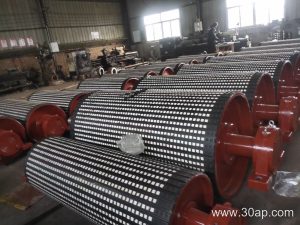
Because the roll layout differs from a standard three-roll set, the four-roll bracket is a distinct component, not a substitute for other support frames. It works together with the idler roller, the conveyor belt, and the surrounding conveyor structure, while the drive pulley, tail pulley, and bend pulley remain separate parts of the machine.
Construction and Mounting Arrangement
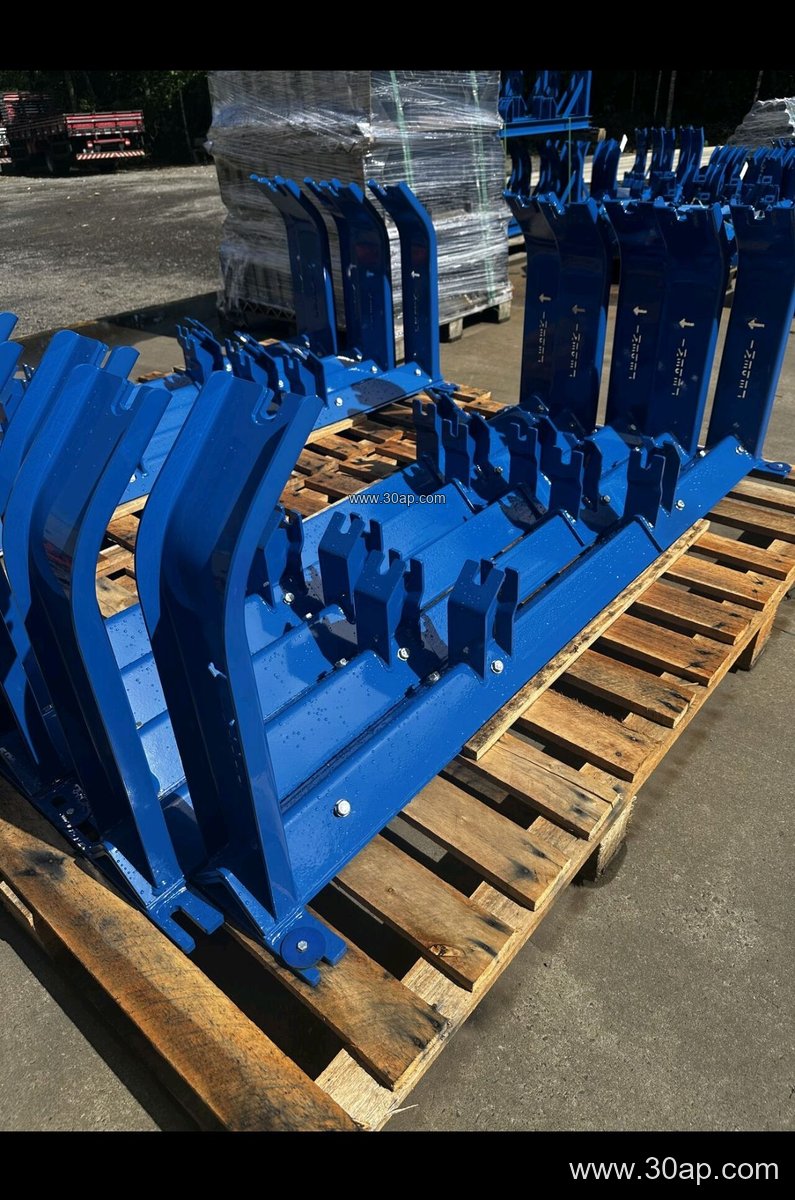
The bracket typically consists of a crossbeam, end brackets, and roll seats or mounting plates. The two outer rolls sit at a steeper angle, and the two inner rolls form a shallower center section. This arrangement can be fixed or adjustable, depending on the design. Adjustable versions let maintenance teams set trough angles within a range, which helps when belt training or material behavior changes over time.
Common materials include welded angle steel and channel steel for general duty, and folded plate for heavier frames. Bolt holes, crossbeam length, and the distance between roll seats normally follow the belt width and the trough angle, so these dimensions are usually confirmed against the conveyor drawing rather than taken as a fixed value.
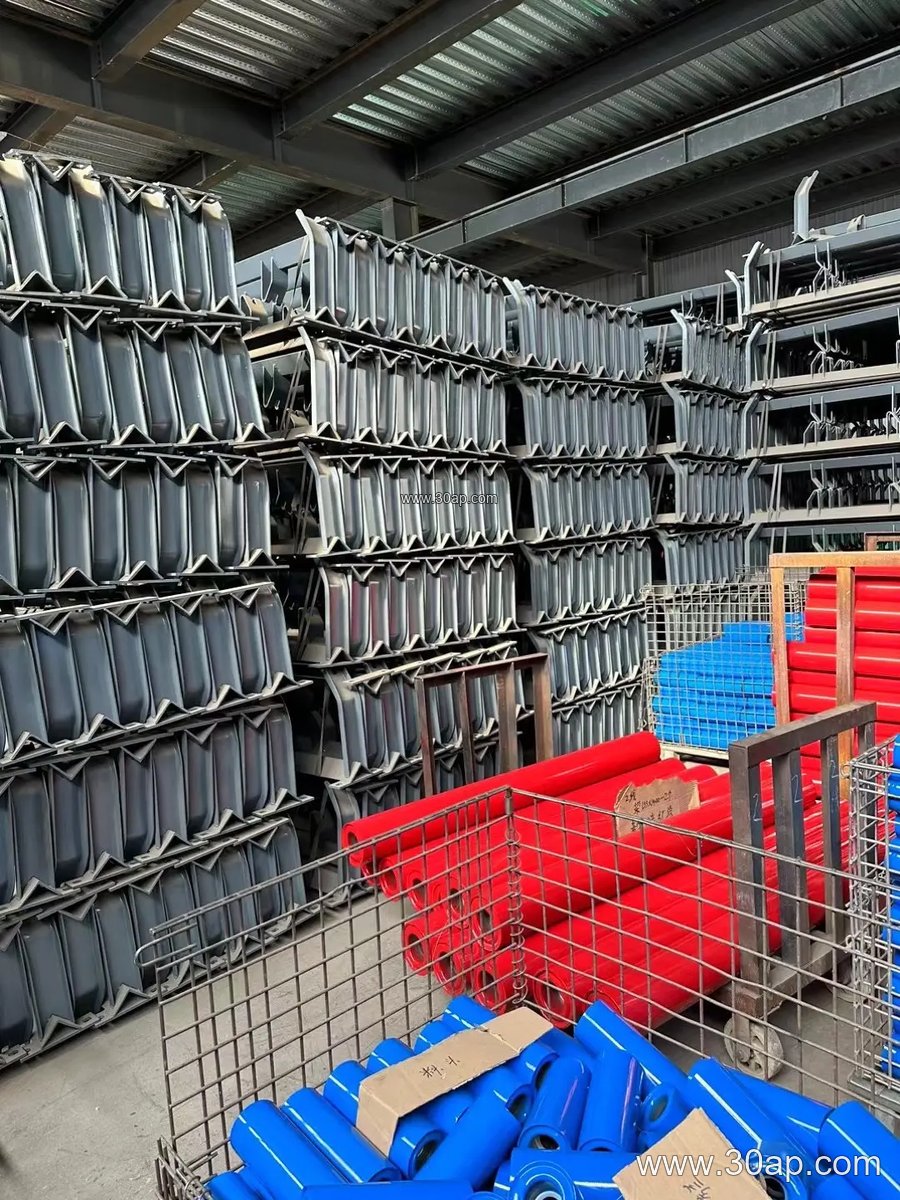
- Roll seats arranged for four rolls with a stepped trough profile
- Bolted or welded crossbeam, depending on frame style
- Adjustable or fixed trough angle, selected by application
- Mounting holes matched to belt width and support spacing
Typical Sizes and Selection References
The table below shows common reference combinations. These are typical ranges used for planning, not a mandatory match, and final values are set by the conveyor design. A wider belt does not force one specific trough angle or roll diameter, and a given belt width can be paired with several roll sizes depending on load and speed.
| Belt Width | Trough Angle | Roll Diameter | Frame Style |
|---|---|---|---|
| B650 | 30 degrees | Ø89 | Fixed or adjustable |
| B800 | 35 degrees | Ø108 | Fixed or adjustable |
| B1000 | 35 degrees | Ø133 | Adjustable |
| B1200 | 45 degrees | Ø133 | Adjustable |
| B1400 | 45 degrees | Ø159 | Heavy-duty fixed |
| B1600 | 35 to 45 degrees | Ø159 or Ø194 | Heavy-duty fixed |
For a belt such as an EP conveyor belt or a steel cord conveyor belt running at high tonnage, the bracket must be stiff enough to keep the roll seats aligned. On a mining conveyor belt or a coal mining conveyor belt, dust and fines also make it important to choose a frame that sheds material and allows quick roll replacement.
Where It Fits in the Conveyor Line
The four-roll idler bracket is generally installed on the carrying side, especially where the belt needs a deep trough to contain a wide load. In a limestone quarry or a cement plant, it can support the belt after the loading point and along long runs where spillage control matters. In a power plant coal handling system, the same frame helps keep a wide belt centered under heavy lump loads.
It is not a replacement for a bend pulley or a tail pulley, and it should not be confused with a return bracket or a buffer bracket. Those parts serve different positions and duties. When the belt carries hot clinker or sinter, a heat resistant conveyor belt may be used, and the bracket spacing and roll clearance should then be checked with the belt supplier.
Buyer Checklist
Before ordering, confirm the belt width, the required trough angle, the roll diameter, and the mounting hole pattern. Ask whether the frame is fixed or adjustable and whether the crossbeam length matches the existing conveyor structure. Check the steel thickness and the surface treatment, since a heavy-duty mining conveyor belt line puts more load on the frame than a light plant conveyor.
Also confirm roll seat alignment and the method of roll fixing, because a loose seat can wear the idler roller and damage the belt edge. For abrasive duty, such as an iron ore conveyor or a copper ore conveyor, specify a robust frame and plan a regular inspection interval. The four-roll idler bracket is a simple part, but its fit with the belt, the rolls, and the surrounding conveyor bracket system decides how well the line runs.