What the Main Drive Pulley Does
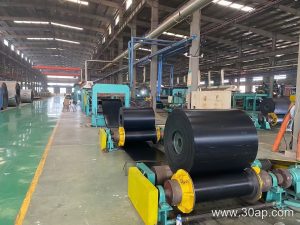
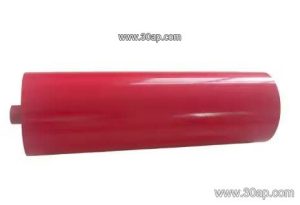
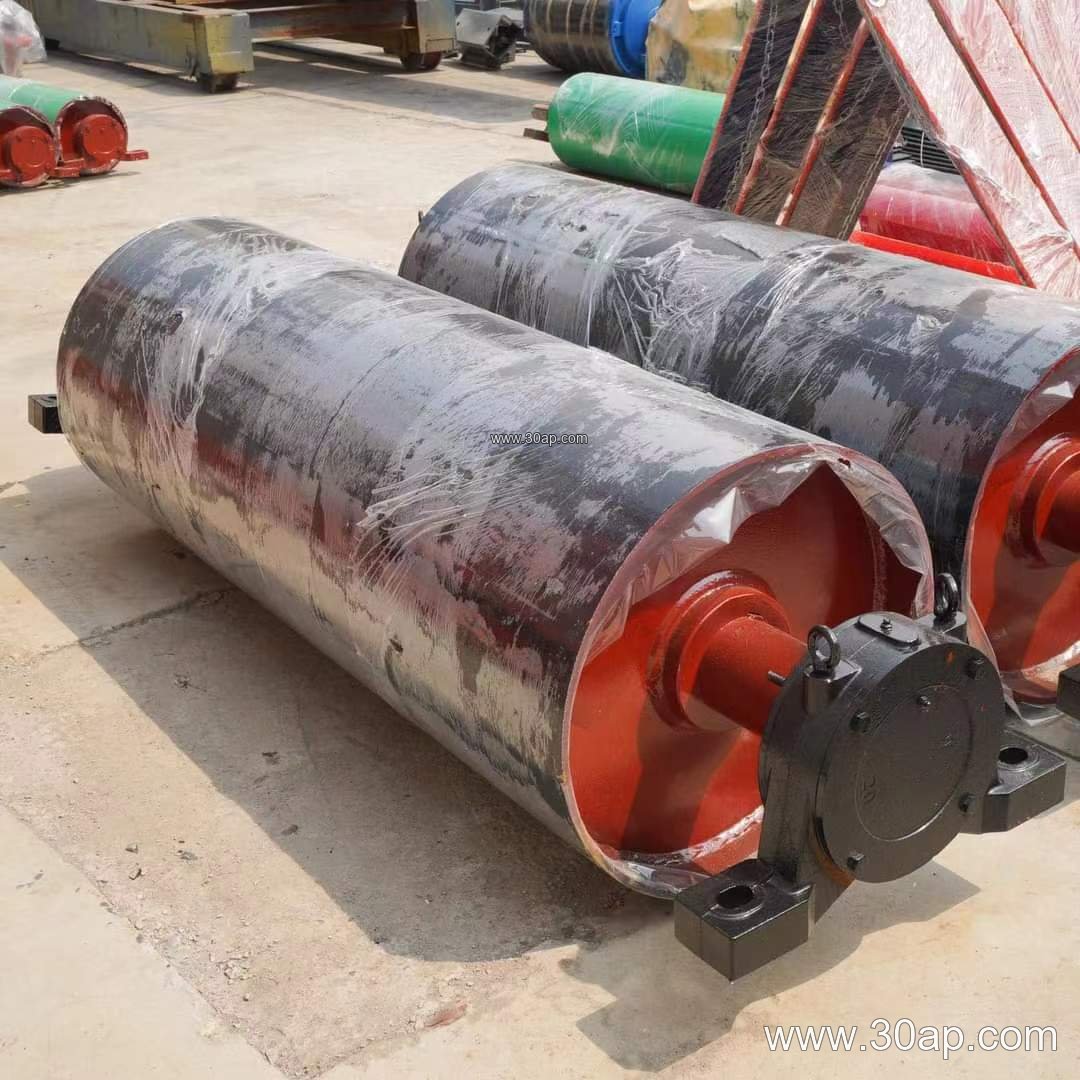
The main drive pulley is the head-end drum that receives torque from the gearbox and motor and transfers it to the conveyor belt through friction. In a bulk handling line it is the component that actually starts the load moving, whether the material is limestone from a quarry, clinker in a cement plant, or coal feeding a power station boiler. Because it carries the full belt tension at the discharge point, its diameter, shell thickness, lagging and shaft design all matter more than those of most other drums on the machine.
Engineers often shorten the name to drive drum or head drum, but the function stays the same: it is the powered pulley, not the tail pulley that returns the belt, and not a bend pulley that simply redirects it. Those are separate positions with separate duties.
Construction and Surface Options
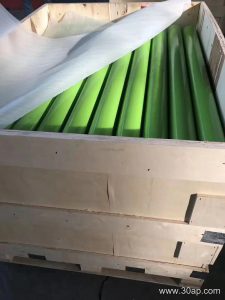
A typical unit is built around a welded steel shell with dished or flat end plates, keyed or shrink-fitted to a forged shaft. The shell surface can be supplied plain or covered with lagging to raise the coefficient of friction. Common surface forms include:
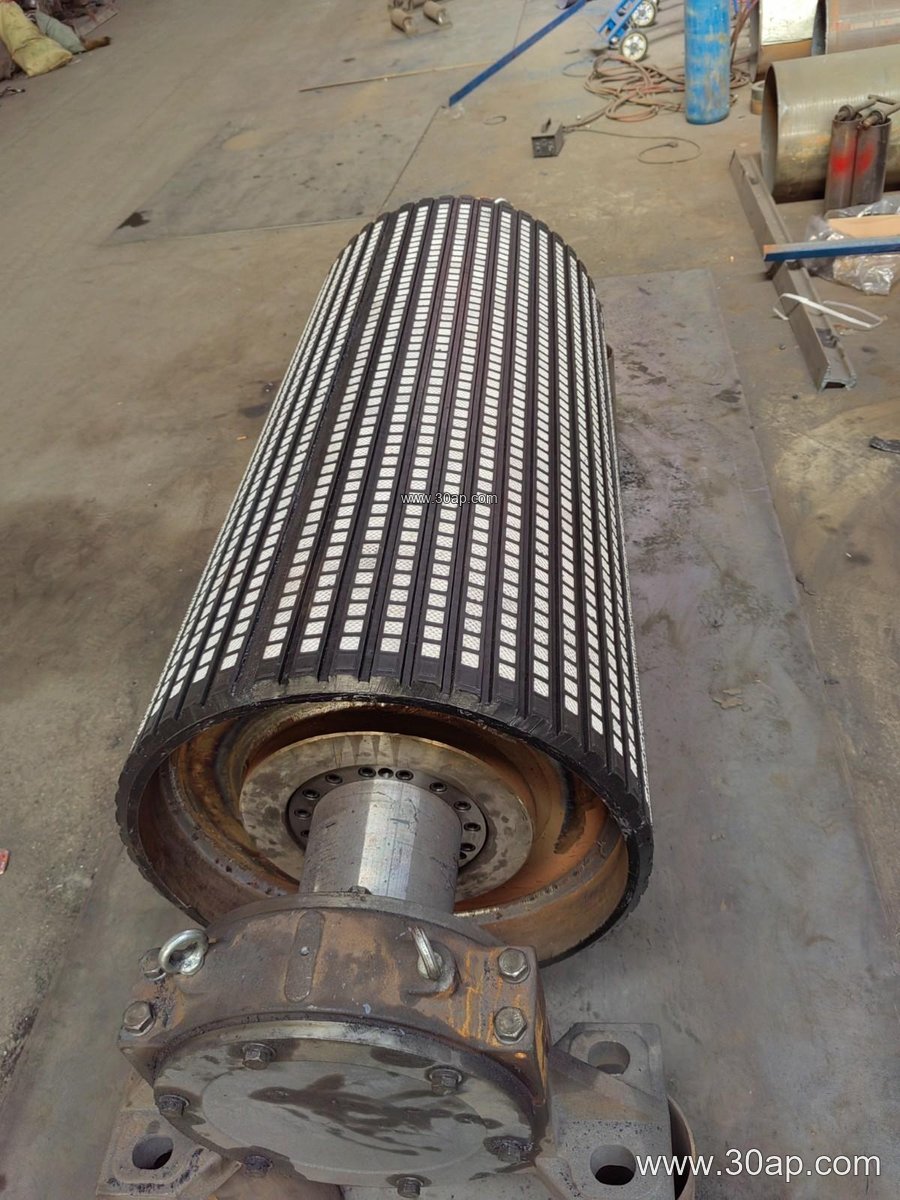
- Plain machined shell for light, clean duties
- Cast rubber or cold-bonded rubber lagging
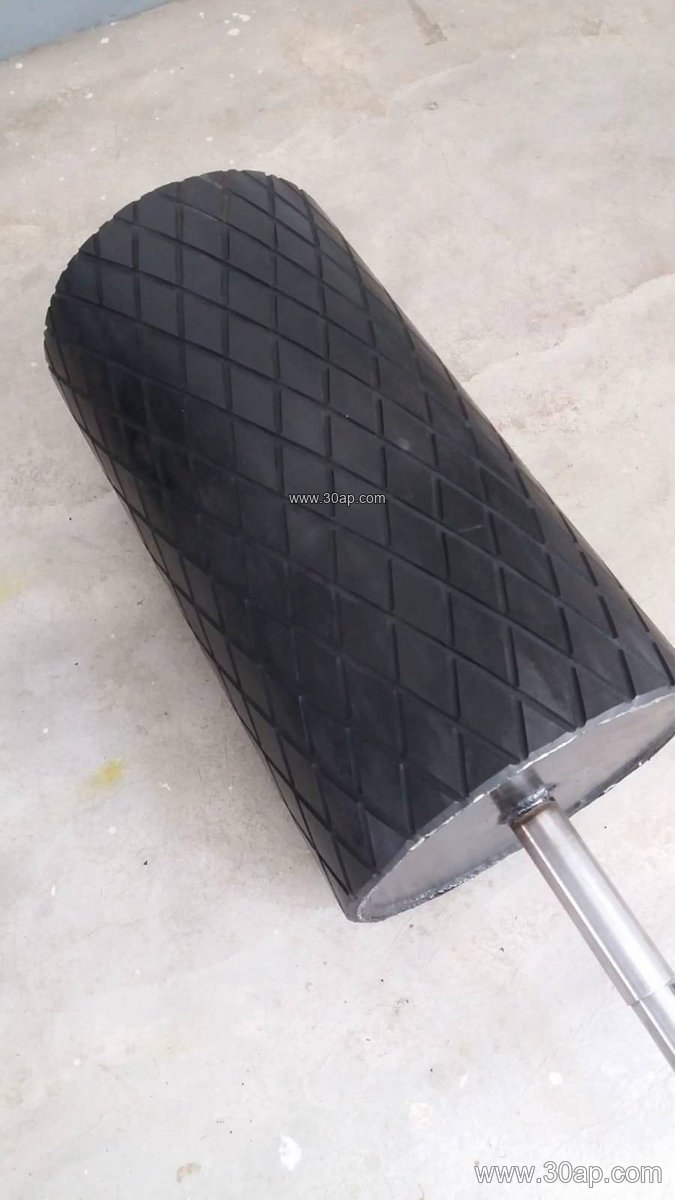
- Hot vulcanized rubber with diamond or herringbone pattern
- Ceramic lagging for wet, abrasive or high-torque service
Lagging thickness is frequently 8, 10, 12, 15 or 20 mm depending on the duty. Diamond grooving helps water escape in wet conditions, while herringbone patterns are chosen where the belt may track slightly off-centre. The choice should match the belt being driven, since a Rubber Conveyor Belt with a smooth cover behaves differently from a chevron or corrugated sidewall belt.
Matching Pulley Size to Belt Width
Buyers usually start from the belt width and then check diameter against torque, belt tension and the minimum wrap angle. Shell face width is normally a little wider than the belt, for example a B800 belt might run on a pulley with roughly 950 mm face width, and a B1200 belt on about 1400 mm. Diameter is a separate decision: a B1200 line could use Ø800, Ø1000 or Ø1250 depending on tension and speed. No single belt width locks in one diameter.
| Belt width | Typical shell face width | Diameter range to consider |
|---|---|---|
| B500 | about 600 mm | Ø250 to Ø500 |
| B650 | about 750 mm | Ø315 to Ø630 |
| B800 | about 950 mm | Ø400 to Ø800 |
| B1000 | about 1150 mm | Ø500 to Ø1000 |
| B1200 | about 1400 mm | Ø630 to Ø1250 |
| B1400 | about 1600 mm | Ø800 to Ø1400 |
| B1600 | about 1800 mm | Ø1000 to Ø1600 |
| B1800 | about 2000 mm | Ø1250 to Ø1800 |
The values above are reference ranges, not fixed pairings. Final sizing should come from the conveyor designer using the actual belt tension and starting torque.
Shaft, Bearings and Drive Connection
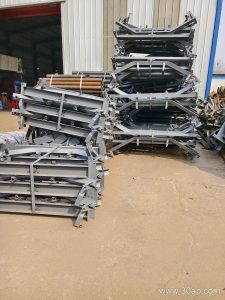
Shaft diameter is determined by torque and bending load, not by belt width alone. Common shaft sizes run from Ø50 up to Ø200, and a heavy head drum on an iron ore or copper ore line may sit at the upper end. The shaft is usually supported in spherical roller bearings housed in bearing blocks bolted to the conveyor bracket or main frame. Drive is transmitted through a keyed shaft end, a shrink disc, or a hollow-shaft gearbox mounted directly on the pulley shaft. The connection method affects maintenance time, so it is worth agreeing early with the supplier.
Where It Is Used
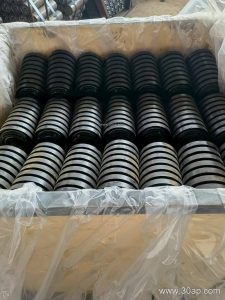
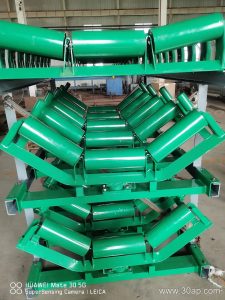
You will find this drum at the discharge end of nearly every continuous bulk conveyor. In a sand and aggregate plant it pulls the belt that carries crushed stone from the screen deck to the stockpile. In a coal washing plant or underground coal mining conveyor it works together with flame retardant belting and heavy idler roller sets to keep production moving. Port bulk terminals and steel plant sinter lines also rely on a well-lagged head drum to hold friction when belts are long and loads are high.
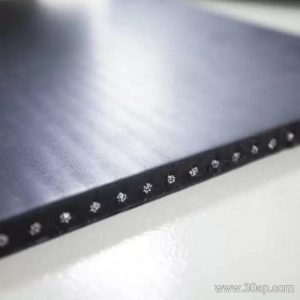
Its performance is closely tied to the rest of the system: a Steel Cord Conveyor Belt on a long overland route needs a large diameter drum to limit bending stress, while a short feeder may use a much smaller one. Matching the drum to the belt, the conveyor pulley set and the idler roller spacing is what keeps a line running smoothly.
Buyer Checklist
- Confirm belt width, belt type and maximum operating tension
- State the required diameter and whether lagging is plain, diamond or ceramic
- Give the shaft size, keyway or shrink-disc detail, and bearing type
- Specify the drive arrangement: gearbox-mounted, foot-mounted or shaft-mounted
- Check that shell face width and drum balance suit the belt tracking
- Ask for the balancing grade and runout tolerance before dispatch
A correctly specified main drive pulley, paired with suitable EP Conveyor Belt or Flame Retardant Conveyor Belt and a well-aligned frame, reduces slip, belt edge wear and unplanned stoppages. Treat the reference figures as a starting point and let the actual conveyor duty decide the final dimensions.