Where a Heavy-Duty Impact Idler Earns Its Place
A Heavy-Duty Impact Idler is the roller set installed at the point where material first lands on the conveyor belt. In a quarry, a coal preparation plant, or a crushing and screening line, the drop from a chute or crusher can be high and the lumps heavy. A standard carrying idler in that position wears quickly, so plants specify an impact idler roller built with a resilient surface and a stronger frame.
The job is simple to describe: absorb the energy of falling rock, ore, or clinker, protect the belt carcass from cuts and punctures, and keep the belt profile steady while the load settles. On a heavy-duty mining conveyor belt line, this small group of rollers often decides how long the belt itself survives.
How the Roller Is Built
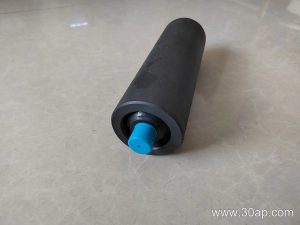
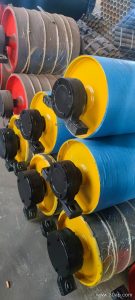
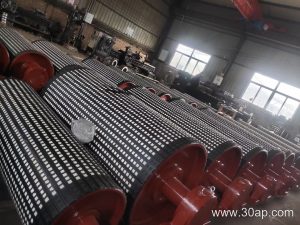
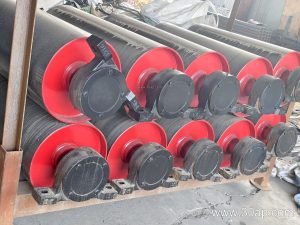
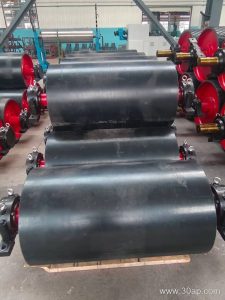
An impact idler roller usually combines a steel tube body with a thick rubber ring surface. The rubber rings are spaced along the shell and can compress under load, which spreads the impact over a longer section of belt instead of one hard contact line. Some designs use a helical rubber surface, often called a spiral or helical impact roller, to cushion the blow and help shed sticky material.
- Shell: heavy-wall steel tube, often thicker than a standard carrying roller.
- Surface: rubber rings or a rubber sleeve; ceramic and nylon surfaces are used in other duty positions but are less common for pure impact absorption.
- Bearing housing: sealed, greased-for-life or regreasable, with common bearing sizes such as 6205, 6305, 6306, 6308, or 6310 depending on load and roller diameter.
- Shaft and brackets: a larger shaft and reinforced conveyor bracket arrangement to resist shock loads.
Roller diameter is chosen from the load and the belt width, not from a single fixed rule. Common impact roller diameters include Ø89, Ø108, Ø127, Ø133, Ø159, and Ø178 mm; larger diameters such as Ø194 and Ø219 mm appear on very heavy installations. A 1200mm wide conveyor belt and an 1800mm wide conveyor belt will not use the same roller length, and the same belt width can be paired with more than one pulley diameter elsewhere in the drive.
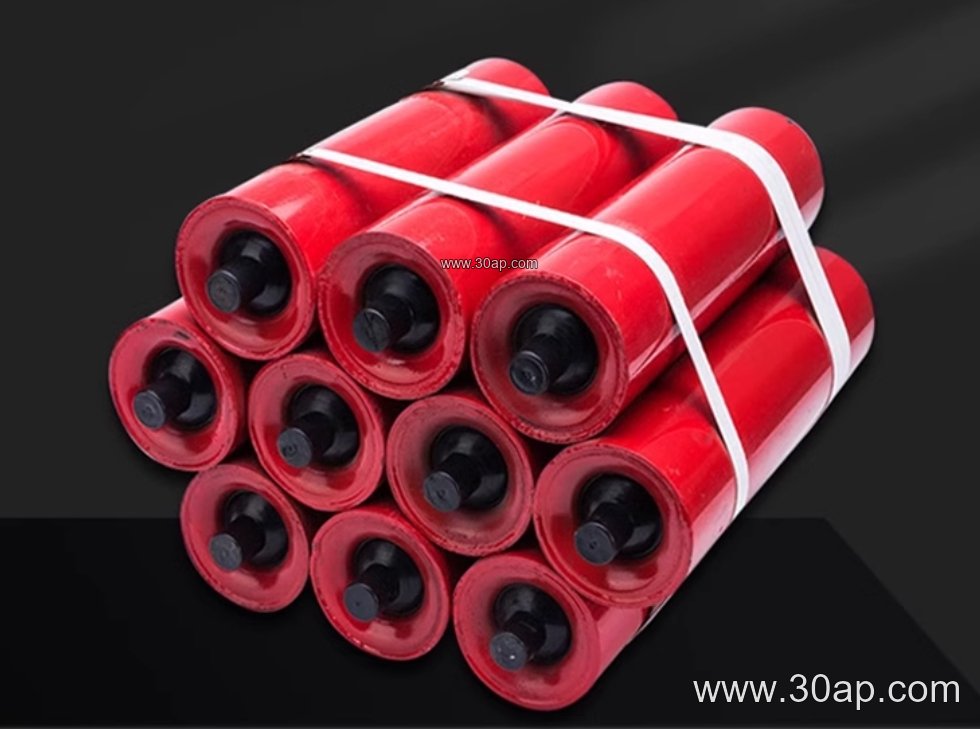
Typical Arrangements and Reference Dimensions
Impact idlers are normally supplied as a troughing set, most often three-roll with a 20, 30, 35, or 45 degree trough angle. Two-roll and single-roll sets exist for narrower belts or special chute layouts. The table below gives common reference values for three-roll troughing sets; side rollers and the centre roller can differ, and final dimensions follow the conveyor design.
| Belt width | Common roller length (reference) | Typical roller diameter range |
|---|---|---|
| B500 | about 200 mm | Ø89 to Ø108 mm |
| B650 | about 250 mm | Ø89 to Ø127 mm |
| B800 | about 315 mm | Ø108 to Ø133 mm |
| B1000 | about 380 mm | Ø108 to Ø159 mm |
| B1200 | about 465 mm | Ø127 to Ø159 mm |
| B1400 | about 530 mm | Ø133 to Ø178 mm |
| B1600 | about 600 mm | Ø133 to Ø178 mm |
| B1800 | about 670 mm | Ø159 to Ø194 mm |
| B2000 | about 750 mm | Ø159 to Ø219 mm |
These figures are guidance only. Impact sets are often mounted on a short, separate frame with rubber or spring cushions, and the spacing between impact rollers is usually tighter than in the normal carrying section so the belt is supported through the whole landing zone.
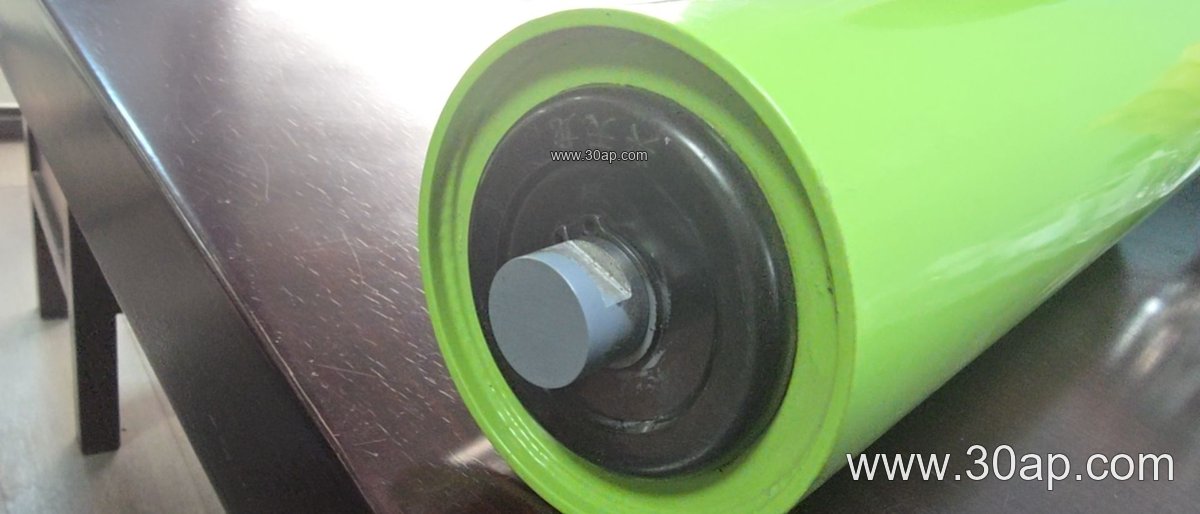
Selecting for the Duty
Buyers should start with the material: lump size, drop height, throughput, and whether the load is wet or abrasive. Iron ore and copper ore demand a tough rubber surface; cement clinker and sinter bring heat, so a heat resistant conveyor belt in the same line may call for a roller with heat-tolerant rings. Underground coal mining conveyor belt systems usually require flame retardant conveyor belt and fire resistant conveyor belt grades, and the roller seals must cope with dust and moisture.
Confirm the shaft end type and bracket spacing against the existing conveyor bracket before ordering, and check that the bearing size suits the actual load rather than assuming a match from belt width alone. Ask for the rubber hardness and ring thickness if the drop is severe, and consider a slightly larger roller diameter to reduce rotational speed and bearing stress.
Installation and Maintenance Notes
Mount impact sets so the belt rests on the rollers without a step at the entry and exit of the loading zone. Check alignment after the first weeks of operation, because shock loads can loosen brackets. Inspect rubber rings for cuts, chunking, and flattening; worn rings lose cushioning and pass impact straight to the belt carcass. Keep the seal area clean and follow the maker’s greasing interval if the bearing is regreasable. When the loading point changes, review the idler layout again rather than adding rollers at random.
For the rest of the line, pair the impact section with suitable carrying and return idlers, a correctly sized conveyor pulley at the drive and tail, and a belt grade matched to the duty, such as an abrasion resistant conveyor belt or a steel cord conveyor belt where tension is high.