What a Belt Conveyor Idler Frame Does on the Line
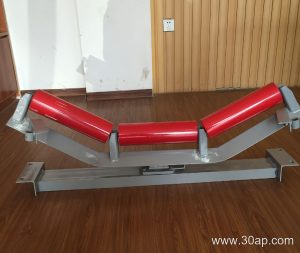
A belt conveyor idler frame is the steel support that holds the idler rollers in position under or above the conveyor belt. It sets the trough angle, keeps the rollers spaced correctly, and transfers the load of the belt and material into the conveyor stringer or structure. Without a properly built frame, the rollers would shift, the belt would wander, and spillage would increase. In a quarry, a coal washing plant, or a cement kiln feed line, this component is small in cost but large in effect on belt tracking and roller life.
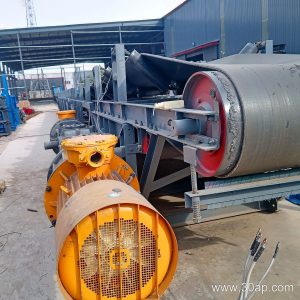
The frame is often called a conveyor idler bracket or idler support frame, and those names describe the same item. It should not be confused with a conveyor pulley, which drives or redirects the belt at the head, tail, or bend position. Pulleys and idler frames work together, but they are not interchangeable parts.
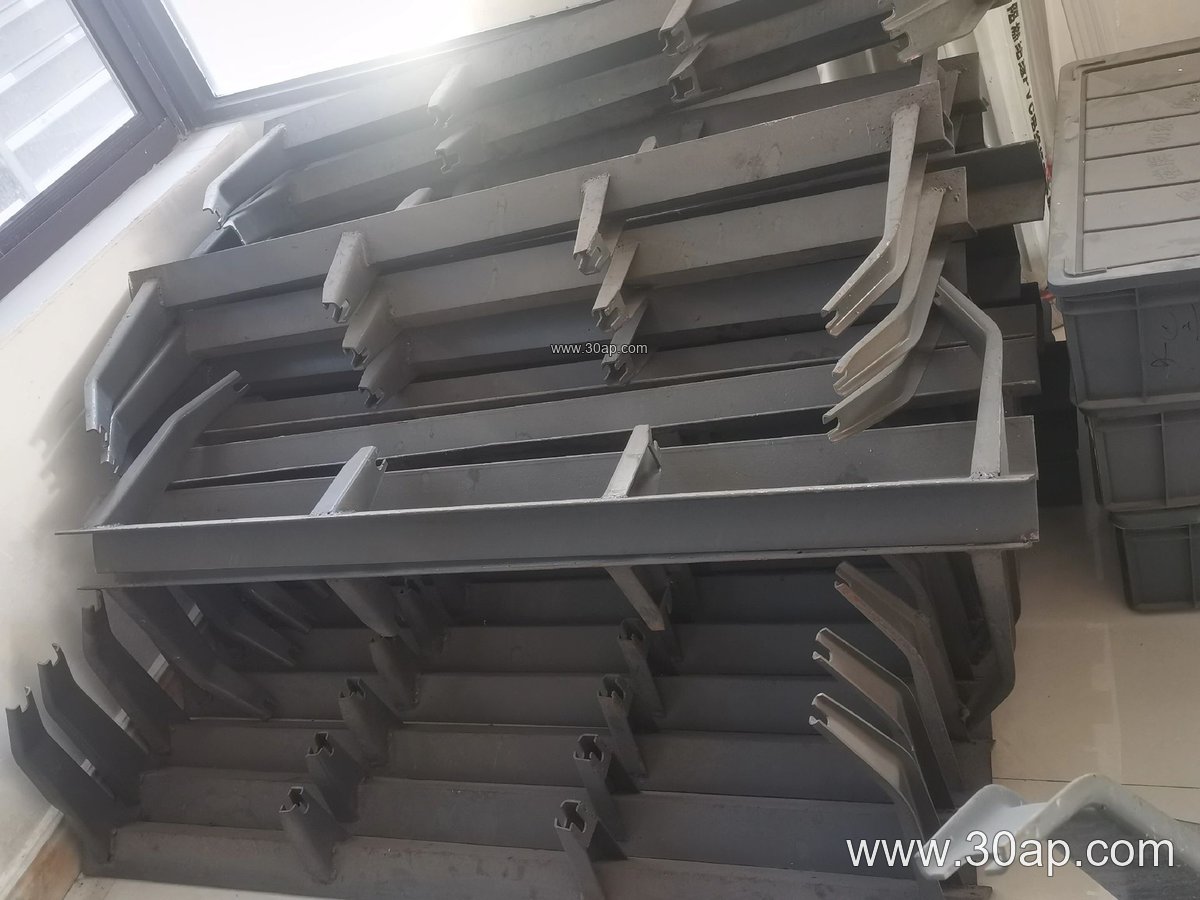
How the Frame Is Built
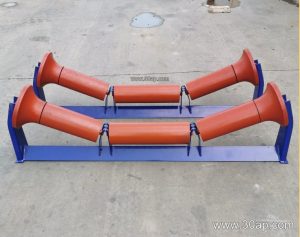
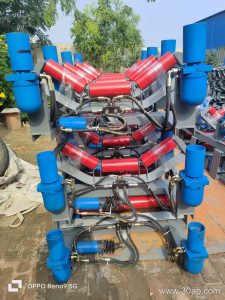
Most frames are fabricated from angle steel, channel steel, or folded steel plate. The cross beam carries the mounting slots or brackets for the idlers, and the ends bolt to the conveyor stringer. Common forms include trough frames for the carrying side, return frames for the empty side, impact frames under loading points, and self-aligning frames for belt tracking. A welded frame usually receives a paint or galvanized finish, while bolted designs allow easier replacement in tight spaces.
Key dimensions are tied to belt width and idler diameter. A frame for B800 with 35 degree trough and Ø108 idlers will not match a B1200 line with 45 degree trough and Ø133 rollers. Mounting hole spacing and beam length change with belt width and trough angle, so they are confirmed by design rather than treated as fixed numbers.
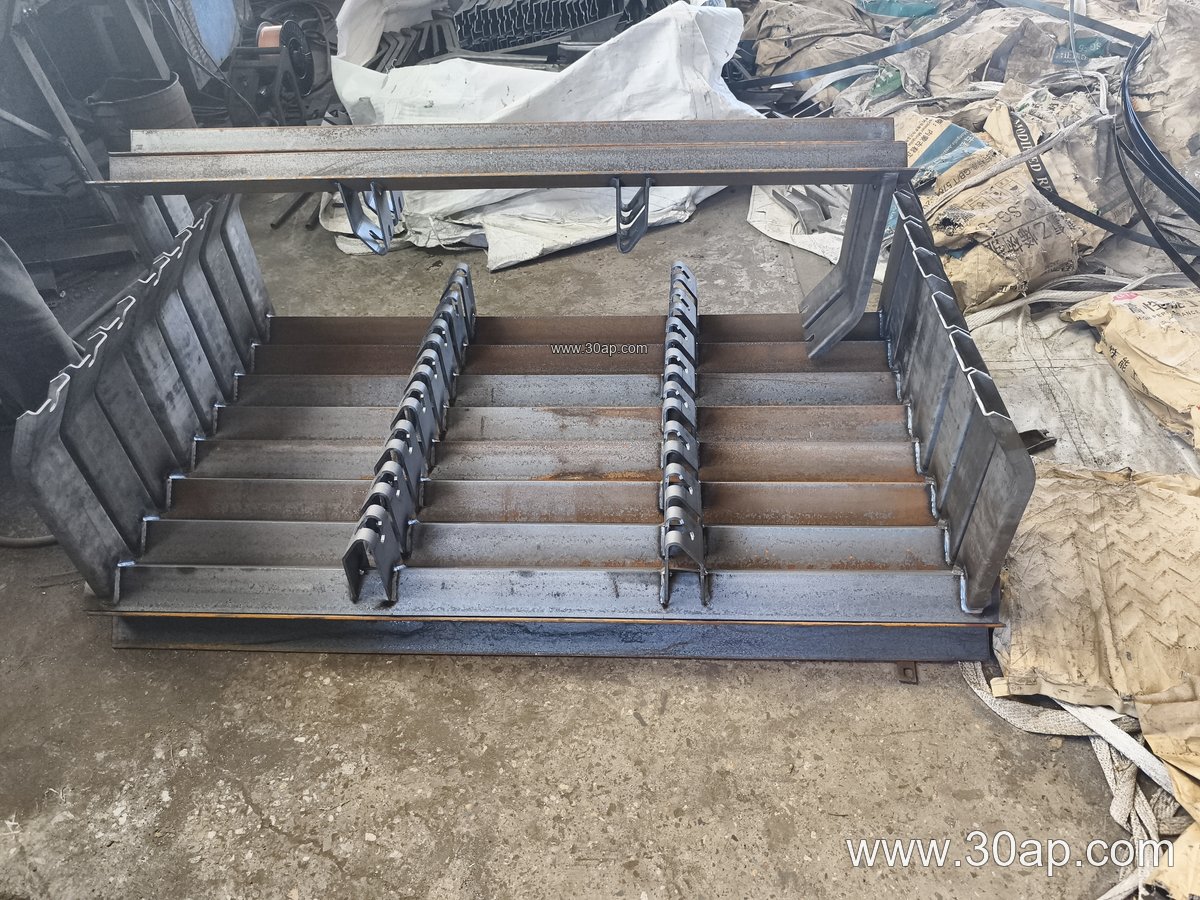
Common Frame Types and Reference Sizes
The table below shows typical combinations used in bulk handling projects. Values are for reference and should be checked against the actual conveyor design.
| Frame Type | Typical Belt Width | Trough Angle | Common Idler Diameter |
|---|---|---|---|
| Trough idler frame (carrying side) | B500 to B2000 | 20, 30, 35, 45 degrees | Ø89, Ø108, Ø133, Ø159 |
| Transition frame | B650 to B1600 | 20 to 35 degrees | Ø89 to Ø159 |
| Return frame (flat) | B500 to B2200 | Flat | Ø89 to Ø194 |
| V-return frame | B650 to B1800 | V shape | Ø108 to Ø159 |
| Impact frame | B800 to B1600 | 30 to 45 degrees | Ø133 to Ø194 |
| Self-aligning frame | B650 to B1400 | 20 to 35 degrees | Ø89 to Ø133 |
| Adjustable frame | B500 to B1200 | Adjustable 20 to 45 degrees | Ø89 to Ø133 |
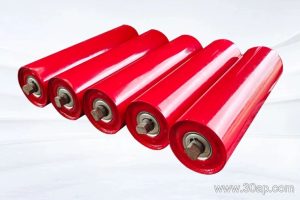
Some designs use a forward tilt of about 1.5 to 2 degrees to help center the belt. Adjustable frames let maintenance teams change the trough angle within a range instead of replacing the whole support. The frame must match the idler roller shaft and the conveyor belt load, especially where heavy ore or wet aggregate is carried.
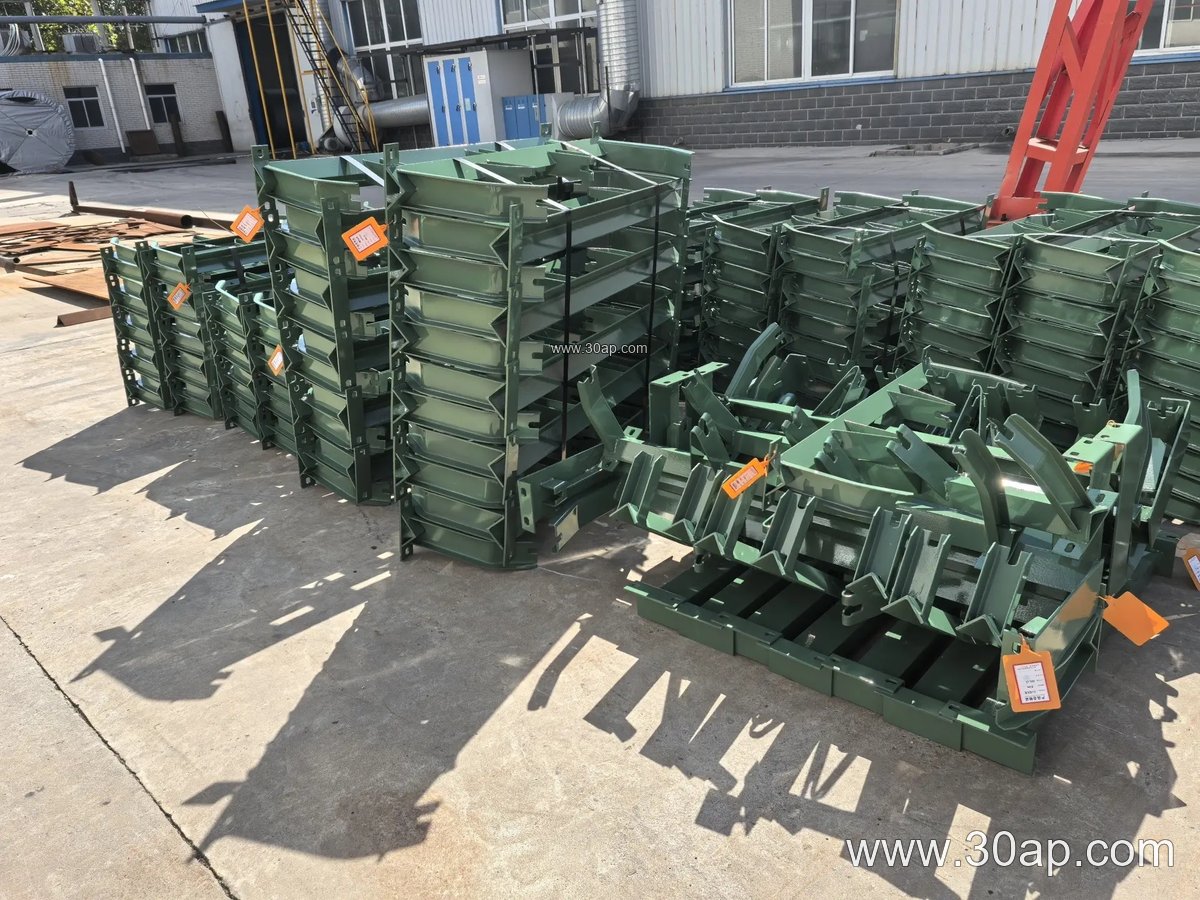
Where These Frames Are Used
In a limestone quarry or a sand and gravel line, trough frames support the belt through the crushing and screening section, while impact frames sit under the crusher discharge. In a coal washing plant, flame retardant and anti-static belt grades are common, and the frames must be spaced to control sag. Power plant coal handling and steel plant sinter lines also rely on stable idler frames to keep the belt aligned over long runs.
The frame choice should follow the belt duty. A heavy-duty mining conveyor belt with a steel cord carcass needs robust support and correct roller spacing, while a fabric core belt on a shorter run can use lighter sections. Matching the frame to the belt and the load is more important than choosing the largest size available.
What Buyers Should Check Before Ordering
- Confirm belt width, trough angle, and idler diameter as a set, not as separate items.
- Check the mounting hole pattern and beam length against the existing stringer.
- State the material and finish, such as painted or galvanized steel.
- Identify whether the position needs a fixed, adjustable, impact, or self-aligning frame.
- Ask for the frame drawing so the conveyor bracket and roller fit can be verified.
A well-chosen idler frame keeps the conveyor pulley and belt running true, reduces roller wear, and lowers spillage. For more on matching frames with belts and rollers, visit our conveyor components section.