What a Multi-Ply Fabric Core Conveyor Belt Is
A Multi-Ply Fabric Core Conveyor Belt is a heavy-duty rubber belt built around several layers of woven fabric. These plies give the belt its tensile strength and resistance to impact, while the rubber covers protect the carcass from abrasion, moisture and the material being carried. It is a common choice in mines, cement plants, power stations, quarries and sand and gravel yards where the conveyor route includes loading points, inclines and long runs between pulleys.
The same product is also called a multi-ply fabric conveyor belt or a fabric core conveyor belt. It should not be confused with a steel cord conveyor belt, which uses steel cables instead of fabric plies, or with a single-ply belt used for lighter duties.
How the Belt Is Built
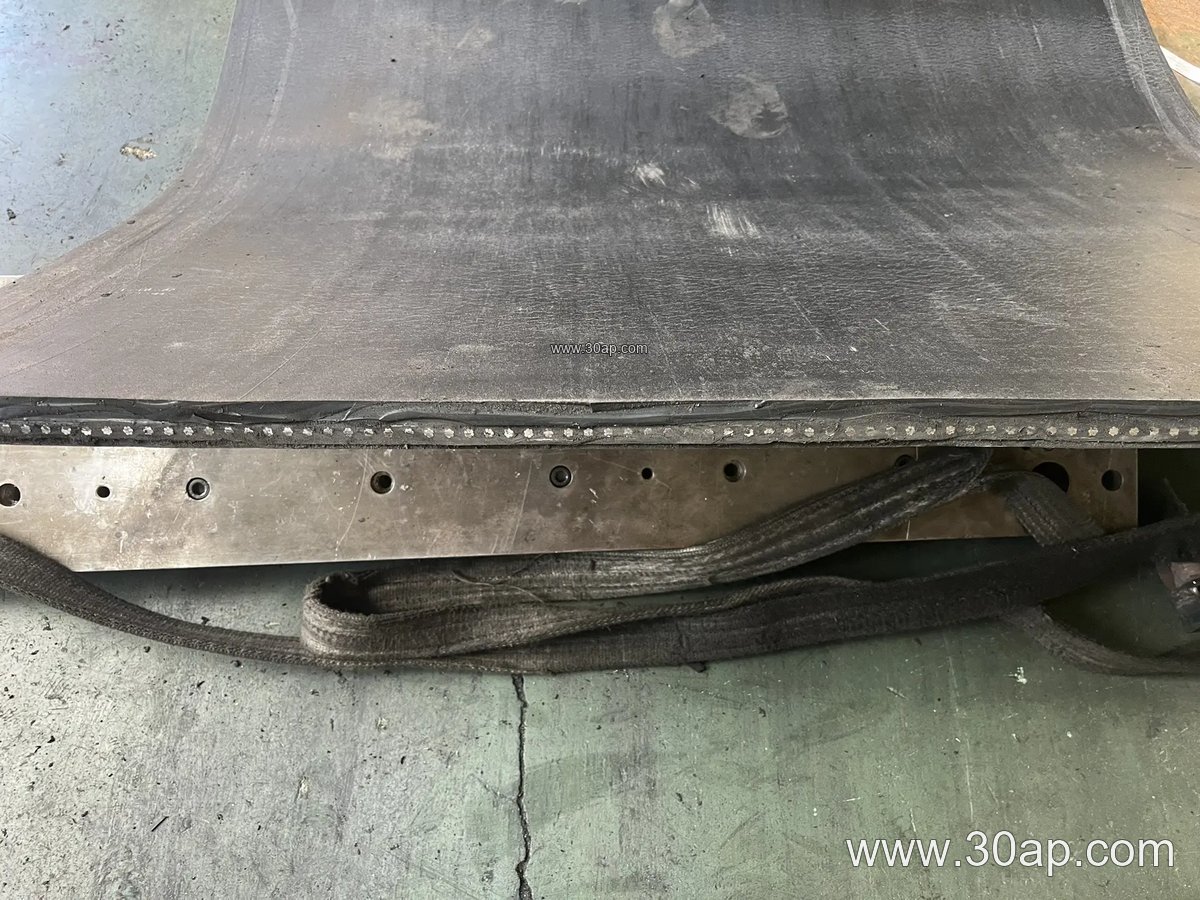
The carcass is the load-bearing part. It is made from two to six plies of fabric, usually EP (polyester warp, nylon weft) or NN (nylon warp, nylon weft). EP fabric offers low stretch and good moisture resistance, while NN fabric gives high flexibility and excellent impact absorption. The plies are bonded with rubber skim compound and then covered on both sides with top and bottom rubber covers.
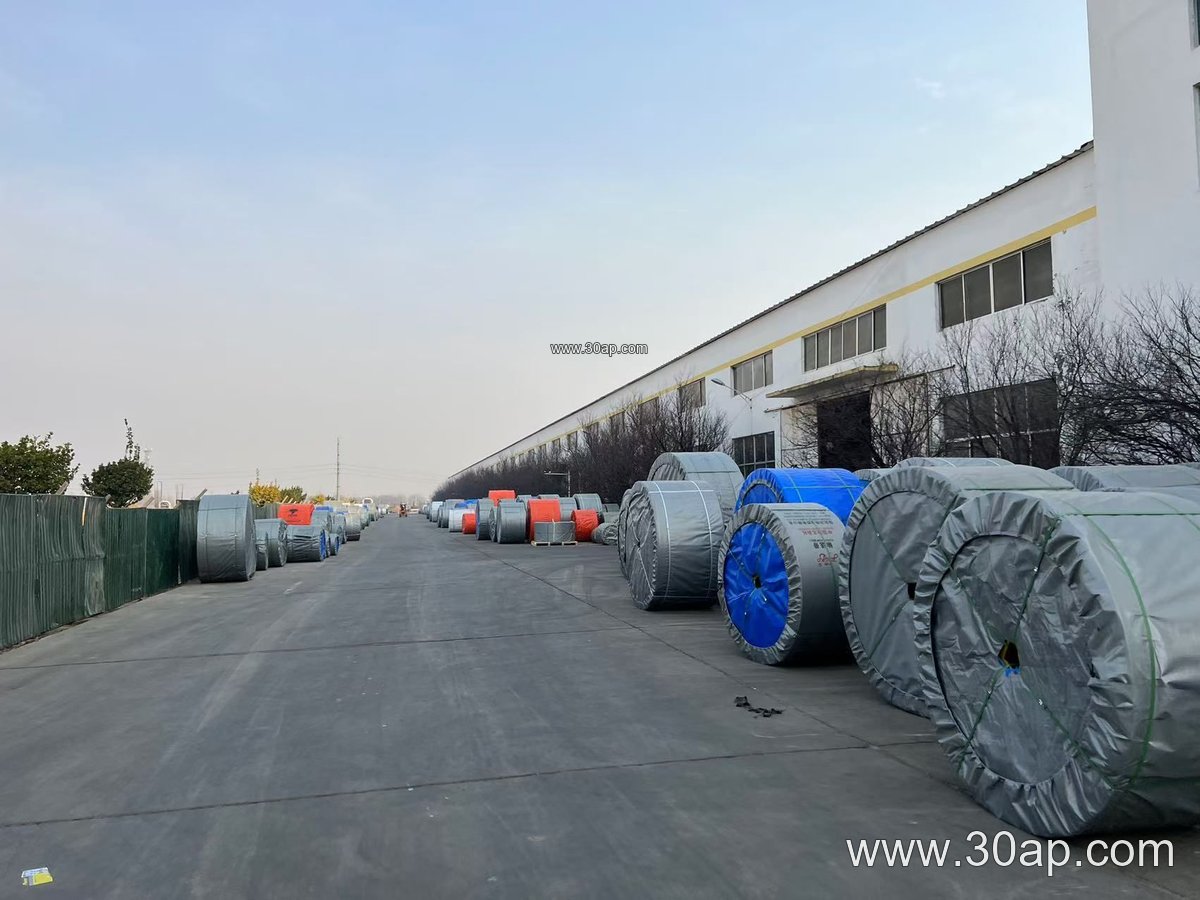
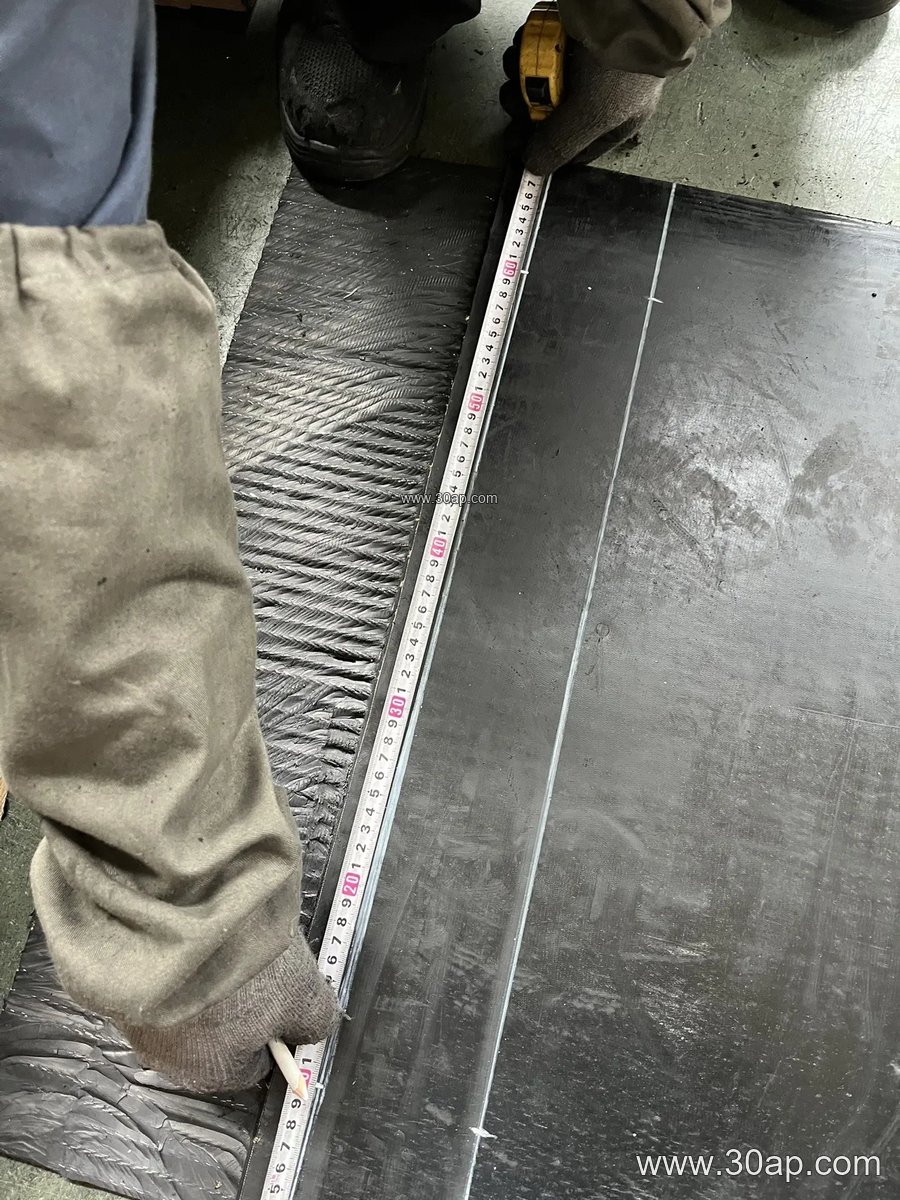
Cover thickness is often written as a pair, for example 4+2 mm, 5+2 mm or 6+2 mm, meaning the top cover is 4 mm and the bottom cover is 2 mm. The top cover meets the material, and the bottom cover runs over the idler rollers and pulleys. Edge construction and skim layers are designed to prevent ply separation under repeated flexing.
Common Strength Grades and Sizes
Multi-ply fabric core belts are available in a range of tension ratings. The table below shows typical reference values; actual specifications depend on the manufacturer and the conveyor design.
| Property | Common reference range |
|---|---|
| Fabric type | EP or NN |
| Number of plies | 2 to 6 |
| Strength grade | EP200, EP315, EP400, EP500, EP630, EP800, EP1000, EP1250, EP1600, EP2000 |
| Belt width | B500, B650, B800, B1000, B1200, B1400, B1600, B1800, B2000 |
| Cover thickness examples | 3+1.5 mm, 4+2 mm, 5+2 mm, 6+2 mm, 8+3 mm |
For a given width, the required strength grade and ply count are determined by the conveyor length, lift, capacity and starting conditions. A wider belt does not automatically suit every pulley; the pulley diameter, shaft and take-up arrangement must be checked against the belt construction.
Where It Fits in the Plant
In a quarry or aggregate plant, a multi-ply belt often runs from the primary crusher to the screening station. The same belt type appears in cement works handling clinker and limestone, in coal mining conveyors, and in power plant coal yards. It also works well on ship loading and port conveyors where large tonnages move continuously. In sand making and stone crushing lines, the belt must resist sharp edges and repeated impact at transfer points.
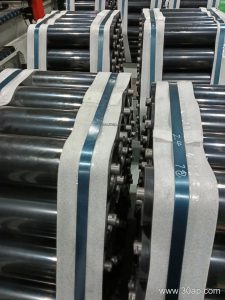
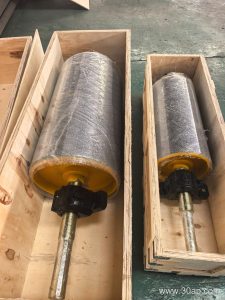
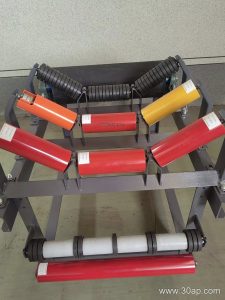
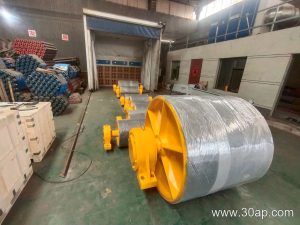
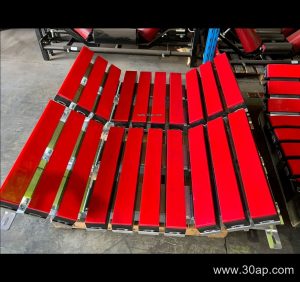
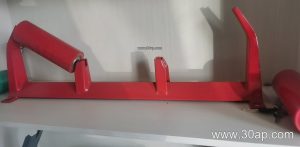
Related equipment matters as much as the belt. A conveyor pulley at the drive and tail end should be sized to suit the belt thickness and ply count. Idler rollers support the belt on the carrying and return sides, and a conveyor bracket keeps the idler frame aligned. Poor alignment of any of these parts shortens belt life more than the belt grade itself.
Choosing the Right Variant
The base belt can be supplied with covers and constructions for specific duties. A flame retardant conveyor belt is used in underground coal mining and other enclosed areas. A heat resistant conveyor belt suits cement clinker, sinter and hot ash, while an abrasion resistant conveyor belt is common in quarry and iron ore service. For oily materials, an oil resistant cover helps prevent swelling. In cold climates, a cold resistant belt keeps flexing at low temperature.
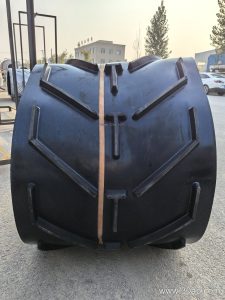
Other forms include a chevron conveyor belt for inclined sections, a corrugated sidewall belt for steep inclines, and a pipe conveyor belt for enclosed transport. These are separate designs, not replacements for a standard multi-ply fabric core belt, but they may be considered when the route cannot be served by a conventional flat belt.
Buyer Checklist
- Confirm fabric type (EP or NN), ply count and strength grade against the conveyor calculation.
- State belt width and cover thickness, for example 1200 mm wide with 6+2 mm covers.
- Describe the material, lump size, temperature and any oil, acid or flame exposure.
- Check drive, tail and bend pulley diameters with the belt supplier before ordering.
- Ask about edge protection and splicing method for the planned installation.
- Plan regular inspection of covers, edges and splices together with idler roller and pulley condition.
A well-matched multi-ply fabric core conveyor belt, combined with correctly sized pulleys, idler rollers and brackets, gives dependable service in demanding bulk handling environments.